THE ORIGINAL COLLECTION · SINCE 2010

Environment
press releases.

Research announcements from universities, hospitals and scientific institutions. Explore the stories, people and discoveries behind the headlines.

Original publication datesPage 96
FIND A STORY

Find a past release.

Dates and source material belong to the original release.

Read our research explainers

Browse the collection · original publication order

Prehistoric Pompeii discovered: Most pristine trilobite fossils ever found shake up scientific understanding of the long extinct group
Environment

Prehistoric Pompeii discovered: Most pristine trilobite fossils ever found shake up scientific understanding of the long extinct group

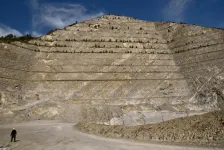
Researchers have described some of the best-preserved three-dimensional trilobite fossils ever discovered. The fossils, which are more than 500 million years old, were collected in the High Atlas of Morocco and are being referred to by scientists as “Pompeii” trilobites due to their remarkable preservation in ash. The trilobites, from the Cambrian period, have been the subject of research by an international team of scientists, led by Prof Abderrazak El Albani, a geologist based at University of Poitiers and originally from Morocco. The team included Dr Greg Edgecombe, a palaeontologist ...

Read the release
Under pressure: How comb jellies have adapted to life at the bottom of the ocean
Environment

Under pressure: How comb jellies have adapted to life at the bottom of the ocean

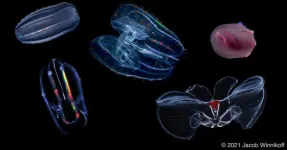
The bottom of the ocean is not hospitable: there is no light; the temperature is freezing cold; and the pressure of all the water above will literally crush you. The animals that live at this depth have developed biophysical adaptations that allow them to survive in these harsh conditions. What are these adaptations and how did they develop? University of California San Diego Assistant Professor of Chemistry and Biochemistry Itay Budin teamed up with researchers from around the country to study the cell membranes of ctenophores (“comb jellies”) and found they had unique lipid structures that allow them to live under intense pressure. Their work appears in Science. Adapting ...

Read the release
Pacific cod can’t rely on coastal safe havens for protection during marine heat waves, OSU study finds
Environment

Pacific cod can’t rely on coastal safe havens for protection during marine heat waves, OSU study finds

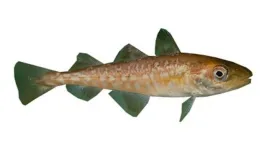
During recent periods of unusually warm water in the Gulf of Alaska, young Pacific cod in near shore safe havens where they typically spend their adolescence did not experience the protective effects those areas typically provide, a new Oregon State University study found. Instead, during marine heat waves in 2014-16 and 2019, young cod in these near shore “nurseries” around Kodiak Island in Alaska experienced significant changes in their abundance, growth rates and diet, with researchers estimating that only the largest 15-25% of the island’s cod population survived the summer. Even after the high temperatures subsided, the ...

Read the release
Environment

Urban green and blue spaces are linked to less coronary artery calcification

· Black participants with greater access to green spaces had up to 35% lower odds of calcification · Black participants living near a river had 32% lower odds of calcification · Coronary artery calcification is an early sign of cardiovascular disease CHICAGO --- Being near and having more exposure to urban green space and blue (water) space is linked to lower odds of having coronary artery calcification in middle age, which is an early marker of cardiovascular disease. The associations were more pronounced among Black individuals and those living in neighborhoods ...

Read the release
Research shows how common plastics could passively cool and heat buildings with the seasons
Environment

Research shows how common plastics could passively cool and heat buildings with the seasons

Researchers at Princeton and UCLA have developed a passive mechanism to cool buildings in the summer and warm them in the winter. In an article published June 27 in the journal Cell Reports Physical Science, they report that by restricting radiant heat flows between buildings and their environment to specific wavelengths, coatings engineered from common materials can achieve energy savings and thermal comfort that goes beyond what traditional building envelopes can achieve. “With the increase ...

Read the release
Environment

Climate change and sea level rise pose an acute challenge for cities with combined sewer systems

Older coastal cities, like Philadelphia, New York and Boston are at risk of being inundated by untreated sewage during floods. Due in part to the design of their combined sewer systems and in part due to sea level rise, these cities could be facing a growing public health crisis as climate change also drives more extreme precipitation, according to researchers at Drexel University who study urban stormwater management. The group recently published research that modeled the potential extent of the problem in a section of the coastal city of Camden, New Jersey, and the effectiveness of one proposed intervention to help ...

Read the release
Environment

New research shows that solar-powered “resilience hubs” in California could generate up to 8GW of power -- providing emergency assistance to vulnerable residents during power outages

OAKLAND, Calif., June 27, 2024 – Power outages are on the rise nationwide as climate change brings more frequent wildfires, heat waves, and severe weather events. The Federal Emergency Management Agency (FEMA) and the state of California have both recently established funding to help communities create “resilience hubs” that rely on solar+battery systems to provide emergency power for residents. A new study in the journal Risk Analysis finds that strategically placing resilience hubs throughout California could generate up to 8 GW of solar energy and lower the state’s carbon emissions by 5 million tons ...

Read the release
Groundbreaking discovery: Zinc can make crop yields more climate-resilient
Environment

Groundbreaking discovery: Zinc can make crop yields more climate-resilient

Researchers have discovered that zinc plays a crucial role in the nitrogen fixation process of legumes. This finding, along with the transcriptional regulator Fixation Under Nitrate (FUN), could revolutionize legume-based agriculture by optimizing crop efficiency and reducing reliance on synthetic fertilizers. By understanding how zinc and FUN regulate nitrogen fixation, researchers might be able to enhance nitrogen delivery, improve crop yields, and promote more sustainable agricultural practices. The new knowledge about zinc can change the way we cultivate crops, as plants can ...

Read the release
Environment

Chinese cities outsourced on others’ efforts to cut carbon emissions

Experts have identified 240 Chinese cities whose emission reduction are mainly benefiting from the carbon mitigation actions of other cities, whilst putting in less effort themselves. Researchers studied the phenomenon across 309 Chinese cities using data from 2012 to 2017 – a period when China underwent economic reform and industrial transformation. Constructing a city-level input-output model to assess carbon footprints, the researchers identified 78% of the cities as ‘outsourced beneficiaries’, ...

Read the release
Antarctic ice shelves hold twice as much meltwater as previously thought
Environment

Antarctic ice shelves hold twice as much meltwater as previously thought

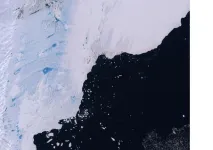
Slush – water-soaked snow – makes up more than half of all meltwater on the Antarctic ice shelves during the height of summer, yet is poorly accounted for in regional climate models. Researchers led by the University of Cambridge used artificial intelligence techniques to map slush on Antarctic ice shelves, and found that 57% of all meltwater is held in the form of slush, with the remaining amount in surface ponds and lakes. As the climate warms, more meltwater is formed on the surface of ice shelves, the floating ice surrounding Antarctica which acts as ...

Read the release
Ocean’s loss of oxygen caused massive Jurassic extinction. Could it happen again?
Environment

Ocean’s loss of oxygen caused massive Jurassic extinction. Could it happen again?

DURHAM, NC – Researchers have discovered a clue in Italian limestone that helps explain a mass extinction of marine life millions of years ago, and may provide warnings about how oxygen depletion and climate change could impact today’s oceans. “This event, and events like it, are the best analogs we have in Earth's past for what is to come in the next decades and centuries,” said Michael A. Kipp, an earth and climate science assistant professor at Duke University. Kipp co-authored a study published June 24 in the Proceedings of the National Academy of Sciences that measures oxygen loss ...

Read the release
New interactive atlas of water scarcity solutions in the US Southwest shares a library of case studies to help adapt to drought
Environment

New interactive atlas of water scarcity solutions in the US Southwest shares a library of case studies to help adapt to drought

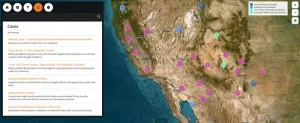
New interactive atlas of water scarcity solutions in the U.S. Southwest shares a library of case studies to help adapt to drought. #### Article URL: https://journals.plos.org/water/article?id=10.1371/journal.pwat.0000246 Article Title: The water adaptation techniques atlas: A new geospatial library of solutions to water scarcity in the U.S. Southwest Author Countries: United States Funding: The authors have declared that no competing interests exist. END ...

Read the release
Leading-edge model predicts impact of river plants on flood level
Environment

Leading-edge model predicts impact of river plants on flood level

River plants provide ecological and environmental benefits, but they raise flood risk by blocking the flow during heavy rain. Removing woody riparian vegetation patches is a primary flood prevention method, but it threatens stream's biodiversity. The research team at the Korea Institute of Civil Engineering and Building Technology (KICT, President Kim, Byung-Suk) has developed a technology for quantifying the effect of river vegetation patches on flood level changes to aid in better decision-making of river management for balancing ecological benefits and flood mitigation. Rivers ...

Read the release
Environment

Why are scientists concerned about the effects of non-native horses and burros on natural ecosystems?

Worldwide, introduced non-native herbivores have the potential to threaten native ecosystems. For example, in western North America, uncontrolled numbers of feral horses and burros are threatening natural habitats and the native wildlife that rely on them. New research published in the wildlife research journal Wildlife Monographs documents the impact that non-native burros are having on plant and animal life in the Sonoran Desert of North America. Investigators found that the presence of burros was associated with changes to long-lived plants important to the region. In areas with established burro herds, researchers documented lower ground cover, plant density, and foliage density, ...

Read the release
Scientists demonstrate for first the time that a group of butterflies flies across the Atlantic Ocean
Environment

Scientists demonstrate for first the time that a group of butterflies flies across the Atlantic Ocean

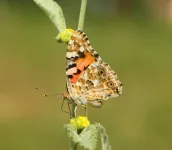
An international team of researchers, led by the Spanish National Research Council (CSIC), has documented a transoceanic flight of more than 4200 km by painted lady butterflies (Vanessa cardui), setting a record for an insect. The study, published in the journal Nature Communications, involved researchers from the Botanical Institute of Barcelona (IBB), a joint center of the CSIC and the Natural Sciences Museum of Barcelona, as well as from the W. Szafer Botanical Institute (Poland), the University of Ottawa (Canada), the Institute of Evolutionary ...

Read the release
Sustainable electrification: Managing resource demands for future electric vehicles
Environment

Sustainable electrification: Managing resource demands for future electric vehicles

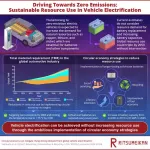
With goals to limit CO2 emissions, many countries have set targets to phase out internal combustion vehicles in favor of electric vehicles (EVs). Japan has set a target for 20-30% of all car sales to be battery electric vehicles (BEVs) and plug-in hybrid electric vehicles (PHEVs), and 30-40% of car sales to be hybrid electric vehicles (HEVs) by 2030. The USA plans for 50% of new vehicles to be zero-emission by 2030, while Germany wants to have 15 million EVs on the road by 2030. These goals raise concerns about the raw material demand for EVs. Batteries, which account for 50% of all resources consumed in BEV production, require ...

Read the release
Telltale greenhouse gases could signal alien activity
Environment

Telltale greenhouse gases could signal alien activity

If aliens modified a planet in their solar system to make it warmer, we’d be able to tell. A new UC Riverside study identifies the artificial greenhouse gases that would be giveaways of a terraformed planet. A terraformed planet has been artificially made hospitable for life. The gases described in the study would be detectable even at relatively low concentrations in the atmospheres of planets outside our solar system using existing technology. This could include the James Webb Space Telescope, or a future European-led space telescope concept. And ...

Read the release
Environment

New tipping point discovered beneath the Antarctic ice sheet

This process is currently not included in models that predict sea level rise, so the new results could offer a more accurate picture of how the world will change with global warming and how much coastal areas will need to adapt. Carried out by scientists at the British Antarctic Survey (BAS), the findings are published in the journal Nature Geoscience. “We have identified the possibility of a new tipping-point in Antarctic ice sheet melting,” says Alex Bradley, an ice dynamics researcher ...

Read the release
Hydrothermal vents on seafloors of ‘ocean worlds’ could support life, new study says
Environment

Hydrothermal vents on seafloors of ‘ocean worlds’ could support life, new study says

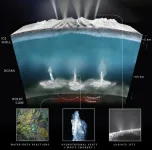
We’ve all seen the surreal footage in nature documentaries showing hydrothermal vents on the frigid ocean floor—bellowing black plumes of super-hot water—and the life forms that cling to them. Now, a new study by UC Santa Cruz researchers suggests that lower-temperature vents, which are common across Earth's seafloor, may help to create life-supporting conditions on "ocean worlds" in our solar system. Ocean worlds are planets and moons that have—or had in the past—a liquid ocean, often under an icy shell or within their rocky interior. In Earth's solar system, several of Jupiter's and Saturn's moons are ocean worlds, and ...

Read the release
Biodiversity loss from 2010 oil spill worse than predicted
Environment

Biodiversity loss from 2010 oil spill worse than predicted

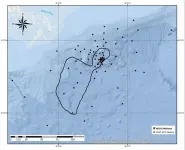
A new peer-reviewed study from researchers at The University of Texas at Arlington; the University of Nevada, Reno; Mokwon University in Daejeon, Korea; and Texas A&M University at Corpus Christi shows the Deepwater Horizon (DWH) oil spill of 2010 affected wildlife and their habitat much more than previously understood. “Overall, we found the area of deep-sea floor affected by the DWH spill was significantly larger than previously thought,” said Masoud Rostami, an author of the study and assistant ...

Read the release
Environment

Boosting biodiversity without hurting local economies

DURHAM, N.C. -- Protected areas, like nature reserves, can conserve biodiversity without harming local economic growth, countering a common belief that conservation restricts development. A new study outlines what is needed for conservation to benefit both nature and people. Conservation zones aim to preserve biodiversity, protect endangered species, and maintain natural habitats. “There’s long been uncertainty about the economic tradeoffs,” said Binbin Li, associate professor of environmental science at Duke Kunshan University, and lead author ...

Read the release
Environment

Scientists document self-propelling oxygen decline in the oceans

Scientists from the University of Copenhagen have made significant strides in understanding ancient ocean anoxia, with potential insights for today's marine environments. 500 million years ago the so-called Cambrian ‘SPICE’ event made oxygen levels in the oceans drop dramatically. Now, researchers from the University of Copenhagen have investigated how large-scale ocean anoxia, or oxygen-depleted conditions, developed during the event, and its potential consequences today. In the study, titled "Cascading oxygen loss shorewards in the oceans – insights from the Cambrian SPICE event" published in OneEarth ...

Read the release
Human activity: A double-edged sword in the face of drought
Environment

Human activity: A double-edged sword in the face of drought

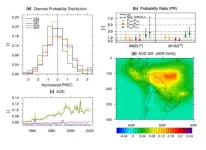
Earth and environmental scientists reported that as human socio-economic activities increase, greenhouse gas emissions will rise, leading to more frequent extreme weather events such as droughts and floods. However, a research team from Pohang University of Science and Technology (POSTECH) has published a study suggesting that anthropogenic greenhouse gases might actually mitigate droughts, offering a new perspective on the impact of human activities on nature. Professor Jonghun Kam from the Division of Environmental Science and Engineering at POSTECH ...

Read the release
Environment

Promise green hydrogen may not always be fulfilled

Green hydrogen often, but certainly not always, leads to CO2 gains. This claim is based on research published in Nature Energy by Kiane de Kleijne from Radboud University and Eindhoven University of Technology. “If you calculate the entire life cycle of green hydrogen production and transport, CO2 gains may be disappointing. However, if green hydrogen is produced from very clean electricity and locally, it can really help reduce emissions.” It is thought that green hydrogen can make ...

Read the release
Environment

Up to 30 percent more time: Climate change makes it harder for women to collect water

Climate change could increase the amount of time women spend collecting water by up to 30 percent globally by 2050, according to a new study published in Nature Climate Change. In regions of South America and Southeast Asia, the time spent collecting water could double due to higher temperatures and less rainfall. A team of scientists from the Potsdam Institute for Climate Impact Research (PIK) estimates the large welfare losses that could result from climate impacts and highlights how women are particularly vulnerable to changing future climate conditions. Worldwide, two billion people currently lack access to safe drinking water. The ...

Read the release
From the original Press-News collection. Issuers of news releases are responsible for the accuracy of their content.