THE ORIGINAL COLLECTION · SINCE 2010

Environment
press releases.

Research announcements from universities, hospitals and scientific institutions. Explore the stories, people and discoveries behind the headlines.

Original publication datesPage 95
FIND A STORY

Find a past release.

Dates and source material belong to the original release.

Read our research explainers

Browse the collection · original publication order

Gondwana’s ultimate hunter – New giant fossil tetrapod found in Namibia
Environment

Gondwana’s ultimate hunter – New giant fossil tetrapod found in Namibia

After three years of meticulous study, an international team of researchers has announced the discovery of a fossilised giant basal tetrapod in Namibia's arid heartland in Nature. A basal tetrapod is an early four-legged vertebrate with fingers and toes, which lived during the transition from water to land. These ancient carnivores are among the earliest ancestors of all modern animals. This nearly complete 3-meter-long skeleton of an adult, unearthed in the Ugab River valley in Damaraland, is the largest ever discovered. This discovery is significant because it challenges previous assumptions that these early four-legged vertebrates, which lived during ...

Read the release

Why the U.S. food system needs agroecology
Environment

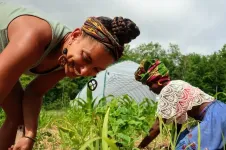
Why the U.S. food system needs agroecology

Agroecology—a science, practice, and movement which seeks social, political, economic, and environmental sustainability in the global food system—is gaining momentum in the U.S., according to a new Dartmouth-led commentary in Nature Food. As the co-authors report, the approach requires coordination between scientists, farmers, and activists. "When it comes to sustainable food and agriculture, people in the U.S. tend to be more familiar with organic farming, the production of food without synthetic inputs, and regenerative agriculture, which primarily strives to restore soil health," says lead author Theresa Ong, an assistant professor of environmental studies ...

Read the release
Environment

Biodegradable biomass-based aerogel for sustainable radiative cooling

An aerogel made from gelatin and DNA surpasses 100% solar reflectance, yielding exceptional radiative cooling, a new study reports. It is also biodegradable. The novel approach paves the way for high-performance next-generation radiative cooling materials, promoting environmentally friendly advancements in the field. Sustainable, energy-efficient, and environmentally conscious cooling technologies are crucial for adapting to our rapidly warming world. Compared to traditional refrigeration systems, passive radiative cooling technologies consume less energy and emit fewer greenhouse gasses, making them ...

Read the release
The dawn of the Antarctic ice sheets
Environment

The dawn of the Antarctic ice sheets

In recent years global warming has left its mark on the Antarctic ice sheets. The "eternal" ice in Antarctica is melting faster than previously assumed, particularly in West Antarctica more than East Antarctica. The root for this could lie in its formation, as an international research team led by the Alfred Wegener Institute has now discovered: sediment samples from drill cores combined with complex climate and ice-sheet modelling show that permanent glaciation of Antarctica began around 34 million years ago – ...

Read the release
Norway can lead the fight against plastic pollution
Environment

Norway can lead the fight against plastic pollution

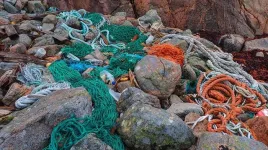
Plastic items from around the world are continuously washing ashore on Norwegian coastlines. This reflects a much larger systemic issue facing the nations of the world. Scientists have long reported the consequences of plastic pollution and the urgent need for intervention, but global plastic production and consumption continue to rise. This underscores the importance of Norway’s advocacy for a global agreement that guarantees stopping the flow of plastics into the environment. But Norway also has a responsibility in generating plastic pollution. In a study conducted ...

Read the release
Environment

Decolonizing the Tropical Ecology curriculum

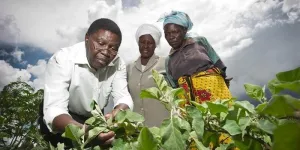
A new study of curriculum reading material at the University of Glasgow finds that 94% of recommended Tropical Ecology authors are white, and that 80% of authors are affiliated with universities outside of the tropics. Dr Stewart White, Senior Lecturer at the School of Biodiversity, One Health and Veterinary Medicine at the University of Glasgow, UK, intends to change that. “Tropical rainforest research was long the preserve of rich white men and the resulting literature was the same,” says Dr White. “This historical bias in tropical research and publication is still ...

Read the release
Wastewater is a viable medium for growing lettuce in hydroponic systems, study shows
Environment

Wastewater is a viable medium for growing lettuce in hydroponic systems, study shows

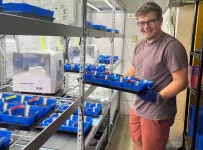
URBANA, Ill. – Urban agriculture has the potential to improve food security through local, efficient, and sustainable food production. Examples of urban food systems include hydroponics, where plants grow in a nutrient solution without soil, and aquaponics, which combines hydroponics with raising fish in tanks. A new study from the University of Illinois Urbana-Champaign examines the use of aquaponics wastewater as a growth medium for lettuce in a hydroponic system. This practice can potentially ...

Read the release
Mighty floods of the Nile River during warmer and wetter climates
Environment

Mighty floods of the Nile River during warmer and wetter climates

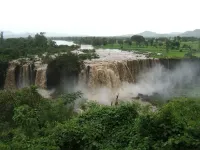
Summary Global warming as well as recent droughts and floods threaten large populations along the Nile Valley. Understanding how such a large river will respond to an invigorated hydrological cycle is therefore a pressing issue. Insights can be gained by studying past periods with wetter and warmer conditions, such as the North African Humid Period eleven to six thousand years ago. A research team of the German Research Centre for Geosciences GFZ, led by Cécile Blanchet, together with colleagues ...

Read the release
Shark hatching success drops from 82% to 11% in climate change scenario
Environment

Shark hatching success drops from 82% to 11% in climate change scenario

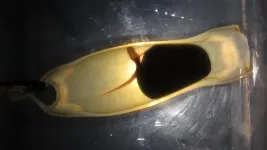
New experimental research shows that the combined effects of ocean warming and acidification could lead to a catastrophic decrease in embryonic shark survival by the year 2100. This research is also the first to demonstrate that monthly temperature variation plays a prominent role in shark embryo mortality. Oceanic warming and acidification are caused by greater concentrations of CO2 dissolving into marine environments, resulting in rising water temperatures and falling pH levels. “The embryos of egg-laying ...

Read the release
How dust pollution from shrinking Great Salt Lake affects communities disproportionately
Environment

How dust pollution from shrinking Great Salt Lake affects communities disproportionately

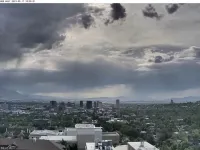
New research from the University of Utah demonstrates how wind-carried dust from the exposed bed of Great Salt Lake is disproportionately affecting disadvantaged communities in the Salt Lake metro area. The findings suggest restoring the lake to a healthy water level would reduce disparities in harmful dust exposure experienced by different racial/ethnic and socioeconomic groups, along with delivering other ecological and economic benefits.⁠ Exposure to particulate pollution arising from dry portions of the playa is highest among Pacific Islanders and Hispanics and lowest among white people compared to other racial/ethnic ...

Read the release
AMS science preview: Maui wildfire, Salt Lake drying, traffic and weather
Environment

AMS science preview: Maui wildfire, Salt Lake drying, traffic and weather

The American Meteorological Society continuously publishes research on climate, weather, and water in its 12 journals. Many of these articles are available for early online access–they are peer-reviewed, but not yet in their final published form. Below is a selection of articles published early online recently. Some articles are open-access; to view others, members of the media can contact kpflaumer@ametsoc.org for press login credentials. JOURNAL ARTICLES Understanding Observed Precipitation Change and the New Climate Normal from the Perspective of Daily Weather Types in the Southeast U.S. Journal of ...

Read the release
Environment

Melting of Alaskan glaciers accelerating faster than previously thought

Melting of glaciers in a major Alaskan icefield has accelerated and could reach an irreversible tipping point earlier than previously thought, new research suggests. The research, led by scientists at Newcastle University, UK, found that glacier loss on Juneau Icefield, which straddles the boundary between Alaska and British Columbia, Canada, has increased dramatically since 2010. The team, which also included universities in the UK, USA and Europe, looked at records going back to 1770 and identified three distinct periods in how icefield volume changed. They saw that glacier volume loss remained fairly ...

Read the release
How to promote menstrual cups as an economic and sustainable option
Environment

How to promote menstrual cups as an economic and sustainable option

In recent decades, single-use plastics have pervaded modern societies, causing a significant surge in plastic pollution that exacts a heavy toll on our environment. Addressing this issue requires prioritizing sustainable alternatives to single-use plastics wherever feasible. Disposable menstrual products are a notable contributor to plastic waste, with billions of sanitary napkins and tampons being discarded every year. Despite the availability of sustainable options like menstrual cups (MCs), consumer preference for single-use products ...

Read the release
Environment

True scale of carbon impact from long-distance travel revealed

The reality of the climate impact of long-distance passenger travel has been revealed in new research from the University of Leeds. Despite only accounting for less than 3% of all trips by UK residents, journeys of more than 50 miles (one way) are responsible for 70% of all passenger travel-related carbon emissions. The disparity is even greater when international travel is singled-out: international journeys are only 0.4% of total trips but are responsible for 55% of emissions. The new research, published today in the journal Nature Energy, also shows ...

Read the release
A new breakthrough in understanding regeneration in a marine worm
Environment

A new breakthrough in understanding regeneration in a marine worm

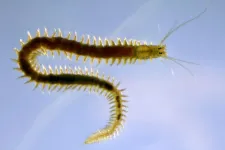
The sea worm Platynereis dumerilii is only a few centimetres long but has a remarkable ability: in just a few days, it can regenerate entire parts of its body after an injury or amputation. By focusing more specifically on the mechanisms at play in the regeneration of this worm’s tail, a research team led by a CNRS scientist1 has observed that gut cells play a role in the regeneration of the intestine as well as other tissues such as muscle and epidermis. Even more surprising, the team found that this ability of gut cells to regenerate other tissue varies according to their location: the closer they are to the posterior end of the ...

Read the release
Environment

Ocean acidification turns fish off coral reefs

A new study of coral reefs in Papua New Guinea shows ocean acidification simplifies coral structure, making crucial habitat less appealing to certain fish species. While much media attention has focused on heat stress-induced coral bleaching, this finding, by a University of Adelaide research team led by Professor Ivan Nagelkerken, adds nuance to concerns about how global warming affects coral reefs. Ocean acidification is caused by an increase in the level of carbon dioxide in oceanwater, leading to a reduction in pH. This makes calcium carbonate less available in the ocean, which corals use to build and repair their skeleton. Professor Nagelkerken and ...

Read the release
Environment

Dampening the "seeds" of hurricanes

Dampening the "seeds" of hurricanes Increased atmospheric moisture produced weaker hurricane formation Increased atmospheric moisture may alter critical weather patterns over Africa, making it more difficult for the predecessors of many Atlantic hurricanes to form, according to a new study published this month. The research team, led by scientists from the U.S. National Science Foundation National Center for Atmospheric Research (NSF NCAR), used an innovative model that allows for higher-resolution simulations of hurricane formation than ever before. This allowed researchers to study the effects of increased regional moisture over Africa, which is the birthplace of ...

Read the release
Shrinking glaciers: Microscopic fungi enhance soil carbon storage in new landscapes created by shrinking Arctic glaciers
Environment

Shrinking glaciers: Microscopic fungi enhance soil carbon storage in new landscapes created by shrinking Arctic glaciers

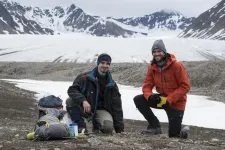
Melting Arctic glaciers are in rapid recession, and microscopic organisms colonise the newly exposed landscapes. Dr. James Bradley, Honorary Reader in Arctic Biogeochemistry in the School of Biological and Behavioural Sciences at Queen Mary University of London, and his team, have revealed that yeasts play an important role in soil formation in the Arctic after glaciers have melted away. Roughly 10% of Earth’s land surface is covered by glacial ice. However, glaciers are retreating ever further and ever faster because of global warming. As they do, ...

Read the release
Environment

UMD-led study finds one-third of Indonesia’s deforested land left idle

EMBARGOED UNTIL JULY 1, 2024 AT 3:00 PM U.S. EASTERN TIME According to a new study published in the Proceedings of the National Academy of Sciences, extensive land areas have been left sitting idle after tropical forests were cleared in Indonesia, a country renowned for its biodiverse rainforests and carbon-rich peatlands. Since 1990, the country has lost 25% of its old-growth forest, and while over one-quarter (7.8 million hectares) of Indonesia’s deforested lands have been converted to palm oil plantations since ...

Read the release
Most climate-vulnerable countries with highest hunger rates significantly under-represented in agrifood research
Environment

Most climate-vulnerable countries with highest hunger rates significantly under-represented in agrifood research

The most climate-vulnerable countries with the highest hunger rates are significantly under-represented in agrifood research – sparking a need for urgent action and increased investments to redress this imbalance, a major new study has found. The ‘State of the Field for Research on Agrifood Systems’ report, published by The Juno Evidence Alliance – a partnership of CABI, Havos.Ai and the University of Notre Dame, USA – found that only one out of eight research papers is led by scientists from ...

Read the release
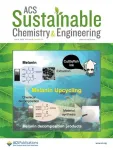
Melanin from cuttlefish ink as a sustainable biomass resource
Environment

Melanin from cuttlefish ink as a sustainable biomass resource

Every year, the negative effects of human activities on the environment become increasingly clear. From climate change and microplastics to the endangerment and extinction of countless species, it is evident that we need to find new ways to achieve sustainability. Fortunately, many research groups in prominent fields like chemistry and materials science are tirelessly working to develop solutions to get us closer to circular and sustainable economies. One area that has attracted much attention in this regard is biomass upcycling. It refers to the transformation of naturally available organic materials into ...

Read the release
Environment

Choose where to plant energy crops wisely to minimise loss of biodiversity, says new study

In the fight to protect biodiversity and limit climate change, the world will reap what it sows, say researchers from the University of Surrey. Energy crops can be used for heat, electricity and even biofuels like bioethanol. They will become more important as the world transitions away from fossil fuels. In a new study, researchers from Surrey have shown that where you choose to plant energy crops makes a big difference to biodiversity. A detailed analysis has shown that planting energy crops on existing agricultural land in places like China and Central Europe could minimise harm to biodiversity ...

Read the release
Climate change to shift tropical rains northward
Environment

Climate change to shift tropical rains northward

A study led by a UC Riverside atmospheric scientist predicts that unchecked carbon emissions will force tropical rains to shift northward in the coming decades, which would profoundly impact agriculture and economies near the Earth's equator. The northward rain shift would be caused by complex changes in the atmosphere spurred by carbon emissions that influence the formation of the intertropical convergence zones. Those zones are essentially atmospheric engines that drive about a third of the world’s precipitation, Liu and his co-authors report in a paper published Friday, June 28, in the journal Nature Climate Change. Tropical ...

Read the release
No evidence that England’s new ‘biodiversity boost’ planning policy will help birds or butterflies
Environment

No evidence that England’s new ‘biodiversity boost’ planning policy will help birds or butterflies

A new legal requirement for developers to demonstrate a biodiversity boost in planning applications could make a more meaningful impact on nature recovery if improvements are made to the way nature’s value is calculated, say researchers at the University of Cambridge. From 2024, the UK’s Environment Act requires planning applications to demonstrate an overall biodiversity net gain of at least 10% as calculated using a new statutory biodiversity metric. The researchers trialled the metric by using it to calculate the biodiversity value of 24 sites across England. These sites have all been monitored over the long-term, allowing the team to compare biodiversity ...

Read the release
June research news from the Ecological Society of America
Environment

June research news from the Ecological Society of America

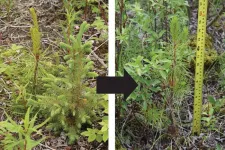
The Ecological Society of America (ESA) presents a roundup of four research articles recently published across its six esteemed journals. Widely recognized for fostering innovation and advancing ecological knowledge, ESA’s journals consistently feature illuminating and impactful studies. This compilation of papers explores the potential for pines to establish in pine-free interior Alaska, internet sleuthing to assess birds’ extinction risk and more, showcasing the Society’s commitment to promoting cutting-edge research that furthers our understanding ...

Read the release
From the original Press-News collection. Issuers of news releases are responsible for the accuracy of their content.