THE ORIGINAL COLLECTION · SINCE 2010

Environment
press releases.

Research announcements from universities, hospitals and scientific institutions. Explore the stories, people and discoveries behind the headlines.

Original publication datesPage 99
FIND A STORY

Find a past release.

Dates and source material belong to the original release.

Read our research explainers

Browse the collection · original publication order

Researchers engineer new approach for controlling thermal emission
Environment

Researchers engineer new approach for controlling thermal emission

UNIVERSITY PARK, Pa. — If a material absorbs light, it will heat up. That heat must go somewhere, and the ability to control where and how much heat is emitted can protect or even hide such devices as satellites. An international team of researchers, including those from Penn State, has developed a novel method for controlling this thermal emission, with what they called promising implications for thermal management and thermal camouflage technologies. The team published their work on June 7 in the print edition of Science. Led by researchers at The University of Manchester’s National Graphene Institute ...

Read the release


Researchers use 3D visualization to predict, prevent hurricane damage
Environment

Researchers use 3D visualization to predict, prevent hurricane damage

Beginning annually on June 1, hurricane season poses a major threat to Texas coastal communities, causing both physical and financial damage to the areas they hit. This damage can be staggering; when Hurricane Harvey hit in 2017, it cost Galveston $132.73 billion in damages. Texas A&M University researchers have collaborated to understand the impacts of storm surge floods before they occur to potentially reduce the level of damage. Their study was published in “Urban Informatics.” The researchers have implemented 3D visualization technology to identify the potential outcomes of hurricane flooding ...

Read the release
In a significant first, researchers detect water frost on solar system’s tallest volcanoes
Environment

In a significant first, researchers detect water frost on solar system’s tallest volcanoes

PROVIDENCE, R.I. [Brown University] — An international team of planetary scientists has detected patches of water frost sitting atop the Tharsis volcanoes on Mars, which are not only the tallest volcanic mountains on the Red Planet but in the entire solar system. The discovery marks the first time frost has been spotted near the planet’s equator, challenging existing perceptions of the planet’s climate dynamics, according to the team’s new study in Nature Geoscience. “We thought it was improbable for frost to form around Mars’ equator, as the mix ...

Read the release
Environment

The solar system may have passed through dense interstellar clouds 2 million years ago, altering Earth’s climate

Around two million years ago, Earth was a very different place, with our early human ancestors living alongside saber-toothed tigers, mastodons, and enormous rodents. And, depending on where they were, they may have been cold: Earth had fallen into a deep freeze, with multiple ice ages coming and going until about 12,000 years ago. Scientists theorize that ice ages occur for a number of reasons, including the planet’s tilt and rotation, shifting plate tectonics, volcanic eruptions, and carbon dioxide levels in the atmosphere. ...

Read the release
Fixing excess carbon dioxide: biocatalyst-driven carboxylation under mild conditions
Environment

Fixing excess carbon dioxide: biocatalyst-driven carboxylation under mild conditions

Carbon capture and utilization technologies for the conversion of carbon dioxide into carboxylic acids have garnered attention recently, with researchers from Tokyo Tech recently demonstrating a biocatalyzed carboxylation reaction of not only natural substrate, pyruvate, but also unnatural one, 2-ketoglutarate, using Thermoplasma acidophilum NADP+- malic enzyme under mild reaction conditions. The proposed strategy can be tailored for the selective synthesis through carbon dioxide fixation reactions. Removing the excess carbon dioxide (CO2) from the environment is not the end goal of the decarbonization process necessary to ...

Read the release
Tiny new species of great ape lived in Germany 11 million years ago
Environment

Tiny new species of great ape lived in Germany 11 million years ago

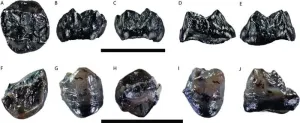
Ancient apes in Germany co-existed by partitioning resources in their environment, according to a study published June 7, 2024 in the open-access journal PLOS ONE by Madelaine Böhme of Eberhard Karls University of Tübingen, Germany and David R. Begun, of University of Toronto, Canada and colleagues. The Hammerschmiede fossil site in Bavaria, Germany is best known for exceptional remains of the ancient great ape Danuvius dating to the late Miocene Epoch, 11.6 million years ago. Other experts contest the strength of the evidence to support whether Danuvius is a hominid or whether ...

Read the release
Study adds new sea cucumber species to the research toolbox
Environment

Study adds new sea cucumber species to the research toolbox

By Devon McPhee WOODS HOLE, Mass. -- Scientists have a handful of standard research organisms, including fruit flies and mice, that they use to study the evolutionary development (evo-devo) of animal lineages over time. Yet the more research organisms they can study, the deeper our understanding of life and the more knowledge we have to advance biomedicine and ecological conservation. Researchers at the Marine Biological Laboratory (MBL), Woods Hole, and the Stazione Zoologica Anton Dohrn (SZS) in Naples, Italy, have added to the evo-devo toolbox by establishing Holothuria tubulosa, ...

Read the release
Wildfire smoke reached 99% of U.S. lakes in 2019-2021
Environment

Wildfire smoke reached 99% of U.S. lakes in 2019-2021

Where there’s smoke, there’s not necessarily fire. Wildfire smoke, sometimes drifting from hundreds of miles away, touched nearly every lake in North America for at least one day per year from 2019 to 2021, according to a study from the University of California, Davis. Even more significantly, the study, published in the journal Global Change Biology, found that 89% of the lakes in North America experienced smoke for more than 30 days during each of those three years of intense wildfire activity. “That was surprising, even ...

Read the release
Basic income can double global GDP while reducing carbon emissions
Environment

Basic income can double global GDP while reducing carbon emissions

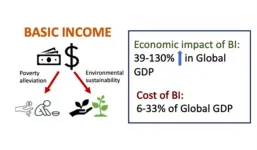
Giving a regular cash payment to the entire world population has the potential to increase global gross domestic product (GDP) by 130%, according to a new analysis published June 7 in the journal Cell Reports Sustainability. Researchers suggest that charging carbon emitters with an emission tax could help fund such basic income program while reducing environmental degradation. “We are proposing that if we can couple basic income with environmental protection, we can save two birds with one stone,” says first author U. Rashid Sumaila of the University of British Columbia in Vancouver. Sumaila has been working on ending harmful fishery subsidies worldwide, but many people who rely ...

Read the release
Tracking greenhouse gas emissions in Chinese value chains with an interprovincial input–output model
Environment

Tracking greenhouse gas emissions in Chinese value chains with an interprovincial input–output model

China’s economy has shifted from a stage of high growth to a stage of high-quality development, and the establishment of a dual-carbon target requires profound changes in the industrial structure and energy systems, as well as finding the right direction and pathway for industrial adjustment. While the potential for technological emission reduction continues to be released, the main factor affecting China’s carbon emissions is the speed and intensity of economic transformation and industrial restructuring. A research team of Dr. GU Alun from Tsinghua University in Beijing, China, recently analyzed the correlations ...

Read the release
Frozen? Let it melt with efficient new deicer friendly to the environment
Environment

Frozen? Let it melt with efficient new deicer friendly to the environment

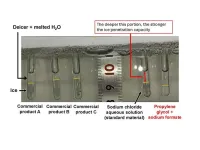
The dangers of frozen roads, airplane engines, and runways are well known, but the use of commercial products often means short-term safety over long-term environmental degradation. Seeking a better product, Osaka Metropolitan University researchers have developed a deicing mixture offering higher performance than deicers on the market while also having less impact on the environment. The team, made up of graduate student Kai Ito, Assistant Professor Arisa Fukatsu, Associate Professor Kenji Okada, and Professor Masahide Takahashi of the Graduate School of Engineering, used machine learning to analyze ice melting mechanisms of aqueous solutions of 21 salts and 16 organic ...

Read the release
Webb finds plethora of carbon molecules around young star
Environment

Webb finds plethora of carbon molecules around young star

An international team of astronomers has used NASA’s James Webb Space Telescope to study the disk of gas and dust around a young, very low-mass star. The results reveal the largest number of carbon-containing molecules seen to date in such a disk. These findings have implications for the potential composition of any planets that might form around this star. Rocky planets are more likely than gas giants to form around low-mass stars, making them the most common planets around the most common stars in our galaxy. Little is known about the chemistry of such worlds, which may be similar to or very different from Earth. By studying the disks from which such planets form, astronomers hope ...

Read the release
Scientists ‘read’ the messages in chemical clues left by coral reef inhabitants
Environment

Scientists ‘read’ the messages in chemical clues left by coral reef inhabitants

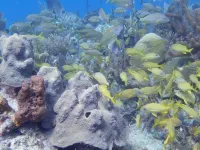
What species live in this coral reef, and are they healthy? Chemical clues emitted by marine organisms might hold that information. But in underwater environments, invisible compounds create a complex “soup” that is hard for scientists to decipher. Now, researchers in ACS’ Journal of Proteome Research have demonstrated a way to extract and identify these indicator compounds in seawater. They found metabolites previously undetected on reefs, including three that may represent different reef organisms. Plants and animals living in coral reefs release various substances, from complex macromolecules to individual amino acids, into the surrounding water. To determine ...

Read the release
Harposporium incensis sp. nov., a South American cordycipitoid species exhibiting inter-phylum host-jumping and having potential as a biological control agent for pest management
Environment

Harposporium incensis sp. nov., a South American cordycipitoid species exhibiting inter-phylum host-jumping and having potential as a biological control agent for pest management

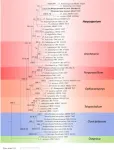
The genus of Harposporium belongs to the Ascomycota of the Fungi kingdom, the class Sortariomycetes, the order Hypocreales, and the family Ophiocordyceiaceae, is a common genus of soil fungi. The species of Harposporium are pathogens of nematodes, with some also infecting rotifers or tardigrades, and has significant ecological value. In recent years, studies have shown that a few species of the genus Harposporium can also parasitize insects or other invertebrates, such as H. janus, which can infect beetles in the Coleoptera family. However, so far, it has not been found that the same species in this genus can parasitize different invertebrates in both sexual and asexual stages. Is there a ...

Read the release
Using oceanography to understand fronts and cyclones on Jupiter
Environment

Using oceanography to understand fronts and cyclones on Jupiter

New research led by Lia Siegelman, a physical oceanographer at UC San Diego’s Scripps Institution of Oceanography, shows that the roiling storms at the planet Jupiter’s polar regions are powered by processes known to physicists studying Earth’s oceans and atmosphere. The geophysical commonalities spanning the 452 million miles between the two planets could even help facilitate an improved understanding of those processes on Earth. Siegelman first made the connection between our planet and the gas giant in 2018 when she noticed a striking similarity between images of Jupiter’s huge cyclones and the ocean turbulence she was studying. ...

Read the release
Climate crisis puts Australia’s ski industry on slippery slope, but not all hope is lost
Environment

Climate crisis puts Australia’s ski industry on slippery slope, but not all hope is lost

Australia’s ski industry is at risk of major disruptions and shorter seasons if the current level of climate pollution continues, according to new modelling from Protect Our Winters Australia (POW) and The Australian National University (ANU). The report found the average ski season across all resorts in Australia will be 44 days shorter by 2050 under a mid-greenhouse gas emissions scenario and 55 days shorter under a high-emissions scenario. It also shows that despite a dramatic decline in snowfall under mid- and high-emissions scenarios, the ...

Read the release
Environment

Scientists question effectiveness of nature-based CO2 removal using the ocean

Limited understanding of basic ocean processes is hindering progress in marine carbon dioxide removal, with the on-going commercialisation of some approaches “premature and misguided”. In a new paper, scientists from the University of East Anglia (UEA), the University of Tasmania’s Institute for Marine and Antarctic Studies, Centre National de la Recherche Scientifique, and the Institute for Sustainable Development and International Relations, review the climatic effectiveness of four 'nature-based' techniques using marine biological processes. These involve shellfish cultivation, seaweed ...

Read the release
Environment

New study finds many of the world’s most threatened species lack evidence of sufficient conservation efforts

-With images- A new study has revealed alarming gaps in the implementation of conservation interventions for thousands of the world's most threatened species. The research, published in the journal Nature, shows that most terrestrial plant and animal species at risk of extinction from threats like habitat loss, over-exploitation for trade, and invasive species are not receiving the appropriate types of conservation efforts needed to protect them. The study findings suggest that there is a serious mismatch between the ...

Read the release
Tiny tropical puddle frogs show that protecting genetic variation is essential for animals to survive the climate crisis
Environment

Tiny tropical puddle frogs show that protecting genetic variation is essential for animals to survive the climate crisis

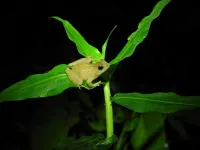
Even widespread species could be genomically vulnerable to the climate crisis, scientists warn. By studying the DNA of puddle frogs living in central African rainforests, the scientists found that areas of high environmental variation foster high genetic variation. If these varied habitats and the frogs that live there are lost, genetic variants that could have allowed the species to evolve to survive the climate crisis could be lost too. Meanwhile, populations with low genetic variation could become extinct quickly, unable to adapt. “Generally, the more genomic variation within ...

Read the release
A novel approach to tracking conservation reveals more areas may be conserved than currently accounted for
Environment

A novel approach to tracking conservation reveals more areas may be conserved than currently accounted for

(Santa Barbara, Calif.) — Thirty by thirty. It’s an ambitious answer to growing calls for protecting more of our planet’s surface. The goal is to conserve 30% of the Earth’s oceans, lands and freshwaters by 2030. While this may seem a lofty aim, the diversity and coverage of conservation areas today might be greater than what’s currently recognized by global tracking systems. An international team of conservation researchers and practitioners, led by scientists at UC Santa Barbara and The Nature Conservancy, has developed an inclusive inventory approach for tracking ...

Read the release
Environment

When mothers and children talk about problems, environment matters

URBANA, Ill. – Talking to their parents about daily stressors can help adolescents deal with their problems. This is particularly important during the transition to middle school, when youth often are faced with new peer and academic challenges. But does it matter where these conversations take place? That’s the topic of a new study from the University of Illinois Urbana-Champaign. “We were interested in the environmental settings for mother-youth conversations. Where do they typically happen, and what are the preferred locations? We wanted to get the perspectives of both the youth and their ...

Read the release
Rocky shores of Pacific Northwest show low resilience to changes in climate
Environment

Rocky shores of Pacific Northwest show low resilience to changes in climate

CORVALLIS, Ore. – A 15-year period ending in 2020 that included a marine heat wave and a sea star wasting disease epidemic saw major changes in the groups of organisms that live along the rocky shores of the Pacific Northwest. The study by Oregon State University scientists, involving four capes in Oregon and California, suggests these communities of species may have low resilience to climate change. Findings were published Monday in Nature Ecology & Evolution and. Researchers learned that ...

Read the release
Environment

Exploring three frontiers in marine biomass and blue carbon capture

A new study offers first-time insights into three emerging climate innovations to safeguard or increase the carbon naturally captured by ocean and coastal ecosystems: rapid interventions to save the Great Barrier Reef, satellite-tracked kelp beds in the deep ocean, and seagrass nurseries in the United Kingdom. The research, published in Environmental Science & Policy and co-authored by leading climate scholars at Boston University, Aarhus University, and the University of Sussex Business School, advances knowledge of understudied interventions in marine ...

Read the release
Some countries could meet their total electricity needs from floating solar panels, research shows
Environment

Some countries could meet their total electricity needs from floating solar panels, research shows

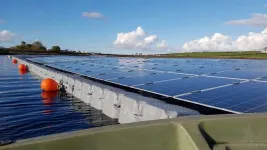
Floating solar photovoltaic panels could supply all the electricity needs of some countries, new research has shown. The study, by researchers from Bangor and Lancaster Universities and the UK Centre for Ecology & Hydrology, aimed to calculate the global potential for deploying low-carbon floating solar arrays. The researchers calculated the daily electrical output for floating photovoltaics (FPV) on nearly 68,000 lakes and reservoirs around the world, using available climate data for each location. The researchers’ ...

Read the release
Environment

Shape and depth of ocean floor profoundly influence how carbon is stored there

Key takeaways The movement of carbon between the atmosphere, oceans and continents — or carbon cycle — regulates Earth’s climate, with the ocean playing a major role in carbon sequestration. A new study finds that the shape and depth of the ocean floor explain up to 50% of the changes in depth at which carbon has been sequestered there over the past 80 million years. While these changes have been previously attributed to other causes, the new finding could inform ongoing efforts to combat climate change through marine carbon sequestration. The movement of carbon between the atmosphere, oceans and continents — the carbon ...

Read the release
From the original Press-News collection. Issuers of news releases are responsible for the accuracy of their content.