THE ORIGINAL COLLECTION · SINCE 2010

Physics
press releases.

Research announcements from universities, hospitals and scientific institutions. Explore the stories, people and discoveries behind the headlines.

Original publication datesPage 24
FIND A STORY

Find a past release.

Dates and source material belong to the original release.

Read our research explainers

Browse the collection · original publication order

New data speed record on optical fiber
Physics

New data speed record on optical fiber

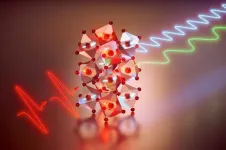
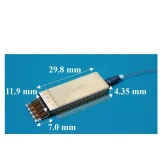
As data traffic continues to increase, there is a critical need for miniaturized optical transmitters and receivers that operate with high-order multi-level modulation formats and faster data transmission rates. In an important step toward fulfilling this requirement, researchers developed a new compact indium phosphide (InP)-based coherent driver modulator (CDM) and showed that it can achieve a record high baud rate and transmission capacity per wavelength compared to other CDMs. CDMs are optical transmitters used in optical communication systems that can put information on light by modulating the amplitude and phase before it is transmitted through optical fiber. “Services that require ...

Read the release

Scientists find new way to roll atomically thin nanosheets into scrolls
Physics

Scientists find new way to roll atomically thin nanosheets into scrolls

Tokyo, Japan – Researchers from Tokyo Metropolitan University have come up with a new way of rolling atomically thin sheets of atoms into “nanoscrolls.” Their unique approach uses transition metal dichalcogenide sheets with a different composition on either side, realizing a tight roll that gives scrolls down to five nanometers in diameter at the center and micrometers in length. Control over nanostructure in these scrolls promises new developments in catalysis and photovoltaic devices. Nanotechnology is giving us new tools to control the structure of materials at ...

Read the release
How electron spectroscopy measures exciton “holes”
Physics

How electron spectroscopy measures exciton “holes”

Semiconductors are ubiquitous in modern technology, working to either enable or prevent the flow of electricity. In order to understand the potential of two-dimensional semiconductors for future computer and photovoltaic technologies, researchers from the Universities of Göttingen, Marburg and Cambridge investigated the bond that builds between the electrons and holes contained in these materials. By using a special method to break up the bond between electrons and holes, they were able to gain a ...

Read the release
Physics

MIT physicists capture the first sounds of heat “sloshing” in a superfluid

In most materials, heat prefers to scatter. If left alone, a hotspot will gradually fade as it warms its surroundings. But in rare states of matter, heat can behave as a wave, moving back and forth somewhat like a sound wave that bounces from one end of a room to the other. In fact, this wave-like heat is what physicists call “second sound.” Signs of second sound have been observed in only a handful of materials. Now MIT physicists have captured direct images of second sound for the first time. The new images reveal how heat can move like a wave, ...

Read the release
Researchers measure and control interactions between magnetic ripples using lasers
Physics

Researchers measure and control interactions between magnetic ripples using lasers

One vision for the future of computing involves using ripples in magnetic fields — called magnons — as a basic mechanism. In this application, magnons would be comparable to electricity as the basis for electronics. In conventional digital technologies, such magnonic systems are expected to be far faster than today’s technologies, from laptops and smartphones to telecommunications. In quantum computing, the advantages of magnonics could include not only quicker speeds but also more stable devices. A recent study in the journal Nature Physics reports an early-stage discovery along the path ...

Read the release
NLR researcher named Fellow of Society of Photo-Optical Instrumentation Engineers (SPIE)
Physics

NLR researcher named Fellow of Society of Photo-Optical Instrumentation Engineers (SPIE)

WASHINGTON – U.S. Naval Research Laboratory research physicist Lynda E. Busse, Ph.D., was named a Fellow of SPIE, the international society for optics and photonics, for outstanding technical contributions to the development of novel infrared (IR) optical materials and photonics devices. Announced December 2023, the 47 new Fellows represent high-profile leaders in academia, industry, and government, and are being honored for their technical achievements as well as for their service to SPIE and the optics and photonics community. Dr. Busse was recognized along with many of the other new Fellows at the 2024 SPIE Photonics West Conference in San Francisco, California ...

Read the release
Physics

Last chance to get hotel discounts for the world’s largest physics meeting

Next month, scientists from around the world will convene to share new results from across the physical sciences in nearly 11,000 individual presentations. The American Physical Society’s (APS) March Meeting will be held in person in Minneapolis and online everywhere March 3-8. Discounted hotel rates are available for in-person attendees at select Minneapolis hotels near the Minneapolis Convention Center. Book your hotel by Feb. 9 to receive the discount. Press Registration News media with valid APS press credentials may register for the meeting at no cost. To request press credentials, visit APS’s online newsroom. Registration ...

Read the release
Scientists mix and match properties to make new superconductor with chiral structure
Physics

Scientists mix and match properties to make new superconductor with chiral structure

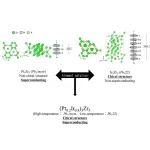
Tokyo, Japan – Researchers from Tokyo Metropolitan University have created a new superconductor with a chiral crystalline structure by mixing two materials, one with superconductivity but no chirality, another with chirality but no superconductivity. The new platinum-iridium-zirconium compound transitions to a bulk superconductor below 2.2 K and was observed to have chiral crystalline structure using X-ray diffraction. Their new solid solution approach promises to accelerate the discovery and understanding of ...

Read the release
A physical qubit with built-in error correction
Physics

A physical qubit with built-in error correction

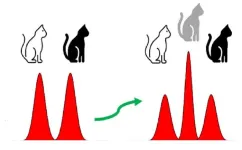
There has been significant progress in the field of quantum computing. Big global players, such as Google and IBM, are already offering cloud-based quantum computing services. However, quantum computers cannot yet help with problems that occur when standard computers reach the limits of their capacities because the availability of qubits or quantum bits, i.e., the basic units of quantum information, is still insufficient. One of the reasons for this is that bare qubits are not of immediate use for running a quantum algorithm. While the binary bits of customary computers store information in the form of fixed values of either 0 or 1, qubits can represent 0 and ...

Read the release
Strategies for enhancing the performance of nickel single-atom catalysts for the electroreduction of CO2 to CO
Physics

Strategies for enhancing the performance of nickel single-atom catalysts for the electroreduction of CO2 to CO

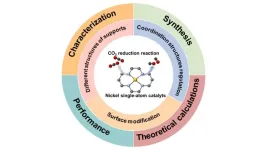
Electrocatalytic reduction of carbon dioxide (CO2) is considered as an effective strategy for mitigating the energy crisis and the greenhouse effect. Among the multiple reduction products, CO is regarded as having the highest market value as it is a crucial feedstock for Fischer-Tropsch process which can synthesize high-value long-chain hydrocarbons. Since the carbon dioxide reduction reaction (CO2RR) has complex intermediates and multiple proton-coupled electron transfer processes, improving the reaction activity and products selectivity remain two great challenges. Single-atom catalysts (SACs) have the advantages of high atom utilization, tunable coordination structure ...

Read the release

Physics

Physical activity and cognitive decline among older adults

About The Study: Physical activity was associated with better late-life cognition, but the association was weak in this systematic review and meta-analysis including 104 studies with 341,000 participants. However, even a weak association is important from a population health perspective. Authors: Paula Iso-Markku, M.D., Ph.D., of the University of Helsinki, Finland is the corresponding author. To access the embargoed study: Visit our For The Media website at this link https://media.jamanetwork.com/ (doi:10.1001/jamanetworkopen.2023.54285) Editor’s Note: Please see the article for additional information, including other authors, author contributions ...

Read the release
Photonics-based wireless link breaks speed records for data transmission
Physics

Photonics-based wireless link breaks speed records for data transmission

Osaka, Japan – From coffee-shop customers who connect their laptop to the local Wi-Fi network to remote weather monitoring stations in the Antarctic, wireless communication is an essential part of modern life. Researchers worldwide are currently working on the next evolution of communication networks, called “beyond 5G” or 6G networks. To enable the near-instantaneous communication needed for applications like augmented reality or the remote control of surgical robots, ultra-high data speeds will be needed on ...

Read the release
Physics

Leisure-time physical activity and falls with and without injuries among older women

About The Study: Participation in leisure-time physical activity at the recommended level or above was associated with lower odds of both non-injurious and injurious falls in this study of 7,100 older women. Brisk walking and both moderate and moderate-vigorous leisure-time physical activity were associated with lower odds of non-injurious falls. Authors: Wing S. Kwok, B.App.Sc., of the University of Sydney in Sydney, Australia, is the corresponding author. To access the embargoed study: Visit our For The Media website ...

Read the release
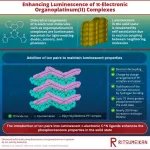
Enhancing solid-state phosphorescence in π-electronic molecules
Physics

Enhancing solid-state phosphorescence in π-electronic molecules

Photoluminescent molecules, capable of absorbing and re-emitting light, play an important role in the development of technologies such as light-emitting diodes, sensors, and displays. Among them, ordered arrangements of π-electronic molecules such as crystals of organoplatinum(II) complexes, where a platinum(II) ion is coordinated by organic ligands in a square-planar arrangement, stand out for their applications in energy-efficient flexible displays. However, their luminescence in the solid state is short-lived due to the interaction between excitons (bound electron-hole pairs) of neighboring molecules. To address this ...

Read the release
Physics

Researchers craft new way to make high-temperature superconductors – with a twist

An international team that includes Rutgers University–New Brunswick scientists has developed a new method to make and manipulate a widely studied class of high-temperature superconductors. This technique should pave the way for the creation of unusual forms of superconductivity in previously unattainable materials. When cooled to a critical temperature, superconductors can conduct electricity without resistance or energy loss. These materials have intrigued physicists for decades because they can achieve a state of ...

Read the release
A faster, more efficient imaging system for nanoparticles
Physics

A faster, more efficient imaging system for nanoparticles

Teams led by professors Jinyang Liang and Fiorenzo Vetrone from the Énergie Matériaux Télécommunications Research Centre at the Institut national de la recherche scientifique (INRS) have developed a new system for imaging nanoparticles. It consists of a high-precision, short-wave infrared imaging technique capable of capturing the photoluminescence lifetimes of rare-earth doped nanoparticles in the micro- to millisecond range. This groundbreaking discovery, which was published in the journal Advanced Science, paves the way for promising applications, particularly in the biomedical and information security fields. Rare-earth ...

Read the release
High power fiber laser at 1.2 μm waveband
Physics

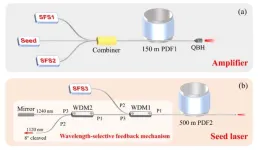
High power fiber laser at 1.2 μm waveband

Laser sources operating at the 1.2 μm wavelength band have some unique applications in photodynamic therapy, biomedical diagnosis and oxygen sensing. Additionally, they can be adopted as pump sources for mid-infrared optical parametric generation as well as visible light generation by frequency doubling. Laser generation at 1.2 μm waveband has been achieved with different solid-state lasers including semiconductor laser, diamond Raman laser, and fiber laser. Among these three types, fiber laser thanks to its simple structure, good beam quality, and operation flexibility, is a great choice for 1.2 μm waveband laser generation. Researchers ...

Read the release
How does a “reverse sprinkler” work? Researchers solve decades-old physics puzzle
Physics

How does a “reverse sprinkler” work? Researchers solve decades-old physics puzzle

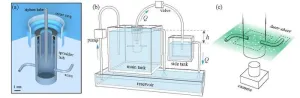
For decades scientists have been trying to solve Feynman’s Sprinkler Problem: How does a sprinkler running in reverse—in which the water flows into the device rather than out of it—work? Through a series of experiments, a team of mathematicians has figured out how flowing fluids exert forces and move structures, thereby revealing the answer to this long-standing mystery. “Our study solves the problem by combining precision lab experiments with mathematical modeling that explains how a reverse sprinkler operates,” explains Leif Ristroph, an associate professor at New York University’s Courant Institute of Mathematical Sciences and the senior author ...

Read the release
Locusts’ sense of smell boosted with custom-made nanoparticles
Physics

Locusts’ sense of smell boosted with custom-made nanoparticles

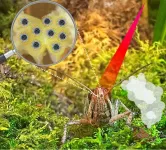
Our sensory systems are highly adaptable. A person who cannot see after turning off a light in the night slowly achieves superior power to see even small objects. Women often attain a heightened sense of smell during pregnancy. How can the same sensory system that was underperforming can also exceed the expectation based on its prior performance? Since nature has perfected its sensory systems over evolutionary time scales, an interdisciplinary team of researchers in the McKelvey School of Engineering at Washington University in St. Louis tapped into ...

Read the release
Genomic “butterfly effect” explains risk for autism spectrum disorder
Physics

Genomic “butterfly effect” explains risk for autism spectrum disorder

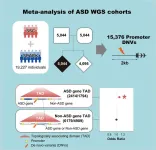
Researchers in the RIKEN Center for Brain Science (CBS) examined the genetics of autism spectrum disorder (ASD) by analyzing mutations in the genomes of individuals and their families. They discovered that a special kind of genetic mutation works differently from typical mutations in how it contributes to the condition. In essence, because of the three-dimensional structure of the genome, mutations are able to affect neighboring genes that are linked to ASD, thus explaining why ASD can occur even without direct mutations to ASD-related genes. This study appeared in the scientific journal Cell Genomics on January 26. ASD is a group of conditions characterized in part ...

Read the release
Highly oriented perovskite films induced by chiral molecules under magnetic-field control
Physics

Highly oriented perovskite films induced by chiral molecules under magnetic-field control

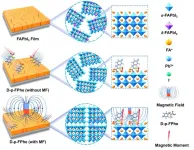
In the realm of clean energy, metal halide perovskite solar cells (PSCs) have emerged as a groundbreaking focus, capturing significant attention for their extraordinary advancements. In just over a decade, their certified power conversion efficiency (PCE) has skyrocketed to 26.1%, approaching the upper limits seen in traditional crystalline silicon cells. What sets PSCs apart is their potential to surpass the 30% PCE threshold [1]. The key to optimizing solar devices lies in the deposition of high-quality perovskite films. Achieving minimal defect density and exceptional homogeneity becomes crucial for enhancing device performance. One commonly employed strategy involves introducing ...

Read the release
In search of muons: Why they switch sites in antiferromagnetic oxides
Physics

In search of muons: Why they switch sites in antiferromagnetic oxides

Muon spectroscopy is an important experimental technique that scientists use to study the magnetic properties of materials. It is based on “implanting” a spin-polarized muon in the crystal and measuring how its behavior is affected by the surroundings. The technique relies on the idea that the muon will occupy a well-identified site that is mainly determined by electrostatic forces, and that can be found by calculating the material’s electronic structure. But a new study led by scientists in Italy, Switzerland, UK and Germany has found that, at least for some materials, that is not the end of the story: the muon site ...

Read the release
Physics

Gamma ray observations of a microquasar demonstrate electron shock acceleration

Observations of gamma rays, emitted by relativistic jets in a microquasar system, demonstrate the acceleration of electrons by a shock front, reports a new study. The microquasar SS 433 is a binary system made up of a compact object, probably a black hole, and a supergiant star. The black hole pulls material off the star and ejects plasma jets, which move at close to the speed of light. The High Energy Stereoscopic System (H.E.S.S.) is an array of five telescopes in Namibia that observe gamma rays. The H.E.S.S. ...

Read the release
David Brydges wins 2024 Dannie Heineman Prize for Mathematical Physics
Physics

David Brydges wins 2024 Dannie Heineman Prize for Mathematical Physics

WASHINGTON, Jan. 25, 2024 – AIP and the American Physical Society (APS) are pleased to announce David Brydges as the recipient of the 2024 Dannie Heineman Prize for Mathematical Physics “for achievements in the fields of constructive quantum field theory and rigorous statistical mechanics, especially the introduction of new techniques including random walk representation in spin systems, the lace expansion, and mathematically rigorous implementations of the renormalization group.” This annual award recognizes significant contributions within the ...

Read the release
Recovering lossless propagation: HKU physicists overcoming optical loss in polariton system with synthetic complex frequency waves
Physics

Recovering lossless propagation: HKU physicists overcoming optical loss in polariton system with synthetic complex frequency waves

A collaborative research team co-led by Professor Shuang ZHANG, the Interim Head of the Department of Physics, The University of Hong Kong (HKU), along with Professor Qing DAI from National Center for Nanoscience and Technology, China, has introduced a solution to a prevalent issue in the realm of nanophotonics – the study of light at an extremely small scale. Their findings, recently published in the prestigious academic journal Nature Materials, propose a synthetic complex frequency wave (CFW) approach to address optical loss in polariton propagation. These findings offer practical solutions such as more efficient light-based devices for faster and ...

Read the release
From the original Press-News collection. Issuers of news releases are responsible for the accuracy of their content.