THE ORIGINAL COLLECTION · SINCE 2010

Physics
press releases.

Research announcements from universities, hospitals and scientific institutions. Explore the stories, people and discoveries behind the headlines.

Original publication datesPage 25
FIND A STORY

Find a past release.

Dates and source material belong to the original release.

Read our research explainers

Browse the collection · original publication order

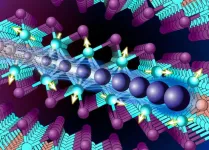
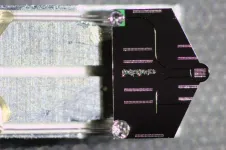
Sub-wavelength confinement of light demonstrated in indium phosphide nanocavity
Physics

Sub-wavelength confinement of light demonstrated in indium phosphide nanocavity

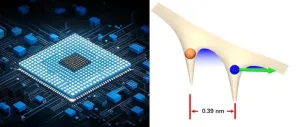
WASHINGTON — As we transition to a new era in computing, there is a need for new devices that integrate electronic and photonic functionalities at the nanoscale while enhancing the interaction between photons and electrons. In an important step toward fulfilling this need, researchers have developed a new III-V semiconductor nanocavity that confines light at levels below the so-called diffraction limit. “Nanocavities with ultrasmall mode volumes hold great promise for improving a wide range of photonic ...

Read the release
Physics

Why do carrots curl? Research reveals the mechanics behind root vegetable ageing

Chopped carrot pieces are among the most universally enjoyed foods and a snacking staple – a mainstay of school lunchboxes, picnics and party platters year-round. Now researchers from the University of Bath have uncovered the secret science of prepping the popular root veg and quantified the processes that make them curl up if left uneaten for too long. Mechanical Engineering student Nguyen Vo-Bui carried out the research as part of his final-year studies, in the limited circumstances of Covid-19 lockdowns of 2021. Without access to labs, Nguyen aimed to identify the geometrical ...

Read the release
Tunnelling of electrons via the neighboring atom
Physics

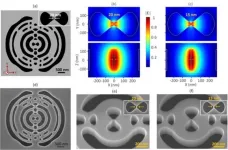
Tunnelling of electrons via the neighboring atom

Tunnelling is one of most fundamental processes in quantum mechanics, where the wave packet could traverse a classically insurmountable energy barrier with a certain probability. Within the atomic scale, tunnelling effects play an important role in molecular biology, such as accelerating enzyme catalysis, prompting spontaneous mutations in DNA and triggering olfactory signaling cascades. Photoelectron tunnelling is a key process in light-induced chemical reactions, charge and energy transfer and radiation emission. The size of optoelectronic chips ...

Read the release
Physics

Gravity helps show strong force strength in the proton

The power of gravity is writ large across our visible universe. It can be seen in the lock step of moons as they circle planets; in wandering comets pulled off-course by massive stars; and in the swirl of gigantic galaxies. These awesome displays showcase gravity’s influence at the largest scales of matter. Now, nuclear physicists are discovering that gravity also has much to offer at matter’s smallest scales. New research conducted by nuclear physicists at the U.S. Department of Energy’s Thomas Jefferson National Accelerator Facility is using a method that connects theories of gravitation to interactions among the smallest ...

Read the release
Corning uses neutrons to reveal ‘atomic rings’ help predict glass performance
Physics

Corning uses neutrons to reveal ‘atomic rings’ help predict glass performance

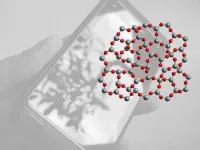
Glass is being used in a wider range of high-performance applications, including those for consumers and industry, military and aerospace electronics, coatings and optics. Because of the extreme precision demanded for use in products such as mobile phones and jet aircraft, glass substrates must not change their shape during the manufacturing process. Corning Incorporated, a manufacturer of innovative glass, ceramics and related materials, invests a tremendous amount of resources into studying the stability of different types of glass. Recently, Corning researchers found that understanding the stability ...

Read the release
Discovering the physics behind 300-year-old firefighting methods
Physics

Discovering the physics behind 300-year-old firefighting methods

WASHINGTON, Jan. 23, 2024 – Today, water pressure technology is ubiquitous, and any person who showers, waters a garden, or fights fires is benefiting from the technology devised to harness it. In the 17th and 18th centuries, though, a steady stream of water not punctuated by pressure drops was a major breakthrough. In 1666, when bucket brigades were the best line of defense, the Great Fire of London burned almost all of the city’s tightly packed, wooden structures. The disaster destroyed hundreds of thousands of homes and dozens of churches, demonstrating the need for better firefighting methods and equipment. One landmark advancement was the ...

Read the release
Breaking through the limits of a single fiber laser amplifier - Coherent Beam Combination
Physics

Breaking through the limits of a single fiber laser amplifier - Coherent Beam Combination

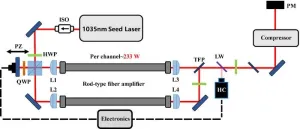
High-power, high-energy ultrafast fiber lasers are indispensable tools in various fields, from basic and applied science research to industrial processing. However, due to thermal effects, nonlinear effects, there is always a limit to the power/energy expansion of a single fiber laser amplifier. Coherent Beam Combination (CBC) technology is an effective strategy to break through the limits of a single fiber laser amplifier and further achieve power/energy scaling. Under the conditions of mutual coherence and stable phase relationship, multiple laser beams can be superimposed and mutually interfere with each other. This approach allows for an ...

Read the release
Physics

EHR workload continues to grow for primary care physicians

The study evaluated recent trends in primary care physicians’ (PCPs) electronic health record (EHR) workload. Prior to and early in the COVID-19 pandemic, PCPs spent more time in the EHR and received more messages than physicians in other specialties, but it is unclear if the pandemic further accelerated the growth of PCPs’ EHR workload. Researchers observed EHR usage of 141 academic PCPs practicing family medicine, internal medicine, and general pediatrics within the University of Wisconsin-Madison health system, which cares for nearly 300,000 primary care patients per year. This longitudinal study compared the amount of time participating ...

Read the release
Scientists trap krypton atoms to form one-dimensional gas
Physics

Scientists trap krypton atoms to form one-dimensional gas

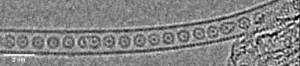
For the first time, scientists have successfully trapped atoms of krypton (Kr), a noble gas, inside a carbon nanotube to form a one-dimensional gas. Scientists from the University of Nottingham’s School of Chemistry used advanced transmission electron microscopy (TEM) methods to capture the moment when Kr atoms joined together, one by one, inside a “nano test tube” container with diameter half a million times smaller than the width of a human hair. The research has been published in the journal of the American Chemical Society. The behaviour of atoms has been studied by scientists ever since it was hypothesized that ...

Read the release
Physics

Wobbling particles in the sky

The atmosphere contains many tiny solid particles. Scientists from the Max Planck Institute for Dynamics and Self-Organization (MPI-DS) and the University of Göttingen in collaboration with the Centre national de la recherche scientifique (CNRS) in France and the university of Gothenburg, Sweden, now studied how such non-spherical particles settle in air. For this, they used a new precision apparatus equipped with high-speed cameras and a novel particle injection mechanism. Using a 3D-printer, they created particles of different shapes resembling discs of thickness as low as 50 micrometer and rods of length as high as 880 micrometers. Thanks to this setup, they could observe that particles ...

Read the release
Physics

RIT’s Moumita Das elected as American Physical Society fellow

Rochester Institute of Technology Professor Moumita Das, from the School of Physics and Astronomy, has been elected an American Physical Society Fellow for her exceptional contributions to physics. The APS Fellowship Program was created to recognize members who have made advances in physics through original research and publication, innovative contributions in the application of physics to science and technology, or teaching or service in the activities of the organization. No more than one half of 1 percent of the APS membership, excluding students, is recognized with fellowship. Only four people from Das’s field worldwide were ...

Read the release
Unlocking the secrets of quasicrystal magnetism: revealing a novel magnetic phase diagram
Physics

Unlocking the secrets of quasicrystal magnetism: revealing a novel magnetic phase diagram

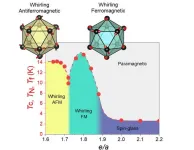
Quasicrystals are intermetallic materials that have garnered significant attention from researchers aiming to advance condensed matter physics understanding. Unlike normal crystals, in which atoms are arranged in an ordered repeating pattern, quasicrystals have non-repeating ordered patterns of atoms. Their unique structure leads to many exotic and interesting properties, which are particularly useful for practical applications in spintronics and magnetic refrigeration. A unique quasicrystal variant, known as the Tsai-type icosahedral quasicrystal (iQC) and their cubic approximant crystals (ACs), display intriguing characteristics. These include long-range ferromagnetic (FM) ...

Read the release
Light it up: reimagining the optical diode effect
Physics

Light it up: reimagining the optical diode effect

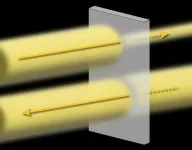
Osaka, Japan – At the heart of global internet connectivity, optical communications form an indispensable foundation. Key to this foundation are optical isolators, created by combining multiple components. The result is a complex structure that transmits light in only one direction, to prevent damage to lasers and minimize noise by avoiding the reversal of light. However, some magnetic materials have an optical diode effect – an unconventional nonreciprocal absorption of light manifested by the material itself. This effect leads to a change in transmittance depending ...

Read the release
Columbia chemists create the first 2D heavy fermion
Physics

Columbia chemists create the first 2D heavy fermion

Researchers at Columbia University have successfully synthesized the first 2D heavy fermion material. They introduce the new material, a layered intermetallic crystal composed of cerium, silicon, and iodine (CeSiI), in a research article published today in Nature. Heavy fermion compounds are a class of materials with electrons that are up to 1000x heavier than usual. In these materials, electrons get tangled up with magnetic spins that slow them down and increase their effective mass. Such interactions are ...

Read the release
Study uncovers mechanics of machete-like ‘tail-whipping’ in thresher sharks
Physics

Study uncovers mechanics of machete-like ‘tail-whipping’ in thresher sharks

Like Indiana Jones, thresher sharks (Alopias spp.) have mastered the art of the whip using their tails. With incredible speed, their long, machete-like tails can slap and stun their prey, allowing them to swallow multiple fish in one fell swoop. Their exceptionally elongated tail, which can often be as long as their entire body, not only makes this particular shark unique, but also a formidable hunter. Thresher shark “tail-whipping” consists of four phases: preparation, strike, wind-down recovery, and prey collection. Overhead tail slaps begin in the preparation phase by lunging ...

Read the release
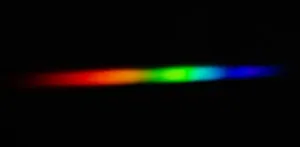
Water as a nonlinear medium for ultrabroadband white laser
Physics

Water as a nonlinear medium for ultrabroadband white laser

Scientists are making significant strides in the development of ultrabroadband white laser sources, covering a wide spectrum from ultraviolet to far infrared. These lasers find applications in diverse fields such as large-scale imaging, femto-chemistry, telecommunications, laser spectroscopy, sensing, and ultrafast sciences. However, the pursuit faces challenges, particularly in the selection of appropriate nonlinear mediums. Traditional solid materials, while efficient, are prone to optical damage under high peak power conditions. Gas mediums, though ...

Read the release
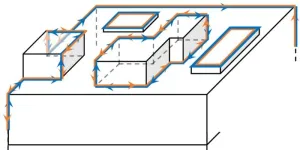
The surface knows what lies beneath: physicists show how to detect higher-order topological insulators
Physics

The surface knows what lies beneath: physicists show how to detect higher-order topological insulators

Just like a book can’t be judged by its cover, a material can’t always be judged by its surface. But, for an elusive conjectured class of materials, physicists have now shown that the surface previously thought to be “featureless” holds an unmistakable signature that could lead to the first definitive observation. Higher-order topological insulators, or HOTIs, have attracted attention for their ability to conduct electricity along one-dimensional lines on their surfaces, but this property is quite difficult to experimentally distinguish from other ...

Read the release
Physics

Modified soft material promises better bioelectronics

The scientific community has long been enamored of the potential for soft bioelectronic devices, but has faced hurdles in identifying materials that are biocompatible and have all of the necessary characteristics to operate effectively. Researchers have now taken a step in the right direction, modifying an existing biocompatible material so that it conducts electricity efficiently in wet environments and can send and receive ionic signals from biological media. “We’re talking about ...

Read the release
Physics

Physicists identify overlooked uncertainty in real-world experiments

The equations that describe physical systems often assume that measurable features of the system — temperature or chemical potential, for example — can be known exactly. But the real world is messier than that, and uncertainty is unavoidable. Temperatures fluctuate, instruments malfunction, the environment interferes, and systems evolve over time. The rules of statistical physics address the uncertainty about the state of a system that arises when that system interacts with its environment. But they’ve ...

Read the release
Bridging light and electrons
Physics

Bridging light and electrons

When light goes through a material, it often behaves in unpredictable ways. This phenomenon is the subject of an entire field of study called “nonlinear optics”, which is now integral to technological and scientific advances from laser development and optical frequency metrology, to gravitational wave astronomy and quantum information science. In addition, recent years have seen nonlinear optics applied in optical signal processing, telecommunications, sensing, spectroscopy, light detection and ranging. All these applications involve the miniaturization of devices ...

Read the release
Is there a common link between the physical and social worlds? Two brothers think so.
Physics

Is there a common link between the physical and social worlds? Two brothers think so.

A Rutgers biophysical chemist and his brother, a political scientist on the West Coast, have joined intellectual forces, realizing a long-standing dream of co-authoring an article that bridges their disciplines involving cells and society. In their paper, they have proposed that powerful parallels exist between the microscopic, natural world of cells and molecules and the human-forged realm of organizations and political systems. Taking it a step further, the brothers – eminent scholars who have served as top leaders of their respective institutions – have proposed that humankind can draw lessons from what the microscopic and macroscopic worlds have in common. Ideally, ...

Read the release
Integrating dimensions to get more out of Moore’s Law and advance electronics
Physics

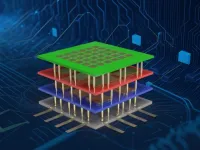
Integrating dimensions to get more out of Moore’s Law and advance electronics

UNIVERSITY PARK, Pa. — Moore's Law, a fundamental scaling principle for electronic devices, forecasts that the number of transistors on a chip will double every two years, ensuring more computing power — but a limit exists. Today's most advanced chips house nearly 50 billion transistors within a space no larger than your thumbnail. The task of cramming even more transistors into that confined area has become more and more difficult, according to Penn State researchers. In a study ...

Read the release
Epic of a molecular ion: With eyes of electrons
Physics

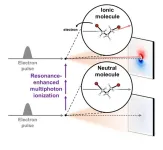
Epic of a molecular ion: With eyes of electrons

Ions are everywhere, from our daily surroundings to the cosmic expanse. As common table salt (NaCl) dissolves into sodium (Na+) and chloride (Cl-) ions in water, it imparts a salty taste. Once absorbed by the body, these ions regulate nerve impulses and muscle movements. In the sun, plasma—a gathering of ions in the gaseous state—undergoes nuclear fusion reactions, transmitting light and energy to Earth. One of the most noteworthy usage ions in everyday life is found in lithium-ion batteries, ...

Read the release
Systemic changes induced by ASCOT in plasma proteome of women with impaired ovarian reserves
Physics

Systemic changes induced by ASCOT in plasma proteome of women with impaired ovarian reserves

“Identifying plasma proteins that regenerate aged or damaged ovaries could lead to more effective, targeted and/or preventive therapies for patients.” BUFFALO, NY- January 9, 2024 – A new research paper was published in Aging (listed by MEDLINE/PubMed as "Aging (Albany NY)" and "Aging-US" by Web of Science) Volume 15, Issue 24, entitled, “Systemic changes induced by autologous stem cell ovarian transplant in plasma proteome of women with impaired ovarian reserves.” Patients with poor ...

Read the release
Physics

PKU scientists and collaborators invent ultrathin optical crystal for next-generation laser tech

BEIJING, Dec. 19 (Xinhua) -- A team of Chinese researchers used a novel theory to invent a new type of ultrathin optical crystal with high energy efficiency, laying the foundation for next-generation laser technology. Prof. Wang Enge from the School of Physics, Peking University, recently told Xinhua that the Twist Boron Nitride (TBN) made by the team, with a micron-level thickness, is the thinnest optical crystal currently known in the world. Compared with traditional crystals of the same thickness, its energy efficiency is raised by 100 to 10,000 times. Wang, also an ...

Read the release
From the original Press-News collection. Issuers of news releases are responsible for the accuracy of their content.