THE ORIGINAL COLLECTION · SINCE 2010

Science
press releases.

Research announcements from universities, hospitals and scientific institutions. Explore the stories, people and discoveries behind the headlines.

Original publication datesPage 276
FIND A STORY

Find a past release.

Dates and source material belong to the original release.

Read our research explainers

Browse the collection · original publication order

Science

Amsterdam UMC set to lead large-scale European study into preventing burnout due to stress among staff in and around the operating theatre

On average, healthcare professionals involved in surgical procedures and care in hospitals experience more stress and burnout than other professional groups in Europe. An estimated 60% of these caregivers are showing symptoms of burnout, while up to half of nurses are considering leaving their profession. To address this, thanks to a Horizon Grant of almost 6.5 million euros, Amsterdam UMC will lead a European consortium in search of the best solutions to stress. "Healthcare providers involved in surgical procedures are under enormous pressure. Think of surgeons, nurses, theatre assistants, anesthesiologists. They ...

Read the release
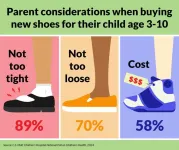

National Poll: Some parents not confident their kids are wearing the right shoes
Science

National Poll: Some parents not confident their kids are wearing the right shoes

ANN ARBOR, Mich. – As children grow, it may feel like they’re constantly outgrowing one clothing item essential for so many activities: their shoes. But many parents in a new national poll acknowledge a lack of confidence in ensuring their children are wearing properly fitting shoes – which experts say is necessary to support growth and prevent injuries. One in seven parents also say they’ve had concerns about their child’s feet or the way they walk while one in 10 parents report their child ...

Read the release
Science

Duke-NUS launches LIVE Ventures, a S$20 million incubator to accelerate research commercialisation

New incubator aims to tap industry experts to bridge the knowledge and funding gap to enhance bench-to-bedside success LIVE Ventures provides up to $500,000 for high-potential academic research projects Duke-NUS Medical School today launched LIVE Ventures, a S$20 million incubation programme designed to catalyse the commercialisation of innovative academic research. Focused on translating scientific breakthroughs into clinical applications, LIVE Ventures will provide Duke-NUS scientists conducting ...

Read the release
Samuel Pepys’ fashion prints reveal his guilty pleasure: Fancy French clothes
Science

Samuel Pepys’ fashion prints reveal his guilty pleasure: Fancy French clothes

University of Cambridge media release UNDER STRICT EMBARGO UNTIL 00:01AM (UK TIME) ON MONDAY 22ND JULY 2024 A collection of French fashion engravings offers precious new insights into the life of Samuel Pepys years after his premature final diary entry. The prints show the tailor’s son remained fascinated by the power of fashion long after he had secured wealth and status. But they also expose Pepys’ internal conflict over French style. Most of what we know about Samuel ...

Read the release
New genetic test will eliminate a form of inherited blindness in dogs
Science

New genetic test will eliminate a form of inherited blindness in dogs

Progressive retinal atrophy (PRA) is a group of inherited diseases that causes progressive degeneration of the light sensitive cells at the back of the eye. Dogs with PRA have normal sight at birth, but by the age of four or five they will be totally blind. There is no treatment. Now a team led by the University of Cambridge has identified the genetic mutation that causes PRA in English Shepherd Dogs, and developed a DNA test for it. By identifying dogs carrying the disease before their eyesight starts to fail, this provides a tool to guide breeding decisions so the disease is not passed on to puppies. Owners usually don’t realise their dog has PRA until it is ...

Read the release
Two-in-one mapping of temperature and flow around microscale convective flows
Science

Two-in-one mapping of temperature and flow around microscale convective flows

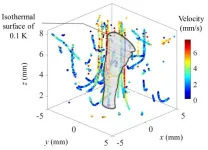
Tokyo, Japan – Researchers from Tokyo Metropolitan University have devised a way to measure both the temperature and velocity profiles of fluid in a convective plume at millimeter length scales in 3D. They combined near-infrared absorption imaging and image processing to separate the motion of tracer particles from snapshots of how light is absorbed, producing both a smooth velocity and temperature map. The technology promises new insights into optimizing the design of micro-heating and cooling devices. Accurate maps of how heat and matter flow at the microscale are vital to the design of micro-heating and cooling devices. A classic example ...

Read the release
Fish adjust reproduction in response to predators
Science

Fish adjust reproduction in response to predators

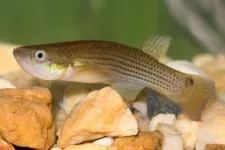
Some species of fish can evolve their egg-laying habits in response to predators in the area in order to survive, according to new research from The University of Texas at Arlington. It has long been observed that organisms modify their traits, including reproductive patterns, in response to changes in their environment. This type of evolutionary plasticity has been observed in many types of animals in different habitats and with varying predators. “We knew that fish who laid their eggs externally often adapted depending on the predators in the area, but we did not know how quickly species could change to these externals pressures,” said biology Professor Matthew Walsh, ...

Read the release
DDX41 and its unique contribution to myeloid leukemogenesis
Science

DDX41 and its unique contribution to myeloid leukemogenesis

“[...] myeloid neoplasms associated with DDX41 variants likely exhibit a unique pathogenesis that diverges from the conventional understanding of myeloid neoplasms.” BUFFALO, NY- July 19, 2024 – A new editorial paper was published in Oncotarget's Volume 15 on July 2, 2024, entitled, “DDX41 and its unique contribution to myeloid leukemogenesis.” In this new editorial, researcher Hirotaka Matsui from the National Cancer Center Hospital in Tokyo, Japan, and Kumamoto University discusses myeloid neoplasms. Until ...

Read the release
Valentina Greco takes on new position as President of the ISSCR
Science

Valentina Greco takes on new position as President of the ISSCR

The ISSCR is thrilled to announce Valentina Greco, Yale School of Medicine, Genetics Department and Yale Stem Cell Center USA, as its President. Her term began at the ISSCR 2024 Annual Meeting held in Hamburg, Germany that concluded on Saturday, 13 July 2024. “I am honored to be taking on the role of ISSCR President for the coming year,” Dr. Greco said. “Building on Amander Clark’s efforts, my focus will be on people and scrutinizing processes so that they better support the diversity of needs of our members across identities including geographies and career stages. In turn ...

Read the release
New snake discovery rewrites history, points to North America’s role in snake evolution
Science

New snake discovery rewrites history, points to North America’s role in snake evolution

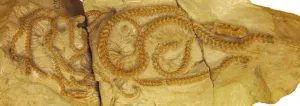
A new species of fossil snake unearthed in Wyoming is rewriting our understanding of snake evolution. The discovery, based on four remarkably well-preserved specimens found curled together in a burrow, reveals a new species named Hibernophis breithaupti. This snake lived in North America 34 million years ago and sheds light on the origin and diversification of boas and pythons. Hibernophis breithaupti has unique anatomical features, in part because the specimens are articulated—meaning they were found all in one piece with the bones still arranged in the proper order—which is unusual for fossil snakes. Researchers believe it may be ...

Read the release
Science

Wash U researchers shine light on amyloid architecture

By Leah Shaffer Amyloid-beta (A-beta) aggregates are tangles of proteins most notably associated with neurodegenerative diseases like Alzheimer’s. Despite its constant stint in the limelight, however, researchers have been unable to get a good understanding of how A-beta comes together and breaks apart. “The way A-beta behaves in a variety of environments, including the human brain, is elusive,” said Brian Sun, an electrical systems and engineering alumnus of Washington University in St. Louis who is now an MD/PhD student in the School of Medicine. “There’s an understanding of growth and decay that isn’t ...

Read the release
Science

Trillions lost in worker productivity due to eco anxiety and ‘lie-back’ lifestyles

Could nature and climate anxieties predict future social behaviours, in the same way that consumer sentiment predicts purchasing and investment? The suggestion is made in the Cell Press journal One Earth, by Griffith University’s Professor Emeritus Ralf Buckley, in a preview of an article led by Professor Thomas Pienkowski in the UK. Professor Buckley said the international Global Burden of Disease Study had shown that anxiety and depression were widespread and worsening. “Economic costs are up to 16% of global GDP, with 19 days per year on average lost ...

Read the release
A tale of two “niches”: The microbial connection between urinary bladder and vagina
Science

A tale of two “niches”: The microbial connection between urinary bladder and vagina

The human body hosts a diverse array of microorganisms that maintain a delicate balance crucial for overall health. This microbial harmony can be disrupted by factors like infections, aging, and hormonal changes, leading to dysbiosis—a condition where microbial communities become imbalanced and harmful to health. Postmenopausal women, for instance, are particularly susceptible to recurrent urinary tract infections and inflammation, including cystitis, due to these microbial shifts. Dr. Takanori Sekito from the Department of Urology, Okayama University Graduate School of Medicine, Japan explains, “In postmenopausal women, the vaginal flora changes ...

Read the release
To walk, you only need fins (and maybe a sense of adventure)
Science

To walk, you only need fins (and maybe a sense of adventure)

Okinawa’s mangrove forests are home to many animal species, from crabs to kingfishers; they host a diverse ecosystem teeming with life. Among the quirkier residents living there is “Minami-Tobihaze” — the barred mudskipper. “They are fish, but they can walk and live partly on land,” says Dr. Fabienne Ziadi-Künzli from the Nonlinear and Non-equilibrium Physics Unit, who is the first author of a study on mudskipper anatomy, which was recently published in the Journal of Anatomy. Adapting to a new life The barred mudskipper, scientifically called Periophthalmus argentilineatus, has more than just one oddity. Their eyes ...

Read the release
Science

Food research fellowships funded for scientists in 6 countries

DALLAS, July 18, 2024 — Diet-related diseases account for 1 in 5 deaths around the world[1] and unsustainable industrial agricultural practices threaten to compromise the health of the planet.[2] While emerging science expands our knowledge of food composition, society still understands little about the tens of thousands of components found in food. The American Heart Association is facilitating a new research fellowship program from the Periodic Table of Food Initiative (PTFI) with support from The Rockefeller Foundation. The program, called Good Food Fellows, aims to train a new ...

Read the release
Science

Time-lapse imaging for embryo selection in IVF does not improve the odds of live birth compared with conventional methods, according to largest study of its kind

There is no difference in live birth rates between time-lapse imaging and other standard approaches used in in-vitro fertilisation (IVF) for embryo incubation and selection prior to implantation, according to the results of the largest trial of its kind. The randomised controlled trial looked at IVF outcomes in the UK and Hong Kong. The results, published today in The Lancet, provide much-needed evidence that using time-lapse imaging (TLI) does not improve treatment outcomes for someone undergoing fertility treatment. Time-lapse imaging is a technique ...

Read the release
Rice’s Emilia Morosan awarded prestigious Vannevar Bush Faculty Fellowship
Science

Rice’s Emilia Morosan awarded prestigious Vannevar Bush Faculty Fellowship

Rice University’s Emilia Morosan has been selected as one of 11 scientists and engineers for the 2024 Vannevar Bush Faculty Fellowship (VBFF) to support her work on correlated topological materials. The fellowship is the Department of Defense’s (DoD) most prestigious single-investigator award and supports groundbreaking basic research with the potential to transform various fields. The VBFF, a five-year fellowship with up to $3 million in funding, encourages innovative ideas where researcher creativity intersects with the unknown. Vannevar Bush Fellows represent a cadre of experts who provide invaluable direction to the DoD ...

Read the release
Science

DOE announces $52 million for small business research and development grants

WASHINGTON, D.C.—In support of President Biden’s Investing in America agenda, the U.S. Department of Energy (DOE) today announced awards totaling $52 million for a broad range of small businesses in 39 states. The projects will work to solve a wide range of problems—from cybersecurity for electric vehicle charging infrastructure to new ways to detect radiation threats and new ways to manufacture lithium metal for batteries. “Since Day One, the Biden-Harris Administration has supported small businesses, prompting record ...

Read the release
Of ants and trees: ‘Evolutionary déjà’ in the tropical rainforest
Science

Of ants and trees: ‘Evolutionary déjà’ in the tropical rainforest

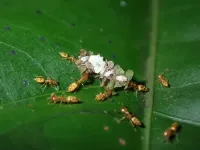
Ants are famous for their regimented and complex social behaviors. In the tropics, they are also famous for forming mutualisms with plants. Certain species of trees have conspicuous hollow swellings that house ants, often feeding the ants with specialized ant food. In return, the ants are pugnacious bodyguards, swarming out to aggressively defend the plant against enemies. Scientists have observed these mutualisms for centuries, but an enduring question is how these intriguing interactions evolved in the first place. That remains a mystery, but new research led by University ...

Read the release
UVA researchers drive safety forward on 3 Toyota collaborative projects
Science

UVA researchers drive safety forward on 3 Toyota collaborative projects

The Center for Applied Biomechanics at the University of Virginia studies the impact of car crashes on the human body, aiming to improve injury prevention. Funded by Toyota’s Collaborative Safety Research Center, CAB’s three newest projects will study rib, lumbar and ankle injuries specifically. Jason Forman, a UVA Engineering and Applied Science research associate professor in the Department of Mechanical and Aerospace Engineering, is the principal investigator on two of the studies. One study will use ...

Read the release
Science

Large-scale GWAS reveals genetic architecture in the VA Million Veteran Program

A large-scale genome-wide association study (GWAS) using data from the United States Department of Veterans Affairs (VA) Million Veterans Program (MVP) – one of the largest US-based biobanks – fills crucial gaps in our knowledge of the relationships between genes, traits, and disease across diverse populations, according to a new study. The findings underscore the importance of diversity in genetic studies and the need for expanding representation in future GWAS investigations. GWAS studies have provided foundational knowledge about the genetic basis of disease ...

Read the release
Science

Foraging niches narrow near birds’ geographic range edges

When at the edges of their geographic ranges, fruit-eating birds favor foods that more closely match their beak size, researchers report, suggesting that foraging niches (the diversity of food resources a species uses) become more specialized toward the periphery of a species range. The findings may help explain geographic variation in species’ fitness and are important for accurately predicting species’ responses to continued environmental change, which is forcing many populations to live near or outside their historic range limits. Animals feed on a subset of available resources within their environment. Optical ...

Read the release
Science

Urgent action needed to combat rising antimalarial resistance in Africa

Artemisinin-based combination therapies (ACTs) have become the cornerstone of malaria treatment and control. However, the recent emergence and spread of artemisinin-resistance (ART-R) in malaria-causing Plasmodium falciparum parasites in eastern Africa has compromised the efficacy of these crucial treatments. In a Policy Forum, Mehul Dhorda and colleagues argue that urgent action is needed to prevent a surge in malaria-related sickness and death in the region. “Success in containing ART-R in the Greater Mekong Subregion in Asia, where ART-R was first reported in 2008, suggests that a multipronged approach is needed ...

Read the release
Science

Unlocking the power of nanopores

Unlocking the power of nanopores Poking holes through membranes with atomic accuracy to build pocket-sized ‘molecule detectives’ Brussels/Washington 19/07/2024 - Transmembrane β-barrel pores (TMBs) are extensively used for single-molecule DNA and RNA sequencing. They enable the miniaturization of a wide array of sensing and sequencing applications into portable USB-size devices and point-of-care technologies. A team of Belgian and American researchers has now described a general approach to design TMB pores from scratch with custom shapes and properties, opening up new opportunities for single-molecule analytics. Their results were published ...

Read the release
Science

In China, property rights take wrong turn

In China, Property Rights Take Wrong Turn Protecting them fueled an economic boom; eroding them risks long-term damage AUSTIN, Texas — China’s economy, long an engine of world growth, has been sputtering lately. During the second quarter of 2024, it grew at an annual rate of 4.7% — down from an average 7% a year during the past decade. For the next two years, the International Monetary Fund forecasts more of the same. Analysts have blamed China’s slowdown on short-term factors, such as debt-ridden real estate and a delayed recovery from the COVID-19 ...

Read the release
From the original Press-News collection. Issuers of news releases are responsible for the accuracy of their content.