THE ORIGINAL COLLECTION · SINCE 2010

Science
press releases.

Research announcements from universities, hospitals and scientific institutions. Explore the stories, people and discoveries behind the headlines.

Original publication datesPage 335
FIND A STORY

Find a past release.

Dates and source material belong to the original release.

Read our research explainers

Browse the collection · original publication order

Science

MD Anderson Research Highlights: AACR 2024 Special Edition

SAN DIEGO ― The University of Texas MD Anderson Cancer Center’s Research Highlights showcases the latest breakthroughs in cancer care, research and prevention. These advances are made possible through seamless collaboration between MD Anderson’s world-leading clinicians and scientists, bringing discoveries from the lab to the clinic and back. This special edition features presentations by MD Anderson researchers at the American Association for Cancer Research (AACR) Annual Meeting 2024. In addition to ...

Read the release
Endometrial, lung, and survivorship studies headline Dana-Farber research at AACR Annual Meeting 2024
Science

Endometrial, lung, and survivorship studies headline Dana-Farber research at AACR Annual Meeting 2024

Boston - Numerous studies conducted by researchers at Dana-Farber Cancer Institute show promising results for patients with endometrial, lung, breast, prostate, and colorectal cancers. The results of these studies, along with dozens of others led by Dana-Farber faculty, will be presented at this year’s American Association for Cancer Research (AACR) Annual Meeting on April 5-10, 2024, in San Diego, Calif. The institute’s leading experts and researchers will present findings across a spectrum of diseases, underscoring their dedication to driving innovation, improving patient outcomes, and changing lives everywhere. Rebecca Porter, MD, PhD, ...

Read the release
Science

Two sex pheromone receptors for sexual communication in the American cockroach

Sex pheromones are vital in facilitating the chemical communication that underpins insect courtship and mating behavior. Among female American cockroaches (Periplaneta americana), two key volatile sex pheromone components, periplanone-A (PA) and periplanone-B (PB), are predominantly released. Previous studies have indicated that PB is the primary component, but the precise interplay between PA and PB, alongside their regulatory mechanisms in male courtship and mating behavior has remained ambiguous. Recently, a team led by Professor Sheng Li from the Institute of Insect Science and Technology, School of Life Sciences, South China Normal ...

Read the release
$1.9 million awarded to create device that will reduce death from bleeding
Science

$1.9 million awarded to create device that will reduce death from bleeding

The Department of Defense awarded a little more than $1.9 million to a multidisciplinary team of researchers at the University of Arkansas and University of Arkansas for Medical Sciences to develop a wearable device that will assist with the early detection and monitoring of internal and external bleeding. The grant comes as part of the Department of Defense’s prestigious Congressionally Directed Medical Research Programs. Hemorrhagic shock is currently the leading cause of preventable death in casualty care settings. Existing methods often fail to detect blood loss until the onset of shock, which can be too late for some patients. This makes early detection and management ...

Read the release
A deep dive into the genetics of alcohol consumption
Science

A deep dive into the genetics of alcohol consumption

A research group centered at the University of California San Diego School of Medicine has drilled deep into a dataset of over 3 million individuals compiled by the direct-to-consumer genetics company 23andMe, Inc., and found intriguing connections between genetic factors influencing alcohol consumption and their relationship with other disorders. The study was recently published in the Lancet eBioMedicine. Sandra Sanchez-Roige, Ph.D., corresponding author and associate professor at UC San Diego School of Medicine Department of Psychiatry, explained that the study used genetic data to broadly classify individuals as being European, Latin American ...

Read the release
Science

The sense of smell is influenced by cues from other senses

The sense of smell is highly influenced by the cues from other senses, while the sense of sight and hearing are affected to a much lesser extent, shows a new study in Journal of Neuroscience. A popular theory of the brain holds that its main function is to predict what will happen next, so it reacts mostly to unexpected events. Most research on this topic, called predictive coding, has only focused on what we see, but no one knows if the different senses, such as smell, work in the same way. To figure out more about how smell relates to how we ...

Read the release
UTEP study: prairie voles display signs of human-like depression
Science

UTEP study: prairie voles display signs of human-like depression

EL PASO, Texas (April 4, 2024) – Psychology researchers at The University of Texas at El Paso are making progress towards understanding the biological underpinnings of depression, a leading cause of disability that affects approximately 280 million people around the world. In a study published this April in the Journal of Affective Disorders, UTEP psychologist Sergio Iñiguez, Ph.D., and his co-authors make the case that prairie voles, small rodents that are found throughout the central United States and Canada, can be effectively used as animal models to further the study of ...

Read the release
Researchers envision sci-fi worlds involving changes to atmospheric water cycle
Science

Researchers envision sci-fi worlds involving changes to atmospheric water cycle

Human activity is changing the way water flows between the Earth and atmosphere in complex ways and with likely long-lasting consequences that are hard to picture. Land use change is altering where clouds form and how precipitation is distributed. Meanwhile, weather modification activities like cloud seeding are shifting how nations plan for water use in the face of climate change. These and other changes to the planet’s atmospheric water cycle were once hard to imagine but are increasingly part of modern water management on the planet. Colorado State University Assistant Professor Patrick Keys is an expert ...

Read the release
An NSF bootcamp for future scientists
Science

An NSF bootcamp for future scientists

Research today doesn't only occur in a lab; indeed, many university researchers extend their work into the community with the goal of inspiring the next generation of scientists and engineers. And some government agencies, like the National Science Foundation, provide the funding to do so. Most recently, Xiayun Zhao, assistant professor of mechanical engineering & materials science at the University of Pittsburgh, completed such outreach at the Carnegie Science Center (CSC). Zhao ...

Read the release
Rusty-patched bumblebee’s struggle for survival found in its genes
Science

Rusty-patched bumblebee’s struggle for survival found in its genes

A team of researchers has uncovered alarming trends in the first range-wide genetic study of an endangered bee species. The study, led by Colorado State University and published in the Journal of Insect Science, will inform conservation and recovery efforts for the rusty-patched bumblebee – a species that was once common in the United States but has declined from about 90% of its historic range. The rusty-patched bumblebee was the first bee species to be federally listed as endangered in 2017 through the U.S. Endangered Species Act. Its numbers dropped rapidly starting in the late 1990s, likely due to a combination of pesticides, ...

Read the release
Body mapping links our responses to music with their degree of uncertainty and surprise
Science

Body mapping links our responses to music with their degree of uncertainty and surprise

Music holds an important place in human culture, and we’ve all felt the swell of emotion that music can inspire unlike almost anything else. But what is it exactly about music that can bring on such intense sensations in our minds and bodies? A new study reported in the journal iScience on April 4 has insight from studies that systematically examine the way perception of unique musical chords elicits specific bodily sensations and emotions. “This study reveals the intricate interplay between musical uncertainty, prediction ...

Read the release
Feeling the music
Science

Feeling the music

Music which surprises us can be felt in the heart, while music which matches our expectations can bring feelings of calmness and satisfaction, according to a new study. Researchers played eight short tunes made up of just four chords each to over 500 participants. Each tune had a varied mix of surprising and unsurprising, and certain and uncertain chord progressions. When asked to report how the tunes made them feel and where they were affected, participants’ answers showed that fluctuations in predictions about chord sequences were felt in specific parts of the body, notably the heart and abdomen. Researchers also ...

Read the release
Science

Nerve stimulation for sleep apnea is less effective for people with higher BMIs

A nerve-stimulation treatment for obstructive sleep apnea that originally was approved only for people with body mass indexes (BMIs) in the healthy range recently was extended to patients with BMIs up to 40, a weight range generally described as severely obese. A healthy BMI ranges from 18.5 to 24.9. The expanded eligibility criteria for the treatment provide more sleep apnea patients with access to the increasingly popular therapy, known as hypoglossal nerve stimulation. However, new research from Washington University School of Medicine in St. Louis indicates that the likelihood of successful nerve-stimulation treatment ...

Read the release
Attack and defence in the microverse
Science

Attack and defence in the microverse

Viruses need hosts. Whether it’s measles, the flu or coronavirus, viral pathogens cannot multiply or infect other organisms without the assistance of their hosts’ cellular infrastructure. However, humans are not the only ones affected by viruses: animals, plants and even microorganisms can all serve as hosts. Viruses that use bacteria as host cells are called bacteriophages (or simply “phages” for short) and are thought to be the most abundant biological entities of all. Just as the human immune system springs ...

Read the release
Science

Study shows link between partner gender and orgasm expectations for women

A new study published in Social Psychological and Personality Science investigated the factors influencing orgasm rates for women across sexual orientations. The researchers report that partner gender plays a significant role in how women approach sex. and their likelihood of reaching orgasm. Understanding the Orgasm Gap Previous research has established the existence of an "orgasm gap," where cisgender women are less likely to achieve orgasm during partnered sex compared to cisgender men. This new study delves deeper, ...

Read the release
Science

Around 10% of deaths from coronary stenting, balloon angioplasty are preventable

Each year more than 500,000 Americans undergo percutaneous coronary intervention, or PCI, a minimally invasive procedure to unclog the arteries that feed the heart. While PCI, which includes both angioplasty and stenting, is one of the most common operations in the world, it does carry a small (about 1-2%) but significant risk of death. Around 10% of all deaths following percutaneous coronary intervention are potentially preventable, a study led by Michigan Medicine finds. The results are published in PLOS ONE. “Deaths in the hospital after PCI are rare and mostly occur in patients ...

Read the release
Science

Click, click, boom—150 new molecules

Cold Spring Harbor Laboratory (CSHL) chemists have created a new collection of molecular compounds and begun testing them as potential leads in the search for new drugs. Among these molecules, they found several that show promise for development as antibiotics and cancer therapies. Sounds like a eureka moment? Well, sort of. But it’s more a case of hard chemistry made simple. The new compounds were synthesized using an efficient new way of linking molecules together, developed in the lab of CSHL Professor John Moses. Moses calls his innovative process Accelerated SuFEx Click Chemistry (ASCC). ...

Read the release
SynGAP Research Fund (SRF) awards collaborative grant to advance research of SYNGAP1 related disorders in adults
Science

SynGAP Research Fund (SRF) awards collaborative grant to advance research of SYNGAP1 related disorders in adults

Toronto, CANADA & Rotterdam NETHERLANDS – March 2024 – The SynGAP Research Fund 501(c)(3) today announced a grant to Dr. Danielle Andrade, Dr. Miles Thompson, Dr. Ryan Yuen, Dr. Rogier Kerssebook, and Dr. Anatoljevna Anna Kattentidt to support research on SynGAP-Related Disorder (SRD) in adults. SRD is a rare neurodevelopmental disorder that causes severe intractable epilepsy, and intellectual disability, and is one of the leading genetic causes of autism (1,2). Dr. Andrade’s team recently published the only research on SRD in adults ...

Read the release
Shy sea anemones are more likely to survive heatwaves
Science

Shy sea anemones are more likely to survive heatwaves

Even in nature, pride can prevail. A study with researchers from the University of Gothenburg shows that sea anemones that react more slowly to change can survive a heatwave better than individuals that change their behaviour quickly. Along the Atlantic coasts of Europe, many species are exposed to abrupt shifts in habitat. Tides, storms and rapid temperature changes are commonplace for the marine species that live there. With climate change, heatwaves are expected to become more frequent, and researchers wanted to find out how coastal marine species cope with extreme water temperatures. They chose to study the sea anemone species Actinia ...

Read the release
Science

Study finds high amounts of silica exposure in previously deployed military veterans

Since the conflicts that followed 9/11 in 2001, military veterans deployed to areas in Southwest Asia, Iraq, Afghanistan, and the Horn of Africa have been developing respiratory diseases caused by inhaling particulate matter linked to their deployment locations and job duties. New research published in the International Journal of Environmental Research and Public Health shows levels of silica and other silicates are significantly higher in the lungs of those who have had past deployments compared to normal lung tissue. “Using ...

Read the release
SynGAP Research Fund (SRF) appoints Kathryn Helde, PhD, as Chief Scientific Officer (CSO) focusing on SYNGAP1 research
Science

SynGAP Research Fund (SRF) appoints Kathryn Helde, PhD, as Chief Scientific Officer (CSO) focusing on SYNGAP1 research

Mill Valley, CA – April 4, 2024 – SynGAP Research Fund 501(c)(3), the leading patient advocacy group working to improve the lives of SYNGAP1-Related Disorder (SRD) patients, today announced the appointment of Kathryn Helde, PhD, as its Chief Scientific Officer, effective February 1, 2024. “SRF’s scientific grantmaking, industry partnerships, and repurposing efforts have grown past the point where we need a dedicated CSO,” says Mike Graglia, SRF’s Co-Founder and Managing Director. “We are fortunate to have a parent in our ranks who is as well trained, talented, and dedicated as Dr. Helde. As a volunteer for years, ...

Read the release
UTA chemist acclaimed as up-and-coming scientist
Science

UTA chemist acclaimed as up-and-coming scientist

A University of Texas at Arlington chemist has been honored for his significant contributions to separation science. Kevin Schug, the Shimadzu Distinguished Professor of Analytical Chemistry, was named recipient of the 2024 Silver Jubilee Medal by the Chromatography Society, a United Kingdom-based organization with worldwide membership. The Silver Jubilee Medal recognizes up-and-coming researchers who have made major use of separation science in their own field or those who have made important contributions to a particular area of separation science. The award was created in 1982 to celebrate the society’s 25th anniversary. “I know many prominent separation scientists ...

Read the release
Red flags: I’m not the bug for you!
Science

Red flags: I’m not the bug for you!

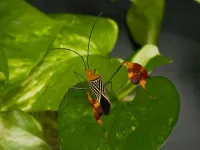
In the quaint town of Gamboa, nestled near the Panama Canal, a team of scientists embarked on a unique endeavor: attaching red flags onto the legs of crickets and observing how birds respond to them. These eye-catching flags were borrowed from the matador bug (Anisoscelis alipes), an insect renowned for the colorful adornments on its hind legs. This trait has captivated Smithsonian postdoctoral fellow Ummat Somjee for several years, particularly given the matador bug’s tendency to wave them. The persisting question: Why does it wave its colorful hind legs? A previous study, also supervised by Dr. Somjee, suggested ...

Read the release
New sunflower family tree reveals multiple origins of flower symmetry
Science

New sunflower family tree reveals multiple origins of flower symmetry

UNIVERSITY PARK, Pa. — The sunflower family tree revealed that flower symmetry evolved multiple times independently, a process called convergent evolution, among the members of this large plant family, according to a new analysis. The research team, led by a Penn State biologist, resolved more of the finer branches of the family tree, providing insight into how the sunflower family — which includes asters, daisies and food crops like lettuce and artichoke — evolved. A paper describing the analysis and findings, which researchers said may help identify useful traits to selectively breed plants with more desirable characteristics, appeared online in the journal ...

Read the release
Might your personality affect how you move? Runners classified as Myers-Briggs "Sensing" types have a more grounded running style in experiments than those classified as "Intuition" types
Science

Might your personality affect how you move? Runners classified as Myers-Briggs "Sensing" types have a more grounded running style in experiments than those classified as "Intuition" types

Might your personality affect how you move? Runners classified as Myers-Briggs "Sensing" types have a more grounded running style in experiments than those classified as "Intuition" types ### Article URL: https://journals.plos.org/plosone/article?id=10.1371/journal.pone.0300108 Article Title: Mind to move: Differences in running biomechanics between sensing and intuition shod runners Author Countries: France, Switzerland, Belgium Funding: The author(s) received no specific funding for this work. END ...

Read the release
From the original Press-News collection. Issuers of news releases are responsible for the accuracy of their content.