THE ORIGINAL COLLECTION · SINCE 2010

Science
press releases.

Research announcements from universities, hospitals and scientific institutions. Explore the stories, people and discoveries behind the headlines.

Original publication datesPage 382
FIND A STORY

Find a past release.

Dates and source material belong to the original release.

Read our research explainers

Browse the collection · original publication order

A global study reveals pathways to save threatened sharks, despite rising mortality trends
Science

A global study reveals pathways to save threatened sharks, despite rising mortality trends

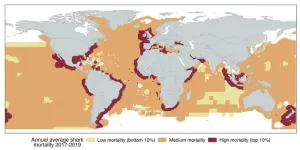
Sharks have persisted as powerful ocean predators for more than 400 million years. They survived five mass extinctions, diversifying into an amazing variety of forms and lifestyles. But this ancient lineage is now among the world's most threatened species groups due to overexploitation in poorly regulated fisheries and the proliferation of wasteful finning practices. Governments around the world have introduced a host of regulations aimed at reducing shark catch and finning, the latter of which typically sees valuable shark fins retained for sale while carcasses are discarded at sea. But until ...

Read the release
Science

Shark fishing mortality on the rise despite regulatory change

Despite widespread legislation and fishing regulations aimed at reducing wasteful shark finning practices, global shark fishing mortality is still on the rise, researchers report. The findings suggest that improved regulations are needed to reverse the continued overexploitation of these species. Over the last several decades, sharks have been increasingly recognized as some of the planet’s most threatened wildlife. Increasing shark mortality has been driven in part by overfishing – large numbers of sharks are often captured as bycatch in tuna ...

Read the release
Science

Comprehensive assessment reveals high extinction risks for thousands of Atlantic Forest trees in eastern South America

A comprehensive analysis of tree species’ conservation statuses across Atlantic Forest trees reveals high extinction risks. According to the report, roughly two-thirds of the 4950 tree species living in this biodiversity hotspot are threatened with extinction. This includes 82% of endemic species, which have quite limited geographic ranges. Based on these findings, the authors suggest that the conservation status of tropical forests worldwide may be worse than previously believed. Conservation efforts and decisions often ...

Read the release
Lab-grown retinas explain why people see colors dogs can’t
Science

Lab-grown retinas explain why people see colors dogs can’t

With human retinas grown in a petri dish, researchers discovered how an offshoot of vitamin A generates the specialized cells that enable people to see millions of colors, an ability that dogs, cats, and other mammals do not possess. “These retinal organoids allowed us for the first time to study this very human-specific trait,” said author Robert Johnston, an associate professor of biology. “It’s a huge question about what makes us human, what makes us different.” The findings, published in PLOS Biology, increase understanding of color ...

Read the release
Science

A call for improved CDC communication on adult immunization

In an editorial in the Annals of Internal Medicine, CUNY SPH Distinguished Lecturer Scott Ratzan, Senior Scholar Ken Rabin, and colleagues call for the Centers for Disease Control and Prevention (CDC) to “raise its persuasive communications game” on adult immunization to clinicians and the public. They argue that disseminating scientific information alone will not suffice in the present environment of disinformation and low trust in public health. The editorial is in response to the CDC’s ...

Read the release
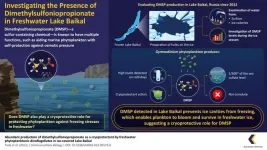
Exploring dimethylsulfoniopropionate production by freshwater phytoplankton in lake Baikal
Science

Exploring dimethylsulfoniopropionate production by freshwater phytoplankton in lake Baikal

Phytoplankton or microalgae found in the ocean are often known to produce a sulfur-containing chemical called dimethylsulfoniopropionate (DMSP). This organic molecule breaks down to release a strong but sweet-smelling gas called dimethyl sulfide (DMS), which plays a major role in the formation of cloud condensation nuclei and is also associated with the smell of the sea. More importantly, DMSP acts as an osmolyte and thus protects the phytoplankton against the osmotic pressure created by saline water. Scientists have, however, ...

Read the release
Producing tears in a dish: researchers develop first model of human conjunctiva
Science

Producing tears in a dish: researchers develop first model of human conjunctiva

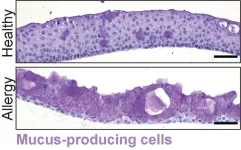
The Organoid group at the Hubrecht Institute produced the first organoid model of the human conjunctiva. These organoids mimic the function of the actual human conjunctiva, a tissue involved in tear production. Using their new model, the researchers discovered a new cell type in this tissue: tuft cells. The tuft cells become more abundant under allergy-like conditions and are therefore likely to play a role in allergies. The organoid model can now be used to test drugs for several diseases affecting the conjunctiva. The study will be published in Cell Stem Cell on 11 January 2024. Our eyes produce tears to protect themselves from injuries and ...

Read the release
Synapses brought to the point
Science

Synapses brought to the point

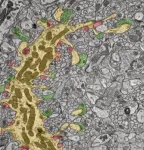
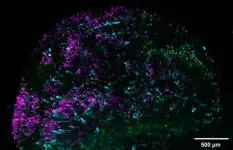
Whether picking up a small object like a pen or coordinating different body parts, the cerebellum in the brain performs essential functions for controlling our movement. Researchers at the Institute of Science and Technology Austria (ISTA) investigated how a crucial set of synapses between neurons within it functions and develops. Their findings have now been published in the journal Neuron. Even if you do not think about it, every day you are using the intricate circuits of neurons in your brain to perform astonishingly delicate movements with your body. One essential unit in this is the cerebellum playing a key role in fine motor control, coordination, and timing. “Every ...

Read the release
Science

ChatGPT has read almost the whole internet. That hasn't solved its diversity issues

AI language models are booming. The current frontrunner is ChatGPT, which can do everything from taking a bar exam, to creating an HR policy, to writing a movie script. But it and other models still can’t reason like a human. In this Q&A, Dr. Vered Shwartz (she/her), assistant professor in the UBC department of computer science, and masters student Mehar Bhatia (she/her) explain why reasoning could be the next step in AI—and why it’s important to train these models using diverse ...

Read the release
First direct imaging of small noble gas clusters at room temperature
Science

First direct imaging of small noble gas clusters at room temperature

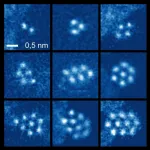
For the first time, scientists have succeeded in the stabilisation and direct imaging of small clusters of noble gas atoms at room temperature. This achievement opens up exciting possibilities for fundamental research in condensed matter physics and applications in quantum information technology. The key to this breakthrough, achieved by scientists at the University of Vienna in collaboration with colleagues at the University of Helsinki, was the confinement of noble gas atoms between two layers of graphene. This method overcomes the difficulty that noble gases do not form stable structures under experimental conditions ...

Read the release
A tiny tattoo for a tabby
Science

A tiny tattoo for a tabby

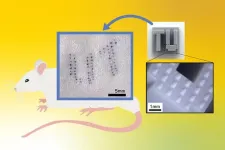
Tokyo, Japan – If you’ve ever taken a car trip through a rural area, you might already know that livestock, including cows and sheep, can be individually tracked using decidedly old-fashioned methods, such as ear tags or even branding marks. By contrast, many tech-savvy pet owners have opted to have their dog or cat “chipped” by having a radio frequency identification (RFID) permanently implanted under the skin. However, all these identification solutions leave something to be desired, as ear tags can become damaged or lost, while RFID chips require an invasive procedure to insert and specialized equipment to read. In a study recently published in Scientific ...

Read the release
Researchers use spinning metasurfaces to craft compact thermal imaging system
Science

Researchers use spinning metasurfaces to craft compact thermal imaging system

WASHINGTON — Researchers have developed a new technology that uses meta-optical devices to perform thermal imaging. The approach provides richer information about imaged objects, which could broaden the use of thermal imaging in fields such as autonomous navigation, security, thermography, medical imaging and remote sensing. “Our method overcomes the challenges of traditional spectral thermal imagers, which are often bulky and delicate due to their reliance on large filter wheels or interferometers,” said research team leader Zubin Jacob from ...

Read the release
Science

Experiments in infant mice suggest new way to prevent spread of flu in people

Scientists have long known that some viruses and bacteria begin infections by latching first onto sugar molecules on the surfaces of cells lining the sinuses and throat of mammals, including humans. Viral particles, for instance, can attach to these molecules, called sialic acids, or SAs, like keys fitting into locks. Now, a new study in infant mice shows that keeping virus particles from attaching to SAs limits more than just the entry of influenza A viral infections, but also hinders their exit (shedding) and transmission from mouse to mouse. Such infections are the main cause of the seasonal flu that kills more than 36,000 Americans annually. While vaccines to guard ...

Read the release
Science

Virtual Science Writers Conference will uncover the truth behind ‘hormone balancing’

WASHINGTON—The popular TikTok trend of ‘hormone balancing’ has taken over the internet with claims to balance your hormones with holistic approaches alone, but medical experts question its legitimacy. Endocrine Society expert Deena Adimoolam, M.D., will discuss ‘hormone balancing’ during the Society’s Virtual Science Writers Conference on January 24. What: The Virtual Science Writers Conference will examine: How hormones function and stay in balance Common ...

Read the release
Researchers discover potential microbiome links to skin aging
Science

Researchers discover potential microbiome links to skin aging

The effects of aging and external factors like UV exposure on skin are well documented. As people age or spend more time in the sun, their skin tends to become drier and more wrinkled, Recent findings have identified an exciting potential new link to signs of skin aging—the skin microbiome, the collection of microorganisms that inhabits our skin. The results come from a collaborative study carried out by researchers at the Center for Microbiome Innovation (CMI) at the University of California San Diego (UC San Diego) and L'Oréal ...

Read the release
Generating stable qubits at room temperature
Science

Generating stable qubits at room temperature

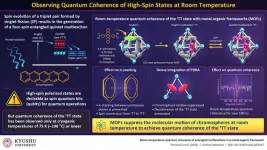
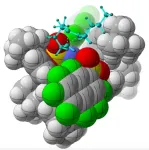
Fukuoka, Japan—In a study published in Science Advances, a group of researchers led by Associate Professor Nobuhiro Yanai from Kyushu University's Faculty of Engineering, in collaboration with Associate Professor Kiyoshi Miyata from Kyushu University and Professor Yasuhiro Kobori of Kobe University, reports that they have achieved quantum coherence at room temperature: the ability of a quantum system to maintain a well-defined state over time without getting affected by surrounding disturbances This breakthrough was made possible by embedding a chromophore, ...

Read the release
Watching others visibly dislike vegetables might make onlookers dislike them, too
Science

Watching others visibly dislike vegetables might make onlookers dislike them, too

Humans learn which behaviors pay off and which don’t from watching others. Based on this, we may draw conclusions about how to act – or eat. In the case of the latter, people may use each other as guides to determine what and how much to eat. This is called social modelling and is one of the most powerful social influences on eating behavior. In a new study, researchers in the UK investigated whether observing others’ facial expressions while eating raw broccoli influenced young women’s liking and desire to ...

Read the release
Perinatal depression linked to increased risk of death
Science

Perinatal depression linked to increased risk of death

Women who suffer depression during or after pregnancy have a higher risk of death by both natural and unnatural causes, a new study of childbirth in Sweden published in The BMJ reports. The increased risk peaks in the month after diagnosis but remains elevated for as long as 18 years afterwards. Women who develop perinatal depression, which is to say depression during pregnancy or shortly after childbirth, are generally twice as likely to die of natural or, as in most cases, unnatural causes. They are six times more likely to commit than women without this form of depression. The increase ...

Read the release
Science

Texas A&M AgriLife Research gets $5.2 million grant for onion improvement

Texas A&M AgriLife Research received more than $5.2 million in grant funding from the U.S. Department of Agriculture’s National Institute of Food and Agriculture for a project to address multiple aspects of the southern U.S. onion harvest system. Subas Malla, Ph.D., Texas A&M AgriLife Research associate professor at the Texas A&M AgriLife Research and Extension Center in Uvalde, will serve as director for a short-day onion project. (Texas A&M AgriLife photo by Paul Schattenberg) The director for the “Ensuring Future Economic Viability of U.S. Short-Day ...

Read the release
Science

Preeclampsia and preterm birth risk may be reduced by calcium dose lower than current WHO standard

Key points: According to two trials of 11,000 pregnant women in India and in Tanzania, low-dose calcium supplementation (500 milligrams per day) appears as effective at reducing the risk of preeclampsia and preterm birth as high-dose calcium supplementation (1,500 milligrams per day). The World Health Organization currently recommends high-dose calcium supplementation—equivalent to three calcium pills a day—for pregnant women in contexts with low-calcium diets, predominantly low- and middle-income countries. Lowering the pill burden to one 500mg ...

Read the release
Science

Black people face strokes at higher rates, younger ages than white people

EMBARGOED FOR RELEASE UNTIL 4 P.M. ET, WEDNESDAY, JANUARY 10, 2024 MINNEAPOLIS – Black people consistently had a higher rate of stroke than white people over a recent 22-year period, according to a study published in the January 10, 2024, online issue of Neurology®, the medical journal of the American Academy of Neurology. The study also found that the average age of Black people experiencing stroke was nearly 10 years younger than that of white people, another inequity that grew over time. “We found that the rate of stroke is decreasing over time in both Black and white people—a very encouraging trend for U.S. prevention efforts,” said study ...

Read the release
Science

ASBMB announces 2024 class of fellows

The American Society for Biochemistry and Molecular Biology today announced its 2024 class of fellows. The honorific program recognizes scientists who have made outstanding contributions to the field through their research, teaching, mentoring or other forms of service. Edward Eisenstein, an associate professor of bioengineering at the University of Maryland and ASBMB Membership Committee chair, and Judith Bond, an adjunct professor of biochemistry and biophysics at the University of North Carolina at Chapel Hill and ...

Read the release
Researchers step closer to mimicking nature’s mastery of chemistry
Science

Researchers step closer to mimicking nature’s mastery of chemistry

In nature, organic molecules are either left- or right-handed, but synthesizing molecules with a specific “handedness” in a lab is hard to do. Make a drug or enzyme with the wrong “handedness,” and it just won’t work. Now chemists at the University of California, Davis, are getting closer to mimicking nature’s chemical efficiency through computational modeling and physical experimentation. In a study appearing Jan. 10 in Nature, Professor Dean Tantillo, graduate students William DeSnoo and Croix Laconsay, and colleagues at the Max Planck ...

Read the release
Science

Dark web fentanyl-selling operations have grown rapidly, offer steep discounts

Overdose deaths in North America have skyrocketed, primarily because of the spread of illegally manufactured fentanyl. In a new study, researchers analyzed an early and prominent fentanyl-selling operation on the dark web. The organization sustained a significant growth rate, which allowed it to offer consumers steep discounts. In light of these findings, the authors conclude that it might be challenging to constrain supply by shuttering individual organizations since remaining organizations could grow rapidly to fill unmet demand. The study was conducted by researchers at Carnegie ...

Read the release
Science

Can drinking alkaline water help prevent kidney stones? Not likely, study finds

Waltham — January 10, 2024 — Bottled water marketed as "alkaline water" is unlikely to be an effective alternative for prevention of recurrent urinary stones, reports a study in the January issue of The Journal of Urology®, an Official Journal of the American Urological Association (AUA). The journal is published in the Lippincott portfolio by Wolters Kluwer. "While alkaline water products have a higher pH than regular water, they have a negligible alkali content – ...

Read the release
From the original Press-News collection. Issuers of news releases are responsible for the accuracy of their content.