THE ORIGINAL COLLECTION · SINCE 2010

Science
press releases.

Research announcements from universities, hospitals and scientific institutions. Explore the stories, people and discoveries behind the headlines.

Original publication datesPage 456
FIND A STORY

Find a past release.

Dates and source material belong to the original release.

Read our research explainers

Browse the collection · original publication order

Science

Can children recognize sick faces?

According to the World Health Organization, globally, infectious disease is a leading cause of death among children. Furthermore, children are more likely than adults to contract infectious illnesses. However, there’s a gap in research measuring children’s responses to sick faces. It is important to understand how children’s ability to recognize and avoid sickness emerges and develops to help improve children’s health and public health more broadly. Previous research has only reported that adults can use faces to recognize if someone is sick and make judgments about whether to approach or avoid them. Researchers from the University ...

Read the release

Science

Are you breaking your body clock?

Researchers are using mathematical models to better understand the effects of disruptions like daylight savings time, working night shifts, jet lag or even late-night phone scrolling on the body’s circadian rhythms. The University of Waterloo and the University of Oxford researchers have developed a new model to help scientists better understand the resilience of the brain’s master clock: the cluster of neurons in the brain that coordinates the body’s other internal rhythms. They also hope to suggest ...

Read the release
Science

Nauseous territory: outfoxing predators using baits that make them barf

Introduced foxes, dogs, cats, rats, and other predators kill millions of native animals every year, but what if they were conditioned to associate this prey with food that made them ill? A team of international researchers have shown the potential to do just that, burying baits containing capsules of levamisole, a chemical that induces nausea and vomiting when consumed by predators. In a world first experiment conducted in south-eastern Australia, where introduced red foxes are responsible for countless wildlife deaths, the Australian National University (ANU) and University of South Australia scientists laid baits of fried deboned chicken, with some containing ...

Read the release
Science

Smartphone app may support drinkers who overindulge to drink less heavily

Access to a smartphone alcohol intervention app helped university students to cut down their overall alcohol consumption and the number of days they drank heavily, suggests a study published in The BMJ today. Unhealthy drinking is the biggest risk factor to health for 15 to 49-year olds, and unhealthy use of alcohol is especially prevalent among adult students, prompting the authors to design a smartphone app to encourage healthier drinking among this group. The authors tested the app in 1770 university students who had screened positive for ...

Read the release
The modern sea spider had started to diversify by the Jurassic, study finds
Science

The modern sea spider had started to diversify by the Jurassic, study finds

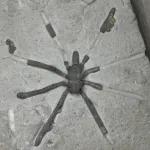
An extremely rare collection of 160-million-year-old sea spider fossils from Southern France are closely related to living species, unlike older fossils of their kind. These fossils are very important to understand the evolution of sea spiders. They show that the diversity of sea spiders that still exist today had already started to form by the Jurassic. Lead author Dr Romain Sabroux from the University of Bristol’s School of Earth Sciences, said: “Sea spiders (Pycnogonida), are a group of marine animals that is overall very poorly studied. “However, ...

Read the release
Real-time parking info now available through UTA Parking Finder app
Science

Real-time parking info now available through UTA Parking Finder app

The University of Texas at Arlington has launched a new digital parking platform this fall that gives users real-time knowledge of available parking spaces, electric vehicle charging locations and garage/lot percentage occupancy. The UTA Parking Finder is currently live and enables students, employees and visitors to make informed parking decisions in real time. Additional parking lot parking sensors will be added during the next three years until approximately 85% of all parking space on campus is covered. The North Central Texas Council of Governments and Modii, a provider of modern mobility solutions, ...

Read the release
The Global Flourishing Study launches open access of sample research data with the Center for Open Science
Science

The Global Flourishing Study launches open access of sample research data with the Center for Open Science

Charlottesville, VA – The first sample dataset from the Global Flourishing Study (GFS) initiative is now available to researchers, with the project’s initial full dataset scheduled for release in the coming months through the Center for Open Science (COS). The GFS, a partnership among Gallup, COS, and researchers at Baylor University and Harvard University, is a $43.4 million, five-year study of 200,000 individuals in 22 countries. The GFS data will be an open-access resource for researchers, journalists, policymakers, and ...

Read the release
CCNY scientists trap light inside a magnet
Science

CCNY scientists trap light inside a magnet

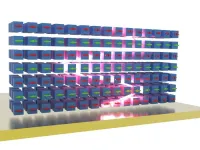
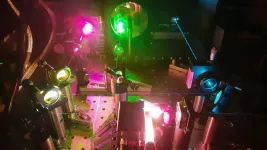
A new study led by Vinod M. Menon and his group at the City College of New York shows that trapping light inside magnetic materials may dramatically enhance their intrinsic properties. Strong optical responses of magnets are important for the development of magnetic lasers and magneto-optical memory devices, as well as for emerging quantum transduction applications. In their new article in Nature, Menon and his team report the properties of a layered magnet that hosts strongly bound excitons -- quasiparticles with particularly strong optical interactions. Because of that, the material is capable of trapping light -- all by itself. As their experiments ...

Read the release
Science

Brinter joins RegenMed Hub

WINSTON-SALEM, NC, August 2023 – Brinter Bio-Implant company joined the RegeneratOR’s Innovation Accelerator in 2023, located in the Regenerative Medicine Hub (RegenMed Hub), a rapidly growing regenerative medicine ecosystem based in the Innovation Quarter, in Winston-Salem. Brinter is developing the world’s first personalized 3D bioprinted implants for meniscus repair using the company’s patented 3D bioprinting technology. The company’s bioprinters use a modular multi-material 3D bioprinting platform scalable from manual ...

Read the release
Researchers achieve high-speed super-resolution imaging with a large field of view
Science

Researchers achieve high-speed super-resolution imaging with a large field of view

WASHINGTON — Researchers have developed a fluorescence microscope that uses structured illumination for fast super-resolution imaging over a wide field of view. The new microscope was designed to image multiple living cells simultaneously with a very high resolution to study the effects of various drugs and mixtures of drugs on the body. “Polypharmacy — the effect of the many combinations of drugs typically prescribed to the chronically sick or elderly — can lead to dangerous interactions and is becoming a major issue,” said Henning Ortkrass ...

Read the release
Mosquito nets treated with multiple insecticides can control malaria when pyrethroid resistance leads normal nets to fail
Science

Mosquito nets treated with multiple insecticides can control malaria when pyrethroid resistance leads normal nets to fail

Mosquito nets treated with multiple insecticides can control malaria when pyrethroid resistance leads normal nets to fail ### Article URL: https://journals.plos.org/plosone/article?id=10.1371/journal.pone.0289469 Article Title: Effectiveness of dual active ingredient insecticide-treated nets in preventing malaria: A systematic review and meta-analysis Author Countries: Australia, USA, Malawi Funding: This work was funded by the World Health Organisation, APW202903809 The funder of the study had a role in the development of the protocol, the wording and development of the review questions, the interpretation ...

Read the release
Science

Schizophrenia genetic risk factor impairs mitochondrial function

Researchers at Rutgers and Emory University are gaining insights into how schizophrenia develops by studying the strongest-known genetic risk factor. When a small portion of Chromosome 3 is missing – known as 3q29 deletion syndrome – it increases the risk for schizophrenia by about 40 fold. Researchers have now analyzed overlapping patterns of altered gene activity in two models of 3q29 deletion syndrome, including mice where the deletion has been engineered in using CRIPSR, and human brain organoids, or three-dimensional tissue cultures used to study disease. These two systems both exhibit impaired mitochondrial ...

Read the release
Science

Research informs WHO malaria net guideline update

The World Health Organisation (WHO) has updated its recommendation for malaria-preventing mosquito nets based on new research from the University of Adelaide. Dr Timothy Barker, of the JBI Adelaide GRADE Centre, located at the University of Adelaide, led a team which proved the effectiveness of a combination of insecticides when used to treat malaria-preventing mosquito nets. Mosquito nets treated with pyrethroid insecticides have been distributed into malaria-prone regions globally since 2005, but some mosquito populations have developed a resistance to the substance. “The number of malaria cases actually ...

Read the release
New leaf-tailed gecko from Madagascar is a master of disguise
Science

New leaf-tailed gecko from Madagascar is a master of disguise

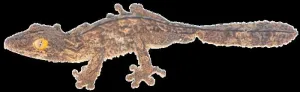
Leaf-tailed geckos are masters of camouflage. Some species have skin flaps around the whole body and head, as well as flattened tails. During the day, they rest head-down on tree trunks with these skin flaps spread out, and blend seamlessly into their surroundings, making them nearly impossible to spot. At night, they awaken to prowl the fine branches of the understory looking for invertebrate prey. “When we first discovered this species in 2000, we already suspected it might be new to science,” says Dr Frank Glaw, curator of herpetology at the Bavarian State Collection of Zoology, lead author on the study. “But ...

Read the release
Science

MD Anderson research highlights for August 16, 2023

HOUSTON ― The University of Texas MD Anderson Cancer Center’s Research Highlights showcases the latest breakthroughs in cancer care, research and prevention. These advances are made possible through seamless collaboration between MD Anderson’s world-leading clinicians and scientists, bringing discoveries from the lab to the clinic and back. Recent developments include a novel single-cell sequencing technology that allows for rapid analyses of archived and frozen cells, greater understanding of the ...

Read the release
Science

Collecting clean water from fog

In countries such as Peru, Bolivia and Chile, it’s not uncommon for people who live in foggy areas to hang up nets to catch droplets of water. The same is true of Morocco and Oman. These droplets then trickle down the mesh and are collected to provide water for drinking, cooking and washing. As much as several hundred litres of water can be harvested daily using a fog net only a few square metres in area. For regions with little rain or spring water, but where fog is a common occurrence, this can be a blessing. One crucial drawback with this method, however, ...

Read the release
Science

Prevalence, factors associated with vaping CBD among adolescents

About The Study: In this study of 28,000 middle and high school students, the prevalence of vaping cannabidiol (CBD) was high, particularly among e-cigarette users and Hispanic and sexual minority populations. The findings suggest that evidence-based educational campaigns, interventions, and public policy changes are needed to reduce the harmful health outcomes possible with vaping CBD among developing youths. Authors: Hongying Daisy Dai, Ph.D., of the University of Nebraska Medical Center in Omaha, is the corresponding author. To access the embargoed study: Visit our For The Media website at this link https://media.jamanetwork.com/ (doi:10.1001/jamanetworkopen.2023.29167) Editor’s ...

Read the release
Science

ASBMB names 2024 award winners

The American Society for Biochemistry and Molecular Biology announced today the winners of its annual awards. Colleagues and other leaders in the field nominated the winners for making significant contributions to biochemistry and molecular biology and the training of emerging scientists. The recipients will give talks about their work at the society’s 2024 annual meeting, Discover BMB, slated for March 23–26 in San Antonio. In addition to cash prizes ranging from $2,000 to $35,000, each ASBMB award consists of a plaque and transportation ...

Read the release
Science

Gray wolf recovery is a success—is that a problem?

Over the past 30 years, efforts to recover gray wolf populations in the United States have been broadly successful, with many regions now sporting robust populations of the charismatic carnivore. Writing in BioScience, wolf experts David E. Ausband and L. David Mech describe the conservation landscape and also the obstacles that wolves face as their populations expand into their historical ranges. "Remarkable wolf conservation success yields remarkable challenges," ...

Read the release
Science

Professor Ibrahim Abubakar awarded 2023 Roux Prize

SEATTLE, Wash. August 16, 2023–Distinguished global health leader Ibrahim Abubakar is the recipient of the 2023 Roux Prize for his dedication to improve health outcomes over the last three decades. Now in its 10th year, the Roux Prize has been recognizing individuals all over the globe who have leveraged evidence-based health data to improve population health. The Roux Prize is awarded by the Institute for Health Metrics and Evaluation (IHME) at the University of Washington’s School of Medicine. “Prof. Abubakar has been steadfast in his contributions to global health. His expertise and advocacy have directly affected policy implementation and ...

Read the release
Cleaning water with ‘smart rust’ and magnets (video)
Science

Cleaning water with ‘smart rust’ and magnets (video)

SAN FRANCISCO, Aug. 16, 2023 — Pouring flecks of rust into water usually makes it dirtier. But researchers have developed special iron oxide nanoparticles they call “smart rust” that actually makes it cleaner. Smart rust can attract many substances, including oil, nano- and microplastics, as well as the herbicide glyphosate, depending on the particles’ coating. And because the nanoparticles are magnetic, they can easily be removed from water with a magnet along with the pollutants. Now, the team is reporting that they’ve ...

Read the release
Science

Tubing and swimming change the chemistry and microbiome of streams

SAN FRANCISCO, Aug. 16, 2023 — With Labor Day approaching, many people are preparing to go tubing and swimming at local streams and rivers. These delightful summertime activities seem innocuous, but do they have an impact on these waterways? Today, scientists report preliminary results from the first holistic study of this question, which shows that recreation can alter the chemical and microbial fingerprint of streams, but the environmental and health ramifications are not yet known. The researchers will present their results at the fall meeting of the American Chemical Society (ACS). ACS Fall 2023 is a hybrid meeting ...

Read the release
Harnessing big data reveals birds’ coexisting tactics
Science

Harnessing big data reveals birds’ coexisting tactics

Birds likely hold smart insights about coexisting in popular habitats– especially as climate change looms. But tapping into that knowledge has a big hurdle: knowing where and how numerous birds live successfully in vast environments. In today’s biological research journal Proceedings of the Royal Society B, scientists at Michigan State University (MSU) peeled back layer upon layer of big data to tease out real-life answers that until now have been explored mostly in small-scale experiments. Sam Ayebare, a PhD candidate from Uganda, has led the work that is the first steps to understanding how so many birds can coexist in the vast Albertine ...

Read the release
Science

Six strategies could boost NY City housing by 300,000 units over decade

Six policies aimed boosting residential housing construction in New York City could spark the production of roughly 300,000 additional new housing units over a decade, according to a new RAND Corporation report. The additional housing units would represent more than a 160% increase over recent annual housing production levels in the city, according to the report. Researchers say the surge in housing supply likely would lead to increased affordability through greater competition among landlords for tenants in the short term and an increase in naturally occurring ...

Read the release
Team compares reanalysis datasets with Advanced Himawari Imager measurements over East Asia
Science

Team compares reanalysis datasets with Advanced Himawari Imager measurements over East Asia

Today’s weather satellites provide scientists with a unique opportunity to evaluate the abilities of various reanalysis datasets to depict multilayer tropospheric water vapor. So a research team undertook a study to assess multilayer water vapor depiction in six representative reanalysis datasets against the measurements from the Advanced Himawari Imager over East Asia. Because water vapor is important in the formation of clouds and precipitation, it is vital for scientists to better understand water vapor and the biases among various datasets. Their work is published in the journal Advances in Atmospheric Science on July 29, 2023. Scientists produce reanalysis datasets when ...

Read the release
From the original Press-News collection. Issuers of news releases are responsible for the accuracy of their content.