THE ORIGINAL COLLECTION · SINCE 2010

Science
press releases.

Research announcements from universities, hospitals and scientific institutions. Explore the stories, people and discoveries behind the headlines.

Original publication datesPage 468
FIND A STORY

Find a past release.

Dates and source material belong to the original release.

Read our research explainers

Browse the collection · original publication order

Science

Often, consumers inadvertently give too much credit to products’ ‘scientifically studied’ claims

Key takeaways A new study finds that consumers often misremember if a product is labeled “scientifically studied” or “scientifically proven” — despite the significant difference in meaning between the two phrases. UCLA psychologists conducted an experiment with one group of college students and another group of older adults to determine whether they would accurately recall which claim was made in an advertisement for a dietary supplement. Only 26% of subjects correctly remembered which phrase was used, and the percentage who recalled the information ...

Read the release

Sahara dust can enhance removal of methane
Science

Sahara dust can enhance removal of methane

The study by Maarten van Herpen et al., entitled “Photocatalytic Chlorine Atom Production on Mineral Dust-Sea Spray Aerosols over North Atlantic,” was funded in part by the NGO Spark Climate Solutions. It incorporates a proposed new mechanism whereby blowing mineral dust mixes with sea-spray to form Mineral Dust-Sea Spray Aerosol (MDSA). The results suggest that MDSA is activated by sunlight to produce an abundance of chlorine atoms, which oxidize atmospheric methane and tropospheric ozone via photocatalysis. Largely composed of blowing dust from the Sahara Desert combined with sea salt aerosol from the ocean, MDSA is the dominant source of atmospheric ...

Read the release
Unlocking secrets of the elusive ghost shark
Science

Unlocking secrets of the elusive ghost shark

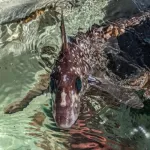
Researchers from the University of Florida and the Seattle Aquarium are exploring 100 meters underwater in the Pacific Northwest this summer to learn more about mysterious ghost sharks, one of the strangest beasts from the depths of the ocean. Using remotely operated underwater vehicles, or ROVs, the scientists searched for nesting grounds of the Pacific spotted ratfish, Hydrolagus colliei, a ghostlike fish that lurks on the ocean floor. “We know very little about these elusive relatives of sharks and even less about their spawning habits and embryonic development,” said ...

Read the release
NIH researcher Rafael de Cabo, PhD receives AFAR 2023 Irving S. Wright Award of Distinction
Science

NIH researcher Rafael de Cabo, PhD receives AFAR 2023 Irving S. Wright Award of Distinction

The American Federation for Aging Research (AFAR), a national non-profit organization whose mission is to support and advance healthy aging through biomedical research, is pleased to recognize the exemplary contributions of Rafael de Cabo, PhD, to the field of aging research through the 2023 Irving S. Wright Award of Distinction. This award is named in honor of AFAR’s founder and recognizes exceptional contributions to basic or clinical research in the field of aging. Established in 1982, the award is a framed citation and carries a cash prize of $5,000. Dr. de Cabo is Senior Investigator of the ...

Read the release
Science

Muscadine wine shows promise in improving aging skin

Could muscadine wine help perk up sagging skin? According to a new study, women who drank two glasses of dealcoholized muscadine wine daily showed significant improvements in the elasticity and water retention of their skin compared with those who consumed a placebo. The study is the first time scientists have studied the impacts of nonalcoholic wine consumption on skin health in a randomized clinical trial. Researchers attribute the beneficial effects to chemical compounds called polyphenols that naturally occur in many plants. “Muscadine grapes have been found to have a unique polyphenolic profile in comparison to other red wine varieties,” ...

Read the release
Dance and the state: Research explores ballet training in Ukraine
Science

Dance and the state: Research explores ballet training in Ukraine

BINGHAMTON, N.Y. -- Ballet training centers of Ukraine successfully resist co-optation by both neo-imperial and nationalist ideologies, forming robust and inclusive dancing communities that in many ways mirror structures of modern Ukrainian society, according to research from Binghamton University, State University of New York. The signature Vaganova style of Soviet ballet can be described in a number of ways: exacting, athletic, classical, Russian. It’s also uniform across post-Soviet training academies, including those based in now-independent Ukraine. Training shapes bodies, and post-Soviet dancers still begin ...

Read the release
Key to preventing HIV progression lies in the gut
Science

Key to preventing HIV progression lies in the gut

Restoring and improving gut health may be key to slowing HIV progression to AIDS, according to a new study by University of Pittsburgh infectious diseases scientists published today in the journal JCI Insight. The animal study, which was performed with simian immunodeficiency virus (SIV), the monkey form of HIV, revealed that tackling only systemic immune activation and inflammation when attempting to control disease progression and comorbidities isn’t effective. Instead, treatments should target the root cause of those problems and focus on healing the gut. “It ...

Read the release
Science

Risk of forced labor is widespread in U.S. food supply, study finds

Eliminating forced labor is a vital starting point for creating a just and sustainable food supply, but most of us don’t know much about the labor conditions involved in producing our food. It’s possible that the people who picked and processed some of the items on our dinner table worked in conditions that involved force, fraud, coercion, or debt bondage. In a study published July 24 in Nature Food, researchers at the Friedman School of Nutrition Science and Policy at Tufts University and the University of Nottingham Rights Lab calculated the risk of forced labor across all aspects of the U.S. food supply, excluding seafood. They found that the majority of forced ...

Read the release
Science

Study: Inflation Reduction Act’s cap on insulin out-of-pocket costs boosts prescription fills

LOS ANGELES – The Inflation Reduction Act’s policy capping out-of-pocket costs for insulin to $35 for a month’s supply led to increases in the total number of insulin fills for Medicare beneficiaries, according to a new study from the USC Schaeffer Center for Health Policy & Economics and University of Wisconsin–Madison. Following the cap’s enactment in January 2023, the number of insulin fills among Medicare Part D enrollees increased from 519,588 to 523,564 per month. In contrast, the number of insulin fills decreased among older adults without Medicare during the same period. The study was published today in the Journal of ...

Read the release
Science

FASEB joins Society Publishers to recommend diversity initiatives for publications

ROCKVILLE, Md. — The Federation of American Society for Experimental Biology (FASEB) recently co-authored a report to provide guidance to society publishers on how to address diversity and inclusivity matters within their journal programs. Titled Recommendations for Equity, Diversity, and Inclusion Initiatives for Society Publishers, the report was published by the Society Publishers’ Coalition, of which FASEB is a member. Darla P. Henderson, PhD, FASEB Director of Open Science and Research Integrity and Director of Publications, represented FASEB and was among the report’s ...

Read the release
Science

PKU researchers make major progress in convective turbulence

Researchers from the Department of Mechanics and Engineering Science at Peking University (PKU), led by Prof. Chen Shiyi and Prof. Yang Yantao, have recently proposed a groundbreaking mechanism to enhance the efficiency of heat transfer in convective turbulence. The paper has been published in the first-class journal Physical Review Letters, entitled “Boundary-Layer Disruption and Heat-Transfer Enhancement in Convection Turbulence by Oscillating Deformations of Boundary.” Convective turbulence, driven by gravity-induced instabilities resulting from temperature ...

Read the release
Science

How toxic is alcohol? This PKU-Oxford team seeks answers

Recently, a study conducted by researchers from Peking University and Oxford Population Health shed light on the susceptibility of Chinese men to 60 diseases related to alcohol consumption. The study, titled "Alcohol consumption and risks of more than 200 diseases in Chinese men," was published in the prestigious journal Nature Medicine. Alcohol consumption poses a significant global health threat, with previous research highlighting its strong association with diseases such as liver cirrhosis, stroke, and various types of cancer. However, there has been a lack of ...

Read the release
MSU study links cadmium levels in women’s urine to endometriosis
Science

MSU study links cadmium levels in women’s urine to endometriosis

EAST LANSING, Mich. – Women with a history of endometriosis had higher concentrations of cadmium in their urine compared to those without that diagnosis, according to a Michigan State University study that suggests the toxic metal could be linked to the development of endometriosis. Affecting one in 10 reproductive-age women, endometriosis is a gynecologic condition in which tissue that looks like the lining of the uterus, or womb, appears outside the uterus. Those with endometriosis can experience chronic, painful and debilitating symptoms, which can interfere with all aspects of life, including daily activity, work productivity, ...

Read the release
Science

Breastfeeding is associated with a 33% reduction in first-year post-perinatal infant mortality

Ann Arbor, July 24, 2023 - Among nearly 10 million US infants born between 2016 and 2018, breastfed babies were 33% less likely to die during the post-perinatal period (day 7−364) than infants who were not breastfed, reports a new study in the American Journal of Preventive Medicine, published by Elsevier. The findings build on previous US research with smaller datasets, which documented the association between the initiation of breastfeeding and the reduction of post-perinatal infant mortality by a range of 19% to 26%. Lead investigator Julie L. Ware, MD, MPH, ...

Read the release
These eight habits could lengthen your life by decades
Science

These eight habits could lengthen your life by decades

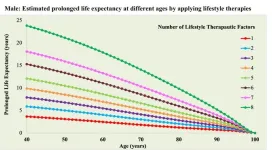
A new study involving over 700,000 U.S. veterans reports that people who adopt eight healthy lifestyle habits by middle age can expect to live substantially longer than those with few or none of these habits. The eight habits are: being physically active, being free from opioid addiction, not smoking, managing stress, having a good diet, not regularly binge drinking, having good sleep hygiene, and having positive social relationships. According to the results, men who have all eight habits at age 40 would be predicted to live an average of 24 years longer than men with none of these habits. For women, having all eight healthy lifestyle factors ...

Read the release
Science

Upping your intake of omega-3s may help protect your hearing

Researchers report that blood levels of the omega-3 fatty acid docosahexaenoic acid (DHA) were inversely correlated with hearing difficulty in a new population-based cross-sectional study. Middle-aged and older adults with higher DHA levels were 8-20% less likely to report age-related hearing issues than those with lower DHA levels. “Higher DHA levels have previously been found to be associated with a lower risk of heart disease, cognitive impairment, and death. Our study extends these findings to suggest a role for DHA in maintaining ...

Read the release
Wormlike animals are first amphibians shown to pass microbes to their offspring
Science

Wormlike animals are first amphibians shown to pass microbes to their offspring

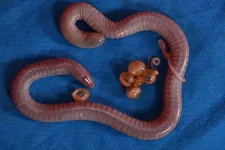
Caecilians are an elusive type of amphibian that primarily live underground and look like a cross between a worm and a snake. One of the few things that is known about caecilians is their unique method for feeding their young. Mothers produce a special layer of fatty skin tissue, which juvenile caecilians tear off with baby teeth that evolved specifically for that purpose. A new study shows that skin-feeding does more than provide nutrients for young caecilians. It also helps the mother pass microbes from her skin and gut down to her young, inoculating them to jump-start a healthy ...

Read the release
Gene conferring novel function to seahorse brood pouch identified
Science

Gene conferring novel function to seahorse brood pouch identified

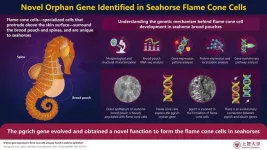
Teleost fish encompass a diverse group, among which seahorses display a unique morphology. The characteristic spines and brood pouch seen in seahorses feature distinctive epithelial cells—called flame cone cells—covered by a mucous cap. However, these cells are not found in the barbed pipefish Urocampus nanus or the seaweed pipefish Syngnathus schlegeli, close relatives of the seahorse, belonging to the Syngnathidae lineage. While research has hypothesized the function of the flame cone cells, their evolutionary origins have remained a mystery. Now, a team of scientists led by Assoc. Prof. Mari Kawaguchi and Prof. Shigeki Yasumasu from the Department of Materials ...

Read the release
Science

Researchers identify genes that directly influence what we eat

In one of the first large-scale studies of genes related to diet, researchers have uncovered almost 500 genes that appear to directly influence the foods we eat. The findings represent an important step toward using a person’s genetics to develop precision nutrition strategies that help improve health or prevent disease. “Some genes we identified are related to sensory pathways — including those for taste, smell, and texture — and may also increase the reward response in the brain,” said research team leader Joanne Cole, PhD, assistant professor in the Department ...

Read the release
Science

Researchers illuminate resilience of U.S. food supply chains

Researchers have identified a number of chokepoints in U.S. agricultural and food supply chains through a study that improves our understanding of agri-food supply chain security and may aid policies aimed at enhancing its resilience. The work is presented in a paper published in the July 20, 2023, issue of the journal Nature Food, “Structural chokepoints determine the resilience of agri-food supply chains in the United States,” by authors including CEE Associate Professor Megan Konar and CEE Ph.D. student Deniz Berfin Karakoc. The agricultural and food ...

Read the release
Science

IU team contributes six research papers to Human BioMolecular Atlas Program collection in Nature

Katy Börner’s team from the Luddy School of Informatics, Computing, and Engineering’s Cyberinfrastructure for Network Science Center has made significant contributions to constructing a Human Reference Atlas and has led or co-authored six research articles in a just-released HuBMAP package in Nature. Börner, Victor H. Yngve distinguished professor of engineering and information science, and CNS director, leads one of the two mapping components within the NIH-funded Human BioMolecular Atlas Program. Her team includes ...

Read the release
Research supporting increased crop growth published in Proceedings of the National Academy of Sciences
Science

Research supporting increased crop growth published in Proceedings of the National Academy of Sciences

NORMAN, OKLA. – An article describing research conducted by John Peters, Ph.D., chair of the Department of Chemistry and Biochemistry, Dodge Family College of Arts and Sciences at the University of Oklahoma, and fellow researchers, has been published in the journal Proceedings of the National Academy of Sciences. The article “Structural insights into redox signal transduction mechanisms in the control of nitrogen fixation by the NifLA system” explores the way bacteria regulate the expression of genes related to nitrogen fixation ­– the conversion of nitrogen in the air into ammonia that can help plants grow. “Using small angle X-ray scattering ...

Read the release
Study: How mother and infant sleep patterns interact during the first two years of life
Science

Study: How mother and infant sleep patterns interact during the first two years of life

URBANA, Ill. — New mothers can expect sleep deprivation in the first few years of baby’s life. But too little sleep can take a toll on the health of both mother and child. A new study from the University of Illinois Urbana-Champaign looks at maternal and infant sleep patterns, identifying predictors and providing recommendations for instilling healthy habits. “The first two years is a really critical period where a lot of development is going on, and sleep is important for health. We wanted to look at the association of mother and infant sleep and whether it changes over time,” said Tianying ...

Read the release
NIH grant to facilitate high-speed bioprinting of bones, tracheas, organs
Science

NIH grant to facilitate high-speed bioprinting of bones, tracheas, organs

UNIVERSITY PARK, Pa. — Developing technology to quickly and efficiently bioprint human tissues at scale is the goal of a new project led by Penn State researchers. When fully developed, the technology will be the first to enable the fabrication of scalable, native tissues such as bones, tracheas and organs. The National Institute of Biomedical Imaging and Engineering at the National Institute of Health has awarded over $2 million in support of the project, led by Ibrahim T. Ozbolat, professor of engineering science and mechanics, biomedical engineering, and neurosurgery at Penn State. “This will be a platform technology, which can be used for multiple purposes,” ...

Read the release
Science

Male crickets court females in unison – unless rivals get too close

Male crickets sing in unison to attract females – but stop singing if a rival gets too close, new research shows. University of Exeter scientists watched more than 100 male field crickets, and measured how often they chirped at the same time (called “singing overlap”). Singing by males one to five metres away from a listening male had a “stimulatory effect”, leading to a chorus of crickets singing together. However, males were less likely to sing if another cricket chirped within one metre – possibly because the territorial insects instead chose to fight ...

Read the release
From the original Press-News collection. Issuers of news releases are responsible for the accuracy of their content.