THE ORIGINAL COLLECTION · SINCE 2010

Science
press releases.

Research announcements from universities, hospitals and scientific institutions. Explore the stories, people and discoveries behind the headlines.

Original publication datesPage 469
FIND A STORY

Find a past release.

Dates and source material belong to the original release.

Read our research explainers

Browse the collection · original publication order

Researchers decipher the secrets of Benjamin Franklin’s paper money
Science

Researchers decipher the secrets of Benjamin Franklin’s paper money

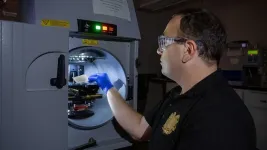
Benjamin Franklin may be best known as the creator of bifocals and the lightning rod, but a group of University of Notre Dame researchers suggest he should also be known for his innovative ways of making (literal) money. During his career, Franklin printed nearly 2,500,000 money notes for the American Colonies using what the researchers have identified as highly original techniques, as reported in a study published this week in the Proceedings of the National Academy of Sciences. The research team, led by Khachatur Manukyan, an associate research professor ...

Read the release
On the hunt for strangeness
Science

On the hunt for strangeness

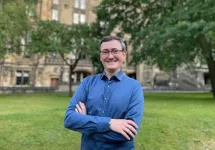
NEWPORT NEWS, VA – Peter Hurck has been searching for strange particles, named such because they contain strange quarks, since beginning work on his Ph.D. As the 2023 Jefferson Science Associates (JSA) Postdoctoral Prize winner, he’ll continue conducting data analyses to identify strange particles and learn about their properties. Many of these experiments that contribute to the data Hurck is analyzing are conducted at the U.S. Department of Energy's Thomas Jefferson National Accelerator Facility, which is managed and operated by JSA. “Strangeness hasn't been studied as much because it's quite ...

Read the release
Science

ASBMB expresses concerns on proposed NIH budget cuts

On July 19, the American Society for Biochemistry and Molecular Biology released a statement expressing concerns on the National Institutes of Health budget proposed in the House Labor, Health and Human Services, Education and Related Agencies funding bill. The bill allocates only $44.7 billion for NIH, which represents a 6.4% decrease from fiscal year 2023 levels and would have detrimental repercussions for the National Institute of Allergy and Infectious Diseases, the National Institute of Neurological Diseases and Stroke, the National Cancer Institute and the National Institute ...

Read the release
Science

Long-term changes in waves and storm surges have not impacted global coastlines

Changes in ocean wave and storm conditions have not caused long-term impacts on sandy coastlines in the past 30 years, a new study has found. Published today in Scientific Reports, the study draws on data from 30 years of global satellite and model studies to investigate whether changes in ocean wave conditions will have an impact on the stability of coastal environments. The compounding effect of climate change driven variations in waves, storm surge and sea level rise is projected to lead to shoreline position change along most of the world’s sandy coasts. A team ...

Read the release
Going the distance for better wireless charging
Science

Going the distance for better wireless charging

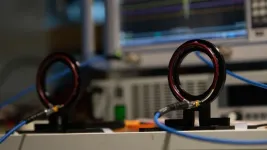
A better way to wirelessly charge over long distances has been developed at Aalto University. Engineers have optimized the way antennas transmitting and receiving power interact with each other, making use of the phenomenon of “radiation suppression”. The result is a better theoretical understanding of wireless power transfer compared to the conventional inductive approach, a significant advancement in the field. Charging over short distances, such as through induction pads, uses magnetic near fields to transfer power with high efficiency, but at longer distances the efficiency dramatically drops. New research shows that this high efficiency ...

Read the release
Science

Early peanut introduction gaining traction among US parents, but more work needed

Peanut introduction is not well known among those with less access to health-care information Having a pediatrician recommend early peanut introduction was best way for parents/caregivers to be informed Fear of an allergic reaction is the main reason parents decline, but only 1% infants had a reaction, which was mild CHICAGO --- In 2017, the National Institutes of Health (NIH) announced a dramatic reversal in its approach to peanut-allergy prevention, recommending parents expose their infants as young as four months old to peanuts to prevent peanut allergy. In the five years since, early introduction ...

Read the release
Science

A ‘toolbox of biocatalysts’ improves control over free radicals

(Santa Barbara, Calif.) — One of the central challenges for synthetic chemists is to impose control over free radicals. Highly reactive molecules with an unpaired electron, free radicals may be familiar to you; these are the type of molecules we take antioxidant supplements for, in an effort to tame oxidative stress. In the world of synthetic chemistry, however, free radicals hold a lot of promise. “Free radical chemistry is very useful for the synthesis of both bioactive small molecules and everyday polymers,” said UC Santa Barbara chemistry professor Yang Yang, an author of a paper on the matter that appears in Nature Catalysis. “However, ...

Read the release
Center for Open Science welcomes Yvette Seger to its Board of Directors
Science

Center for Open Science welcomes Yvette Seger to its Board of Directors

Charlottesville, VA –The Center for Open Science (COS) is delighted to announce the appointment of Yvette Seger, PhD to its Board of Directors. Seger brings impressive experience and strategic leadership across a range of areas that aligns well with COS’s mission, vision, and activities, including policy analysis, advocacy, and implementation. Seger holds multiple roles as Director of Science Policy, Deputy Director of the Office of Public Affairs, and Director of Strategic Scientific Program ...

Read the release
Science

Hardship affects the gut microbiome across generations

Key takeaways A UCLA-led study has shown that hardship experienced by mothers during their own childhood or during pregnancy is reflected in the composition of their 2-year-old children’s gut microbiome. It was previously understood that in rodents, prenatal stress affects microbiomes into adulthood, but how long after birth the effects lasted in humans was unknown. The changes to this community of microorganisms are likely among the ways that hardship affects a child’s socioemotional development. Hardship experienced by mothers during their own childhood or during pregnancy is reflected ...

Read the release
Science

WFSJ presents WCSJ2025 and WCSJ2027!

“It’s a great privilege to host the World Conference of Science Journalists 2025,” says Mandi Smallhorne, president of SASJA. “As it is the first time the conference has ever been held on African soil, this is truly a historic event, we’re delighted to be the pioneers! We look forward to welcoming the science journalists of the world to our home; we are sure it will be an eye-opening and rewarding experience. Our beautiful country has a lot to share, and that includes some fascinating scientific experiences, from the Square Kilometre Array, to cutting edge genomic sequencing, to the Cradle of Humankind. We are brewing ...

Read the release
Science

Draining 401(k) accounts when changing jobs: the hidden time bomb undermining retirement savings

Key Takeaways: At job separation, 41.4% of employees cash out 401(k) savings, most draining their entire accounts. Cashing out increases with the proportion of the 401(k) balance contributed by employers. The “account composition effect” is most likely driven by behavioral rather than economic explanations. The cash-out option was presented to terminating employees in a salient way, unintentionally nudging them to withdraw their 401(k) savings. BALTIMORE, MD, July 17, 2023 – When researchers set out to study 401(k) retirement savings ...

Read the release
Science

Sending the shoes back? How about this lovely gift card? Cross-selling can help retailers avoid lost revenue from returns

https://www.rotman.utoronto.ca/Connect/MediaCentre/NewsReleases/20230720 Toronto - It’s become so darn easy to order stuff thanks to the miracles of online shopping. But it’s not so simple on the retailer end, especially when more than 16 per cent of those sales are later sent back. In the U.S., that adds up to a staggering $816 billion in lost revenue. Cross-selling can help, say a pair of researchers. Their experiments show that once we’ve chosen to buy something, we tend to consider that money as already spent or gone, also called ...

Read the release
Nature inspires breakthrough achievement: hazard-free production of fluorochemicals
Science

Nature inspires breakthrough achievement: hazard-free production of fluorochemicals

For the first time, Oxford chemists have generated fluorochemicals – critical for many industries – without the use of hazardous hydrogen fluoride gas. The innovative method was inspired by the biomineralization process that forms our teeth and bones. The results are published today in the leading journal Science. A team of chemists have developed an entirely new method for generating critically important fluorochemicals that bypasses the hazardous product hydrogen fluoride (HF) gas. ...

Read the release
Science

Could early induction of labor reduce inequities in pregnancy outcomes?

Inducing labor at 39 weeks of pregnancy has the greatest benefit in risk reduction for women from more socioeconomically deprived areas, according to a new study published July 13th in the open access journal PLOS Medicine by Ipek Gurol-Urganci of the London School of Hygiene & Tropical Medicine, UK, and colleagues. The findings suggest that increased uptake of induction of labor at 39 weeks may help reduce inequities in adverse perinatal outcomes. Adverse perinatal outcomes— which include stillbirths, neonatal ...

Read the release
Science

Biobank-scale imaging data unveils the genetic architecture of the human skeletal form

Combining data from full-body x-ray images and associated genomic data from more than 30,000 UK Biobank participants, researchers have helped illuminate the genetic basis of human skeletal proportions. The findings not only provide new insights into the evolution of the human skeletal form and its role in musculoskeletal disease, but they also demonstrate the utility of using population-scale imaging data from biobanks to understand both disease-related and normal physical variation among humans. Of all primates, humans are the only ones to have evolved to be normally bipedal, an adaptation that may have facilitated the use of tools and accelerated cognitive development. ...

Read the release
Genes that shape bones identified, offering clues about our past and future
Science

Genes that shape bones identified, offering clues about our past and future

Using artificial intelligence to analyze tens of thousands of X-ray images and genetic sequences, researchers from The University of Texas at Austin and New York Genome Center have been able to pinpoint the genes that shape our skeletons, from the width of our shoulders to the length of our legs. The research, published as the cover article in Science, pulls back a curtain on our evolutionary past and opens a window into a future where doctors can better predict patients’ risks of developing conditions such as back pain or arthritis in later life. “Our research is a powerful demonstration of the impact of AI in medicine, particularly when it comes to analyzing ...

Read the release
Science

These bones were made for walking

NEW YORK, NY--Perhaps the most profound advance in primate evolution occurred about 6 million years ago when our ancestors started walking on two legs. The gradual shift to bipedal locomotion is thought to have made primates more adaptable to diverse environments and freed their hands to make use of tools, which in turn accelerated cognitive development. With those changes, the stage was set for modern humans. The genetic changes that made possible the transition from knuckle-based scampering in great apes to upright walking in humans have now been uncovered in a new study by researchers ...

Read the release
Observing the long-postulated intermediate of catalytic amination reactions
Science

Observing the long-postulated intermediate of catalytic amination reactions

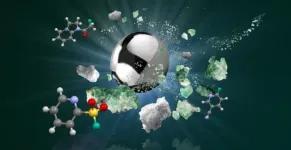
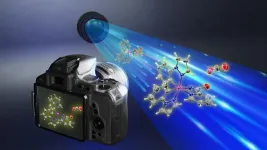
Led by Director CHANG Sukbok, scientists from the Center for Catalytic Hydrocarbon Functionalizations within the Institute for Basic Science (IBS) have made a breakthrough in understanding the structure and reactivity of a key intermediate in catalytic reactions. This intermediate, known as a transition metal-nitrenoid, plays a crucial role in converting hydrocarbons into amides, which are important in pharmaceuticals and materials science. In chemical reactions, intermediates are substances that are formed and consumed during the transformation of reactants into products. Hence, understanding these intermediates ...

Read the release
New advancements in assay development research
Science

New advancements in assay development research

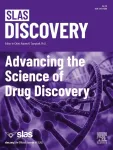
Oak Brook, IL – The July 2023 issue of SLAS Discovery, the open access journal focused on research progressing drug discovery, is now available. Volume 28, Issue 5, contains one short communication and four full-length articles covering assay quality metrics, fluorescence resonance energy transfer (FRET) and small molecule glycomimetics and other high-throughput screening-related research. Full-length articles Mathematical relationships between control group variability and assay quality metrics Authored by early ...

Read the release
Rice researchers earn prestigious Defense Department grants
Science

Rice researchers earn prestigious Defense Department grants

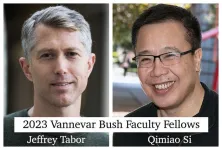
HOUSTON – (July 20, 2023) – Rice University professors Qimiao Si and Jeffrey Tabor, are recipients of prestigious Vannevar Bush Faculty Fellowships from the United States Department of Defense. Si, a theoretical quantum physicist, and Tabor, a bioengineer and synthetic biologist, are among 10 members of the 2023 class of Bush fellows named by the department’s Basic Research Office. The highly competitive, five-year fellowships are among the federal government’s most prestigious individual research honors. Bush fellowships are awarded annually and include $3 million to pursue ...

Read the release
Frontiers adopts CRediT to enhance clarity in research authorship
Science

Frontiers adopts CRediT to enhance clarity in research authorship

Frontiers journals have adopted the Contributor Roles Taxonomy (CRediT) to improve the way authors' contributions to research are communicated and acknowledged. The new system replaces the conventional free-text authorship descriptions with a standardized and transparent system that ensures consistency and accuracy in recognizing individual contributions. CRediT categorizes individual author contributions into well-defined roles and provides a clear, concise framework to describe the diverse contributions made by researchers ...

Read the release
From chaos to light
Science

From chaos to light

The transition to chaos is ubiquitous in nonlinear systems. Continuous-wave-driven photonic-chip-based Kerr microresonators exhibit spatiotemporal chaos, also known as chaotic modulation instability. For more than fifteen years such modulation instability states have been considered impractical for applications compared to their coherent-light-state counterparts, such as soliton states. The latter have been the centerpiece for numerous high-profile application demonstrations, from long-range optical communication to photonic computing. Now, researchers from the group of Tobias Kippenberg at EPFL have found a new way to harness the unique features of chaotic frequency combs to implement ...

Read the release
Bats struggle during organic farming transition
Science

Bats struggle during organic farming transition

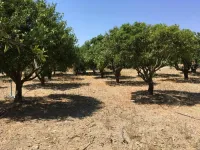
Bat activity falls as farms make the transition to organic agriculture, new research shows. Organic farming is better for biodiversity than conventional farming, which relies heavily on substances such as pesticides, herbicides and fertilisers. However, little is known about how wildlife is affected by the transition period when a farm goes organic. The new study, led by the universities of Bristol, Göttingen and Exeter, assessed the effects of organic farming by monitoring insect-eating bats at citrus ...

Read the release
Male killer whales protected by post-menopause mothers
Science

Male killer whales protected by post-menopause mothers

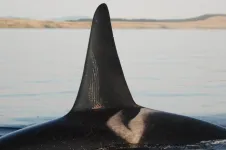
Post-menopause female killer whales protect their sons – but not their daughters – from fights with other whales, new research shows. Scientists studied “tooth rake marks” – the scarring left when one whale scrapes their teeth across the skin of another – and found males had fewer marks if their mother was present and had stopped breeding. Only six species – humans and five species of toothed whales – are known to experience menopause, and scientists have long been puzzled about why this occurs. The new study – by the universities ...

Read the release
Science

How eelgrass spread around the world

Seagrasses evolved from freshwater plants and use sunlight and carbon dioxide (CO2) for photosynthesis and are able to thrive in depths down to 50 metres. In contrast to algae, they possess roots and rhizomes that grow in sandy to muddy sediments. The grass-like, leaf-shoots produce flowers and complete their life cycle entirely underwater. Seeds are negatively buoyant but seed-bearing shoots can raft, thus greatly enhancing dispersal distances at oceanic scale. As a foundational species, eelgrass provides critical shallow-water habitats for diverse biotas and also provides numerous ecosystem services including carbon uptake. Seagrasses have recently been recognised as one of the important ...

Read the release
From the original Press-News collection. Issuers of news releases are responsible for the accuracy of their content.