THE ORIGINAL COLLECTION · SINCE 2010

Space
press releases.

Research announcements from universities, hospitals and scientific institutions. Explore the stories, people and discoveries behind the headlines.

Original publication datesPage 13
FIND A STORY

Find a past release.

Dates and source material belong to the original release.

Read our research explainers

Browse the collection · original publication order

Space

New study reveals how to reclaim space for civil society in times of democratic decline

A new study shows that highlighting shared values and common goals can significantly increase the acceptance of civic organizations that are often seen as controversial and delegitimized for challenging the status quo. The research tested different messaging strategies on more than 1,600 Jewish Israeli participants, using real-world examples from a delegitimized prominent NGO. Messages that focused on widely supported activities—like providing services to marginalized communities—or that framed the organization as part of a shared value-based identity led to greater perceived legitimacy. The findings offer a practical ...

Read the release
Space

Learning as an adventure: The lecture theatre in the spaceship

The low-threshold, playful communication of complex scientific content is a challenge. A team from the Game Lab Graz at the Institute of Human-Centred Computing at Graz University of Technology (TU Graz) has developed a solution for this. The learning environment Project Chimera, implemented as a computer game, enables gamified, story-based learning of more complex content from the fields of science and technology. Funded by an Epic Mega Grant from software and games developer Epic Games (Fortnite, Unreal Engine), a team led by Johanna Pirker and Saeed Safikhani has created a virtual 3D ...

Read the release
Space

NASA’s Magellan mission reveals possible tectonic activity on Venus

Vast, quasi-circular features on Venus’ surface may reveal that the planet has ongoing tectonics, according to new research based on data gathered more than 30 years ago by NASA’s Magellan mission. On Earth, the planet’s surface is continually renewed by the constant shifting and recycling of massive sections of crust, called tectonic plates, that float atop a viscous interior. Venus doesn’t have tectonic plates, but its surface is still being deformed by molten material from below. Seeking to better understand the underlying processes driving these deformations, the researchers studied a type of feature called a corona. ...

Read the release
Space

Dark matter formed when fast particles slowed down and got heavy, new theory says

A study by Dartmouth researchers proposes a new theory about the origin of dark matter, the mysterious and invisible substance thought to give the universe its shape and structure. The researchers report in Physical Review Letters that dark matter could have formed in the early life of the universe from the collision of high-energy massless particles that lost their zip and took on an incredible amount of mass immediately after pairing up, according to their mathematical models. While hypothetical, dark matter is believed to exist based on observed gravitational effects that cannot be explained by visible matter. Scientists ...

Read the release
Space

Ryan Cooke and Max Pettini receive $500,000 Gruber Cosmology Prize for Measuring a Key Value at the Dawn of the Universe

New Haven, Conn. — The 2025 Gruber Foundation Cosmology Prize recognizes Ryan Cooke and Max Pettini both for their determination of a key value in the composition of the universe moments after it came into existence and for perfecting the method that allowed them to make that measurement. Cooke and Pettini will equally share the $500,000 award and each will receive a gold laureate pin at a ceremony that will take place later this year. The citation honors them for “bringing the light element abundances and Big Bang Nucleosynthesis (BBN) into the realm of precision cosmology.” BBN is a theoretical model of the nuclear reactions in the first ...

Read the release
Space

Astronomers take a second look at twin star systems

New Haven, Conn. — Apples-to-apples comparisons in the distant universe are hard to come by. Whether the subject is dwarf galaxies, supermassive black holes, or “hot Jupiters,” astronomers can spend months or years searching for comparable objects and formations to study. And it is rarer still when those objects are side-by-side. But a new Yale study offers a road map for finding “twin” planetary systems — showing whether binary stars that orbit each other, and that were born at the same time and place, tend to host similar ...

Read the release
Space

Scientists precisely simulate turbulence in the Galaxy — it doesn’t behave like they thought

From the ocean’s rolling swells to the bumpy ride of a jetliner, turbulence is everywhere. It breaks large waves into smaller ones, cascading energy across scales. It is ubitquitous throughout our Galaxy and the broader Universe, shaping the behavior of plasma, stars, and magnetic fields. Yet despite its ubiquity, turbulence remains one of the greatest unsolved problems in physics. Now, by developing the world’s largest-ever simulations of magnetized turbulence, an international team of scientists has measured — with unprecedented precision — how ...

Read the release
Space

Exposome Moonshot launching in Washington D.C.

Under embargo until 10:00 AM EST May 12, 2025 Who? 500+ public health researchers, thought-leaders, policy-makers & civil society actors. What? Inaugural Exposome Moonshot Forum. Where? Johns Hopkins University Bloomberg Center, Washington D.C. When? Monday May 12th to Thursday May 15th, 2025: www.exposomemoonshot.org Background: The Human Genome Project, initiated in 1990 and completed in 2003, was a global scientific effort to map and sequence all genetic material, the information needed to ...

Read the release
Space

Universe decays faster than thought, but still takes a long time

The research by black hole expert Heino Falcke, quantum physicist Michael Wondrak, and mathematician Walter van Suijlekom (all from Radboud University, Nijmegen, the Netherlands) is a follow-up to a 2023 paper by the same trio. In that paper, they showed that not only black holes, but also other objects such as neutron stars can 'evaporate' via a process akin to Hawking radiation. After that publication, the researchers received many questions from inside and outside the scientific community about how long the process would take. They have now answered this question in the new article. Ultimate end The researchers calculated ...

Read the release
Space

Astrophysicist searches for gravitational waves in new way

University of Colorado Boulder astrophysicist Jeremy Darling is pursuing a new way of measuring the universe’s gravitational wave background—the constant flow of waves that churn through the cosmos, warping the very fabric of space and time. The research, published in The Astrophysical Journal Letters, could one day help to unlock some of the universe’s deepest mysteries, including how gravity works at its most fundamental level. “There is a lot we can learn from getting these precise measurements of gravitational waves,” said Darling, professor ...

Read the release
Space

Janice R. Lachance, J.D., FASAE selected for top position of global earth and space science association

WASHINGTON — The American Geophysical Union Board of Directors and Executive Search Committee is pleased to announce AGU’s new Executive Director and CEO will be Janice R. Lachance, J.D., Fellow of the American Society of Association Executives and the National Academy of Public Administration. “Janice has served as an exceptional interim Executive Director and CEO during the last two years, said AGU President Brandon Jones, Ph.D. “She has demonstrated the leadership qualities ...

Read the release
Space

Total and minimum energy efficiency tradeoff in robust multigroup multicast satellite communications

Satellite communication is an indispensable part of sixth generation of mobile communication systems (6G) given its global coverage and long-distance propagation. Energy consumption and channel acquisition are two critical issues in satellite communication systems. On the one hand, with the rapidly increasing energy wastage in wireless systems, green communication technology has attracted extensive attentions and energy efficiency (EE) becomes the key performance indicator in the transmission scheme design of satellite communications. On the other hand, channel state information (CSI) is well required in designing the beamforming, but it is infeasible for gateway ...

Read the release
Space

Black holes: Beyond the singularity

“Hic sunt leones,” remarks Stefano Liberati, one of the authors of the paper and director of IFPU. The phrase refers to the hypothetical singularity predicted at the center of standard black holes — those described by solutions to Einstein’s field equations. To understand what this means, a brief historical recap is helpful. In 1915, Einstein published his seminal work on general relativity. Just a year later, German physicist Karl Schwarzschild found an exact solution to those equations, which implied the existence of extreme objects now known as black holes. These are objects with mass so concentrated that nothing — not even light — ...

Read the release
Space

CAII receives NASA funding to assist Euclid space mission

The Center for Artificial Intelligence Innovation (CAII) at the National Center for Supercomputing Applications received $1 million in funding from NASA to support the Euclid space mission, which explores dark matter and dark energy throughout the universe. By developing and integrating an open-sourced deep learning framework to process images captured by Euclid, CAII and Principal Investigator Xin Liu aim to accurately and efficiently identify blended galaxies or overlapping sources of information that make data analysis much more difficult. “A significant challenge ...

Read the release
Space

AFAR Vincent Cristofalo Rising Star Award Ceremony to honor Daniel W. Belsky, Ph.D.

New York, NY and Anchorage, AK — On May 12, 2025, at the 53rd Annual Meeting of the American Aging Association (AGE) in Anchorage, Alaska, the American Federation for Aging Research (AFAR) will host an award ceremony to present the 2025 Vincent Cristofalo Rising Star Award in Aging Research to Daniel W. Belsky, PhD. The event will be held from 1-2pm AKDT in the Tikahtnu Ballroom of the Dena'ina Civic and Convention Center. The award will be presented by AFAR Scientific Director Steven N. Austad, PhD. The Vincent Cristofalo Rising Star Award in Aging Research is ...

Read the release
Space

Space junk falling to Earth needs to be tracked. Meteoroid sounds can help

Every year, Earth gets a bit bigger. Thousands of metric tons of space dust fall from the sky, while about 50 tons per year of meteorites crash land somewhere on the surface. Since the 1960s, space junk has also occasionally returned to Earth, falling from a hazy sphere of trash encircling the planet. Remnants of rockets, tools lost by space-walking astronauts, defunct satellites, and more fly through lower Earth orbit, reaching speeds of 18,000 miles per hour. When any item—whether space rock or space junk—enters the atmosphere, scientists try to track its path to estimate where it will land. Will the item in question plunk straight down, or will it fly along at an angle ...

Read the release
Space

Loss of genetic plant diversity is visible from space

Mountain regions are hotspots of biodiversity and represent some of the most species-rich habitats overall. However, these diverse ecosystems are being rapidly transformed by global change. Over the past five decades, rising temperatures and changes in land use at high altitudes have encouraged the growth and spread of highly competitive plants such as shrubs and trees – a process known as “mountain greening.” The specialized and often low-growing species of open grassland habitats are being pushed back as a result. Sideritis, a characteristic ...

Read the release
Space

Flares from magnetized stars can forge planets’ worth of gold, other heavy elements

Astronomers have discovered a previously unknown birthplace of some of the universe’s rarest elements: a giant flare unleashed by a supermagnetized star. The astronomers calculated that such flares could be responsible for forging up to 10 percent of our galaxy’s gold, platinum and other heavy elements. The discovery also resolves a decades-long mystery concerning a bright flash of light and particles spotted by a space telescope in December 2004. The light came from a magnetar — a type of star wrapped in magnetic fields trillions of times as strong as Earth’s — that had unleashed a giant flare. The powerful blast of radiation only lasted a few ...

Read the release
Space

Thirty-year mystery of dissonance in the “ringing” of black holes explained

Tokyo, Japan – A scientist from Tokyo Metropolitan University has solved the longstanding problem of a “dissonance” in gravitational waves emitted by a black hole. Using high precision computing and a new theoretical physics framework, it was discovered that it was caused by a resonance between a pair of distinctive “modes” i.e. different ways in which a black hole can “ring.” The phenomenon offers new insights into the nascent field of black hole spectroscopy. Black holes are astrophysical objects so dense that even light cannot escape their gravitational pull. Despite their awesome presence ...

Read the release
Space

Evidence blasted into space: Mystery why some meteorites look less shocked solved

Carbon-containing meteorites look like they had less severe impacts than those without carbon because the evidence was blasted into space by gases produced during the impact. The Kobe University discovery not only solves a 30-year-old mystery, but also provides guidelines for a future sampling mission to Ceres. Knowing what happens when meteorites collide is important for understanding the evolution of the solar system because it provides a window into the solar system’s past. And so, planetary scientists as well as astrobiologists analyzing meteorite samples have been ...

Read the release
Space

Astronomers discover a planet that’s rapidly disintegrating, producing a comet-like tail

MIT astronomers have discovered a planet some 140 light-years from Earth that is rapidly crumbling to pieces. The disintegrating world is about the mass of Mercury, although it circles about 20 times closer to its star than Mercury does to the sun, completing an orbit every 30.5 hours. At such close proximity to its star, the planet is likely covered in magma that is boiling off into space. As the roasting planet whizzes around its star, it is shedding an enormous amount of surface minerals and effectively evaporating away. The astronomers spotted the planet using NASA’s Transiting ...

Read the release
Space

World’s leading science competition identifies 19 breakthrough solutions around the globe with greatest potential to tackle the planetary crisis

The Frontiers Planet Prize names 19 National Champions – scientists offering scalable solutions to help keep humanity safely within planetary boundaries. Following an independent scientific assessment involving 100 experts, chaired by Professor Johan Rockström, the developer of the Planetary Boundaries framework, the prize ensures faster global scientific consensus around the innovative ideas with greatest potential to drive change. The Frontiers Planet Prize has today announced 19 National Champions from science ...

Read the release
Space

The chemical basis for life can form in interstellar ice

The Krebs cycle is a series of chemical reactions that occur in the cells of living beings. It can produce energy from the degradation of certain types of molecules (lipids, sugars, proteins). This energy is then used by the cell to produce the energy essential to cell function. These fine layers of ice form on dust grains in space, and are irradiated by ultraviolet radiation and cosmic rays. Organic molecules that play a role in the chemical processes behind the origins of life. At the Nice Institute of Chemistry (CNRS/Université Côte ...

Read the release
Space

New study unveils volcanic history and clues to ancient life on Mars

In a groundbreaking study co-authored by a Texas A&M University scientist, researchers have revealed new insights into the geological history of Mars' Jezero Crater, the landing site of NASA’s Perseverance rover. Their findings suggest that the crater's floor is composed of a diverse array of iron-rich volcanic rocks, providing a window into the planet’s distant past and the closest chance yet to uncover signs of ancient life. Research scientist Dr. Michael Tice, who studies geobiology and sedimentary geology in the Texas A&M College of Arts and ...

Read the release
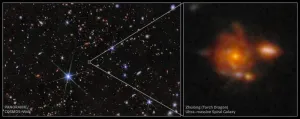
NSF NOIRLab astronomer discovers oldest known spiral galaxy in the Universe
Space

NSF NOIRLab astronomer discovers oldest known spiral galaxy in the Universe

Large, grand-design spiral galaxies like our own Milky Way are common in the nearby Universe. But they have proven hard to find in the early Universe, which is consistent with expectations that large disks with spiral arms should take many billions of years to form. However, assistant astronomer Christina Williams of NSF NOIRLab, which is funded by the U.S. National Science Foundation, has discovered a surprisingly mature spiral galaxy just one billion years after the Big Bang [1]. This is the most distant, earliest known ...

Read the release
From the original Press-News collection. Issuers of news releases are responsible for the accuracy of their content.