THE ORIGINAL COLLECTION · SINCE 2010

Space
press releases.

Research announcements from universities, hospitals and scientific institutions. Explore the stories, people and discoveries behind the headlines.

Original publication datesPage 14
FIND A STORY

Find a past release.

Dates and source material belong to the original release.

Read our research explainers

Browse the collection · original publication order

Space

"Big surprise": astronomers find planet in perpendicular orbit around pair of stars

Astronomers have found a planet that orbits at an angle of 90 degrees around a rare pair of peculiar stars. This is the first time we have strong evidence for one of these ‘polar planets’ orbiting a stellar pair. The surprise discovery was made using the European Southern Observatory’s Very Large Telescope (VLT). Several planets orbiting two stars at once, like the fictional Star Wars world Tatooine, have been discovered in the past years. These planets typically occupy orbits that roughly align with the plane in which their host stars orbit each ...

Read the release
Astronomers find rare twist in exoplanet’s twin star orbit
Space

Astronomers find rare twist in exoplanet’s twin star orbit

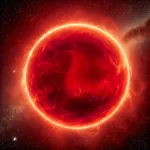
Astronomers have discovered a planet that orbits at a 90-degree angle around a rare pair of strange stars – a real-life ‘twist’ on the fictional twin suns of Star Wars hero Luke Skywalker’s home planet of Tatooine. The exoplanet, named 2M1510 (AB) b, orbits a pair of young brown dwarfs — objects bigger than gas-giant planets but too small to be proper stars. Only the second pair of eclipsing brown dwarfs known – this is the first exoplanet found on a right-angled path to the orbit of its two host stars. An international team of researchers led ...

Read the release
Crystal clues on Mars point to watery and possibly life-supporting past
Space

Crystal clues on Mars point to watery and possibly life-supporting past

A QUT-led study analysing data from NASA’s Perseverance rover has uncovered compelling evidence of multiple mineral-forming events just beneath the Martian surface – findings that bring scientists one step closer to answering the profound question: did life ever exist on Mars? The QUT research team led by Dr Michael Jones, from the Central Analytical Research Facility and the School of Chemistry and Physics, includes Associate Professor David Flannery, Associate Professor Christoph Schrank, Brendan Orenstein and Peter Nemere, together with researchers from North America and Europe. The findings were published in the prestigious journal ...

Read the release
Space

‘Cosmic radio’ could find dark matter in 15 years

Scientists have designed a ‘cosmic radio’ detector which could discover dark matter in 15 years. Published today in Nature, scientists at King’s College London, Harvard University, UC Berkley and others have shared the foundation of what they believe will be the most accurate dark matter detector to date. Dark matter is the unobservable form of matter could make up as much as 85% of mass in the Universe, but scientists are not sure exactly what it is. Axions are one of the leading ...

Read the release
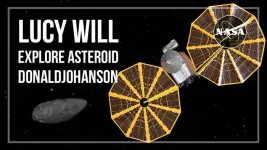
SwRI-led Lucy mission survey of main belt asteroid Donaldjohanson imminent
Space

SwRI-led Lucy mission survey of main belt asteroid Donaldjohanson imminent

SAN ANTONIO — April 15, 2025 —The Southwest Research Institute-led Lucy mission is preparing to survey the next target in its epic 4-billion-mile, 12-year, 11-asteroid tour. On April 20, 2025, NASA’s Lucy spacecraft will fly past the three-mile-wide main belt asteroid (52246) Donaldjohanson as a test run to the main event: visiting the never-before-explored Trojan asteroids in the Jupiter system. For billions of years, these mysterious space rocks have been gravitationally trapped in two swarms leading and trailing Jupiter in orbit around the Sun, holding clues to the formation of our solar system. NASA’s Lucy spacecraft will be the ...

Read the release
Space

Scientists may have solved a puzzling space rock mystery

An international team of researchers may have answered one of space science’s long-running questions – and it could change our understanding of how life began. Carbon-rich asteroids are abundant in space yet make up less than 5 per cent of meteorites found on Earth. An international team of scientists from Curtin University’s School of Earth and Planetary Sciences, the International Centre for Radio Astronomy (ICRAR), the Paris Observatory and more scoured the globe to find an answer. Published today in Nature Astronomy, researchers analysed close to 8500 meteoroids and meteorite impacts, using data from ...

Read the release
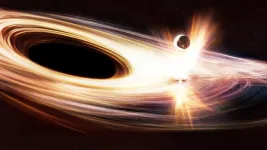
From boring to bursting: a giant black hole awakens
Space

From boring to bursting: a giant black hole awakens

Although we know that supermassive black holes (millions of times the mass of our Sun) lurk at the centre of most galaxies, their very nature makes them difficult to spot and study. In contrast to the popular idea of black holes constantly ‘gobbling up’ matter, these gravitational monsters can spend long periods of time in a dormant, inactive phase. This was true of the black hole at the heart of SDSS1335+0728, a distant and unremarkable galaxy 300 million light-years away in the constellation of Virgo. After being inactive for decades, it suddenly lit up and recently began producing unprecedented flashes of X-ray light. The first signs ...

Read the release
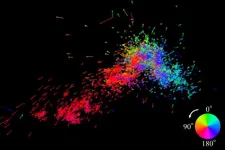
Research suggests our closest neighboring galaxy may be being torn apart
Space

Research suggests our closest neighboring galaxy may be being torn apart

A team led by Satoya Nakano and Kengo Tachihara at Nagoya University in Japan has revealed new insights into the motion of massive stars in the Small Magellanic Cloud (SMC), a small galaxy neighboring the Milky Way. Their findings suggest that the gravitational pull of the Large Magellanic Cloud (LMC), the SMC’s larger companion, may be tearing the smaller one apart. This discovery reveals a new pattern in the motion of these stars that could transform our understanding of galaxy evolution and interactions. The results were published ...

Read the release
'Hidden galaxies' could be smoking gun in universe riddle
Space

'Hidden galaxies' could be smoking gun in universe riddle

Astronomers have peered back in time to find what looks like a population of 'hidden' galaxies that could hold the key to unlocking some of the universe's secrets. If their existence is confirmed it would "effectively break current models of galaxy numbers and evolution". The possible galaxies may also provide the missing piece of the puzzle for the energy generation in the universe in infrared light. That's because their combined light would be enough to top-up the energy budget of the universe to the maximum we observe, effectively ...

Read the release
Space

Hubble Space telescope unveils the first images of ongoing star cluster mergers near the center of dwarf galaxies

A new study reports the first direct observation of merging star clusters in the nuclear region of dwarf galaxies. This detection confirms the feasibility of this formation route for nuclei in dwarf galaxies, which has long been debated. The study was published in Nature science journal, and led by Postdoctoral Researcher Mélina Poulain from the University of Oulu, Finland. Dwarf galaxies are the most abundant type of galaxies that populate the Universe. Composed of 100 times fewer stars than the ...

Read the release
Space

Do “completely dark” dark matter halos exist?

Every galaxy is thought to form at the center of a dark matter halo – a region of gravitationally bound matter that extends far beyond the visible boundaries of a galaxy. Stars are formed when gravity within dark matter halos draws in gas, but astrophysicists don’t yet know whether star-free dark matter halos exist. Now Ethan Nadler, a computational astrophysicist at UC San Diego, has calculated the mass below which halos fail to form stars. This work was done using analytic predictions from galaxy formation theory and cosmological simulations. "Historically, our understanding of dark matter has been ...

Read the release
In the search for life on exoplanets, finding nothing is something too
Space

In the search for life on exoplanets, finding nothing is something too

What if humanity's search for life on other planets returns no hits? A team of researchers led by Dr. Daniel Angerhausen, a Physicist in Professor Sascha Quanz's Exoplanets and Habitability Group at ETH Zurich and a SETI Institute affiliate, tackled this question by considering what could be learned about life in the universe if future surveys detect no signs of life on other planets. The study, which has just been published in The Astronomical Journal and was carried out within the framework of the Swiss National Centre of Competence in Research, PlanetS, relies on a Bayesian statistical analysis to establish the minimum number of exoplanets that should ...

Read the release
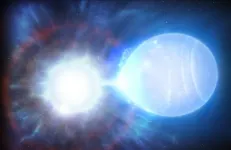
Warwick astronomers discover doomed pair of spiralling stars on our cosmic doorstep
Space

Warwick astronomers discover doomed pair of spiralling stars on our cosmic doorstep

University of Warwick astronomers have discovered an extremely rare, high mass, compact binary star system only ~150 light years away. These two stars are on a collision course to explode as a type 1a supernova, appearing 10 times brighter than the moon in the night sky. Type 1a supernovae are a special class of cosmic explosion, famously used as ‘standard candles’ to measure distances between Earth and their host galaxies. They occur when a white dwarf (the dense remnant core of a star) accumulates too much mass, is unable to withstand its own ...

Read the release
Melodies of musical ‘starquakes’ shed new light on how our galaxy formed
Space

Melodies of musical ‘starquakes’ shed new light on how our galaxy formed

They say music is the universal language of humankind, but some stars in our galaxy exhibit their own rhythm, offering fresh clues into how they and our galaxy evolved over time. According to an international team of researchers, including scientists from The Australian National University (ANU) and UNSW Sydney, some stars exhibit fluctuations in their brightness over time, which are caused by continuous ‘starquakes’. These fluctuations can be translated into frequencies, which can be used to determine a star’s age and other properties ...

Read the release
Space

Sound frequencies of stars sing of our galaxy’s past and future

A new study led by UNSW Sydney researchers into a cluster of stars 2700 light years away reveals their stages of evolution through the ‘sounds’ they make. This discovery will allow scientists to map the history of the Milky Way and other galaxies, accelerating knowledge in the field of astrophysics. Dr Claudia Reyes is the lead author of the study published today in Nature. While undertaking her PhD at the UNSW School of Physics, she studied 27 stars in a cluster of stars called M67. The stars in ...

Read the release
Mammals were adapting from life in the trees to living on the ground before dinosaur-killing asteroid
Space

Mammals were adapting from life in the trees to living on the ground before dinosaur-killing asteroid

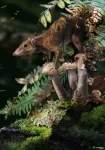
More mammals were living on the ground several million years before the mass extinction event that wiped out the dinosaurs, new research led by the University of Bristol has revealed. The study, published today in the journal Palaeontology, provides fresh evidence that many mammals were already shifting toward a more ground-based lifestyle leading up to the asteroid’s impact. By analysing small-fossilised bone fragments, specifically end of limb bones, from marsupial and placental mammals found in Western North America - the only place with a well-preserved terrestrial fossil record from this time – the team discovered signs that ...

Read the release
Space

Organic molecules of unprecedented size discovered on Mars

The longest organic molecules identified to date on Mars have recently been detected by scientists from the CNRS1, together with their colleagues from France, the United States of America, Mexico and Spain. These long carbon chains, containing up to 12 consecutive carbon atoms, could exhibit features similar to the fatty acids produced on Earth by biological activity2. The lack of geological activity and the cold, arid climate on Mars have helped preserve this invaluable organic matter in a clay-rich sample for the past 3.7 billion years. It therefore dates from the period during which life first emerged on Earth. These findings ...

Read the release
Space

How black holes could nurture life

At the center of most large galaxies, including our own Milky Way, sits a supermassive black hole. Interstellar gas periodically falls into the orbit of these bottomless pits, switching the black hole into active galactic nucleus (AGN)-mode, blasting high-energy radiation across the galaxy. It's not an environment you'd expect a plant or animal to thrive in. But in a surprising new study in the Astrophysical Journal, researchers at Dartmouth and the University of Exeter show that AGN radiation can have a paradoxically nurturing effect on life. Rather ...

Read the release
Space

NRL's narrow field imager launches on NASA's PUNCH mission

WASHINGTON, D.C. — The U.S. Naval Research Laboratory’s (NRL) Narrow Field Imager (NFI) was launched into space aboard a SpaceX Falcon 9 rocket as a part of NASA’s Polarimeter to Unify the Corona and Heliosphere (PUNCH) mission on March 11 and deployed from Falcon 9 on March 12. PUNCH is a four-satellite constellation, collecting observations in low Earth orbit. It will conduct global, 3D observations of the inner heliosphere to investigate the solar corona's evolution into the solar wind. The mission is scheduled to conduct science for the next two years, following a 90-day commissioning period. The NRL-developed NFI, sponsored ...

Read the release
Oxygen discovered in most distant known galaxy
Space

Oxygen discovered in most distant known galaxy

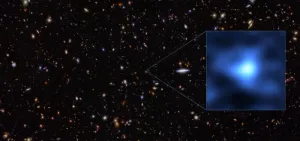
Two different teams of astronomers have detected oxygen in the most distant known galaxy, JADES-GS-z14-0. The discovery, reported in two separate studies, was made possible thanks to the Atacama Large Millimeter/submillimeter Array (ALMA), in which the European Southern Observatory (ESO) is a partner. This record-breaking detection is making astronomers rethink how quickly galaxies formed in the early Universe. Discovered last year, JADES-GS-z14-0 is the most distant confirmed galaxy ever found: it is so far away, its light took 13.4 billion years to reach us, meaning we see it as it was when the Universe was less than 300 million years old, about 2% of its present age. ...

Read the release
New DESI results: Evidence mounts for evolving dark energy
Space

New DESI results: Evidence mounts for evolving dark energy

A new analysis of data collected over three years by the Dark Energy Spectroscopic Instrument (DESI) collaboration provides even stronger evidence than the group’s previous datasets that dark energy, long thought to be a “cosmological constant,” might be evolving over time in unexpected ways. Dr. Mustapha Ishak-Boushaki, professor of physics at The University of Texas at Dallas, is co-chair of the DESI working group that interprets cosmological survey data gathered by the international collaboration, which includes more than 900 researchers ...

Read the release
New DESI results strengthen hints that dark energy may evolve
Space

New DESI results strengthen hints that dark energy may evolve

The fate of the universe hinges on the balance between matter and dark energy: the fundamental ingredient that drives its accelerating expansion. New results from the Dark Energy Spectroscopic Instrument (DESI) collaboration use the largest 3D map of our universe ever made to track dark energy’s influence over the past 11 billion years. Researchers see hints that dark energy, widely thought to be a “cosmological constant,” might be evolving over time in unexpected ways. DESI is an international experiment with more than 900 researchers from over 70 institutions around the world and is managed by the U.S. Department of Energy’s Lawrence Berkeley ...

Read the release
DESI opens access to the largest 3D map of the universe yet
Space

DESI opens access to the largest 3D map of the universe yet

The Dark Energy Spectroscopic Instrument (DESI) is mapping millions of celestial objects to better understand dark energy: the mysterious driver of our universe’s accelerating expansion. Today, the DESI collaboration released a new collection of data for anyone in the world to investigate. The dataset is the largest of its kind, with information on 18.7 million objects: roughly 4 million stars, 13.1 million galaxies, and 1.6 million quasars (extremely bright but distant objects powered by supermassive black holes at their cores). While the experiment’s ...

Read the release
Meteorites: A geologic map of the asteroid belt
Space

Meteorites: A geologic map of the asteroid belt

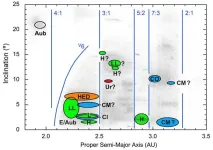
March 18, 2025, Mountain View, CA -- Where do meteorites of different type come from? In a review paper in the journal Meteoritics & Planetary Science, published online this week, astronomers trace the impact orbit of observed meteorite falls to several previously unidentified source regions in the asteroid belt. “This has been a decade-long detective story, with each recorded meteorite fall providing a new clue,” said meteor astronomer and lead author Peter Jenniskens of the SETI Institute and NASA Ames Research Center. “We now have the first outlines of a geologic map of the asteroid belt.” Ten years ago, ...

Read the release
New high-definition pictures of the baby universe
Space

New high-definition pictures of the baby universe

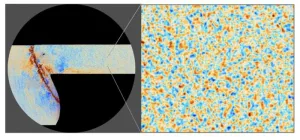
New research by the Atacama Cosmology Telescope (ACT) collaboration has produced the clearest images yet of the universe’s infancy – the earliest cosmic time yet accessible to humans. Measuring light that traveled for more than 13 billion years to reach a telescope high in the Chilean Andes, the new images reveal the universe when it was about 380,000 years old – the equivalent of hours-old baby pictures of a now middle-aged cosmos. “We are seeing the first steps towards making the earliest stars and galaxies,” says Suzanne Staggs, director of ACT and Henry ...

Read the release
From the original Press-News collection. Issuers of news releases are responsible for the accuracy of their content.