THE ORIGINAL COLLECTION · SINCE 2010

Space
press releases.

Research announcements from universities, hospitals and scientific institutions. Explore the stories, people and discoveries behind the headlines.

Original publication datesPage 15
FIND A STORY

Find a past release.

Dates and source material belong to the original release.

Read our research explainers

Browse the collection · original publication order

Combination of cosmic processes shapes the size and location of sub-Neptunes
Space

Combination of cosmic processes shapes the size and location of sub-Neptunes

UNIVERSITY PARK, Pa. — A combination of cosmic processes shapes the formation of one of the most common types of planets outside of our solar system, according to a new study led by researchers at Penn State. The research team used data from NASA’s Transiting Exoplanet Survey Satellite (TESS) to study young sub-Neptunes — planets bigger than Earth but smaller than Neptune — that orbit close to their stars. The work provides insights into how these planets might migrate inward or lose their atmosphere during their early stages. A paper describing the ...

Read the release
Deep dive into space turns up new Spitzer bubbles
Space

Deep dive into space turns up new Spitzer bubbles

To learn more about the deepest reaches of our own galaxy and the mysteries of star formation, Japanese researchers have created a deep learning model. The Osaka Metropolitan University-led team used artificial intelligence to pore through the vast amounts of data being acquired from space telescopes, finding bubble-like structures that had not been included in existing astronomical databases. The Milky Way galaxy we live in, like other galaxies in the universe, has bubble-like structures formed mainly during the birth and activity of high-mass stars. These so-called Spitzer bubbles hold important clues to understanding the process of star formation and galaxy evolution. Graduate School of ...

Read the release
Space

NASA atmospheric wave-studying mission releases data from first 3,000 orbits

Following the 3,000th orbit of NASA’s AWE (Atmospheric Waves Experiment) aboard the International Space Station, researchers publicly released the mission’s first trove of scientific data, crucial to investigate how and why subtle changes in Earth’s atmosphere cause disturbances, as well as how these atmospheric disturbances impact technological systems on the ground and in space. “We’ve released the first 3,000 orbits of data collected by the AWE instrument in space and transmitted back to Earth,” said Ludger Scherliess, principal investigator for the mission and physics professor at Utah State University. “This is a view of atmospheric ...

Read the release
Space

Weighing in on a Mars water debate

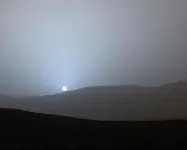
More than 3 billion years ago, Mars intermittently had liquid water on its surface. After the planet lost much of its atmosphere, however, surface water could no longer persist. The fate of Mars’ water—whether it was buried as ice, confined in deep aquifers, incorporated into minerals or dissipated into space—remains an area of ongoing research, one of particular interest to LASP Senior Research Scientist Bruce Jakosky, former principal investigator of the Mars Atmosphere and Volatile EvolutioN (MAVEN) mission. Last week, in a letter to the editor ...

Read the release
Understanding gamma rays in our universe through StarBurst
Space

Understanding gamma rays in our universe through StarBurst

WASHINGTON, D.C. — The U.S. Naval Research Laboratory (NRL), in partnership with NASA’s Marshall Space Flight Center (MSFC), has developed StarBurst, a small satellite (SmallSat) instrument for NASA's StarBurst Multimessenger Pioneer mission, which will detect the emission of short gamma-ray bursts (GRBs), a key electromagnetic (EM) signature that will contribute to the understanding of neutron star (NS) mergers. NRL transferred the instrument to NASA on March 4 for the next phase, environmental ...

Read the release
NASA taps UTA to shape future of autonomous aviation
Space

NASA taps UTA to shape future of autonomous aviation

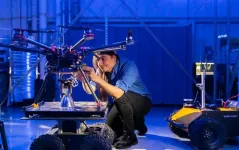
Envision a world where unmanned aircraft deliver goods to your front door and transport passengers in flying taxis, cargo planes cross continents carrying vital trade goods, and fighter jets patrol battle zones—all without a human pilot at the controls. Those scenarios might seem a bit far-fetched now, but researchers are working diligently to develop these aircraft and ensure they operate safely. That’s why NASA has awarded a $1 million grant through its University Leadership Initiative (ULI) to a team from The University of Texas at Arlington Research ...

Read the release
A planetary boundary for geological resources: Limits of regional water availability
Space

A planetary boundary for geological resources: Limits of regional water availability

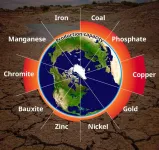
Geological resources such as critical metals and minerals, essential for the diffusion of technologies such as renewable energy and energy storage towards a decarbonized society, are indispensable for supporting modern life in the form of various products and services. Their demand is expected to increase in the coming years owing to global population as well as economic growth. Thus far, scientists and policymakers have primarily discussed geological resource availability from the viewpoint of reserves and resources in the ecosphere and technosphere. However, resources such as ...

Read the release
Astronomy’s dirty window to space
Space

Astronomy’s dirty window to space

When we observe distant celestial objects, there is a possible catch: Is that star I am observing really as reddish as it appears? Or does the star merely look reddish, since its light has had to travel through a cloud of cosmic dust to reach our telescope? For accurate observations, astronomers need to know the amount of dust between them and their distant targets. Not only does dust make objects appear reddish (“reddening”), it also makes them appear fainter than they really are (“extinction”). It’s like we are looking out into space through a dirty ...

Read the release
Space

Violent supernovae 'triggered at least two Earth extinctions'

Royal Astronomical Society press release RAS PR 25/10 Embargoed until 00:01 on Thursday 13 March 2025 At least two mass extinction events in Earth's history were likely caused by the "devastating" effects of nearby supernova explosions, a new study suggests. Researchers at Keele University say these super-powerful blasts – caused by the death of a massive star – may have previously stripped our planet's atmosphere of its ozone, sparked acid rain and exposed life to harmful ultraviolet radiation from the Sun. They believe a supernova explosion close to Earth could be to blame for both the late Devonian and Ordovician ...

Read the release
First radio pulses traced to dead-star binary
Space

First radio pulses traced to dead-star binary

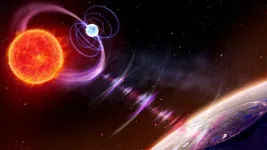
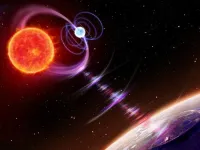
An international team of astronomers, including a Northwestern University astrophysicist, has traced a series of mysterious radio pulses to an unprecedented home. Starting a decade ago, astronomers have detected a pulse of radio emission every two hours, coming from the direction of the Big Dipper. After combining observations from multiple telescopes, the team can now reveal the culprit: a binary system with a dead star. According to the new study, a red dwarf and white dwarf are orbiting each other so tightly that their magnetic fields interact. Each time they bump together — which is every two hours — the interaction emits a long radio blast. Although astronomers ...

Read the release
Two-star system explains unusual astrophysical phenomenon
Space

Two-star system explains unusual astrophysical phenomenon

(Images available via the links in the Notes section) An international team of astrophysicists led by the Netherlands and the UK have discovered that radio pulses lasting seconds to minutes are due to two stars coming together – rather than emissions from a single star. The results are published today (12 March) in Nature Astronomy. In recent years, a new astronomical phenomenon has puzzled radio astronomers: researchers have detected radio pulses from the Milky Way that last from seconds to minutes. These pulses are unlike anything expected from known radio-emitting neutron stars, or pulsars*, ...

Read the release
Small, faint and 'unexpected in a lot of different ways': U-M astronomers make galactic discovery
Space

Small, faint and 'unexpected in a lot of different ways': U-M astronomers make galactic discovery

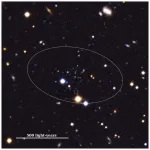
A discovery made by a team led by researchers at the University of Michigan tugs at the seams of some key cosmic lessons we thought we had learned from our own galaxy. This new knowledge comes from the outskirts of Andromeda, the Milky Way's nearest major galactic neighbor, where astronomers have found the system's smallest and dimmest satellite galaxy to date. This dwarf galaxy, named Andromeda XXXV and located roughly 3 million light-years away, is forcing astronomers to rethink how galaxies evolve in different cosmic environments and survive different epochs of the universe. Although the discovery bears ...

Read the release
Space

Mysterious phenomenon at center of galaxy could reveal new kind of dark matter

A mysterious phenomenon at the centre of our galaxy could be the result of a different type of dark matter. Dark matter, the mysterious form of unobserved matter which could make up 85% of the mass of the known universe, is one of science’s biggest manhunts. In this first of its kind study, scientists have taken a step closer to understanding the elusive mystery matter. They believe a reimagined candidate for dark matter could be behind unexplained chemical reactions taking place in the Milky Way. Dr Shyam Balaji, Postdoctoral Research Fellow at King’s College London and one of the lead authors of the study explains, “At the ...

Read the release
Space

BU researcher named rising star in endocrinology

(Boston)—Sun Lee, MD, MSc, assistant professor of medicine at Boston University Chobanian & Avedisian School of Medicine, has been awarded an American Association of Clinical Endocrinology (AACE) Rising Star in Endocrinology Award. The honor is presented to a physician who is within 10 years of completing their endocrine fellowship and has demonstrated actionable outcomes in outstanding leadership, teamwork and/or innovation in support of AACE’s mission to elevate clinical endocrinology ...

Read the release
Space

Planetary science: More potential locations for ice on Moon

Ice may be present a few centimetres below the Moon’s surface in more areas of the lunar polar regions than was previously thought due to large, yet highly localised, variations in surface temperatures. The results, published in Communications Earth & Environment, are derived from direct measurements taken at the lunar surface in 2023 by the Indian Chandrayaan-3 mission. Future long-term exploration (or habitation) of the Moon will likely depend on the availability of ice to provide water, with the likelihood of ice formation in a ...

Read the release
How’s the weather on Mars?
Space

How’s the weather on Mars?

A new study by researchers including those at the University of Tokyo revealed that atmospheric gravity waves play a crucial role in driving latitudinal air currents on Mars, particularly at high altitudes. The findings, based on long-term atmospheric data, offer a fresh perspective on the behaviors of Mars' middle atmosphere, highlighting fundamental differences from Earth’s. The study applied methods developed to explore Earth’s atmosphere to quantitatively estimate the influence of gravity waves on Mars’ planetary circulation. Despite it being a very cold planet, Mars is quite a hot topic these days. With human visitation seemingly ...

Read the release
The chances of anything coming from Mars
Space

The chances of anything coming from Mars

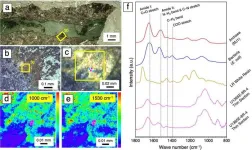
Within the next decade, space agencies plan to bring samples of rock from Mars to Earth for study. Of concern is the possibility these samples contain life, which could have unforeseen consequences. Therefore, researchers in this field strive to create methods to detect life. For the first time, researchers, including those from the University of Tokyo and NASA, successfully demonstrated a method to detect life in ancient rocks analogous to those found on Mars. We’ve all seen the movies, in which “Scientists bring back something from space, ...

Read the release
Discriminated groups create safe spaces online
Space

Discriminated groups create safe spaces online

Online threats, hatred and harassment have led people who feel discriminated against to create digital spaces where they can feel safe. According to a new thesis from the University of Gothenburg, these spaces are characterised by clear rules and constant maintenance and monitoring. Much of social life today takes place online. Unfortunately, the worst aspects of interpersonal relationships also appear in the digital world. A study of 51 countries revealed that 38% of women had personally experienced online harassment. Bullying and harassment have led people to create their own digital safe spaces, which is the topic ...

Read the release
Mysterious interstellar icy objects
Space

Mysterious interstellar icy objects

Niigata, Japan - Organic molecules that serve as the building blocks of life are believed to form in space, but their exact formation sites and delivery mechanisms to planets remain a major mystery in astronomy and planetary science. One of the key elements in solving this mystery is the presence of ice in interstellar environments. In cold, dense, and shielded regions of the galaxy, atoms and molecules adhere to the surfaces of submicron-sized solid particles (dust), leading to the formation of interstellar ices. This process is similar to how snow forms in Earth’s clouds. Astronomers from Niigata University and ...

Read the release
New limits found for dark matter properties from latest search
Space

New limits found for dark matter properties from latest search

Tokyo, Japan – A team led by a member of Tokyo Metropolitan University have made advances in the search for dark matter, observing galaxies using new spectrographic technology and the Magellan Clay Telescope. With a mere 4 hours of observations, precise measurements in the infrared range have set new limits on the lifetime of dark matter. Their findings highlight the crucial utility of their technology and extend the search to less explored parts of the spectrum. Over the past century, cosmologists have grappled with an apparent inconsistency in what they saw in the universe. Observations of the rotation of galaxies, for example, imply that there is a lot of mass out ...

Read the release
Space

UAF scientist designing satellite to hunt small space debris

A University of Alaska Fairbanks scientist is participating in a U.S. government effort to design a satellite and instruments capable of detecting space debris as small as 1 centimeter, less than one-half inch. Debris that small, which cannot currently be detected from the ground, can damage satellites and other spacecraft in low-Earth orbit. The idea is to outfit future satellites, such as those vital for communication systems, with technology to avoid space debris collisions. Space debris travels ...

Read the release
Space

The distinct role of Earth’s orbit in 100-thousand-year glacial cycles

The ebb and flow of Pleistocene glacial cycles is not random; it follows a predictable pattern dictated by the distinct and deterministic influence of Earth’s orbital geometry, according to a new study. The findings highlight the roles of precession, obliquity, and eccentricity – factors influencing the tilt and movement of Earth's axis, and the shape of Earth's orbit around the Sun – in glacial transitions. They also establish a predictive model for past and future glacial cycles based ...

Read the release
Scientists match Earth’s ice age cycles with orbital shifts
Space

Scientists match Earth’s ice age cycles with orbital shifts

(Santa Barbara, Calif.) — Beginning around 2.5 million years ago, Earth entered an era marked by successive ice ages and interglacial periods, emerging from the last glaciation around 11,700 years ago. A new analysis suggests the onset of the next ice age could be expected in 10,000 years’ time. An international team, including researchers form UC Santa Barbara, made their prediction based on a new interpretation of the small changes in Earth’s orbit of the sun, which lead to massive shifts in the planet’s climate over periods of thousands of years. The study tracks the natural cycles of the planet’s climate over a period ...

Read the release
MSU forges strategic partnership to solve the mystery of how planets are formed
Space

MSU forges strategic partnership to solve the mystery of how planets are formed

EAST LANSING, Mich. – Astronomers have long grappled with the question, “How do planets form?” A new collaboration among Michigan State University, Arizona State University and Lawrence Livermore National Laboratory will seek to answer this question with the help of a powerful telescope and high-performance computers. The team of researchers will use 154 hours on the James Webb Space Telescope, or JWST, to probe the atmospheres of seven planets beyond our solar system – all of which were formed less than 300 million years ago, around the time dinosaurs roamed ...

Read the release
ASU forges new strategic partnership to solve the mystery of how planets are formed
Space

ASU forges new strategic partnership to solve the mystery of how planets are formed

Astronomers have long grappled with the question, “How do planets form?” A new collaboration among Arizona State University (ASU) , Michigan State University (MSU) and Lawrence Livermore National Laboratory (LLNL) will seek to answer this question with the help of a powerful telescope and high-performance computers. The team of researchers will use 154 hours on the James Webb Space Telescope (JWST), to probe the atmospheres of seven planets beyond our solar system – all of which were formed less than 300 million years ago, around the time dinosaurs roamed the Earth. In conjunction with JWST, this collaboration, called the KRONOS program, will use computers ...

Read the release
From the original Press-News collection. Issuers of news releases are responsible for the accuracy of their content.