THE ORIGINAL COLLECTION · SINCE 2010

Space
press releases.

Research announcements from universities, hospitals and scientific institutions. Explore the stories, people and discoveries behind the headlines.

Original publication datesPage 23
FIND A STORY

Find a past release.

Dates and source material belong to the original release.

Read our research explainers

Browse the collection · original publication order

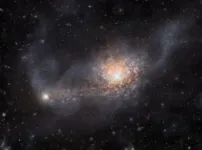
NASA’s Webb reveals distorted galaxy forming cosmic question mark
Space

NASA’s Webb reveals distorted galaxy forming cosmic question mark

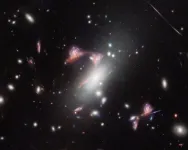
It’s 7 billion years ago, and the universe’s heyday of star formation is beginning to slow. What might our Milky Way galaxy have looked like at that time? Astronomers using NASA’s James Webb Space Telescope have found clues in the form of a cosmic question mark, the result of a rare alignment across light-years of space. “We know of only three or four occurrences of similar gravitational lens configurations in the observable universe, which makes this find exciting, as it demonstrates the power of Webb and suggests maybe now we will find ...

Read the release

NASA's mini BurstCube mission detects mega blast
Space

NASA's mini BurstCube mission detects mega blast

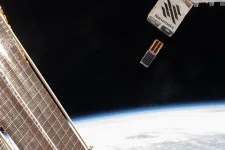
The shoebox-sized BurstCube satellite has observed its first gamma-ray burst, the most powerful kind of explosion in the universe, according to a recent analysis of observations collected over the last several months. “We’re excited to collect science data,” said Sean Semper, BurstCube’s lead engineer at NASA’s Goddard Space Flight Center in Greenbelt, Maryland. “It’s an important milestone for the team and for the many early career engineers and scientists that have been part of the mission.” The ...

Read the release
Space

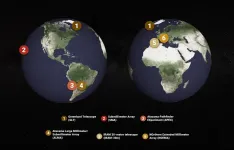
Representatives from NASA, ESA, JAXA, ASI, KASA meet during COSPAR 2024 to reinforce cooperation and coordination for future missions to the asteroid Apophis

Each agency representative presented the status of their current involvement in current and future planning for missions to Apophis (including extended mission for OSIRIS-REx, renamed OSIRIS-APEX, for NASA and the RAMSES mission for ESA) as well as the existing partnerships and mutual involvement in other agency’s missions, e.g. the infrared camera provided by JAXA in ESA’s mission Hera. Concepts to fly to Apophis, as well as reuse of existing payloads, spare parts and hardware, coordination of arrival time at Apophis of the different spacecraft, techniques to be demonstrated, ...

Read the release
Genomic dark matter solves butterfly evolutionary riddle
Space

Genomic dark matter solves butterfly evolutionary riddle

[Note: High-resolution images related to this research available for download at this link. Caption and credit information provided.] WASHINGTON (August 30, 2024) — A team of international researchers has uncovered a surprising genetic mechanism that influences the vibrant and complex patterns on butterfly wings. In a study published in the Proceedings of the National Academy of Sciences, the team, led by Luca Livraghi at the George Washington University and the University of Cambridge, discovered ...

Read the release
Doughnut-shaped region found inside Earth’s core deepens understanding of planet’s magnetic field
Space

Doughnut-shaped region found inside Earth’s core deepens understanding of planet’s magnetic field

A doughnut-shaped region thousands of kilometres beneath our feet within Earth’s liquid core has been discovered by scientists from The Australian National University (ANU), providing new clues about the dynamics of our planet’s magnetic field. The structure within Earth’s liquid core is found only at low latitudes and sits parallel to the equator. According to ANU seismologists, it has remained undetected until now. The Earth has two core layers: the inner core, a solid layer, and the outer core, a liquid layer. Surrounding the Earth’s core is the mantle. The ...

Read the release
Dancing galaxies make a monster at the cosmic dawn
Space

Dancing galaxies make a monster at the cosmic dawn

Astronomers have spotted a pair of galaxies in the act of merging 12.8 billion years ago. The characteristics of these galaxies indicate that the merger will form a monster galaxy, one of the brightest types of objects in the Universe. These results are important for understanding the early evolution of galaxies and black holes in the early Universe. Quasars are bright objects powered by matter falling into a supermassive black hole at the center of a galaxy in the early Universe. The most accepted theory is that when two gas-rich galaxies merge to form a single larger galaxy, the gravitational interaction of the two galaxies causes gas to fall towards the supermassive ...

Read the release
Event horizon telescope makes highest-resolution black hole detections from Earth
Space

Event horizon telescope makes highest-resolution black hole detections from Earth

The Event Horizon Telescope (EHT) Collaboration has conducted test observations achieving the highest resolution ever obtained from the surface of the Earth, by detecting light from the centers of distant galaxies at a frequency of around 345 GHz. When combined with existing images of supermassive black holes at the hearts of M87 and Sgr A at the lower frequency of 230 GHz, these new results will not only make black hole photographs 50% crisper but also produce multi-color views of the region immediately outside the boundary of these cosmic beasts. The new detections, led by scientists from the Center for Astrophysics | Harvard & Smithsonian (CfA) that ...

Read the release
In six new rogue worlds, Webb Telescope finds more star birth clues
Space

In six new rogue worlds, Webb Telescope finds more star birth clues

The James Webb Space Telescope has spotted six likely rogue worlds—objects with planetlike masses but untethered from any star’s gravity—including the lightest ever identified with a dusty disk around it. The elusive objects offer new evidence that the same cosmic processes that give birth to stars may also play a common role in making objects only slightly bigger than Jupiter. “We are probing the very limits of the star forming process,” said lead author Adam Langeveld, an astrophysicist at Johns Hopkins University. “If you have an object that looks like a young Jupiter, is it possible that ...

Read the release
Star lives and afterlives
Space

Star lives and afterlives

A two-faced star, a star as massive as the Sun but as compact as the Moon, and star ‘corpses’ that engulf entire planets and disrupt planetary orbits. Ilaria Caiazzo, an astrophysicist who has made stunning discoveries, joins the Institute of Science and Technology Austria (ISTA) as a new assistant professor. Her path led her from philosophy to studying stellar evolution and death while managing her broad interests including movie production. Ilaria Caiazzo has always had a broad spectrum of interests. Her path to astrophysics started in philosophy and ...

Read the release
LZ experiment sets new record in search for dark matter
Space

LZ experiment sets new record in search for dark matter

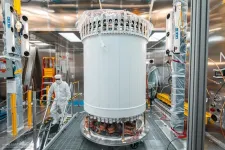
Figuring out the nature of dark matter, the invisible substance that makes up most of the mass in our universe, is one of the greatest puzzles in physics. New results from the world’s most sensitive dark matter detector, LUX-ZEPLIN (LZ), have narrowed down possibilities for one of the leading dark matter candidates: weakly interacting massive particles, or WIMPs. LZ, led by the Department of Energy’s Lawrence Berkeley National Laboratory (Berkeley Lab), hunts for dark matter from a cavern nearly one mile underground at the Sanford Underground Research Facility in South Dakota. The experiment’s new results explore weaker dark matter interactions ...

Read the release
Space

Repetitive head impacts and perivascular space volume in former football players

About The Study: In this cross-sectional cohort study of 170 former football players and 54 unexposed controls, larger perivascular space (PVS) volume was associated with greater exposure to repetitive head impacts (RHI). Additionally, PVS volume was associated with worse performance on cognitive tests. These findings suggest that PVS volume may contribute to the association between exposure to RHI, cognitive impairment, and the development of RHI-associated neurodegeneration. Corresponding Author: To contact the corresponding ...

Read the release
NASA’s DART impact permanently changed the shape and orbit of asteroid moon
Space

NASA’s DART impact permanently changed the shape and orbit of asteroid moon

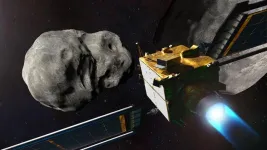
When NASA’s Double Asteroid Redirection Test (DART) spacecraft collided with an asteroid moon called Dimorphos in 2022, the moon was significantly deformed—creating a large crater and reshaping it so dramatically that the moon derailed from its original evolutionary progression—according to a new study. The study’s researchers believe that Dimorphos may start to “tumble” chaotically in its attempts to move back into gravitational equilibrium with its parent asteroid named Didymos. “For ...

Read the release
Space

Researchers identify effective materials for protecting astronauts from harmful cosmic radiation on Mars

Abu Dhabi, August 23, 2024: Researchers have identified specific materials, including certain plastics, rubber, and synthetic fibers, as well as Martian soil (regolith), which would effectively protect astronauts by blocking harmful space radiation on Mars. These findings could inform the design of protective habitats and spacesuits, making long-duration Mars missions more feasible. Because Mars lacks Earth’s thick atmosphere and magnetic field, astronauts exploring the planet would be exposed to dangerous levels of radiation. Dimitra Atri, Investigator, ...

Read the release
NASA’s EXCITE mission prepared for scientific balloon flight
Space

NASA’s EXCITE mission prepared for scientific balloon flight

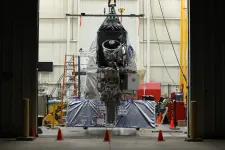
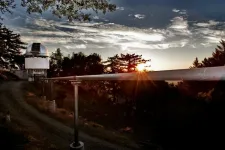
Scientists and engineers are ready to fly an infrared mission called EXCITE (EXoplanet Climate Infrared TElescope) to the edge of space. EXCITE is designed to study atmospheres around exoplanets, or worlds beyond our solar system, during circumpolar long-duration scientific balloon flights. But first, it must complete a test flight during NASA’s fall 2024 scientific ballooning campaign from Fort Sumner, New Mexico. “EXCITE can give us a three-dimensional picture of a planet’s atmosphere and temperature by collecting data the whole time the world orbits its star,” said Peter Nagler, the mission’s principal ...

Read the release
New detectable gravitational wave source from collapsing stars predicted from simulations
Space

New detectable gravitational wave source from collapsing stars predicted from simulations

The death of a massive, rapidly spinning star can shake the universe. And the resulting ripples — known as gravitational waves — could be felt by instruments on Earth, according to new research published August 22 in The Astrophysical Journal Letters. These new sources of gravitational waves just await discovery, the scientists behind the research predict. The gravitational waves emerge following the violent deaths of rapidly rotating stars 15 to 20 times the mass of the sun. Upon running ...

Read the release
MCG physicians working to help prevent vision loss associated with space travel
Space

MCG physicians working to help prevent vision loss associated with space travel

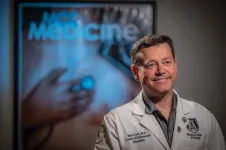
Physicians at the Medical College of Georgia at Augusta University are working with Polaris Dawn, the first of the Polaris Program’s three human spaceflight missions, to better understand the eye changes many astronauts experience during spaceflight that can leave them with a wide range of symptoms once they return to Earth — from a new need for glasses to significant loss of vision. The Polaris Program is a first-of-its-kind effort to rapidly advance human spaceflight capabilities while continuing to raise funds and awareness for important causes on Earth. More than 70% of astronauts experience a phenomenon ...

Read the release
Marshall University innovators selected for prestigious NIH-funded entrepreneurship program
Space

Marshall University innovators selected for prestigious NIH-funded entrepreneurship program

HUNTINGTON, W.Va. – Two Marshall University innovators, Brad Profitt, DC, DPT, DScPT, and M’Hamed Turki, M.D., have been selected to participate in the National Institutes of Health (NIH) funded IDeA Regional Entrepreneurship Development (I-RED) Program, facilitated by the XLerator Network. The NIH’s competitive I-RED program supports the creation of educational products to promote entrepreneurship in academic institutions. XLerator Health, a health care accelerator based in Louisville, Kentucky, assists startup founders like Profitt and Turki in commercializing their businesses and attracting funding. Profitt is a co-founder ...

Read the release
Near-term NASA Mars and lunar in situ propellant production: complexity versus simplicity
Space

Near-term NASA Mars and lunar in situ propellant production: complexity versus simplicity

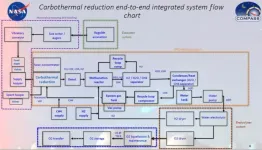
First, lunar ISPP is analyzed from aspects of lunar resources, near-term lunar processes, carbothermal process, polar ice, and reduction of iron oxides. There are basically 4 potential lunar resources: (1) Silicates in regolith containing typically >40% oxygen. (2) Regolith containing FeO for hydrogen reduction. FeO content may vary from 5% to 14%, leading to recoverable oxygen content in the 1 to 3% range. (3) Imbedded atoms in regolith from solar wind (typically parts per million). (4) Water ice in regolith pores in permanently shadowed craters near the poles (unknown percentage but ...

Read the release
New view of North Star reveals spotted surface
Space

New view of North Star reveals spotted surface

ATLANTA — Researchers using Georgia State University’s Center for High Angular Resolution Astronomy (CHARA) Array have identified new details about the size and appearance of the North Star, also known as Polaris. The new research is published in The Astrophysical Journal. Earth’s North Pole points to a direction in space marked by the North Star. Polaris is both a navigation aid and a remarkable star in its own right. It is the brightest member of a triple-star system and is a pulsating variable star. Polaris gets brighter and fainter periodically as the star’s diameter ...

Read the release
Planets contain more water than thought
Space

Planets contain more water than thought

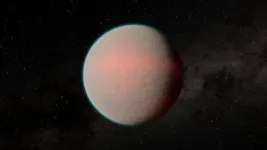
We know that the Earth has an iron core surrounded by a mantle of silicate bedrock and water (oceans) on its surface. Science has used this simple planet model until today for investigating exoplanets – planets that orbit another star outside our solar system. “It is only in recent years that we have begun to realise that planets are more complex than we had thought,” says Caroline Dorn, Professor for Exoplanets at ETH Zurich. Most of the exoplanets known today are located close to ...

Read the release
Space

Tracking down the asteroid that sealed the fate of the dinosaurs

Geoscientists from the University of Cologne have led an international study to determine the origin of the huge piece of rock that hit the Earth around 66 million years ago and permanently changed the climate. The scientists analysed samples of the rock layer that marks the boundary between the Cretaceous and Paleogene periods. This period also saw the last major mass extinction event on Earth, in which around 70 percent of all animal species became extinct. The results of the study published in Science indicate that the asteroid formed outside Jupiter’s orbit during the ...

Read the release
Right on schedule: Physicists use modeling to forecast a black hole's feeding patterns with precision
Space

Right on schedule: Physicists use modeling to forecast a black hole's feeding patterns with precision

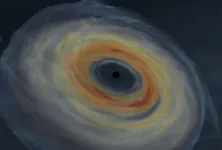
Powerful telescopes like NASA’s Hubble, James Webb, and Chandra X-ray Observatory provide scientists a window into deep space to probe the physics of black holes. While one might wonder how you can “see” a black hole, which famously absorbs all light, this is made possible by tidal disruption events (TDEs) - where a star is destroyed by a supermassive black hole and can fuel a “luminous accretion flare.” With luminosities thousands of billions of times brighter than the Sun, accretion events enable astrophysicists to study supermassive black holes (SMBHs) at cosmological distances. TDEs occur when a star is violently ripped ...

Read the release
Rocks collected on Mars hold key to water and perhaps life on the planet. Bring them back to Earth.
Space

Rocks collected on Mars hold key to water and perhaps life on the planet. Bring them back to Earth.

Over the course of nearly five months in 2022, NASA's Perseverance rover collected rock samples from Mars that could rewrite the history of water on the Red Planet and even contain evidence for past life on Mars. But the information they contain can't be extracted without more detailed analysis on Earth, which requires a new mission to the planet to retrieve the samples and bring them back. Scientists hope to have the samples on Earth by 2033, though NASA's sample return mission may be delayed. "These samples are the reason why our mission was flown," said paper ...

Read the release

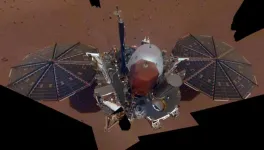
Presence of liquid water most probable explanation for data collected by mars lander
Space

Presence of liquid water most probable explanation for data collected by mars lander

Data about Mars’ planetary crust gathered from the Mars InSight lander are best explained by the conclusion that the crust has stores of liquid water. Analysis led by Vashan Wright, a geophysicist at UC San Diego’s Scripps Institution of Oceanography, provides the best evidence to date that the planet still has liquid water in addition to that frozen at its poles. If that conclusion is true, it sets the stage for new research considering the planet’s habitability and continuing a search for life that exists on a place other than Earth. The potential presence of liquid water on Mars has tantalized scientists for decades. Water is essential for a habitable planet. “Understanding ...

Read the release
Record-breaking recovery of rocks that originated in Earth’s mantle could reveal secrets of planet’s history
Space

Record-breaking recovery of rocks that originated in Earth’s mantle could reveal secrets of planet’s history

Scientists have recovered the first long section of rocks that originated in the Earth’s mantle, the layer below the crust and the planet’s largest component. The rocks will help unravel the mantle’s role in the origins of life on Earth, the volcanic activity generated when it melts, and how it drives the global cycles of important elements such as carbon and hydrogen, according to the team. The nearly continuous 1,268 metres of mantle rock was recovered from a “tectonic window,” a section ...

Read the release
From the original Press-News collection. Issuers of news releases are responsible for the accuracy of their content.