THE ORIGINAL COLLECTION · SINCE 2010

Space
press releases.

Research announcements from universities, hospitals and scientific institutions. Explore the stories, people and discoveries behind the headlines.

Original publication datesPage 22
FIND A STORY

Find a past release.

Dates and source material belong to the original release.

Read our research explainers

Browse the collection · original publication order

Mars’ missing atmosphere could be hiding in plain sight
Space

Mars’ missing atmosphere could be hiding in plain sight

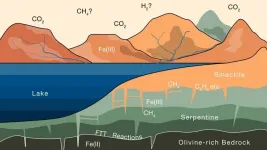
Mars wasn’t always the cold desert we see today. There’s increasing evidence that water once flowed on the Red Planet’s surface, billions of years ago. And if there was water, there must also have been a thick atmosphere to keep that water from freezing. But sometime around 3.5 billion years ago, the water dried up, and the air, once heavy with carbon dioxide, dramatically thinned, leaving only the wisp of an atmosphere that clings to the planet today. Where exactly did Mars’ ...

Read the release

Space

Can cosmic radiation in outer space affect astronauts’ long-term cognition?

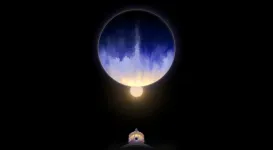
During missions into outer space, galactic cosmic radiation (GCR) will penetrate current spacecraft shielding and thus pose a significant risk to human health. Previous studies have shown that GCR can cause short-term cognitive deficits in male rodents. Now a study published in the Journal of Neurochemistry reveals that GCR exposure can also cause long-lasting learning deficits in female rodents. The impact of GCR on cognition was lessened when mice were fed an antioxidant and anti-inflammatory compound called CDDO-EA. Beyond ...

Read the release
More to munch on: The popcorn planet WASP-107b unveils new atmospheric details
Space

More to munch on: The popcorn planet WASP-107b unveils new atmospheric details

The "popcorn planet" is back in the spotlight! Using NASA's James Webb Space Telescope (JWST), a team of international astronomers has discovered new atmospheric details on WASP-107b, an exoplanet with a puffed-up atmosphere due to tidal heating. Previously described as an extremely low-density "popcorn planet" by researchers, WASP-107b has once again proven to be an intriguing subject, revealing even more surprising characteristics about its inflated and dynamic atmosphere. WASP-107b, a gas giant about the size of Jupiter but with just one-tenth of its mass, has ...

Read the release
Emily Carter wins prestigious Marsha I. Lester Award from American Chemical Society
Space

Emily Carter wins prestigious Marsha I. Lester Award from American Chemical Society

Emily Carter, senior strategic advisor and associate laboratory director for applied materials and sustainability sciences at the U.S. Department of Energy’s (DOE) Princeton Plasma Physics Laboratory (PPPL), has won the 2024 Marsha I. Lester Award for Exemplary Impact in Physical Chemistry. Awarded each year by the American Chemical Society (ACS) at its annual fall meeting, the award recognizes an “exemplary impact in physical chemistry research.” Nominees for the award must be members of the ACS’s physical chemistry ...

Read the release
New indoor vertical farming research could help future-proof food demand for a changing planet
Space

New indoor vertical farming research could help future-proof food demand for a changing planet

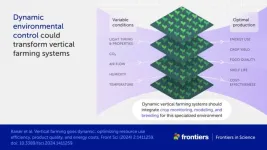
To make sure everyone eats well in our crowded world, we need to innovate. Vertical farming systems, which grow plants intensively in an indoor setting, could be part of the answer – but to use them on a large scale we need to overcome key problems, especially the management of the energy-intensive, expensive light the plants need to grow. Now scientists show how manipulating light according to the needs of specific crops could make them grow stronger and healthier while minimizing energy use. “The biggest benefit of vertical farming systems is that healthy food can be grown ...

Read the release
Astronomers catch a glimpse of a uniquely inflated and asymmetric exoplanet
Space

Astronomers catch a glimpse of a uniquely inflated and asymmetric exoplanet

Astronomers from the University of Arizona, along with an international group of researchers, observed the atmosphere of a hot and uniquely inflated exoplanet using NASA's James Webb Space Telescope. The exoplanet, which is the size of Jupiter but only a tenth of its mass, is found to have east-west asymmetry in its atmosphere, meaning that there is a significant difference between the two edges of its atmosphere. The findings are published in the journal Nature Astronomy. "This is the first time the east-west asymmetry of any exoplanet has ...

Read the release
DECam confirms that early-universe quasar neighborhoods are indeed cluttered
Space

DECam confirms that early-universe quasar neighborhoods are indeed cluttered

Quasars are the most luminous objects in the Universe and are powered by material accreting onto supermassive black holes at the centers of galaxies. Studies have shown that early-Universe quasars have black holes so massive that they must have been swallowing gas at very high rates, leading most astronomers to believe that these quasars formed in some of the densest environments in the Universe where gas was most available. However, observational measurements seeking to confirm this conclusion have thus far yielded conflicting results. Now, a new study using the Dark Energy Camera ...

Read the release
Explaining dramatic planetwide changes after world’s last ‘Snowball Earth’ event
Space

Explaining dramatic planetwide changes after world’s last ‘Snowball Earth’ event

Some of the most dramatic climatic events in our planet’s history are “Snowball Earth” events that happened hundreds of millions of years ago, when almost the entire planet was encased in ice up to 0.6 miles (1 kilometer) thick. These “Snowball Earth” events have happened only a handful of times and do not occur on regular cycles. Each lasts for millions of years or tens of millions of years and is followed by dramatic warming, but the details of these transitions are poorly ...

Read the release
Magnifying deep space through the “carousel lens”
Space

Magnifying deep space through the “carousel lens”

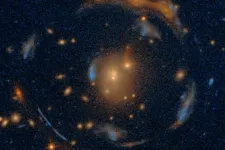
In a rare and extraordinary discovery, researchers have identified a unique configuration of galaxies that form the most exquisitely aligned gravitational lens found to date. The Carousel Lens is a massive cluster-scale gravitational lens system that will enable researchers to delve deeper into the mysteries of the cosmos, including dark matter and dark energy. “This is an amazingly lucky ‘galactic line-up’ – a chance alignment of multiple galaxies across a line-of-sight spanning most of the observable universe,” said David Schlegel, a co-author of the study and a senior scientist in Berkeley Lab’s Physics Division. "Finding one such alignment is ...

Read the release
Gargantuan black hole jets are biggest seen yet
Space

Gargantuan black hole jets are biggest seen yet

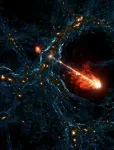
** Caltech is hosting an embargoed media zoom about this result on Monday, September 16 at 10am Pacific/1pm Eastern. You can register here: https://caltech.zoom.us/webinar/register/WN_gYEV5Tl1S0uZkZG1gDIEnQ#/registration Astronomers have spotted the biggest pair of black hole jets ever seen, spanning 23 million light-years in total length. That's equivalent to lining up 140 Milky Way galaxies back to back. "This pair is not just the size of a solar system, or a Milky Way; we are talking about 140 Milky Way diameters in total," says Martijn ...

Read the release
NASA completes spacecraft to transport, support Roman Space Telescope
Space

NASA completes spacecraft to transport, support Roman Space Telescope

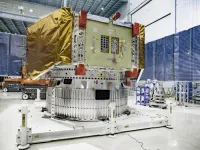
The spacecraft bus that will deliver NASA’s Nancy Grace Roman Space Telescope to its orbit and enable it to function once there is now complete after years of construction, installation, and testing. Now that the spacecraft is assembled, engineers will begin working to integrate the observatory’s other major components, including the science instruments and the telescope itself. “They call it a spacecraft bus for a reason — it gets the telescope to where it needs to be ...

Read the release
Space

Black hole pairs may unveil new particles

In a paper published in Physical Review Letters this week, physicists from Amsterdam and Copenhagen argue that close observations of merging black hole pairs may unveil information about potential new particles. The research combines several new discoveries made by UvA scientists over the past six years. Gravitational waves that are emitted by the merger of two black holes carry detailed information about the shape and evolution of the orbits of the components. A new study by physicists Giovanni Maria Tomaselli and Gianfranco Bertone from ...

Read the release
Space

A wobble from Mars could be sign of dark matter, MIT study finds

In a new study, MIT physicists propose that if most of the dark matter in the universe is made up of microscopic primordial black holes — an idea first proposed in the 1970s — then these gravitational dwarfs should zoom through our solar system at least once per decade. A flyby like this, the researchers predict, would introduce a wobble into Mars’ orbit, to a degree that today’s technology could actually detect. Such a detection could lend support to the idea that primordial black holes are a primary source of dark matter throughout the universe. “Given decades of precision ...

Read the release
Astronomers detect black hole ‘starving’ its host galaxy to death
Space

Astronomers detect black hole ‘starving’ its host galaxy to death

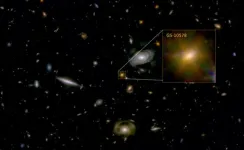
Astronomers have used the NASA/ESA James Webb Space Telescope to confirm that supermassive black holes can starve their host galaxies of the fuel they need to form new stars. The international team, co-led by the University of Cambridge, used Webb to observe a galaxy roughly the size of the Milky Way in the early universe, about two billion years after the Big Bang. Like most large galaxies, it has a supermassive black hole at its centre. However, this galaxy is essentially ‘dead’: it has mostly stopped forming new stars. “Based ...

Read the release
Using training model to map planted and natural forests via satellite image
Space

Using training model to map planted and natural forests via satellite image

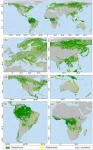
While planting trees may seem like an easy win to combat climate change, planted forests often encroach on natural forests, wetlands, and grasslands. This can reduce biodiversity, disturb the natural environment, and disrupt carbon and water cycling. While there has been a global increase in forest cover, it’s hard to know if this forest is the regeneration and growth of natural forests or if it is planting new trees. Accurately mapping these forests with remote sensing technology could help. However, comprehensive maps of planted forests and natural forests are lacking even though it is possible to distinguish planted forests and natural forests on satellite images ...

Read the release
$3.5M grant to Georgia State will fuel space research across the globe
Space

$3.5M grant to Georgia State will fuel space research across the globe

ATLANTA — A new three-year, $3.5 million grant from the U.S. National Science Foundation will foster new research at Georgia State’s Center for High Angular Resolution Astronomy (CHARA) Array by astronomers from around the world. The grant will fund open-access time at the CHARA Array through the NSF National Optical-Infrared Astronomy Research Laboratory (NSF NOIRLab). The program offers astronomers the opportunity to apply for observing time at the CHARA Array to investigate all kinds of objects ...

Read the release
Space

Path to prosperity for planet and people if Earth’s critical resources are better shared: report

Earth will only remain able to provide even a basic standard of living for everyone in the future if economic systems and technologies are dramatically transformed and critical resources are more fairly used, managed and shared, according to an international research team including scientists from The Australian National University (ANU). The report, published in The Lancet Planetary Health, outlines how cities and businesses have the power to play a crucial role and become the “stewards” of critical Earth ...

Read the release
Space

Keeping mold out of future space stations

COLUMBUS, Ohio – Mold can survive the harshest of environments, so to stop harmful spores from growing on future space stations, a new study suggests a novel way to prevent its spread. Researchers created a predictive approach for modeling unintended microbial growth in critical spaces and applied it to life on the International Space Station. An analysis of dust samples obtained from the space station found that repeated elevated humidity exposures for even a short time can lead to rapid microbial growth and composition changes in dust that make it easier for microbes, ...

Read the release
Space

Mathematical proof: Five satellites needed for precise navigation

As a rule, GPS indicates our location with an accuracy of just a few meters. But we have all experienced situations where the possible error increases to a few hundred meters or the indicated location is simply wrong. One reason for this can be the small number of satellites with line-of-sight contact to the navigation device or unfavorable relative alignment of the satellites. How does GPS work? GPS satellites are equipped with an extremely accurate atomic clock and know their positions at all times. They continually transmit the time and their location using radio waves. A mobile phone ...

Read the release
Plasmonic modulators could enable high-capacity space communication
Space

Plasmonic modulators could enable high-capacity space communication

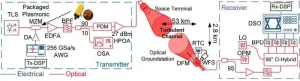
Researchers have achieved data rates as high as 424Gbit/s across a 53-km turbulent free-space optical link using plasmonic modulators— devices that uses special light waves called surface plasmon polaritons to control and change optical signals. The new research lays the groundwork for high-speed optical communication links that transmit data over open air or space. Free-space-optical communication networks could aid space exploration because they can provide high-speed, high-capacity data transmission with lower latency and less interference than traditional radio frequency communication systems. ...

Read the release
Space

Saline nasal drops reduce the duration of the common cold in young children by two days

Using hypertonic saline nasal drops can reduce the length of the common cold in children by two days, according to a study that will be presented at the European Respiratory Society (ERS) Congress in Vienna, Austria [1]. They can also reduce the onward transmission of colds to family members. The results of the ELVIS-Kids randomised controlled trial were presented by Professor Steve Cunningham from Child Life and Health, University of Edinburgh, UK. He said: “Children have up to 10 to 12 upper respiratory tract infections, what we refer to as colds, per year, which ...

Read the release
Groundwater use can be accurately monitored with satellites using OPENet, new study finds
Space

Groundwater use can be accurately monitored with satellites using OPENet, new study finds

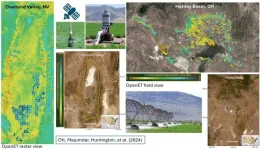
Drought is a widespread concern in the Western U.S., and water managers across the region are developing groundwater management plans to conserve the essential resource. Groundwater is often pumped to the surface to irrigate crops, and meters that measure the flow of pumped water have historically offered the best information on groundwater use. These meters are rare, however, so DRI scientists set out to determine whether OpenET, a platform that measures evapotranspiration using satellite data, could help fill this information gap. The new study, published August 8th in a special issue of Agricultural Water Management, compared groundwater meter ...

Read the release
Space

Tiny glass beads indicate volcanism on the Moon 120 million years ago

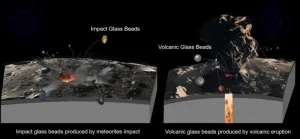
There were volcanic eruptions on the Moon as recently as 120 million years ago, according to a new analysis of a lunar sample collected by the Chang’e‑5 mission. Samples collected by the Apollo, Luna and Chang’e‑5 missions have previously shown there was widespread basaltic volcanism on the Moon extending from about 4.4 to 2.0 billion years ago. The new findings demonstrate that volcanism persisted much longer than was previously suspected, at least on smaller, more localized scale. Bi-Wen Wang, Qian W.L. Zhang and colleagues sorted through more than 3000 tiny glass beads they recovered from a lunar sample collected by Chang’e‑5, examining the bead’s ...

Read the release
Researchers prove 120-million-year-old volcanism on moon
Space

Researchers prove 120-million-year-old volcanism on moon

Extensive geologic evidence of ancient volcanic activity can be found on the Moon, but how long this volcanism persisted has been unclear. However, Prof. LI Qiuli’s Lab at the Institute of Geology and Geophysics of the Chinese Academy of Sciences (IGGCAS) has recently identified three volcanic glass beads from lunar soil samples collected by the Chang’e-5 mission. Their research shows that the beads were formed 123±15 million years ago (Ma), thus representing the youngest lunar ...

Read the release
Weather in deep space -- Trinity astrophysicist wins European Research Council Starting Grant
Space

Weather in deep space -- Trinity astrophysicist wins European Research Council Starting Grant

Drs Johanna Vos has won a highly prestigious European Research Council (ERC) Starting Grants to pursue research aimed at better understanding weather patterns in extrasolar worlds deep in the galaxy. Dr Vos’ project: Exometeorology: Probing Extrasolar Atmospheres (Exo-PEA) Over the past 30 years, astronomers have uncovered thousands of new extrasolar planets, which vary from small, rocky worlds, to giant planets like Jupiter. Additionally, lots of isolated or free-floating worlds have been discovered. We have already learned that the atmospheres of these strange worlds are highly complex, hosting a range of weather processes. The launch of the James Webb Space Telescope ...

Read the release
From the original Press-News collection. Issuers of news releases are responsible for the accuracy of their content.