THE ORIGINAL COLLECTION · SINCE 2010

Space
press releases.

Research announcements from universities, hospitals and scientific institutions. Explore the stories, people and discoveries behind the headlines.

Original publication datesPage 24
FIND A STORY

Find a past release.

Dates and source material belong to the original release.

Read our research explainers

Browse the collection · original publication order

Space

Scientists lay out revolutionary method to warm Mars

Ever since we learned that the surface of planet Mars is cold and dead, people have wondered if there is a way to make it friendlier to life. In a groundbreaking study published Aug. 7 in Science Advances, researchers from the University of Chicago, Northwestern University, and the University of Central Florida have proposed a revolutionary approach towards terraforming Mars. This new method, using engineered dust particles released to the atmosphere, could potentially warm the Red Planet by more ...

Read the release
Space

Newly published report outlines findings from first archaeology project in space

The first-ever archeological survey in space has provided new insights into how astronauts use and adapt their living space on the International Space Station, which could influence the design of new space stations after the ISS is decommissioned. Findings from the research team behind the International Space Station Archaeological Project (ISSAP) were published today in the journal PLOS ONE. Archaeologist Justin Walsh of Chapman University is available to discuss the discoveries of the team’s first on-orbit project, the Sampling Quadrangle Assemblages Research Experiment (SQuARE). While Earth-bound archaeologists dig one-meter squares to understand ...

Read the release
Space

Study on planet-warming contrails “a spanner in the works” for aviation industry

Modern commercial aircraft flying at high altitudes create longer-lived planet-warming contrails than older aircraft, a new study has found. The result means that although modern planes emit less carbon than older aircraft, they may be contributing more to climate change through contrails. Led by scientists at Imperial College London, the study highlights the immense challenges the aviation industry faces to reduce its impact on the climate. The new study also found that private jets produce more contrails than previously thought, ...

Read the release
Space

Cut ties with Coca Cola in interests of athletes, spectators, and the planet, IOC urged

The International Olympic Committee (IOC) should cut its ties with Coca Cola in the best interests of athletes, spectators, and the planet, urge Trish Cotter and Sandra Mullin of the international public health organisation, Vital Strategies, in an editorial to be published shortly in the open access journal BMJ Global Health.* The company’s sponsorship forces athletes to implicitly endorse unhealthy sugary drinks and provides Coca Cola with elite access to political and corporate leaders to exert its influence, insist the authors. Coca Cola has sponsored the Olympic Games for almost 100 years, they note. And there’s ...

Read the release
UH astronomers uncover risks to planets that could host life
Space

UH astronomers uncover risks to planets that could host life

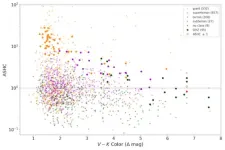
A groundbreaking study has revealed that red dwarf stars can produce stellar flares that carry far-ultraviolet (far-UV) radiation levels much higher than previously believed. This discovery suggests that the intense UV radiation from these flares could significantly impact whether planets around red dwarf stars can be habitable. Led by current and former astronomers from the University of Hawaiʻi Institute for Astronomy (IfA), the research was recently published in the Monthly Notices of the Royal Astronomical Society. “Few stars have been thought to generate ...

Read the release
Configuration design method of mega constellation for low earth orbit observation
Space

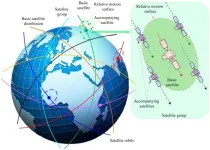
Configuration design method of mega constellation for low earth orbit observation

First, satellites in the mega constellation are categorized and the constellation design based on different satellite division is proposed. Satellites in the mega constellation are divided into 2 types, namely, the basic satellites and the accompanying satellites. All basic satellites that are surrounded by accompanying satellites are evenly distributed globally, and they have the same subsatellite trajectory. A basic satellite and its accompanying satellites are defined as a satellite group. The constellation is composed ...

Read the release
Space

Scientists pin down the origins of the moon’s tenuous atmosphere

While the moon lacks any breathable air, it does host a barely-there atmosphere. Since the 1980s, astronomers have observed a very thin layer of atoms bouncing over the moon’s surface. This delicate atmosphere — technically known as an “exosphere” — is likely a product of some kind of space weathering. But exactly what those processes might be has been difficult to pin down with any certainty. Now, scientists at MIT and the University of Chicago say they have identified the main process that formed the moon’s atmosphere and continues to sustain ...

Read the release
DART forward: Five papers shed new light on asteroids from world’s first planetary defense test
Space

DART forward: Five papers shed new light on asteroids from world’s first planetary defense test

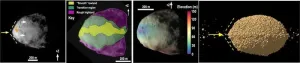
In the months that followed NASA’s Double Asteroid Redirection Test (DART) mission, which sent a spacecraft to intentionally collide with an asteroid moonlet, the science team verified that kinetic impact was a viable deflection technique, proving one effective method of preventing future asteroid strikes on Earth. Since then, researchers have continued studying data collected from the successful experiment, focusing specifically on surface features of the binary asteroid system, composed of moonlet Dimorphos and parent asteroid Didymos. In recently published papers in Nature Communications, the team explored the geology of the asteroid system encountered in 2022 to characterize its ...

Read the release
Space

COSPAR 2024: Embracing team spirit in space research

The Committee on Space Research (COSPAR) has successfully concluded its 45th COSPAR Scientific Assembly in Busan, Korea, held from 13 to 21 July. This prestigious event brought together more than 3,000 experts and leaders from 55 countries in all major fields of space science, under the theme “Team Spirit in Space Research”. This biennial event, actively supported by major space organizations, is a benchmark for fostering dialogue and collaboration within the global space science community. Bringing space leaders together Of particular note this time was the showcasing of ...

Read the release
UBC super-black wood can improve telescopes, optical devices and consumer goods
Space

UBC super-black wood can improve telescopes, optical devices and consumer goods

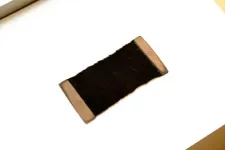
Thanks to an accidental discovery, researchers at the University of British Columbia have created a new super-black material that absorbs almost all light, opening potential applications in fine jewelry, solar cells and precision optical devices. Professor Philip Evans and PhD student Kenny Cheng were experimenting with high-energy plasma to make wood more water-repellent. However, when they applied the technique to the cut ends of wood cells, the surfaces turned extremely black. Measurements by Texas A&M University’s ...

Read the release
Repair kit for NASA’s NICER mission heading to space station
Space

Repair kit for NASA’s NICER mission heading to space station

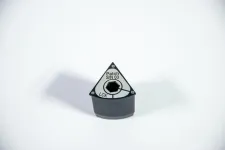
NASA will deliver a patch kit for NICER (Neutron star Interior Composition Explorer), an X-ray telescope on the International Space Station, on the agency’s Northrop Grumman 21st commercial resupply mission. Astronauts will conduct a spacewalk to complete the repair. Located near the space station’s starboard solar array, NICER was damaged in May 2023. The mission team delivered the patch kit to NASA’s Johnson Space Center in Houston in May 2024 so it could be prepped and packed for the upcoming resupply mission. “It’s ...

Read the release
NASA data shows July 22 was Earth’s hottest day on record
Space

NASA data shows July 22 was Earth’s hottest day on record

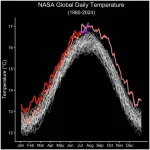
July 22, 2024, was the hottest day on record, according to a NASA analysis of global daily temperature data. July 21 and 23 of this year also exceeded the previous daily record, set in July 2023. These record-breaking temperatures are part of a long-term warming trend driven by human activities, primarily the emission of greenhouse gases. As part of its mission to expand our understanding of Earth, NASA collects critical long-term observations of our changing planet. “In a year that has been the hottest on record to date, these past two weeks have ...

Read the release
Chemical analyses find hidden elements from renaissance astronomer Tycho Brahe’s alchemy laboratory
Space

Chemical analyses find hidden elements from renaissance astronomer Tycho Brahe’s alchemy laboratory

In the Middle Ages, alchemists were notoriously secretive and didn’t share their knowledge with others. Danish Tycho Brahe was no exception. Consequently, we don’t know precisely what he did in the alchemical laboratory located beneath his combined residence and observatory, Uraniborg, on the now Swedish island of Ven. Only a few of his alchemical recipes have survived, and today, there are very few remnants of his laboratory. Uraniborg was demolished after his death in 1601, and the building materials were scattered for reuse. However, during an excavation ...

Read the release
NASA’s Webb images cold exoplanet 12 light-years away
Space

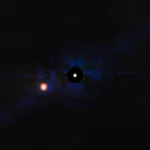
NASA’s Webb images cold exoplanet 12 light-years away

An international team of astronomers using NASA’s James Webb Space Telescope has directly imaged an exoplanet roughly 12 light-years from Earth. The planet, Epsilon Indi Ab, is one of the coldest exoplanets observed to date. The planet is several times the mass of Jupiter and orbits the K-type star Epsilon Indi A (Eps Ind A), which is around the age of our Sun, but slightly cooler. The team observed Epsilon Indi Ab using the coronagraph on Webb’s MIRI (Mid-Infrared Instrument). Only a few tens of exoplanets have been directly imaged previously by space- and ground-based observatories. “Our prior observations of this system have been more indirect measurements ...

Read the release
Dark matter flies ahead of normal matter in mega galaxy cluster collision
Space

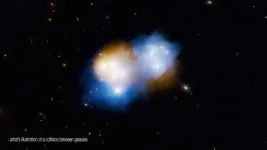
Dark matter flies ahead of normal matter in mega galaxy cluster collision

Astronomers have untangled a messy collision between two massive clusters of galaxies in which the clusters' vast clouds of dark matter have decoupled from the so-called normal matter. The two clusters each contain thousands of galaxies and are located billions of light-years away from Earth. As they plowed through each other, the dark matter—an invisible substance that feels the force of gravity but emits no light—sped ahead of the normal matter. The new observations are the first to directly probe the decoupling of the dark and normal matter velocities. Galaxy ...

Read the release
Webb images nearest super-Jupiter, opening a new window to exoplanet research
Space

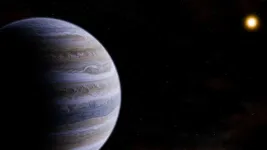
Webb images nearest super-Jupiter, opening a new window to exoplanet research

“We were excited when we realised we had imaged this new planet”, said Elisabeth Matthews, a researcher at the Max Planck Institute for Astronomy in Heidelberg, Germany. She is the main author of the underlying research article published in the journal Nature. “To our surprise, the bright spot that appeared in our MIRI images did not match the position we were expecting for the planet”, Matthews points out. “Previous studies had correctly identified a planet in this system but underestimated this super-Jupiter gas giant’s ...

Read the release
How spaceborne satellites can help with forest monitoring
Space

How spaceborne satellites can help with forest monitoring

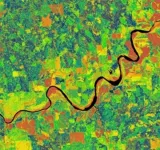
Information like forest canopy height can be useful in assessing the health of a forest, but current measuring methods are not always feasible for large geographic regions or adaptable to diverse forest types. Monitoring from space can be a solution. Forests function as more than a place for a quiet retreat: trees intake and absorb carbon dioxide (a major greenhouse gas), a process also known as carbon sequestration, and are essential parts of water regulation, habitat provision, and support much of the world’s terrestrial biodiversity. Quantifying forest structure parameters, ...

Read the release
Astrophysicists uncover supermassive blackhole/dark matter connection in solving the ‘final parsec problem’
Space

Astrophysicists uncover supermassive blackhole/dark matter connection in solving the ‘final parsec problem’

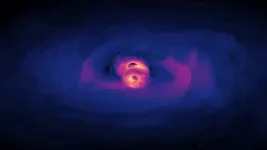
Researchers have found a link between some of the largest and smallest objects in the cosmos: supermassive black holes and dark matter particles. Their new calculations reveal that pairs of supermassive black holes (SMBHs) can merge into a single larger black hole because of previously overlooked behaviour of dark matter particles, proposing a solution to the longstanding “final parsec problem” in astronomy. The research is described in Self-interacting dark matter solves the final parsec problem of supermassive black hole mergers published this month in the journal Physical Review Letters. In ...

Read the release
Rice researchers explore the effects of stellar magnetism on potential habitability of exoplanets
Space

Rice researchers explore the effects of stellar magnetism on potential habitability of exoplanets

Interest in Earth-like planets orbiting within the habitable zone of their host stars has surged, driven by the quest to discover life beyond our solar system. But the habitability of such planets, known as exoplanets, is influenced by more than just their distance from the star. A new study by Rice University’s David Alexander and Anthony Atkinson extends the definition of a habitable zone for planets to include their star’s magnetic field. This factor, well studied in our solar system, can have significant implications for life on other planets, according ...

Read the release
Space

Marshall University awarded grant to further fentanyl addiction research

HUNTINGTON, W.Va. – Marshall University was awarded a $3.3 million grant (#R01DA057931) from the National Institute on Drug Abuse (NIDA) to examine the genetic mechanisms that underlie fentanyl addiction. In 2022, fentanyl overdose was the leading cause of death for U.S. adults aged 18 to 45, according to Families Against Fentanyl (2023). “This alarming statistic highlights the urgent need to understand why some people are more susceptible to fentanyl addiction,” ...

Read the release
New dawn for space storm alerts could help shield Earth's tech
Space

New dawn for space storm alerts could help shield Earth's tech

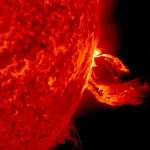
New dawn for space storm alerts could help shield Earth's tech Royal Astronomical Society press release RAS PR 24/22 (NAM 8) For immediate release Space storms could soon be forecasted with greater accuracy than ever before thanks to a big leap forward in our understanding of exactly when a violent solar eruption may hit Earth. Scientists say it is now possible to predict the precise speed a coronal mass ejection (CME) is travelling at and when it will smash into our planet – even before it has fully erupted from ...

Read the release
Learning from Venus: Combining earth system sciences with planetary sciences
Space

Learning from Venus: Combining earth system sciences with planetary sciences

The University of Freiburg is establishing a new tenure track professorship in Earth and Planetary Geodynamics at the Faculty of Environment and Natural Resources, made possible by a 1.71 million euro grant from the Volkswagen Foundation. The new tenure track professorship is part of a comprehensive strategic initiative for combining Earth system sciences with planetary sciences at the University that also includes the establishment of a new Earth System Simulation Lab (EaSySim) and the introduction of an Earth Sciences ...

Read the release
Exoplanet caught in ‘hairpin turn’ signals how high-mass gas giants form
Space

Exoplanet caught in ‘hairpin turn’ signals how high-mass gas giants form

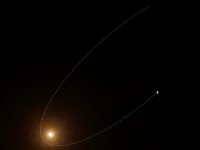
UNIVERSITY PARK, Pa. — Astronomers have discovered a planet that has the most oblong orbit ever found among transiting planets. The exoplanet’s extreme circuit — which looks closer to a cucumber than a circle — follows one of the most drastically stretched-out orbits of all known exoplanets, planets that orbit stars outside our solar system. It is also orbiting its star backwards, lending insight into the mystery of how close-in massive gas planets, known as hot Jupiters, form, stabilize and evolve over time. The research, led by Penn State scientists, was published today (July 17) in ...

Read the release
Grain boundaries weaken in planetary interiors
Space

Grain boundaries weaken in planetary interiors

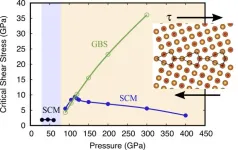
Mantle convection and associated plate tectonics of planets like the Earth are governed by the deformation of mantle rocks. This deformation occurs through the motion of defects in the crystal lattices of minerals. Thus the physical properties of these structural defects under pressure have profound implications on the dynamics of Earth-like planets. Our collaborative team of researchers, led by Dr. Sebastian Ritterex, a former post-doc of the Geodynamics Research Center, Ehime University and now a researcher of the Department ...

Read the release
Sun-like stars found orbiting hidden companions
Space

Sun-like stars found orbiting hidden companions

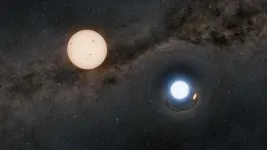
Most stars in our universe come in pairs. While our own Sun is a loner, many stars like our Sun orbit similar stars, while a host of other exotic pairings between stars and cosmic orbs pepper the universe. Black holes, for example, are often found orbiting each other. One pairing that has proved to be quite rare is that between a Sun-like star and a type of dead star called a neutron star. Now, astronomers led by Caltech's Kareem El-Badry have uncovered what appear to be 21 neutron stars in orbit around stars like our Sun. Neutron stars are dense burned-out ...

Read the release
From the original Press-News collection. Issuers of news releases are responsible for the accuracy of their content.