THE ORIGINAL COLLECTION · SINCE 2010

Space
press releases.

Research announcements from universities, hospitals and scientific institutions. Explore the stories, people and discoveries behind the headlines.

Original publication datesPage 25
FIND A STORY

Find a past release.

Dates and source material belong to the original release.

Read our research explainers

Browse the collection · original publication order

Food aroma study may help explain why meals taste bad in space
Space

Food aroma study may help explain why meals taste bad in space

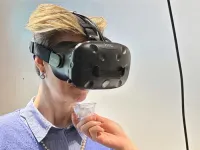
Scientists from RMIT University have led a world-first study on common food aromas that may help explain why astronauts report that meals taste bland in space and struggle to eat their normal nutritional intake. This research, which is published in the International Journal of Food Science and Technology, has broader implications for improving the diets of isolated people, including nursing home residents, by personalising aromas to enhance the flavour of their food. Previous research has shown that aroma plays a big role in the flavour of food. The team in this study tested how people perceived vanilla and almond extracts and lemon essential oil changed from normal environments on ...

Read the release
JWST unveils stunning ejecta and CO structures in Cassiopeia A's young supernova
Space

JWST unveils stunning ejecta and CO structures in Cassiopeia A's young supernova

July 15, 2024, Mountain View, CA -- The SETI Institute announced the latest findings from the James Webb Space Telescope (JWST) of the supernova remnant, Cassiopeia A (Cas A). These observations of the youngest known core collapse supernova in the Milky Way provide insights into the conditions that lead to the formation and destruction of molecules and dust within supernova ejecta. The study’s findings change our understanding of dust formation in the early universe in the galaxies detected by JWST 300 million years after the Big Bang. ...

Read the release
Space

Existence of lunar lava tube cave demonstrated

A team of international scientists, under the lead of the University of Trento, Italy, has published a research study that has made a milestone discovery on the Moon knowledge. For the first time, scientists have demonstrated the existence of a tunnel in the lunar subsurface. It seems to be an empty lava tube. The research study was published by Nature Astronomy and is the result of an international collaboration. "These caves have been theorized for over 50 years, but it is the first time ever that we have demonstrated their existence," ...

Read the release
A stochastic modeling approach for interplanetary supply chain planning
Space

A stochastic modeling approach for interplanetary supply chain planning

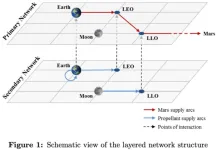
First of all, the problem scope and the theoretical foundation are presented. The considered ISC network is a layered network in which nodes represent points of interactions between the two layers. The two interacting networks are PN which delivers cargo from Earth to Mars and SN that is responsible for the propellant supply along the way, respectively. They share the same nodes but comprise different arcs based on their distinct purposes. The nodes are defined as surface nodes (celestial bodies ...

Read the release
Space

Gravitational waves hint at dark matter and Big Bang mysteries

RIVERSIDE, Calif. -- Gravitational Waves, ripples in space-time predicted by Einstein almost a century ago, were detected for the first time in 2015. A new study led by Yanou Cui, an associate professor of physics and astronomy at the University of California, Riverside, reports that very simple forms of matter could create detectable gravitational wave backgrounds soon after the Big Bang. “This mechanism of creating detectable gravitational wave backgrounds may shed light on ...

Read the release
Space

Scientific definition of a planet says it must orbit our sun; A new proposal would change that

Key takeaways The International Astronomical Union defines a planet as a celestial body that orbits the sun, is massive enough that gravity has forced it into a spherical shape, and has cleared away other objects near its orbit around the sun. Scientists now recognize the existence of thousands of planets, but the IAU definition applies only to those within our solar system. The new proposed definition specifies that the body may orbit one or more stars, brown dwarfs or stellar remnants and sets mass limits that should apply to planets everywhere. Planetary scientists are proposing ...

Read the release
Mars likely had cold and icy past, new study finds
Space

Mars likely had cold and icy past, new study finds

The question of whether Mars ever supported life has captivated the imagination of scientists and the public for decades. Central to the discovery is gaining insight into the past climate of Earth’s neighbor: was the planet warm and wet, with seas and rivers much like those found on our own planet? Or was it frigid and icy, and therefore potentially less prone to supporting life as we know it? A new study finds evidence to support the latter by identifying similarities between soils found on Mars and those of Canada’s Newfoundland, a cold subarctic climate. The study, published July 7th in Communications Earth and Environment, looked for soils on Earth with ...

Read the release
NASA’s Hubble finds strong evidence for intermediate-mass black hole in Omega Centauri
Space

NASA’s Hubble finds strong evidence for intermediate-mass black hole in Omega Centauri

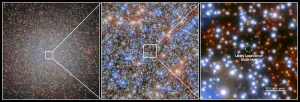
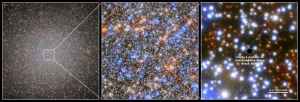
Most known black holes are either extremely massive, like the supermassive black holes that lie at the cores of large galaxies, or relatively lightweight, with a mass of under 100 times that of the Sun. Intermediate-mass black holes (IMBHs) are scarce, however, and are considered rare "missing links" in black hole evolution. Now, an international team of astronomers has used more than 500 images from NASA's Hubble Space Telescope — spanning two decades of observations — to search for evidence of an intermediate-mass black hole by following the motion of seven ...

Read the release
Astronomers find the nearest massive black hole, a missing link in massive black hole formation
Space

Astronomers find the nearest massive black hole, a missing link in massive black hole formation

Omega Centauri is a spectacular collection of about ten million stars, visible as a smudge in the night sky from Southern latitudes. Through a small telescope, it looks no different from other so-called globular clusters: a spherical collection of stars, so dense towards the centre that it becomes impossible to distinguish individual stars. But now a new study, led by Maximilian Häberle (Max Planck Institute for Astronomy), confirms what astronomers had been suspecting for some time: Omega Centauri contains a central black hole. The black hole appears to be the “missing link” between its stellar and ...

Read the release
Astronomers find missing link in massive black hole formation
Space

Astronomers find missing link in massive black hole formation

Omega Centauri is a spectacular collection of 10 million stars, visible as a smudge in the night sky from Southern latitudes. Through a small telescope, it looks no different from other so-called globular clusters; a spherical stellar collection so dense towards the center that it becomes impossible to distinguish individual stars. But a new study, led by researchers from the University of Utah and the Max Planck Institute for Astronomy, confirms what astronomers had argued about for over a decade: Omega Centauri contains a central black hole. The black hole appears to be the missing link between its stellar ...

Read the release
Producing ‘space brick’ for moon base using microwave
Space

Producing ‘space brick’ for moon base using microwave

The Moon’s recent discovery of energy resources, such as water ice, has refocused interest on its potential as a sustainable hub for space exploration. NASA has also announced the Artemis mission, aiming for long-term human presence on the lunar surface. However, infrastructure expansion, such as lunar base construction plays a vital role. Yet, transporting construction materials from Earth to the lunar surface via landers incurs a significant cost of 1.2 million USD per kilogram. Weight directly translates to cost, making the transportation of construction materials from Earth to the Moon nearly impossible. To solve this problem, Korea ...

Read the release
Stench of a gas giant? Nearby exoplanet reeks of rotten eggs. And that’s a good thing
Space

Stench of a gas giant? Nearby exoplanet reeks of rotten eggs. And that’s a good thing

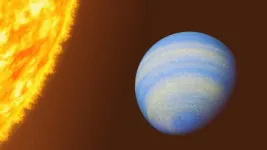
An exoplanet infamous for its deadly weather has been hiding another bizarre feature—it reeks of rotten eggs, according to a new Johns Hopkins University study of data from the James Webb Space Telescope. The atmosphere of HD 189733 b, a Jupiter-sized gas giant, has trace amounts of hydrogen sulfide, a molecule that not only gives off a stench but also offers scientists new clues about how sulfur, a building block of planets, might influence the insides and atmospheres of gas worlds beyond the solar system. The findings are published today ...

Read the release
Fresh wind blows from historical supernova
Space

Fresh wind blows from historical supernova

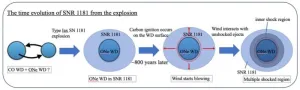
A mysterious remnant from a rare type of supernova recorded in 1181 has been explained for the first time. Two white dwarf stars collided, creating a temporary “guest star,” now labeled supernova (SN) 1181, which was recorded in historical documents in Japan and elsewhere in Asia. However, after the star dimmed, its location and structure remained a mystery until a team pinpointed its location in 2021. Now, through computer modeling and observational analysis, researchers have recreated the structure of the remnant white dwarf, a rare occurrence, explaining its ...

Read the release
Effects of visual and auditory instructions on space station procedural tasks
Space

Effects of visual and auditory instructions on space station procedural tasks

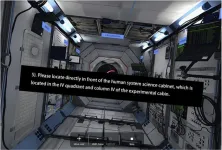
Firstly, the authors provided a detailed explanation of the experimental methods and procedures. This study recruited 30 healthy subjects (15 males and 15 females), aged between 20 to 50 years, with an average age of 42 ± 6.58 years. All participants had no severe visual or auditory impairments and were right-handed. The subjects met the biometric standards for astronaut candidates and were rigorously screened. The experiment used Unity 3D to model the space station, simulating the internal scenes of the space station. The subjects started from the core node module and found the laboratory module I, where they operated the Space Raman Spectrometer ...

Read the release
Organic material from Mars reveals the likely origin of life’s building blocks
Space

Organic material from Mars reveals the likely origin of life’s building blocks

Organic material from Mars reveals the likely origin of life’s building blocks Two samples from Mars together deliver the "smoking gun" in a new study showing the origin of Martian organic material. The study presents solid evidence for a prediction made over a decade ago by University of Copenhagen researchers that could be key to understanding how organic molecules, the foundation of life, were first formed here on Earth. In a meteor crater on the red planet, a solitary robot is moving about. Right now it is probably collecting soil samples with a drill and a robotic arm, as it has quite ...

Read the release
Space

This desert moss has the potential to grow on Mars

The desert moss Syntrichia caninervis is a promising candidate for Mars colonization thanks to its extreme ability to tolerate harsh conditions lethal to most life forms. The moss is well known for its ability to tolerate drought conditions, but researchers report June 30 in the journal The Innovation that it can also survive freezing temperatures as low as −196°C, high levels of gamma radiation, and simulated Martian conditions involving these three stressors combined. In all cases, prior dehydration seemed to help the plants cope. “Our study shows that the environmental resilience ...

Read the release
Space

Analysis of NASA InSight data suggests Mars hit by meteoroids more often than thought

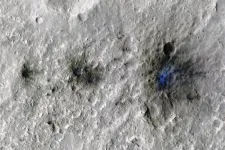
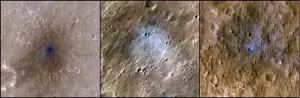
PROVIDENCE, R.I. [Brown University] — NASA’s Mars InSight Lander may be resting on the Red Planet in retirement, but data from the robotic explorer is still leading to seismic discoveries on Earth. In one of the latest studies using data from the spacecraft, an international team of scientists led by a Brown University researcher found that Mars may be getting bombarded by space rocks at more frequent rates than previously thought. Impact rates could be two to 10 times higher than previously estimated, depending on the size of the meteoroids, according to the study published in Science Advances. “It’s ...

Read the release
Tiny bright objects discovered at dawn of universe baffle scientists
Space

Tiny bright objects discovered at dawn of universe baffle scientists

UNIVERSITY PARK, Pa. — A recent discovery by NASA’s James Webb Space Telescope (JWST) confirmed that luminous, very red objects previously detected in the early universe upend conventional thinking about the origins and evolution of galaxies and their supermassive black holes. An international team, led by Penn State researchers, using the NIRSpec instrument aboard JWST as part of the RUBIES survey identified three mysterious objects in the early universe, about 600-800 million years after the Big Bang, ...

Read the release
New class of Mars quakes reveals daily meteorite strikes
Space

New class of Mars quakes reveals daily meteorite strikes

In brief: For the first time, researchers use seismic data to estimate a global meteorite impact rate showing meteoroids the size of a basketball impact Mars on a near daily basis. Impact-generated seismic signals show meteorite impacts to be 5-times more abundant than previously thought. Seismic data offers a new tool, in addition to observational data, for calculating meteorite impact rates and planning future Mars missions An international team of researchers, co-lead by ETH Zurich and Imperial College London, have derived the first estimate of global meteorite impacts on Mars using seismic data. Their findings indicate between 280 to 360 meteorites strike ...

Read the release
Surprising meteorite impact rate on Mars can act as ‘cosmic clock’
Space

Surprising meteorite impact rate on Mars can act as ‘cosmic clock’

Seismic signals have suggested Mars gets hit by around 300 basketball-sized meteorites every year, providing a new tool for dating planetary surfaces. The new research, led by scientists at Imperial College London and ETH Zurich working as part of NASA's InSight mission, has shed light on how often ‘marsquakes’ caused by meteorite impacts occur on Mars. The researchers found that Mars experiences around 280 to 360 meteorite impacts every year that produce craters larger than eight metres in diameter and shake the red planet’s ...

Read the release
Last segment of the world’s largest telescope mirror successfully cast
Space

Last segment of the world’s largest telescope mirror successfully cast

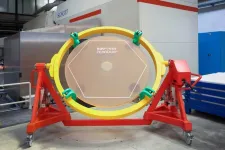
The European Southern Observatory’s Extremely Large Telescope (ESO’s ELT), under construction in the Chilean Atacama Desert, is one step closer to completion. German company SCHOTT has successfully cast the blank for the last of the 949 segments commissioned for the telescope’s primary mirror (M1). With a diameter of more than 39 metres, M1 will be by far the largest mirror ever made for a telescope. Too large to be made from a single piece of glass, M1 will consist of 798 hexagonal segments, each about five centimetres thick and 1.5 ...

Read the release
NRL CCOR launches on the GOES-U NOAA satellite to monitor space weather
Space

NRL CCOR launches on the GOES-U NOAA satellite to monitor space weather

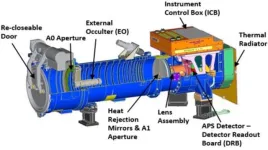
WASHINGTON – The U.S. Naval Research Laboratory’s (NRL) Compact Coronagraph (CCOR) was launched June 25, on the National Oceanic and Atmospheric Administration (NOAA) Geostationary Operational Environmental Satellite-U (GOES-U) from NASA – Kennedy Space Center to detect and characterize coronal mass ejections (CMEs). The NOAA sponsored NRL to design, integrate, and test CCOR, a small space telescope that will create an artificial eclipse of the sun and ...

Read the release
Precision instrument bolsters efforts to find elusive dark energy
Space

Precision instrument bolsters efforts to find elusive dark energy

Dark energy — a mysterious force pushing the universe apart at an ever-increasing rate — was discovered 26 years ago, and ever since, scientists have been searching for a new and exotic particle causing the expansion. Pushing the boundaries of this search, University of California, Berkeley physicists have now built the most precise experiment yet to look for minor deviations from the accepted theory of gravity that could be evidence for such a particle, which theorists have dubbed a chameleon or symmetron. The experiment, which combines an atom interferometer for precise gravity ...

Read the release
Space

Marsquakes may help reveal whether liquid water exists underground on red planet

UNIVERSITY PARK, Pa. — If liquid water exists today on Mars, it may be too deep underground to detect with traditional methods used on Earth. But listening to earthquakes that occur on Mars — or marsquakes — could offer a new tool in the search, according to a team led by Penn State scientists. When quakes rumble and move through aquifers deep underground, they produce electromagnetic signals. The researchers reported in the journal JGR Planets how those signals, if also produced on Mars, could identify water miles under the surface. The study may lay the groundwork for future analyses of data from Mars missions, according to ...

Read the release
Geologists expect Chang’e-6 lunar surface samples to contain volcanic rock and impact ejecta
Space

Geologists expect Chang’e-6 lunar surface samples to contain volcanic rock and impact ejecta

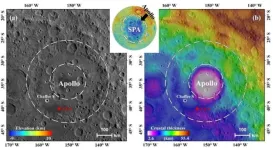
On June 25, China’s Chang’e-6 (CE-6) lunar probe is set to return to Earth, carrying the first surface samples collected from the farside of the Moon. In anticipation of this historic event, scientists from the Institute of Geology and Geophysics at the Chinese Academy of Sciences are publishing their predictions for the unique materials that may be found in the CE-6 samples in the journal The Innovation. Based on the geological characteristics of the probe’s landing site, the researchers anticipate that the returned surface samples will consist of 2.5-million-year-old volcanic rock combined with ...

Read the release
From the original Press-News collection. Issuers of news releases are responsible for the accuracy of their content.