THE ORIGINAL COLLECTION · SINCE 2010

Space
press releases.

Research announcements from universities, hospitals and scientific institutions. Explore the stories, people and discoveries behind the headlines.

Original publication datesPage 29
FIND A STORY

Find a past release.

Dates and source material belong to the original release.

Read our research explainers

Browse the collection · original publication order

Scientists discover new way to extract cosmological information from galaxy surveys
Space

Scientists discover new way to extract cosmological information from galaxy surveys

Scientists at the National Astronomical Observatories of the Chinese Academy of Sciences (NAOC) and their international collaborators have recently developed a new method for efficiently extracting information from galaxy surveys. Their research results were published online in the latest issue of Communications Physics. Massive galaxy redshift surveys are powerful tools for probing the Universe in this era of precision cosmology. By observing a great number of spectra from distant galaxies, astronomers are able to create density fields of galaxies ...

Read the release
Space

Cosmic rays streamed through Earth’s atmosphere 41,000 years ago

Earth’s magnetic field cocoons our planet from the onslaught of cosmic radiation streaming through space while also shielding us from charged particles hurled outward by the sun. But the geomagnetic field is not stationary. Not only does magnetic north wobble, straying from true north (a geographically defined location), but occasionally, it flips. During these reversals, north becomes south, south becomes north, and in the process, the intensity of the magnetic field wanes. But there’s also ...

Read the release
Space

A third of China’s urban population at risk of city sinking, new satellite data shows

Land subsidence is overlooked as a hazard in cities, according to scientists from the University of East Anglia (UEA) and Virginia Tech. Writing in the journal Science, Prof Robert Nicholls of the Tyndall Centre for Climate Change Research at UEA and Prof Manoochehr Shirzaei of Virginia Tech and United Nations University for Water, Environment and Health, Ontario, highlight the importance of a new research paper analysing satellite data that accurately and consistently maps land movement across China. While they say in their comment article that consistently measuring subsidence is a great achievement, they argue it is only the start of finding solutions. Predicting ...

Read the release
Space

Atmospheric isotopes reveal 4.5 billion years of volcanism on Jupiter’s moon Io

Sulfur and chlorine isotopes in the atmosphere of Jupiter’s moon Io indicate that it has been volcanically active for the entire 4.57 billion-year history of the Solar System, according to a new study. The findings offer new insights into the moon’s history. Io is the most volcanically active body in the Solar System. This extreme level of volcanic activity is the result of tidal heating from friction generated within the moon’s interior as it is pulled between Jupiter and its neighboring moons of Europa and Ganymede. However, how long Io has hosted such extensive ...

Read the release
From dreams to reality: unveiling the ideal in situ construction method for lunar habitats and paving the way to Moon colonization
Space

From dreams to reality: unveiling the ideal in situ construction method for lunar habitats and paving the way to Moon colonization

As the lunar exploration mission evolves from exploration to construction and utilization, in situ lunar construction becomes an imperative requirement. The core lies in regolith solidification and formation, aiming to maximize local resource utilization while minimizing transportation and maintenance costs. Nearly 20 techniques have been employed for preparing regolith-based construction materials, each with distinct requirements and capabilities. Professor Feng from Tsinghua University has conducted a comprehensive review, ...

Read the release
Space

Surrey engineers help Mauritius spot illegal fishing from space

Authorities in Mauritius will begin combatting illegal fishing with satellite technology thanks to a partnership between the University of Surrey and the Mauritius Research and Innovation Council (MRIC). The Nereus project combines satellite images with other ship location data. It uses artificial intelligence (AI) to detect anomalies, spotting ships of interest and working out where they are headed. Authorities can then check whether illegal fishing is taking place. Dr Raffaella Guida, Reader in Satellite Remote Sensing at the Surrey Space Centre, at the University of Surrey, said: "Catching vessels illegally fishing off an island ...

Read the release
FAU Engineering selected by NASA for University Nanosatellite Program
Space

FAU Engineering selected by NASA for University Nanosatellite Program

Florida Atlantic University’s College of Engineering and Computer Science is among eight university teams in the United States selected to work with NASA and the U.S. military to foster innovation and expertise in the small satellite sector. NASA’s CubeSat Launch Initiative (CSLI) is partnering with the U.S. Air Force and U.S. Space Force for the 2024 Mission Concept Program. A CubeSat is among a class of research spacecraft called nanosatellites about the size of a 4-inch cube and typically weighing less than 5 pounds. Running from May through August, the University Nanosatellite ...

Read the release
Dual-beamline photoelectron momentum microscopy upgrade revolutionizes valence orbital analysis
Space

Dual-beamline photoelectron momentum microscopy upgrade revolutionizes valence orbital analysis

The world's first dual-beamline photoelectron momentum microscope has been developed at the UVSOR Synchrotron Facility, Japan. This innovative experimental station brings breakthroughs in studying the behavior of electrons in materials governing material properties, particularly in analyzing valence orbitals. Understanding the behavior of electrons in materials is crucial for the advancement of materials science and device engineering. Conventional photoelectron spectroscopy provides deep insight into the nature of the electronic structure of solids. Currently, the challenge of researching electronic structures on the micrometer scale is being pursued all over the world. ...

Read the release
Cold coulomb crystals, cosmic clues: Unraveling the mysteries of space chemistry
Space

Cold coulomb crystals, cosmic clues: Unraveling the mysteries of space chemistry

While it may not look like it, the interstellar space between stars is far from empty. Atoms, ions, molecules, and more reside in this ethereal environment known as the Interstellar Medium (ISM). The ISM has fascinated scientists for decades, as at least 200 unique molecules form in its cold, low-pressure environment. It’s a subject that ties together the fields of chemistry, physics, and astronomy, as scientists from each field work to determine what types of chemical reactions happen there. Now, in the recently published cover article of the Journal of Physical Chemistry A, JILA Fellow and University of Colorado Boulder Physics Professor ...

Read the release
NASA’s Fermi mission sees no gamma rays from nearby supernova
Space

NASA’s Fermi mission sees no gamma rays from nearby supernova

A nearby supernova in 2023 offered astrophysicists an excellent opportunity to test ideas about how these types of explosions boost particles, called cosmic rays, to near light-speed. But surprisingly, NASA’s Fermi Gamma-ray Space Telescope detected none of the high-energy gamma-ray light those particles should produce. On May 18, 2023, a supernova erupted in the nearby Pinwheel galaxy (Messier 101), located about 22 million light-years away in the constellation Ursa Major. The event, named SN 2023ixf, is the most luminous nearby supernova discovered since Fermi launched in ...

Read the release
Oregon State researchers advance pigment chemistry with moon-inspired reddish magentas
Space

Oregon State researchers advance pigment chemistry with moon-inspired reddish magentas

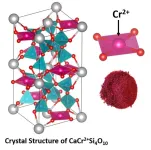
CORVALLIS, Oregon – An Oregon State University researcher who made color history in 2009 with a vivid blue pigment has developed durable, reddish magentas inspired by lunar mineralogy and ancient Egyptian chemistry. Mas Subramanian, distinguished professor of chemistry, and collaborators at OSU report the findings of the study, funded by the National Science Foundation, in the journal Chemistry of Materials. The new pigments, which could be used as energy-efficient coatings for vehicles and buildings, are based on divalent chromium, Cr2+, and are ...

Read the release
Most massive stellar black hole in our galaxy found
Space

Most massive stellar black hole in our galaxy found

Astronomers have identified the most massive stellar black hole yet discovered in the Milky Way galaxy. This black hole was spotted in data from the European Space Agency’s Gaia mission because it imposes an odd ‘wobbling’ motion on the companion star orbiting it. Data from the European Southern Observatory’s Very Large Telescope (ESO’s VLT) and other ground-based observatories were used to verify the mass of the black hole, putting it at an impressive 33 times that of the Sun. Stellar black holes are formed from the collapse of massive stars and the ones ...

Read the release
Space

Study uses thermodynamics to describe expansion of the Universe

The idea that the Universe is expanding dates from almost a century ago. It was first put forward by Belgian cosmologist Georges Lemaître (1894-1966) in 1927 and confirmed observationally by American astronomer Edwin Hubble (1889-1953) two years later. Hubble observed that the redshift in the electromagnetic spectrum of the light received from celestial objects was directly proportional to their distance from Earth, which meant that bodies farther away from Earth were moving away faster and the universe must be expanding. A surprising new ingredient was added to the model in 1998 when observations of ...

Read the release
Space

Hydrogen recombination found to be most plausible explanation for high levels of energy in stellar superflares

Although their primary purpose is to look for exoplanets, observatories like the Kepler Space Telescope and the Transiting Exoplanet Survey Satellite (TESS) have supplied a vast amount of data on stellar flares, detected with high-precision photometry by broadband filters in the visible light spectrum. The stars are so far away that they appear only as points of light to these telescopes, and the phenomena interpreted as stellar flares are abrupt increases in the brightness of these points. There is also a lack of data in other parts of the electromagnetic spectrum, and most studies of these events focus on irradiated ...

Read the release
Physicists solve puzzle about ancient galaxy found by Webb telescope
Space

Physicists solve puzzle about ancient galaxy found by Webb telescope

RIVERSIDE, Calif. -- Last September, the James Webb Space Telescope, or JWST, discovered JWST-ER1g, a massive ancient galaxy that formed when the universe was just a quarter of its current age. Surprisingly, an Einstein ring is associated with this galaxy. That’s because JWST-ER1g acts as a lens and bends light from a distant source, which then appears as a ring — a phenomenon called strong gravitational lensing, predicted in Einstein’s theory of general relativity. The total mass enclosed within the ring has two components: stellar and dark matter components. “If ...

Read the release
Stellar winds of three sun-like stars detected for the first time
Space

Stellar winds of three sun-like stars detected for the first time

An international research team led by a researcher from the University of Vienna has for the first time directly detected stellar winds from three Sun-like stars by recording the X-ray emission from their astrospheres, and placed constraints on the mass loss rate of the stars via their stellar winds. The study is currently published in Nature Astronomy. Astrospheres, stellar analogues of the heliosphere that surrounds our solar system, are very hot plasma bubbles blown by stellar winds into the interstellar medium, a space filled with gas and dust. The ...

Read the release
Beautiful nebula, violent history: Clash of stars solves stellar mystery
Space

Beautiful nebula, violent history: Clash of stars solves stellar mystery

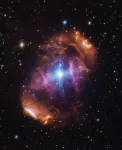
When astronomers looked at a stellar pair at the heart of a stunning cloud of gas and dust, they were in for a surprise. Star pairs are typically very similar, like twins, but in HD 148937, one star appears younger and, unlike the other, is magnetic. New data from the European Southern Observatory (ESO) suggest there were originally three stars in the system, until two of them clashed and merged. This violent event created the surrounding cloud and forever altered the system’s fate. “When doing background reading, ...

Read the release
Space

A magnetic massive star was produced by a stellar merger

Shedding light on why some massive stars have magnetic fields even though these stars’ interiors layers don’t undergo convection, researchers report observational evidence that magnetic fields form in some such stars through stellar mergers. The magnetic fields of low-mass stars, like the Sun, are produced by a dynamo generated in the convective layers of the star’s interior. Massive stars – those 8 or more solar masses at formation – do not have the convective interiors required to sustain magnetic fields in ...

Read the release
Penn Engineers recreate Star Trek’s Holodeck using ChatGPT and video game assets
Space

Penn Engineers recreate Star Trek’s Holodeck using ChatGPT and video game assets

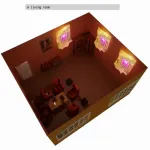
In Star Trek: The Next Generation, Captain Picard and the crew of the U.S.S. Enterprise leverage the holodeck, an empty room capable of generating 3D environments, to prepare for missions and to entertain themselves, simulating everything from lush jungles to the London of Sherlock Holmes. Deeply immersive and fully interactive, holodeck-created environments are infinitely customizable, using nothing but language: the crew has only to ask the computer to generate an environment, and that space appears in the holodeck. Today, virtual interactive environments are also used to train robots prior to real-world deployment in a ...

Read the release
Long-term satellite observations show climatological characteristics of isolated deep convection over the Tibetan Plateau
Space

Long-term satellite observations show climatological characteristics of isolated deep convection over the Tibetan Plateau

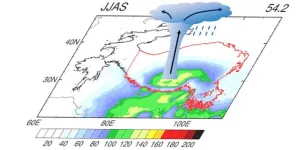
The Tibetan Plateau is a prevalent region for deep convection owing to its unique thermodynamic forcing. Deep convection can exist as isolated deep convection (IDC), which is small in size, or mesoscale convective systems (MCSs), which are convective storms organized into larger and longer-lived systems. Most previous research has focused on MCSs over the Tibetan Plateau, but less so on IDC systems (hereafter, IDCs). Dr. Ying Na from Wuxi University, and Dr. Chaofan Li from the Institute of Atmospheric Physics, Chinese Academy of Sciences, China, examined the climatological features of IDCs by using high-resolution satellite observations in June to September ...

Read the release
Space

Cher Farrugia and Wei Qiao named winners of the 2024 IADR STAR Network Academy Fellowship

Alexandria, VA, USA – The International Association for Dental, Oral, and Craniofacial Research (IADR) has announced Cher Farrugia and Wei Qiao as the winners of the 2024 IADR STAR Network Academy Fellowship. Farrugia, from the University of Bristol, England, UK, and Qiao, from The University of Hong Kong, SAR, China, were recognized during the Opening Ceremonies of the 102nd General Session of the IADR, which was held in conjunction with the 53rd Annual Meeting of the American Association for Dental, Oral, and Craniofacial Research and the 48th Annual ...

Read the release
How the moon turned itself inside out
Space

How the moon turned itself inside out

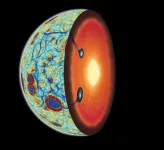
About 4.5 billion years ago, a small planet smashed into the young Earth, flinging molten rock into space. Slowly, the debris coalesced, cooled and solidified, forming our moon. This scenario of how the Earth's moon came to be is the one largely agreed upon by most scientists. But the details of how exactly that happened are "more of a choose-your-own adventure novel," according to researchers in the University of Arizona Lunar and Planetary Laboratory who published a paper in Nature Geoscience. The findings offer important insights into the evolution ...

Read the release
Portsmouth researchers enable detection of remarkable gravitational-wave signal
Space

Portsmouth researchers enable detection of remarkable gravitational-wave signal

Researchers from the University of Portsmouth’s Institute of Cosmology and Gravitation (ICG) have helped to detect a remarkable gravitational-wave signal, which could hold the key to solving a cosmic mystery. The discovery is from the latest set of results announced today (5 April) by the LIGO-Virgo-KAGRA collaboration, which comprises more than 1,600 scientists from around the world, including members of the ICG, that seeks to detect gravitational waves and use them for exploration of fundamentals of science. In May 2023, shortly after ...

Read the release
CHEOPS detects a ‘‘rainbow’’ on an exoplanet
Space

CHEOPS detects a ‘‘rainbow’’ on an exoplanet

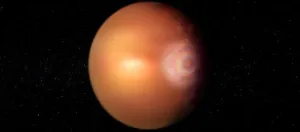
The CHEOPS space telescope, whose scientific operations centre is based at the University of Geneva (UNIGE), is providing new information on the mysterious exoplanet WASP-76b. This ultra-hot giant is characterised by an asymmetry between the amount of light observed on its eastern terminator - the fictitious line that separates its night side from its day side - and that observed on its western terminator. This peculiarity is thought to be due to a ‘‘glory’’, a luminous phenomenon similar to a rainbow, which occurs if the light from the star - the ‘‘sun’’ around which the ...

Read the release
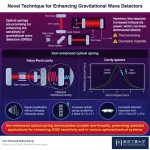
Kerr-enhanced optical spring for next-generation gravitational wave detectors
Space

Kerr-enhanced optical spring for next-generation gravitational wave detectors

The detection of gravitational waves stands as one of the most significant achievements in modern physics. In 2017, gravitational waves from the merger of a binary neutron star were detected for the first time which uncovered crucial information about our universe, from the origin of short gamma-ray bursts to the formation of heavy elements. However, detecting gravitational waves emerging from post-merger remnants has remained elusive due to their frequency range lying outside the range of modern gravitational wave detectors (GWDs). ...

Read the release
From the original Press-News collection. Issuers of news releases are responsible for the accuracy of their content.