THE ORIGINAL COLLECTION · SINCE 2010

Space
press releases.

Research announcements from universities, hospitals and scientific institutions. Explore the stories, people and discoveries behind the headlines.

Original publication datesPage 28
FIND A STORY

Find a past release.

Dates and source material belong to the original release.

Read our research explainers

Browse the collection · original publication order

MIT researchers discover the universe’s oldest stars in our own galactic backyard
Space

MIT researchers discover the universe’s oldest stars in our own galactic backyard

MIT researchers, including several undergraduate students, have discovered three of the oldest stars in the universe, and they happen to live in our own galactic neighborhood. The team spotted the stars in the Milky Way’s “halo” — the cloud of stars that envelopes the entire main galactic disk. Based on the team’s analysis, the three stars formed between 12 and 13 billion years ago, the time when the very first galaxies were taking shape. The researchers have coined the stars ...

Read the release
Space

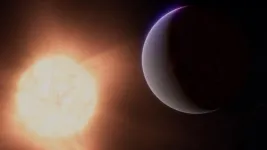
WASP-193b, a giant planet with a density similar to that of cotton candy

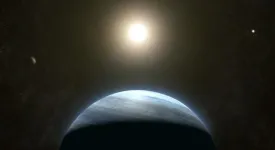
An international team led by researchers from the EXOTIC Laboratory of the University of Liège, in collaboration with MIT and the Astrophysics Institute in Andalusia, has just discovered WASP-193b, an extraordinarily low-density giant planet orbiting a distant Sun-like star. This new planet, located 1,200 light-years from Earth, is 50% larger than Jupiter but seven times less massive, giving it an extremely low density comparable to that of cotton candy. "WASP-193b is the second least dense planet discovered to date, after Kepler-51d, which is much smaller," explains ...

Read the release
Space

SIAM Conference on Mathematics of Planet Earth (MPE24)

Climate change, biodiversity, infectious diseases, sustainability, and the associated socio-economic impacts are among the areas of greatest global concern. The SIAM Conference on Mathematics of Planet Earth (MPE24) provides a forum for interdisciplinary researchers to discuss mathematical, statistical, and computational strategies for addressing these problems. The discussion at MPE24 will range from the development of quantitative techniques and algorithms to providing policy makers with tools for qualitative decision support. This year, MPE24 is especially interested in sessions and presentations that address fundamental ...

Read the release
Space

Hints of a possible atmosphere around a rocky exoplanet

55 Cancri e is one of five known planets orbiting a Sun-like star in the constellation Cancer. With a diameter nearly twice that of Earth and a density slightly greater, the planet is classified as a super-Earth: larger than Earth, smaller than Neptune, and similar in composition to the rocky planets in our solar system. Brice-Olivier Demory from the Center for Space and Habitability CSH of the University of Bern and member of the NCCR PlanetS is co-author of the study that has just been published in Nature. He ...

Read the release
Squeezed by neighbors, planet glows with molten lava
Space

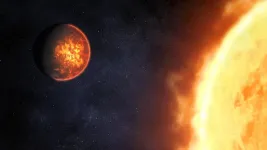
Squeezed by neighbors, planet glows with molten lava

UC Riverside astrophysicist Stephen Kane had to double check his calculations. He wasn’t sure the planet he was studying could be as extreme as it seemed. Kane never expected to learn that a planet in this faraway star system is covered with so many active volcanoes that seen from a distance it would take on a fiery, glowing-red hue. “It was one of those discovery moments that you think, ‘wow, it’s amazing this can actually exist,” Kane said. A paper detailing the discovery has been published in The Astronomical Journal. Launched in 2018, NASA’s Transiting Exoplanet Survey ...

Read the release
NASA’s Webb hints at possible atmosphere surrounding rocky exoplanet
Space

NASA’s Webb hints at possible atmosphere surrounding rocky exoplanet

Researchers using NASA’s James Webb Space Telescope may have detected atmospheric gases surrounding 55 Cancri e, a hot rocky exoplanet 41 light-years from Earth. This is the best evidence to date for the existence of any rocky planet atmosphere outside our solar system. Renyu Hu from NASA’s Jet Propulsion Laboratory (JPL) in Pasadena, California, is lead author on a paper published today in Nature. “Webb is pushing the frontiers of exoplanet characterization to rocky planets,” Hu said. “It is truly ...

Read the release
Exploring the asteroid apophis with small satellites
Space

Exploring the asteroid apophis with small satellites

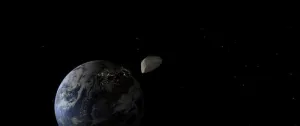
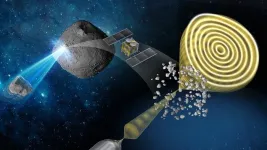
The author of a disaster novel couldn't have dreamed it up any better: On a Friday, the thirteenth of all days, the potentially dangerous asteroid (99942) Apophis will come extremely close to humanity. On 13 April 2029, there will only be around 30,000 kilometres between the cosmic rock and Earth. It will then be possible to see Apophis with the naked eye as a point of light in the evening sky, even from Würzburg. What makes the asteroid so dangerous: its average diameter is an impressive 340 metres. If it were to hit the Earth, the ...

Read the release
This sound-suppressing silk can create quiet spaces
Space

This sound-suppressing silk can create quiet spaces

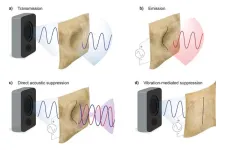
We are living in a very noisy world. From the hum of traffic outside your window to the next-door neighbor’s blaring TV to sounds from a co-worker’s cubicle, unwanted noise remains a resounding problem. To cut through the din, an interdisciplinary collaboration of researchers from MIT and elsewhere developed a sound-suppressing silk fabric that could be used to create quiet spaces. The fabric, which is barely thicker than a human hair, contains a special fiber that vibrates when a voltage is applied to it. The researchers leveraged those vibrations to suppress ...

Read the release
Advancing satellite-based PNT service: low earth orbit satellite constellations augment the GNSS
Space

Advancing satellite-based PNT service: low earth orbit satellite constellations augment the GNSS

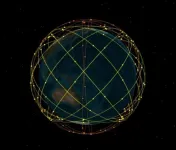
A study has outlined the critical needs and essential technologies for a Low Earth Orbit (LEO) constellation to augment satellite navigation systems, significantly improving the Positioning, Navigation and Timing (PNT) services. This research specifically targets the diverse demands of different users for LEO augmented GNSS, the possible contribution of LEOs to PNT performances, and the key technologies referring to the LEO-based navigation augmentation system. The Global Navigation Satellite Systems (GNSS), including the BeiDou Navigation Satellite System (BDS), are the most widely used in providing PNT services. However, GNSS signals from geostationary orbit (GEO), inclined ...

Read the release
Webb telescope probably didn’t find life on an exoplanet — yet
Space

Webb telescope probably didn’t find life on an exoplanet — yet

Recent reports of NASA’s James Webb Space Telescope finding signs of life on a distant planet understandably sparked excitement. A new study challenges this finding, but also outlines how the telescope might verify the presence of the life-produced gas. The UC Riverside study, published in the Astrophysical Journal Letters, may be a disappointment to extraterrestrial enthusiasts but does not rule out the near-future possibility of discovery. In 2023 there were tantalizing reports of a biosignature gas in the atmosphere of planet K2-18b, ...

Read the release
Space

Satellite images of plants’ fluorescence can predict crop yields

ITHACA, N.Y. – Cornell University researchers and collaborators have developed a new framework that allows scientists to predict crop yield without the need for enormous amounts of high-quality data – which is often scarce in developing countries, especially those facing heightened food insecurity and climate risk. In many parts of the world, crop yields are dropping, largely due to the effects of climate change. According to a recent Cornell study, over the last four decades, for every 1 degree Celsius of warming, net farm income decreased by 66%. Farmers in developed countries can often rely on big datasets ...

Read the release
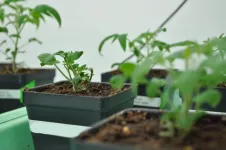
Simulations of agriculture on Mars using pea, carrot and tomato plants suggest that intercropping, growing different crops mixed together, could boost yields in certain conditions
Space

Simulations of agriculture on Mars using pea, carrot and tomato plants suggest that intercropping, growing different crops mixed together, could boost yields in certain conditions

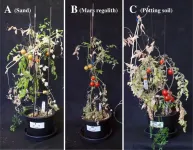
Simulations of agriculture on Mars using pea, carrot and tomato plants suggest that intercropping, growing different crops mixed together, could boost yields in certain conditions ### Article URL: https://journals.plos.org/plosone/article?id=10.1371/journal.pone.0302149 Article Title: Intercropping on Mars: A promising system to optimise fresh food production in future martian colonies Author Countries: The Netherlands Funding: The author(s) received no specific funding for this work. END ...

Read the release
Space

A “cosmic glitch” in gravity

A group of researchers at the University of Waterloo and the University of British Columbia have discovered a potential “cosmic glitch” in the universe’s gravity, explaining its strange behaviour on a cosmic scale. For the last 100 years, physicists have relied upon Albert Einstein’s theory of “general relativity” to explain how gravity works throughout the universe. General relativity, proven accurate by countless tests and observations, suggests that gravity impacts ...

Read the release
World’s highest observatory explores the universe
Space

World’s highest observatory explores the universe

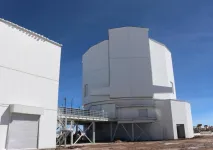
How do planets form? How do galaxies evolve? And ultimately, how did the universe itself begin? A unique astronomical observatory that researchers hope will unravel some of the biggest mysteries out there marks its opening on April 30, 2024. At an altitude of 5,640 meters, the University of Tokyo Atacama Observatory (TAO), built on the summit of a desert mountain in northern Chile, is the highest astronomical observatory in the world, which should give it unrivaled capabilities, but presents some novel challenges. Astronomers will ...

Read the release
NASA’s Webb maps weather on planet 280 light-years away
Space

NASA’s Webb maps weather on planet 280 light-years away

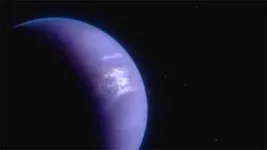
An international team of researchers has successfully used NASA’s James Webb Space Telescope to map the weather on the hot gas-giant exoplanet WASP-43 b. Precise brightness measurements over a broad spectrum of mid-infrared light, combined with 3D climate models and previous observations from other telescopes, suggest the presence of thick, high clouds covering the nightside, clear skies on the dayside, and equatorial winds upwards of 5,000 miles per hour mixing atmospheric gases around the planet. The investigation is just the latest demonstration of the exoplanet science now possible with Webb’s ...

Read the release
Webb captures top of iconic horsehead nebula in unprecedented detail
Space

Webb captures top of iconic horsehead nebula in unprecedented detail

NASA’s James Webb Space Telescope has captured the sharpest infrared images to date of a zoomed-in portion of one of the most distinctive objects in our skies, the Horsehead Nebula. These observations show the top of the “horse’s mane” or edge of this iconic nebula in a whole new light, capturing the region’s complexity with unprecedented spatial resolution. Webb’s new images show part of the sky in the constellation Orion (The Hunter), in the western side of a dense region known as the Orion B molecular cloud. Rising from turbulent waves of dust and gas is the Horsehead Nebula, otherwise known as ...

Read the release
Citizen scientists help discover record-breaking exoplanet in binary star system
Space

Citizen scientists help discover record-breaking exoplanet in binary star system

A team of astronomers and citizen scientists has discovered a planet in the habitable zone of an unusual star system, including two stars and potentially another exoplanet. The planet hunters spotted the Neptune-like planet as it crossed in front of its host star, temporarily dimming the star’s light in a way akin to a solar eclipse on Earth. This ‘transit method’ usually identifies planets with tight orbits, as they are more likely to follow paths that put them between Earth and their host star and, when following such paths, move into light-blocking positions more frequently. That’s why this newly discovered planet is ...

Read the release
Space

UC Irvine astronomers’ simulations support dark matter theory

Irvine, Calif., April 29, 2024 — Computer simulations by astronomers support the idea that dark matter – matter that no one has yet directly detected but which many physicists think must be there to explain several aspects of the observable universe – exists, according to the researchers, who include those at the University of California, Irvine. The work addresses a fundamental debate in astrophysics – does invisible dark matter need to exist to explain how the universe works the way it ...

Read the release
Probing the effects of interplanetary space on asteroid Ryugu
Space

Probing the effects of interplanetary space on asteroid Ryugu

Samples reveal evidence of changes experienced by the surface of asteroid Ryugu, some probably due to micrometeoroid bombardment. Analyzing samples retrieved from the asteroid Ryugu by the Japanese Space Agency’s Hayabusa2 spacecraft has revealed new insights into the magnetic and physical bombardment environment of interplanetary space. The results of the study, carried out by Professor Yuki Kimura at Hokkaido University and co-workers at 13 other institutions in Japan, are published in the journal Nature Communications. The investigations used electron waves penetrating ...

Read the release
Space

New Durham University study reveals mystery of decaying exoplanet orbits

-With images- A new study led by researchers at Durham University has uncovered a novel mechanism that could solve a long-standing mystery about decaying planetary orbits around stars like our Sun. The study, published in The Astrophysical Journal Letters, proposes that stellar magnetic fields play a crucial role in dissipating the gravitational tides responsible for the orbital decay of ‘hot Jupiter’ exoplanets. Hot Jupiters are massive, gaseous planets similar to Jupiter that orbit extraordinarily close to their parent stars, taking only a few days to complete ...

Read the release
Researchers advance detection of gravitational waves to study collisions of neutron stars and black holes
Space

Researchers advance detection of gravitational waves to study collisions of neutron stars and black holes

MINNEAPOLIS/ST. PAUL (04/26/2024) — Researchers at the University of Minnesota Twin Cities College of Science and Engineering co-led a new study by an international team that will improve the detection of gravitational waves—ripples in space and time. The research aims to send alerts to astronomers and astrophysicists within 30 seconds after the detection, helping to improve the understanding of neutron stars and black holes and how heavy elements, including gold and uranium, are produced. The findings were recently published in the Proceedings of the National Academy of Sciences of the United States of America (PNAS), a peer-reviewed, open access, scientific journal. Gravitational ...

Read the release
MSU researchers uncover 'parallel universe' in tomato genetics
Space

MSU researchers uncover 'parallel universe' in tomato genetics

In a new paper appearing in Science Advances, Michigan State University researchers have unraveled a surprising genetic mystery centered on sugars found in what gardeners know as “tomato tar.” Anyone who has pruned tomato plants barehanded has likely found their fingers darkened with a sticky, gold-black substance that won’t quite wash off. This tomato tar is sticky for good reason. It’s made of sugars — acylsugars, to be precise — and acts as a sort of natural flypaper for ...

Read the release
Star bars show Universe’s early galaxies evolved much faster than previously thought
Space

Star bars show Universe’s early galaxies evolved much faster than previously thought

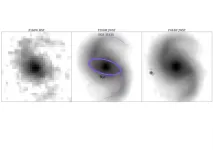
Embargoed until 00:01am BST on Wednesday 24 April 2024/19.01pm ET on Tuesday 23 April 2024 -With pictures- The Universe’s early galaxies were less chaotic and developed much faster than previously thought, according to new research looking back more than ten billion years in time. An international team of astronomers led by Durham University, UK, used the James Webb Space Telescope (JWST) to find evidence of bar formation when the Universe was only a few billion years old. Bars are elongated strips of stars found in disc or ...

Read the release
To find life in the universe, look to deadly Venus
Space

To find life in the universe, look to deadly Venus

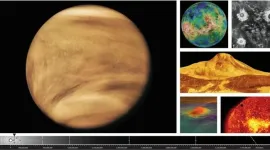
Despite surface temperatures hot enough to melt lead, lava-spewing volcanoes, and puffy clouds of sulfuric acid, uninhabitable Venus offers vital lessons about the potential for life on other planets, a new paper argues. “We often assume that Earth is the model of habitability, but if you consider this planet in isolation, we don’t know where the boundaries and limitations are,” said UC Riverside astrophysicist and paper first author Stephen Kane. “Venus gives us that.” Published today in the journal Nature Astronomy, the paper compiles much of the known information about Earth and Venus. ...

Read the release
Scientists worldwide in line for US$1.1 million Frontiers Planet Prize as 2024 National Champions announced
Space

Scientists worldwide in line for US$1.1 million Frontiers Planet Prize as 2024 National Champions announced

The Frontiers Planet Prize today (22 April) announced 23 National Champions drawn from science research teams across six continents in the second year of the global competition. The Prize recognizes scientists whose research contributes to accelerating solutions that ensure humanity remains safely within the boundaries of the Earth's ecosystem. The National Champions now move forward to the final round of the competition, where three International Champions will be awarded 1 million CHF each to support their research. ...

Read the release
From the original Press-News collection. Issuers of news releases are responsible for the accuracy of their content.