THE ORIGINAL COLLECTION · SINCE 2010

Space
press releases.

Research announcements from universities, hospitals and scientific institutions. Explore the stories, people and discoveries behind the headlines.

Original publication datesPage 27
FIND A STORY

Find a past release.

Dates and source material belong to the original release.

Read our research explainers

Browse the collection · original publication order

Space

Exotic black holes could be a byproduct of dark matter

For every kilogram of matter that we can see — from the computer on your desk to distant stars and galaxies — there are 5 kilograms of invisible matter that suffuse our surroundings. This “dark matter” is a mysterious entity that evades all forms of direct observation yet makes its presence felt through its invisible pull on visible objects. Fifty years ago, physicist Stephen Hawking offered one idea for what dark matter might be: a population of black holes, which might have formed very soon after the Big Bang. Such “primordial” black holes would not have been the goliaths that we detect today, but ...

Read the release
Space

Scientists detect slowest-spinning radio emitting neutron star ever recorded

Scientists have detected what they believe to be a neutron star spinning at an unprecedentedly slow rate —slower than any of the more than 3,000 radio emitting neutron stars measured to date. Neutron stars - the ultra-dense remains of a dead star - typically rotate at mind-bendingly fast speeds, taking just seconds or even a fraction of a second to fully spin on their axis. However, the neutron star, newly discovered by an international team of astronomers, defies this rule, emitting radio signals on a comparatively ...

Read the release
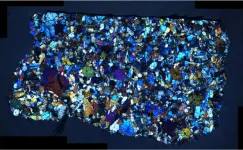
Martian meteorites deliver a trove of information on Red Planet’s structure
Space

Martian meteorites deliver a trove of information on Red Planet’s structure

Mars has a distinct structure in its mantle and crust with discernible reservoirs, and this is known thanks to meteorites that scientists at Scripps Institution of Oceanography at UC San Diego and colleagues have analyzed on Earth. Meteorites that formed roughly 1.3 billion years ago and then ejected from Mars have been collected by scientists from sites in Antarctica and Africa in recent decades. Scripps Oceanography geologist James Day and his colleagues report May 31 in the journal Science Advances ...

Read the release
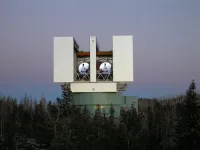
Glimpses of a volcanic world: New telescope images of Jupiter's moon Io rival those from spacecraft
Space

Glimpses of a volcanic world: New telescope images of Jupiter's moon Io rival those from spacecraft

New images of Jupiter's volcano-studded moon Io, taken by the Large Binocular Telescope on Mount Graham in Arizona, offer the highest resolution of Io ever achieved with an Earth-based instrument. The observations were made possible by a new high-contrast optical imaging instrument, dubbed SHARK-VIS, and the telescope's adaptive optics system, which compensates for the blurring induced by atmospheric turbulence. The images, to be published in the journal Geophysical Research Letters, reveal surface features as small as 50 miles across, ...

Read the release
Flyby of asteroid Dinkinesh reveals a surprisingly complex history
Space

Flyby of asteroid Dinkinesh reveals a surprisingly complex history

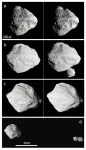
SAN ANTONIO — May 30, 2024 —When NASA’s Lucy spacecraft flew past the tiny main belt asteroid Dinkinesh last November, the Southwest Research Institute-led mission discovered a trough and ridge structure on the main asteroid as well as the first-ever-encountered contact binary satellite. The flyby data of this half-mile-wide object revealed a dramatic history of sudden breakups and transformation. Scientists think a big chunk of Dinkinesh suddenly shifted, excavating the trough and flinging debris into its vicinity. Some materials fell back to the asteroid body, forming the ridge, ...

Read the release
New technique from Brown University researchers offers more precise maps of the Moon’s surface
Space

New technique from Brown University researchers offers more precise maps of the Moon’s surface

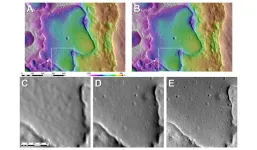
PROVIDENCE, R.I. [Brown University] — A new study by Brown University researchers may help redefine how scientists map the surface of the Moon, making the process more streamlined and precise than ever before. Published in the Planetary Science Journal, the research by Brown scholars Benjamin Boatwright and James Head describes enhancements to a mapping technique called shape-from-shading. The technique is used to create detailed models of lunar terrain, outlining craters, ridges, slopes and other surface hazards. By analyzing the way light hits different surfaces of the Moon, it allows researchers to estimate the three-dimensional ...

Read the release
With wobbling stars, astronomers gauge mass of 126 exoplanets and find 15 new ones
Space

With wobbling stars, astronomers gauge mass of 126 exoplanets and find 15 new ones

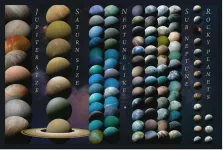
LAWRENCE — Using data from the Transiting Exoplanet Survey Satellite and W.M. Keck Observatory on Mauna Kea in Hawaii, an astronomer at the University of Kansas led a study appearing today revealing 15 new exoplanets — planets beyond our solar system — along with the mass of 126 other exoplanets. The findings give astronomers new understanding of the makeup of exoplanets and their star systems generally. The study cataloging the exoplanets — comprising severe and exceptional environments, some of which hold promise to support life — was conducted under auspices of the TESS-Keck Survey and appears ...

Read the release
Euclid space mission releases first scientific results and new images of the cosmos
Space

Euclid space mission releases first scientific results and new images of the cosmos

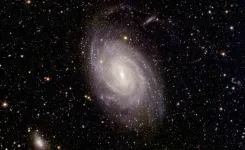
European space mission Euclid has released early scientific papers based on observations made by the space telescope, along with five new astronomical images of the Universe, as the project sets about unravelling the secrets of the cosmos. The new images are part of Euclid’s Early Release Observations (EROs) and accompany the mission’s first scientific data and 10 forthcoming science papers. Their publication comes less than a year after the space telescope’s launch and some six months after it returned its first full-colour ...

Read the release
Galaxies actively forming in early universe caught feeding on cold gas
Space

Galaxies actively forming in early universe caught feeding on cold gas

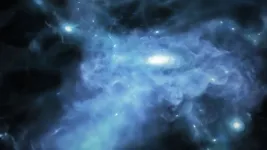
Researchers analyzing data from NASA’s James Webb Space Telescope have pinpointed three galaxies that may be actively forming when the universe was only 400 to 600 million years old. Webb’s data shows these galaxies are surrounded by gas that the researchers suspect to be almost purely hydrogen and helium, the earliest elements to exist in the cosmos. Webb’s instruments are so sensitive that they were able to detect an unusual amount of dense gas surrounding these galaxies. This gas will likely end up fueling the formation of new stars in the galaxies. “These ...

Read the release
Birth of universe’s earliest galaxies observed for first time
Space

Birth of universe’s earliest galaxies observed for first time

Using the James Webb Space Telescope, University of Copenhagen researchers have become the first to see the formation of three of the earliest galaxies in the universe, more than 13 billion years ago. The sensational discovery contributes important knowledge about the universe and is now published in the prestigious journal Science. For the first time in the history of astronomy, researchers at the Niels Bohr Institute have witnessed the birth of three of the universe's absolute earliest galaxies, somewhere between 13.3 and 13.4 billion years ago. The ...

Read the release
First pictures from Euclid satellite reveal billions of orphan stars
Space

First pictures from Euclid satellite reveal billions of orphan stars

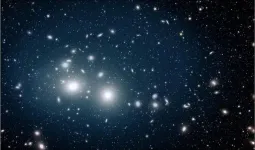
The first scientific pictures from the Euclid satellite mission have revealed more than 1,500 billion orphan stars scattered throughout the Perseus cluster of galaxies. Led by astronomers from the University of Nottingham, this discovery sheds light on the origins of these celestial wanderers. The Perseus cluster, located 240 million light-years away from Earth, is one of the Universe's most massive structures, boasting thousands of galaxies. However, amidst this cosmic ensemble, the Euclid satellite captured faint ghostly light - the orphan stars - drifting between the cluster's galaxies. Stars naturally form within galaxies, so the presence of orphan ...

Read the release
Space

VIDEO: Surrey astrophysicists explore new galaxies and streams of stars using new data from Euclid space telescope

As the European Space Agency publishes the first findings from its Euclid space telescope, scientists from the University of Surrey are celebrating fresh insights from the data. Dr Denis Erkal, Associate Professor of Astrophysics at the University of Surrey, studies how the gravity of the Milky Way pulls clusters of stars apart, creating streams of stars trailing across the galaxy. Now, his model for how this happens (video HERE) has been confirmed by data from Euclid. Dr Erkal said: “For a long time, my modelling ...

Read the release
Space

Scientists reveal first data from Euclid telescope offering snapshot of cosmic history

Scientists have released the first set of scientific data captured with the Euclid telescope, showing an exciting glimpse of the Universe’s distant past. The telescope, launched in July 2023, is part of the Dark Energy Satellite Mission, which aims to map the dark Universe. Led by the European Space Agency in collaboration with The Euclid Consortium - which includes astronomers at The University of Manchester in leadership positions – the mission seeks to unlock mysteries of dark matter and dark energy and reveal how and why the Universe looks as it does today. Early observations, described in a series ...

Read the release
Bérénice Benayoun (USC) receives Rising Star Award in Aging Research
Space

Bérénice Benayoun (USC) receives Rising Star Award in Aging Research

New York, NY – The American Federation for Aging Research (AFAR), a national non-profit organization whose mission is to support and advance healthy aging through biomedical research, is pleased to recognize the exemplary contributions of Bérénice Benayoun, PhD, to the field of aging research through the 2024 Vincent Cristofalo Rising Star Award in Aging Research. This award is named in honor of the late Dr. Cristofalo, who dedicated his career to aging research and encouraged young scientists to investigate important issues in the biology of aging. Established in 2008, the award ...

Read the release
A simpler method for precise molecular orbital visualization
Space

A simpler method for precise molecular orbital visualization

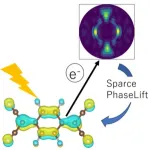
Discoveries and progress in materials science often lay the foundation for technological breakthroughs that reshape many industrial and commercial fields, including medicine, consumer electronics, and energy generation, to name a few. Yet, the development of experimental techniques crucially underpins the exploration of new materials, paving the way for groundbreaking discoveries. These techniques allow scientists to delve into a material’s chemical and physical properties, unlocking insights essential for realizing their potential applications. In a recent study ...

Read the release
Space

Australian study proves ‘humans are planet’s most frightening predator’

Australia lacks fearsome large carnivores like lions and wolves, and the relative lack of fear that marsupials like kangaroos and wallabies show to dogs (and other introduced carnivores) has been attributed to a lack of evolutionary experience with large mammalian predators. This, however, overlooks the 50,000-year-long presence in Australia of the world’s most fearsome predator – the human ‘super predator.’ A new study conducted by Western University biology professor Liana Zanette, in collaboration with Calum ...

Read the release
Cosmic rays illuminate the past
Space

Cosmic rays illuminate the past

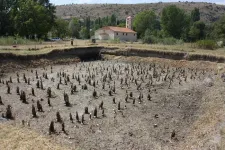
Researchers at the University of Bern have for the first time been able to pin down a prehistoric settlement of early farmers in northern Greece dating back more than 7,000 years to the year. For this they combined annual growth ring measurements on wooden building elements with the sudden spike of cosmogenic radiocarbon in 5259 BC. This provides a reliable chronological reference point for many other archaeological sites in Southeast Europe. Dating finds plays a key role in archaeology. It is always essential to find out how old a tomb, settlement or single object is. Determining the age of finds from prehistoric times has only ...

Read the release
Fowler awarded 2023 NASA Planetary Science Early Career Award
Space

Fowler awarded 2023 NASA Planetary Science Early Career Award

Research Assistant Professor Christopher Fowler received the NASA 2023 Planetary Science Early Career Award for his project “Bringing Planetary Science to West Virginia”. The award is based on demonstrated leadership, involvement in the planetary science community, and potential for future impact. The resources provided by the NASA Planetary Science Early Career Award will allow Fowler and team to undertake research-related activities that are not always possible within the scope of more “traditional” ...

Read the release
Webb Telescope offers first glimpse of an exoplanet’s interior
Space

Webb Telescope offers first glimpse of an exoplanet’s interior

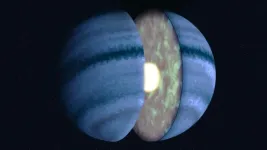
A surprisingly low amount of methane and a super-sized core hide within the cotton candy–like planet WASP-107 b. The revelations, based on data obtained by the James Webb Space Telescope, mark the first measurements of an exoplanet’s core mass and will likely underpin future studies of planetary atmospheres and interiors, a key aspect in the search for habitable worlds beyond our solar system. “Looking into the interior of a planet hundreds of light-years away sounds almost impossible, but when you know the mass, radius, atmospheric composition, and hotness of its interior, you’ve got ...

Read the release
STAR sees a magnetic imprint on deconfined nuclear matter
Space

STAR sees a magnetic imprint on deconfined nuclear matter

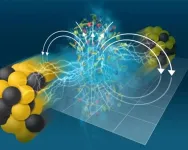
The Science Scientists have the first direct evidence that the powerful magnetic fields created in off-center collisions of atomic nuclei induce an electric current in “deconfined” nuclear matter. This is a plasma “soup” of quarks and gluons that have been set free, or “deconfined,” from nuclear matter—protons and neutrons—in the particle collisions. The magnetic fields in deconfined nuclear matter are a billion times stronger than a typical refrigerator magnet, but their effects can be hard to detect. This new study’s evidence is from measuring the way ...

Read the release
Detection of an Earth-sized exoplanet orbiting the ultracool dwarf star SPECULOOS-3
Space

Detection of an Earth-sized exoplanet orbiting the ultracool dwarf star SPECULOOS-3

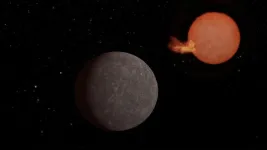
The SPECULOOS project, led by the astronomer Michaël Gillon from the University of Liège, has just discovered a new Earth-sized exoplanet around SPECULOOS-3, an "ultracool dwarf" star as small as Jupiter, twice as cold as our Sun, and located 55 light-years from Earth. After the famous TRAPPIST-1, SPECULOOS 3 is the second planetary system discovered around this type of star. Ultra-cool dwarf stars are the least massive stars in our Universe, similar in size to Jupiter, more than twice as cold, ten times less massive and a hundred times less ...

Read the release
Space

Astronomers discover new Earth-sized world orbiting an ultra-cool star

A new, Earth-sized planet orbiting an ultra-cool red dwarf star, has been detected by an international team of astronomers – just 55 light years away. The planet is only the second of its kind to be discovered around this type of star. Called SPECULOOS-3 b, it takes around 17 hours to complete an orbit of the star which is more than twice as cold as our sun, as well as ten times less massive and a hundred times less luminous. Days and nights on SPECULOOS-3 b seem to be endless: the planet is likely to be tidally locked, so the same side – the ‘dayside’ – always faces the star in a relationship similar to our moon and Earth. The ...

Read the release
Early retirement of old vehicles won't save the planet: A study
Space

Early retirement of old vehicles won't save the planet: A study

Lifespan caps for passenger vehicles have limited effect on reducing greenhouse gas emissions and could drive up costs and material use finds a new study published in Environmental Research: Infrastructure and Sustainability. The research shows that although Light-Duty vehicles (LDVs) contribute 17% to the annual greenhouse gas emissions in the United States, imposing a 15-year lifespan cap on LDV fleets under a business-as-usual scenario will not lead to any meaningful reductions in GHG emissions. To combat delayed uptake of Electric Vehicles (EVs), some have argued for limits on the vehicle’s ...

Read the release
STRIVE project to study ozone, atmospheric layers among finalists for next-generation NASA satellite
Space

STRIVE project to study ozone, atmospheric layers among finalists for next-generation NASA satellite

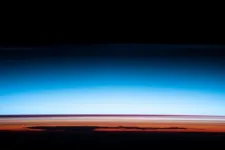
A project led by the University of Washington to better understand our atmosphere’s complexity is a finalist for NASA’s next generation of Earth-observing satellites. The space agency this week announced the projects that will each receive $5 million to advance to the next stage and conduct a one-year concept study. STRIVE seeks to better understand the troposphere that we inhabit and the stratosphere above it, where the ozone layer is, as well as the interface where these two layers meet. That interface, about 6 miles (10 kilometers) above the surface, is where important ...

Read the release
Astronomers spot a giant planet that is as light as cotton candy
Space

Astronomers spot a giant planet that is as light as cotton candy

Astronomers at MIT, the University of Liège in Belgium, and elsewhere have discovered a huge, fluffy oddball of a planet orbiting a distant star in our Milky Way galaxy. The discovery, reported today in the journal Nature Astronomy, is a promising key to the mystery of how such giant, super-light planets form. The new planet, named WASP-193b, appears to dwarf Jupiter in size, yet it is a fraction of its density. The scientists found that the gas giant is 50 percent bigger than Jupiter, and about a tenth as dense — an extremely low density, comparable to that of cotton candy. WASP-193b is the second lightest planet discovered to date, ...

Read the release
From the original Press-News collection. Issuers of news releases are responsible for the accuracy of their content.