THE ORIGINAL COLLECTION · SINCE 2010

Technology
press releases.

Research announcements from universities, hospitals and scientific institutions. Explore the stories, people and discoveries behind the headlines.

Original publication datesPage 102
FIND A STORY

Find a past release.

Dates and source material belong to the original release.

Read our research explainers

Browse the collection · original publication order

Technology

Research collaboration aims to enhance cereal crop resilience to acidic soils and improve agriculture sustainability

ST. LOUIS, MO., April 4, 2024 — Acidic soil caused by changing climate patterns threatens agriculture sustainability across the globe. But the problem goes far beyond rising temperatures. One major cause for concern is more acidic soil, a product of increasing rainfall. Acidic soils with low pH are widespread globally and common in tropical and sub-tropical regions, where food security is a serious challenge. Climate change has exacerbated the problem. Acidic soil can result in aluminum toxicity, putting further stress on global agriculture. A new collaborative research team from the US and Brazil received a $2 ...

Read the release
Technology

Flexible fiber, coupled to the human body, enables chipless textile electronics

A flexible electronic fiber that utilizes the human body as part of the circuit enables textile-based electronics without the need for batteries or chips, researchers report. According to the authors, the approach is well-suited for scalable manufacture of comfortable fiber-based electronics for a wide range of applications, including “smart” clothing. Textile electronic systems are designed to equip textile or fiber assemblies with electronic functions for sensing, computation, display, or communication. They create vast opportunities ranging from physiological monitoring to powering ...

Read the release
Technology

A real life Eye of Sauron? New project to spot possible chemical threats in the air

Picture this disaster scenario in the making: At an industrial plant, a pipe cracks, spraying a cloud of tiny droplets into the air. Workers, however, are in luck. Within minutes, a laser-based device the size of a small suitcase spots the cloud and tells safety crews what’s in it so they know how to respond. That’s the vision behind a new project from a team of engineers and chemists at the University of Colorado Boulder, California Institute of Technology, University of California Santa Barbara, and three companies. It’s ...

Read the release
SLAC completes construction of the largest digital camera ever built for astronomy
Technology

SLAC completes construction of the largest digital camera ever built for astronomy

Menlo Park, Calif. — After two decades of work, scientists and engineers at the Department of Energy's SLAC National Accelerator Laboratory and their collaborators are celebrating the completion of the Legacy Survey of Space and Time (LSST) Camera. As the heart of the DOE- and National Science Foundation-funded Vera C. Rubin Observatory, the 3,200-megapixel camera will help researchers observe our universe in unprecedented detail. Over ten years, it will generate an enormous trove of data on the southern night sky that researchers will ...

Read the release
AI helps to detect invasive Asian hornets
Technology

AI helps to detect invasive Asian hornets

Artificial Intelligence can be used to detect invasive Asian hornets and raise the alarm, new research shows. University of Exeter researchers have developed VespAI, an automated system that attracts hornets to a monitoring station and captures standardised images using an overhead camera. When an Asian hornet visits, VespAI can identify the species with almost perfect accuracy – allowing authorities to mount a rapid response. Asian hornets (also known as yellow-legged hornets) have already invaded much of mainland Europe and parts of east Asia, and have recently been reported in the US states of Georgia and South Carolina. The ...

Read the release
Global rollout of Skin Observer by NAOS and Haut.AI in 2024
Technology

Global rollout of Skin Observer by NAOS and Haut.AI in 2024

Tallinn, 3rd April 2024 - 10 AM CET – NAOS, the French founding company behind pioneering ecobiological skincare brands BIODERMA, Etat Pur, and Institut Esthederm, introduces its innovative new digital tool Skin Observer in collaboration with Haut.AI, a leader in AI applications for skincare and skin aging. The partnership merges cutting-edge AI technology with deep expertise in skin ecobiology. Developed in collaboration with dermatologists, NAOS Skin Observer offers quick and precise skin analysis, recommending customized rituals adapted to individual skin types. The system adjusts routines based on user preferences, dynamic skin ...

Read the release
Machine learning enables viability of vertical-axis wind turbines
Technology

Machine learning enables viability of vertical-axis wind turbines

If you imagine an industrial wind turbine, you likely picture the windmill design, technically known as a horizontal-axis wind turbine (HAWT). But the very first wind turbines, which were developed in the Middle East around the 8th century for grinding grain, were vertical-axis wind turbines (VAWT), meaning they spun perpendicular to the wind, rather than parallel. Due to their slower rotation speed, VAWTs are less noisy than HAWTs and achieve greater wind energy density, meaning they need less space for ...

Read the release
Sandia pumps $140B into the economy through technology development
Technology

Sandia pumps $140B into the economy through technology development

ALBUQUERQUE, N.M. — To say that the technology and products Sandia National Laboratories researchers have helped imagine, innovate and industrialize have had a massive impact on the country would be an understatement. Two studies commissioned by Sandia and the National Nuclear Security Administration show Sandia’s work has had an overall economic impact of $140 billion since the year 2000. That’s a significant figure, especially considering it spans just 20 years, less than a third of Sandia’s 75-year existence. “I am very proud of how Sandia excels in fulfilling its technology transfer mission to deliver economic impact to the U.S.,” ...

Read the release
Technology

Study: AI writing, illustration emits hundreds of times less carbon than humans

LAWRENCE — With the evolution of artificial intelligence comes discussion of the technology's environmental impact. A new study has found that for the tasks of writing and illustrating, AI emits hundreds of times less carbon than humans performing the same tasks. That does not mean, however, that AI can or should replace human writers and illustrators, the study’s authors argue. Andrew Torrance, Paul E. Wilson Distinguished Professor of Law at KU, is co-author of a study that compared established systems such as ChatGPT, Bloom AI, DALL-E2 and others completing writing and illustrating to that of humans. Like ...

Read the release
Computational tools fuel reconstruction of new and improved bird family tree
Technology

Computational tools fuel reconstruction of new and improved bird family tree

An international team of scientists has built the largest and most detailed bird family tree to date—an intricate chart delineating 93 million years of evolutionary relationships between 363 bird species, representing 92% of all bird families. The advance was made possible in large part thanks to cutting-edge computational methods developed by engineers at the University of California San Diego, combined with the university’s state-of-the-art supercomputing resources at the San Diego Supercomputer Center. These technologies have enabled researchers to analyze vast amounts of genomic data with high accuracy and speed, ...

Read the release
New USF study: Research reveals language barriers limit effectiveness of cybersecurity resources
Technology

New USF study: Research reveals language barriers limit effectiveness of cybersecurity resources

TAMPA, Fla. (April 1, 2024) – The idea for Fawn Ngo’s latest research came from a television interview. Ngo, a University of South Florida criminologist, had spoken with a Vietnamese language network in California about her interest in better understanding how people become victims of cybercrime. Afterward, she began receiving phone calls from viewers recounting their own experiences of victimization. “Some of the stories were unfortunate and heartbreaking,” said Ngo, an associate professor in the USF College of Behavioral and Community Sciences. “They made me wonder about the availability ...

Read the release
Reinventing computer vision to mimic human vision
Technology

Reinventing computer vision to mimic human vision

As computer vision (CV) systems become increasingly power and memory intensive, they become unsuitable for high-speed and resource deficit edge applications - such as hypersonic missile tracking and autonomous navigation - because of size, weight, and power constraints. At the University of Pittsburgh, engineers are ushering in the next generation of computer vision systems by using neuromorphic engineering to reinvent visual processing systems with a biological inspiration - human vision. Rajkumar Kubendran, assistant professor ...

Read the release
Technology

Machine learning provides a new picture of the great gray owl

The great gray owl has long been thought of as a sentinel of the Alaska wilderness, keeping watch over snow-laden forests as far north as the Brooks Range, well away from human populations. In a study published last week with Nature Scientific Reports, a team of University of Alaska Fairbanks researchers upends the notion that the iconic bird — known as the phantom of the North — lives far from cities, towns and other markers of human density. “We like to think of our wildlife, especially in Alaska, as existing in pristine wilderness untouched by humans,” said Falk Huettmann, professor ...

Read the release
Technology

Q&A: How to train AI when you don't have enough data

Artificial intelligence excels at sorting through information and detecting patterns or trends. But these machine learning algorithms need to be trained with large amounts of data first. As researchers explore potential applications for AI, they have found scenarios where AI could be really useful — such as analyzing X-ray image data to look for evidence of rare conditions or detecting a rare fish species caught on a commercial fishing boat — but there's not enough data to accurately train the algorithms. Jenq-Neng Hwang, University of Washington professor of electrical and computer and engineering, specializes in these issues. ...

Read the release
Open waste burning linked to air pollution in Northwestern Greenland
Technology

Open waste burning linked to air pollution in Northwestern Greenland

A case study on the effects of open waste burning on air quality in Northwestern Greenland calls attention to the importance of no-one-left-behind sustainable air quality monitoring in the Arctic region. To better understand the air quality risks faced by remote Arctic communities, an international team monitored aerial pollutants at a community in Northwestern Greenland. Their findings, published in Atmospheric Science Letters, reveal that open waste burning elevates the concern of health risks to the community. The study focused on Qaanaaq, a small village in Northwestern Greenland with a population of approximately 600. During the summer of 2022, the team conducted the first-time measurement ...

Read the release
Aston University research center to focus on using AI to improve lives
Technology

Aston University research center to focus on using AI to improve lives

• New centre specifically focuses on using AI to improve society • Current research is designed to improve transport, health and industry • “There have been a lot of reports focusing on the negative use of AI...this is why the centre is so important now.” Aston University researchers have marked the opening of a new centre which focuses on harnessing artificial intelligence (AI) to improve people’s lives. The Aston ...

Read the release
Robot, can you say ‘cheese’?
Technology

Robot, can you say ‘cheese’?

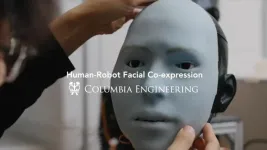
What would you do if you walked up to a robot with a human-like head and it smiled at you first? You’d likely smile back and perhaps feel the two of you were genuinely interacting. But how does a robot know how to do this? Or a better question, how does it know to get you to smile back? While we’re getting accustomed to robots that are adept at verbal communication, thanks in part to advancements in large language models like ChatGPT, their nonverbal communication skills, especially facial expressions, have lagged far behind. Designing a robot that can not only make a wide range ...

Read the release
SwRI leads airborne, ground-based 2024 eclipse observation projects
Technology

SwRI leads airborne, ground-based 2024 eclipse observation projects

SAN ANTONIO — March 27, 2024 —Southwest Research Institute is leading two groundbreaking experiments — on the ground and in the air — to collect astronomical data from the total solar eclipse that will shadow a large swath of the United States on April 8, 2024. SwRI’s Dr. Amir Caspi leads the Citizen Continental-America Telescopic Eclipse (CATE) 2024 experiment, a broad scientific outreach initiative funded by the National Science Foundation (NSF) and NASA, that will ...

Read the release
Super permeable wearable electronics developed for stable, long-term biosignal monitoring by scientists at City University of Hong Kong
Technology

Super permeable wearable electronics developed for stable, long-term biosignal monitoring by scientists at City University of Hong Kong

Super wearable electronics that are lightweight, stretchable and increase sweat permeability by 400-fold have been developed by scientists at City University of Hong Kong (CityUHK), enabling reliable long-term monitoring of biosignals for biomedical devices. Led by Professor Yu Xinge in CityUHK’s Department of Biomedical Engineering (BME), the research team has recently developed a universal method to creating these super wearable electronics that allow gas and sweat permeability, solving the most critical issue facing wearable biomedical devices. Wearable ...

Read the release
World's first demonstration that forests trap airborne microplastics
Technology

World's first demonstration that forests trap airborne microplastics

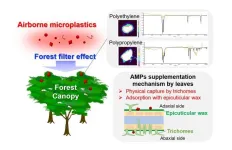
A research group led by Japan Women’s University finds that airborne microplastics adsorb to the epicuticular wax on the surface of forest canopy leaves, and that forests may act as terrestrial sinks for airborne microplastics Tokyo, Japan – Think of microplastics, and you might think of the ones accumulating in the world’s oceans. However, they are also filling the sky and the air we breathe. Now, it has been discovered that forests might be acting as a sink for these airborne microplastics, offering humanity yet another ...

Read the release
University of Oklahoma engineer receives NSF CAREER Award to advance gas sensing technologies
Technology

University of Oklahoma engineer receives NSF CAREER Award to advance gas sensing technologies

NORMAN, OKLA. – Binbin Weng, Ph.D., an engineering professor at the University of Oklahoma, has been awarded a National Science Foundation CAREER Award presented to early-career faculty with the potential to serve as academic role models in research and education. The $497,370 grant will fund his project “Enabling New States of Light in Mid-Wave Infrared Photonics for Gas Sensing Applications.” Weng says there is a growing demand for distributed gas sensing networks capable of continuously monitoring gas threats on a broad scale. However, current technologies face significant challenges in size, power consumption ...

Read the release
Technology

Two plant extracts with potential as GLP-1 agonist weight loss pills are identified by AI-based analysis

*Note - This is an early press release from the European Congress on Obesity (ECO 2024) Venice 12-15 May. Please credit the Congress if using this material* Two plant compounds with potential as GLP-1 agonist weight loss pills have been identified in an AI (artificial intelligence)-based study, the European Congress on Obesity (ECO 2024) (Venice 12-15 May), will hear. Glucagon-like peptide-1 (GLP-1) receptor agonists such as semaglutide and tirzepatide are highly effective at helping people lose weight. By mimicking the action of a hormone ...

Read the release
Technology

Depression in Black people goes unnoticed by AI models analyzing language in social media posts

Methods researchers developed to detect possible depression through language in social media posts don’t appear to work when applied to posts by Black people on social media, according to a new analysis by researchers from Penn’s Perelman School of Medicine and its School of Engineering and Applied Science. The research, published in PNAS, points to an area to focus on for significant improvement and amplifies the importance of considering the intersection of race, health risks, and social media. Work in the past uncovered that using first-person pronouns in posts ...

Read the release
Technology

Analysis of social media language using AI models predicts depression severity for white Americans, but not Black Americans

Researchers were able to predict depression severity for white people, but not for Black people using standard language-based computer models to analyze Facebook posts. Words and phrases associated with depression, such as first-person pronouns and negative emotion words, were around three times more predictive of depression severity for white people than for Black people. The study, published today in the Proceedings of the National Academy of Sciences, is co-authored by researchers at the University of Pennsylvania, Philadelphia, and the National Institute on Drug Abuse (NIDA), ...

Read the release
Artificial reef designed by MIT engineers could protect marine life, reduce storm damage
Technology

Artificial reef designed by MIT engineers could protect marine life, reduce storm damage

The beautiful, gnarled, nooked-and-crannied reefs that surround tropical islands serve as a marine refuge and natural buffer against stormy seas. But as the effects of climate change bleach and break down coral reefs around the world, and extreme weather events become more common, coastal communities are left increasingly vulnerable to frequent flooding and erosion. An MIT team is now hoping to fortify coastlines with “architected” reefs — sustainable, offshore structures engineered to mimic the wave-buffering effects of natural reefs while also providing pockets for fish and other marine ...

Read the release
From the original Press-News collection. Issuers of news releases are responsible for the accuracy of their content.