THE ORIGINAL COLLECTION · SINCE 2010

Technology
press releases.

Research announcements from universities, hospitals and scientific institutions. Explore the stories, people and discoveries behind the headlines.

Original publication datesPage 117
FIND A STORY

Find a past release.

Dates and source material belong to the original release.

Read our research explainers

Browse the collection · original publication order

Are diamonds GaN’s best friend? Revolutionizing transistor technology
Technology

Are diamonds GaN’s best friend? Revolutionizing transistor technology

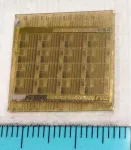
Researchers at Osaka Metropolitan University are proving that diamonds are so much more than just a girl’s best friend. Their groundbreaking research focuses on gallium nitride (GaN) transistors, which are high-power, high-frequency semiconductor devices used in mobile data and satellite communication systems. With the increasing miniaturization of semiconductor devices, problems arise such as increases in power density and heat generation that can affect the performance, reliability, and lifetime of these devices. Therefore, effective thermal management is crucial. Diamond, ...

Read the release

Meet 'Coscientist,' your AI lab partner
Technology

Meet 'Coscientist,' your AI lab partner

In less time than it will take you to read this article, an artificial intelligence-driven system was able to autonomously learn about certain Nobel Prize-winning chemical reactions and design a successful laboratory procedure to make them. The AI did all that in just a few minutes — and nailed it on the first try. "This is the first time that a non-organic intelligence planned, designed and executed this complex reaction that was invented by humans," says Carnegie Mellon University chemist and ...

Read the release
Could an electric nudge to the head help your doctor operate a surgical robot?
Technology

Could an electric nudge to the head help your doctor operate a surgical robot?

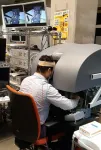
People who received gentle electric currents on the back of their heads learned to maneuver a robotic surgery tool in virtual reality and then in a real setting much more easily than people who didn’t receive those nudges, a new study shows. The findings offer the first glimpse of how stimulating a specific part of the brain called the cerebellum could help health care professionals take what they learn in virtual reality to real operating rooms, a much-needed transition in a field that increasingly relies on digital simulation training, said author and Johns Hopkins University roboticist Jeremy ...

Read the release
Aerogel can become the key to future terahertz technologies
Technology

Aerogel can become the key to future terahertz technologies

High-frequency terahertz waves have great potential for a number of applications including next-generation medical imaging and communication. Researchers at Linköping University, Sweden, have shown, in a study published in the journal Advanced Science, that the transmission of terahertz light through an aerogel made of cellulose and a conducting polymer can be tuned. This is an important step to unlock more applications for terahertz waves. The terahertz range covers wavelengths that lie between microwaves and infrared light on the electromagnetic spectrum. It has a very high frequency. Thanks to this, many researchers ...

Read the release
Artificial intelligence unravels mysteries of polycrystalline materials
Technology

Artificial intelligence unravels mysteries of polycrystalline materials

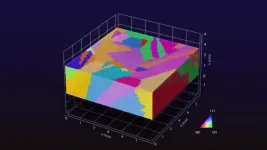
Researchers at Nagoya University in Japan have used artificial intelligence to discover a new method for understanding small defects called dislocations in polycrystalline materials, materials widely used in information equipment, solar cells, and electronic devices, that can reduce the efficiency of such devices. The findings were published in the journal Advanced Materials. Almost every device that we use in our modern lives has a polycrystal component. From your smartphone to your computer to the metals and ceramics in your car. Despite this, polycrystalline materials are tough to utilize because of their complex structures. Along with their composition, the performance ...

Read the release
Assisted reproductive technologies not associated with body mass index in children, except when using frozen embryos – according to new Danish study
Technology

Assisted reproductive technologies not associated with body mass index in children, except when using frozen embryos – according to new Danish study

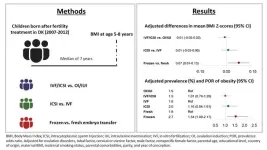
Assisted reproductive technologies not associated with body mass index in children, except when using frozen embryos – according to new Danish study ##### In your coverage, please use this URL to provide access to the freely available paper in PLOS Medicine: http://journals.plos.org/plosmedicine/article?id=10.1371/journal.pmed.1004324 Article Title: Overweight or obesity in children born after assisted reproductive technologies in Denmark: A population-based cohort study Author Countries: ...

Read the release
High Performance Computing Center of the University of Stuttgart and Hewlett Packard Enterprise to build exascale supercomputer
Technology

High Performance Computing Center of the University of Stuttgart and Hewlett Packard Enterprise to build exascale supercomputer

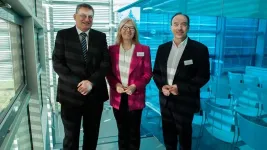
The University of Stuttgart and Hewlett Packard Enterprise (HPE) have announced an agreement to build two new supercomputers at the High-Performance Computing Center of the University of Stuttgart (HLRS). In the first stage, a transitional supercomputer, called Hunter, will begin operation in 2025. This will be followed in 2027 with the installation of Herder, an exascale system that will provide a significant expansion of Germany’s high-performance computing (HPC) capabilities. Hunter and Herder will offer researchers ...

Read the release
Snowflakes swirling in turbulent air as they fall through a laser light sheet. Credit: Singh et al.
Technology

Snowflakes swirling in turbulent air as they fall through a laser light sheet. Credit: Singh et al.

WASHINGTON, Dec. 19, 2023 – A winter wonderland calls to mind piles of fluffy, glistening snow. But to reach the ground, snowflakes are swept into the turbulent atmosphere, swirling through the air instead of plummeting directly to the ground. The path of precipitation is complex but important to more than just skiers assessing the potential powder on their alpine vacation or school children hoping for a snow day. Determining snowflake fall speed is crucial for predicting weather patterns and measuring climate ...

Read the release
Technology

Can AI think like a human?

In a perspective, Athanassios S. Fokas considers a timely question: whether artificial intelligence (AI) can reach and then surpass the level of human thought. Typically, researchers have sought to measure the ability of computer models to accomplish complex goals, such as winning the game of Go or carrying on a conversation that seems human enough to fool an interlocutor. According to Fokas, this approach has a key methodological limitation. Any AI would have to be tested on every single conceivable human goal before anyone could claim that the program was thinking as well as a human. Alternative methodologies are therefore needed. In addition, the “complex goal” focus does not ...

Read the release
New strategy reveals ‘full chemical complexity’ of quantum decoherence
Technology

New strategy reveals ‘full chemical complexity’ of quantum decoherence

In quantum mechanics, particles can exist in multiple states at the same time, defying the logic of everyday experiences. This property, known as quantum superposition, is the basis for emerging quantum technologies that promise to transform computing, communication, and sensing. But quantum superpositions face a significant challenge: quantum decoherence. During this process, the delicate superposition of quantum states breaks down when interacting with its surrounding environment. To unlock the power of chemistry ...

Read the release
Artificial intelligence can predict events in people's lives
Technology

Artificial intelligence can predict events in people's lives

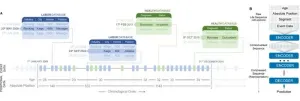
Artificial intelligence developed to model written language can be utilized to predict events in people's lives. A research project from DTU, University of Copenhagen, ITU, and Northeastern University in the US shows that if you use large amounts of data about people's lives and train so-called 'transformer models', which (like ChatGPT) are used to process language, they can systematically organize the data and predict what will happen in a person's life and even estimate the time of death. In a new scientific article, 'Using Sequences of Life-events to Predict Human Lives', published ...

Read the release
Technology

Nurse aide turnover linked to scheduling decisions

Long-term care facilities that scheduled part-time Certified Nursing Assistants (CNAs) with more hours and more consistently with the same co-workers had reduced turnover, according to research led by Washington State University. The findings could help address staffing challenges that affect millions of patients at long-term care facilities nationwide. Using a model based on real scheduling data of thousands of nurse aides, the researchers estimated that a one-hour increase in CNAs’ weekly hours worked could reduce turnover by 1.9%. Also, the analysis found that by scheduling ...

Read the release
NSF-funded project provides digital maps to improve accessibility and navigation for persons with disabilities
Technology

NSF-funded project provides digital maps to improve accessibility and navigation for persons with disabilities

Vinod Namboodiri, joint faculty member of Lehigh University’s College of Health and P.C. Rossin College of Engineering and Applied Science, has been awarded Phase 2 funding from the National Science Foundation’s (NSF) Convergence Accelerator to further develop a digital app to help persons with disabilities navigate indoor environments successfully. MABLE: Mapping for Accessibility in BuiLt Environments provides persons with disabilities independence to experience large events, conferences and educational programs. Using crowdsensing, AI and robotics, MABLE empowers individuals with responsive ...

Read the release
Technology

Using AI to pinpoint hidden sources of clean energy underground

SAN FRANCISCO – As efforts to transition away from fossil fuels strengthen the hunt for new sources of low-carbon energy, scientists have developed a deep learning model to scan the Earth for surface expressions of subsurface reservoirs of naturally occurring free hydrogen. Researchers used the algorithm to help narrow down the potential whereabouts of ovoids or semicircular depressions (SCDs) in the ground that form near areas associated with natural or “gold hydrogen” deposits. Though these circular ...

Read the release
Technology

A study from IMDEA Software researchers reveals hidden fortunes and surprising overestimations in cybercrime revenue

To what extent methodological limitations and incomplete data impact the revenue estimations of cybercriminal groups using the Bitcoin blockchain was largely unknown. A new study, conducted by IMDEA Software Institute researchers Gibran Gomez, Kevin van Liebergen, and Juan Caballero challenges existing figures regarding cybercriminals' Bitcoin earnings to date. The study, entitled "Cybercrime Bitcoin Revenue Estimations: Quantifying the Impact of Methodology and Coverage", recently presented at the ...

Read the release
Xinfeng Gao named 2024 AIAA Associate Fellow
Technology

Xinfeng Gao named 2024 AIAA Associate Fellow

We are pleased to announce that the American Institute of Aeronautics and Astronautics (AIAA), a preeminent aerospace professional society, has selected professor Xinfeng Gao to be a member of the class of 2024 AIAA associate fellows. Only one member of the Institute for every 150 members is selected as an associate fellow each year by the review committee. “This recognition illustrates the impact of our outstanding faculty. Aerospace engineering at UVA continues on a great trajectory and professor Gao is a big part of that,” said Richard W. Kent, professor and chair of the Department of Mechanical and Aerospace Engineering. Pioneering ...

Read the release
Revolutionizing forestry: 'CountShoots' unveils advanced UAV and AI techniques for precise slash pine shoot counting
Technology

Revolutionizing forestry: 'CountShoots' unveils advanced UAV and AI techniques for precise slash pine shoot counting

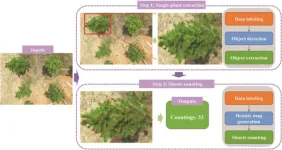
In southern China, the genetically improved slash pine (Pinus elliottii) plays a crucial role in timber and resin production, with new shoot density being a key growth trait. Current manual counting methods are inefficient and inaccurate. Emerging technologies such as UAV-based RGB imaging and deep learning (DL) offer promising solutions. However, DL methods face challenges in global feature capture, necessitating additional mechanisms. Innovations like the Vision Transformer and its derivatives (e.g., TransCrowd, CCTrans) show potential in plant trait counting, offering simplified and more effective approaches for large-scale and accurate ...

Read the release
Computational model captures the elusive transition states of chemical reactions
Technology

Computational model captures the elusive transition states of chemical reactions

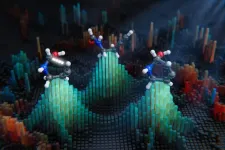
CAMBRIDGE, MA — During a chemical reaction, molecules gain energy until they reach what’s known as the transition state — a point of no return from which the reaction must proceed. This state is so fleeting that it’s nearly impossible to observe it experimentally. The structures of these transition states can be calculated using techniques based on quantum chemistry, but that process is extremely time-consuming. A team of MIT researchers has now developed an alternative approach, based on machine learning, that can calculate ...

Read the release
Technology

DOE’s Office of Science releases vision outlining the path to advancing fusion energy science and technology

Washington, D.C. – The Office of Fusion Energy Sciences (FES), at the U.S. Department of Energy’s Office of Science, announced the release of its vision, Building Bridges: A Vision for the Office of Fusion Energy Sciences, during the Fusion Energy Sciences Advisory Committee hearing on December 13, 2023. This FES vision enables DOE to establish the steps needed to help advance fusion energy, including addressing key science and technology gaps in the supply chain and industry, bringing the United States one step closer to achieving net-zero emissions by 2050. Fusion, the process that powers ...

Read the release
Custom software speeds up, stabilizes high-profile ocean model
Technology

Custom software speeds up, stabilizes high-profile ocean model

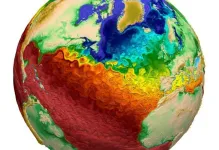
On the beach, ocean waves provide soothing white noise. But in scientific laboratories, they play a key role in weather forecasting and climate research. Along with the atmosphere, the ocean is typically one of the largest and most computationally demanding components of Earth system models like the Department of Energy’s Energy Exascale Earth System Model, or E3SM. Most modern ocean models focus on two categories of waves: a barotropic system, which has a fast wave propagation speed, and a baroclinic system, which ...

Read the release
Technology

Rice study: AI provides more accurate analysis of prehistoric and modern animals, painting picture of ancient world

A new Rice University study of the remains of prehistoric and modern African antelopes found that AI technology accurately identified animals more than 90% of the time compared to humans, who had much lower accuracy rates depending on the expert. Composite images of teeth from five different antelope tribes analyzed and identified by artificial intelligence. Photo courtesy of Manuel Domínguez-Rodrigo. Identifying these animals and their habits helps paint a broader picture of ancient ecosystems, and with the assistance of this new technology, it can be done with more speed and accuracy than previously done by paleontologists, ...

Read the release
Technology

A promising pairing: Scientists demonstrate new combination of materials for quantum science

Quantum information scientists are always on the hunt for winning combinations of materials, materials that can be manipulated at the molecular level to reliably store and transmit information. Following a recent proof-of-principle demonstration, researchers are adding a new combination of compounds to the quantum materials roster. In a study reported in ACS Photonics, researchers combined two nanosized structures — one made of diamond and one of lithium niobate — onto a single chip. They then sent light from the diamond ...

Read the release
PNNL creates Center for Artificial Intelligence
Technology

PNNL creates Center for Artificial Intelligence

RICHLAND, Wash.—The Department of Energy’s Pacific Northwest National Laboratory has created the Center for AI @PNNL to coordinate the pioneering research of hundreds of scientists working on a range of projects focused on science, security and energy resilience. Researchers at PNNL were among the first to dive into artificial intelligence decades ago. But AI has surged in the past year with the ready availability of generative AI, which allows almost anyone to produce sophisticated—though sometimes errant—text and images with just a small amount of data. At the same time, AI is a vital tool for ...

Read the release
Photonics research reveals potential for next-gen AR/VR and IoT
Technology

Photonics research reveals potential for next-gen AR/VR and IoT

USD$200,000 awarded to tackle today’s pressing consumer technology demands Utilizing smart optical sensors for IoT Providing more realistic virtual and augmented realities WASHINGTON – The Optica Foundation today released more detailed information on information technology research funded by the 2023 Optica Foundation Challenge. Researchers Zaijun Chen, University of Southern California, USA, and Alejandro Velez-Zea, Universidad de Antioquia, Colombia, both proposed novel approaches to addressing the flow of data and information in consumer-centric technologies. “The ...

Read the release
Technology

AI study reveals individuality of tongue’s surface

Artificial Intelligence (AI) and 3D images of the human tongue have revealed that the surface of our tongues are unique to each of us, new findings suggest. The results offer an unprecedented insight into the biological make-up of our tongue’s surface and how our sense of taste and touch differ from person to person. The research has huge potential for discovering individual food preferences, developing healthy food alternatives and early diagnosis of oral cancers in the future, experts say. The human tongue is a highly sophisticated and ...

Read the release
From the original Press-News collection. Issuers of news releases are responsible for the accuracy of their content.