THE ORIGINAL COLLECTION · SINCE 2010

Technology
press releases.

Research announcements from universities, hospitals and scientific institutions. Explore the stories, people and discoveries behind the headlines.

Original publication datesPage 52
FIND A STORY

Find a past release.

Dates and source material belong to the original release.

Read our research explainers

Browse the collection · original publication order

Technology

Discovery of Quina technology challenges view of ancient human development in East Asia

While the Middle Paleolithic period is viewed as a dynamic time in European and African history, it is commonly considered a static period in East Asia. New research from the University of Washington challenges that perception. Researchers discovered a complete Quina technological system — a method for making a set of tools — in the Longtan site in southwest China, which has been dated to about 50,000 to 60,000 years ago. Quina technology was found in Europe decades ago but has never before been found in East Asia. The team published its findings March ...

Read the release
Technology

Artificial intelligence in the prevention of sudden death

Many cases of sudden cardiac death could be avoided thanks to artificial intelligence. As part of a new study to be published in European Heart Journal, a network of artificial neurons imitating the human brain was developed by researchers from Inserm, Paris Cité University and the Paris public hospitals group (AP-HP), in collaboration with their colleagues in the USA. During the analysis of data from over 240 000 ambulatory electrocardiograms, this algorithm identified patients at risk of a serious arrhythmia that was capable of triggering cardiac arrest within the following 2 weeks in over 70% of cases. Each ...

Read the release
Howard University physicist revisits the computational limits of life and Schrödinger’s essential question in the era of quantum computing
Technology

Howard University physicist revisits the computational limits of life and Schrödinger’s essential question in the era of quantum computing

WASHINGTON, DC – (March 28, 2025) More than 80 years ago, Erwin Schrödinger, a theoretical physicist steeped in the philosophy of Schopenhauer and the Upanishads, delivered a series of public lectures at Trinity College, Dublin, which eventually came to be published in 1944 under the title What is Life? Now, in the 2025 International Year of Quantum Science and Technology, Philip Kurian, a theoretical physicist and founding director of the Quantum Biology Laboratory (QBL) at Howard University in Washington, D.C., has used the laws of quantum mechanics, which Schrödinger postulated, and the QBL’s discovery of cytoskeletal ...

Read the release
Feeling the future: New wearable device mimics the complexity of human touch
Technology

Feeling the future: New wearable device mimics the complexity of human touch

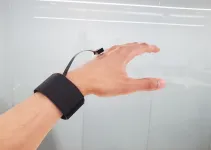
When it comes to haptic feedback, most technologies are limited to simple vibrations. But our skin is loaded with tiny sensors that detect pressure, vibration, stretching and more. Now, Northwestern University engineers have unveiled a new technology that creates precise movements to mimic these complex sensations. The study will be published on March 28 in the journal Science. While sitting on the skin, the compact, lightweight, wireless device applies force in any direction to generate a variety of sensations, including ...

Read the release
Beyond ambiguous reflections: Bridging optical 3D metrology and computer vision
Technology

Beyond ambiguous reflections: Bridging optical 3D metrology and computer vision

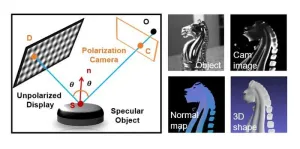
Accurate and robust 3D imaging of specular, or mirror-like, surfaces is crucial in fields such as industrial inspection, medical imaging, virtual reality and cultural heritage preservation. Yet anyone who has visited a house of mirrors at an amusement park knows how difficult it is to judge the shape and distance of reflective objects. This challenge also persists in science and engineering, where the accurate 3D imaging of specular surfaces has long been a focus in both optical metrology and computer vision research. While specialized techniques ...

Read the release
Technology

AI could help sonographers identify abnormalities in unborn babies more quickly

Artificial intelligence (AI) could help sonographers identify any abnormalities at the 20-week pregnancy screening scan almost twice as quickly, without reducing the accuracy or reliability of diagnoses, a new study has shown. This will help improve patient care by allowing sonographers to focus on other aspects of the scan, such as communicating with parents or spending more time looking at any areas of concern. The trial is the first of its kind to use AI for the 20-week pregnancy scan on real patients, and is ...

Read the release
AI learns to ‘speak’ genetic ‘dialect’ for future SARS-CoV-2 mutation prediction
Technology

AI learns to ‘speak’ genetic ‘dialect’ for future SARS-CoV-2 mutation prediction

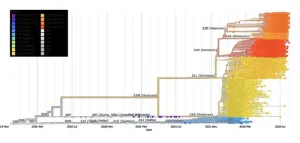
It’s been five years since COVID-19 was declared a global pandemic. As SARS-CoV-2 shifts to endemic status, questions about its future evolution remain. New variants of the virus will likely emerge, driven by positive selection for traits such as increased transmissibility, longer infection duration and the ability to evade immune defenses. These changes could allow the virus to spread among previously immunized populations, potentially triggering new waves of infection. Predicting new mutations in viruses is crucial for advancing life science research, particularly when trying to understand how viruses evolve, ...

Read the release
Sensor technology uses nature’s blueprint and machinery to monitor metabolism in body
Technology

Sensor technology uses nature’s blueprint and machinery to monitor metabolism in body

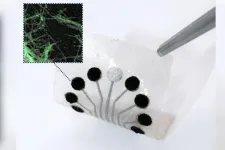
Life’s essential functions are powered by a set of compounds called metabolites, which are involved in every natural process including producing energy, regulating cell activity and keeping the body’s systems in balance. Tracking these molecules offers a window into the onset and status of many diseases, overall health, response to treatment and the intricate workings of biological systems. However, today’s metabolite sensing methods fall short. Most rely on resource-intensive lab tests that give only brief snapshots from isolated samples. The few sensors that can track metabolites continuously are largely limited to detecting blood sugar. An interdisciplinary ...

Read the release
Technology

Encryption breakthrough lays groundwork for privacy-preserving AI models

In an era where data privacy concerns loom large, a new approach in artificial intelligence (AI) could reshape how sensitive information is processed. Researchers Austin Ebel and Karthik Garimella, Ph.D students, and Assistant Professor of Electrical and Computer Engineering Brandon Reagen have introduced Orion, a novel framework that brings fully homomorphic encryption (FHE) to deep learning — allowing AI models to practically and efficiently operate directly on encrypted data without needing to decrypt it first. The implications of this advancement, ...

Read the release
Top global award for young technologists goes to researcher who advanced AI with high-performance computers
Technology

Top global award for young technologists goes to researcher who advanced AI with high-performance computers

ACM, the Association for Computing Machinery, today named Torsten Hoefler, a Professor at ETH Zurich, the recipient of the 2024 ACM Prize in Computing for fundamental contributions to high-performance computing and the ongoing AI revolution. Hoefler developed many of the core capabilities of modern supercomputers and defined key aspects of the algorithms for distributing AI models on them. The ACM Prize in Computing recognizes early-to-mid-career computer scientists whose research contributions have fundamental impact and broad implications. ...

Read the release
Mini rolling robot takes virtual biopsies
Technology

Mini rolling robot takes virtual biopsies

Embargoed: Not for Release Until 2pm U.S. Eastern Time (6pm GMT) Wednesday, 26 March 2025 With images and videos A tiny magnetic robot which can take 3D scans from deep within the body, that could revolutionise early cancer detection, has been developed by researchers. The team, led by engineers from the University of Leeds, say this is the first time it has been possible to generate high-resolution three-dimensional ultrasound images taken from a probe deep inside the gastrointestinal ...

Read the release
Idaho National Laboratory seeks sponsor for innovation incubator to support technology commercialization
Technology

Idaho National Laboratory seeks sponsor for innovation incubator to support technology commercialization

(IDAHO FALLS, Idaho) – The Idaho National Laboratory (INL) is seeking an industry sponsor to invest $5 million to $10 million in a privately funded innovation incubator. This program will combine the power of a national laboratory with private sector commercialization knowledge to unleash breakthrough innovations by finding and supporting promising startups in the areas of nuclear energy, integrated energy systems, cybersecurity and advanced materials. The innovation incubator seeks to provide seed-stage startups aligned ...

Read the release
Researchers achieve quantum computing milestone, realizing certified randomness
Technology

Researchers achieve quantum computing milestone, realizing certified randomness

In a new paper in Nature, a team of researchers from JPMorganChase, Quantinuum, Argonne National Laboratory, Oak Ridge National Laboratory and The University of Texas at Austin describe a milestone in the field of quantum computing, with potential applications in cryptography, fairness and privacy. Using a 56-qubit quantum computer, they have for the first time experimentally demonstrated certified randomness, a way of generating random numbers from a quantum computer and then using a classical supercomputer to prove they are truly random and freshly generated. This could pave the way towards the use of quantum computers for a practical task unattainable through ...

Read the release
Quantum Leap: NIST selects FAU for new generation of encryption standards
Technology

Quantum Leap: NIST selects FAU for new generation of encryption standards

The National Institute of Standards and Technology (NIST) has selected Florida Atlantic University’s Hamming Quasi-Cyclic (HQC) for standardization in its Post-Quantum Cryptography (PQC) project. After a thorough evaluation process, NIST selected HQC to be part of the new generation of encryption standards, for its ability to meet its criteria for security, efficiency and practical implementation. HQC is a cryptographic algorithm designed to ensure secure key exchange between two parties, enabling ...

Read the release
OU researcher leverages technology for alcohol disorder interventions in primary care
Technology

OU researcher leverages technology for alcohol disorder interventions in primary care

OKLAHOMA CITY – According to the Centers for Disease Control and Prevention, 1 in 7 adults in the United States will experience a substance use disorder during their lifetime. University of Oklahoma College of Medicine faculty member Brandi Fink, Ph.D., is working with primary care clinics and health care systems to identify people with an alcohol use disorder and intervene early before the problem worsens. Fink, an associate professor in the Department of Psychiatry and Behavioral Sciences, created an assessment for patients to fill out on an iPad while waiting for an appointment ...

Read the release
Technology

Automated lead nurturing boosts sales—but only under the right conditions

Businesses invest billions in marketing automation, and many assume that Automated Lead Nurturing (ALN) is a proven driver of sales. However, a new Journal of Marketing study reveals that ALN is not a one-size-fits-all solution. The research finds that while ALN improves engagement and enhances salesperson–lead interactions, its impact on sales conversions varies significantly across industries and customer segments. Authored by Johannes Habel (University of Houston), Nathaniel Hartmann (University of South Florida), Phillip Wiseman (Texas Tech University), Michael Ahearne (University of ...

Read the release
Technology

SCAI announces 2025-26 recipients of JSCAI Editorial Fellowship Program

SCAI Announces 2025-26 Recipients of JSCAI Editorial Fellowship Program WASHINGTON — The Society for Cardiovascular Angiography & Interventions (SCAI) is pleased to announce the selection of 10 outstanding early-career interventional cardiologists for the 2025-26 JSCAI Editorial Fellowship Program cohort. The JSCAI Editorial Fellowship Program provides fellows-in-training and early-career interventionalists with a unique opportunity to develop their skills as peer reviewers and gain firsthand experience in the editorial process. Participants are paired with JSCAI Deputy or Associate ...

Read the release
Revolutionizing touch: Researchers explore the future of wearable multi-sensory haptic technology
Technology

Revolutionizing touch: Researchers explore the future of wearable multi-sensory haptic technology

From virtual reality to rehabilitation and communication, haptic technology has revolutionized the way humans interact with the digital world. While early haptic devices focused on single-sensory cues like vibration-based notifications, modern advancements have paved the way for multisensory haptic devices that integrate various forms of touch-based feedback, including vibration, skin stretch, pressure and temperature. Recently, a team of experts, including Rice University’s Marcia O’Malley and Daniel ...

Read the release
These electronics-free robots can walk right off the 3D-printer
Technology

These electronics-free robots can walk right off the 3D-printer

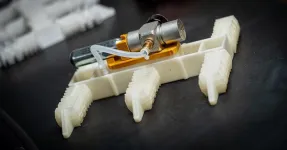
Imagine a robot that can walk, without electronics, and only with the addition of a cartridge of compressed gas, right off the 3D-printer. It can also be printed in one go, from one material. That is exactly what roboticists have achieved in robots developed by the Bioinspired Robotics Laboratory at the University of California San Diego. They describe their work in an advanced online publication in the journal Advanced Intelligent Systems. To achieve this feat, researchers aimed to use the simplest technology available: a desktop ...

Read the release
New type of quantum computer studies the dance of elementary particles
Technology

New type of quantum computer studies the dance of elementary particles

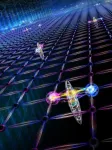
The standard model of particle physics is our best theory of the elementary particles and forces that make up our world: particles and antiparticles, such as electrons and positrons, are described as quantum fields. They interact through other force-fields, such as the electromagnetic force that binds charged particles. To understand the behaviour of these quantum fields and with that our universe, researchers perform complex computer simulations of quantum field theories. Unfortunately, many of these calculations are too complicated for even our best supercomputers and pose great challenges for quantum computers as well, leaving many pressing ...

Read the release
Technology

Study identifies gut sensor that propels intestines to move

After every meal, the intestines perform an action called peristalsis — moving food through their hollow interiors with coordinated contractions and relaxations of the smooth muscle. For more than a century, scientists have known that nerve cells in the gut propel the colon to move, allowing the organ to perform its life-sustaining function. But exactly how these intestinal nerve cells do their job has remained elusive. Now a new NIH-funded study led by researchers at Harvard Medical School and the Icahn School of Medicine at Mount Sinai has identified ...

Read the release
AI reshapes how we observe the stars
Technology

AI reshapes how we observe the stars

AI tools are transforming how we observe the world around us — and even the stars beyond. Recently, an international team proved that deep learning techniques and large language models can help astronomers classify stars with high accuracy and efficiency. Their study, “Deep Learning and Methods Based on Large Language Models Applied to Stellar Light Curve Classification,” was published Feb. 26 in Intelligent Computing, a Science Partner Journal. The team introduced the StarWhisper LightCurve series, a trio of AI models, and evaluated their performance ...

Read the release
Technology

IMDEA Networks revolutionizes 6G networks with DISCO6G project: real-time communication and sensing

IMDEA Networks has begun its participation in DISCO6G, an innovative project that will transform next-generation mobile networks, in collaboration with UC3M, UAM, and UPM and funded by the Madrid Regional Government. Its focus on Integrated Sensing and Communication (ISAC) enables network infrastructures not only to transmit information but also to function as distributed real-time sensors. "DISCO6G represents a paradigm shift, as it turns the network into a system capable of detecting its environment while ...

Read the release
Do-it-yourself box filter clears the air of indoor pollutants
Technology

Do-it-yourself box filter clears the air of indoor pollutants

SAN DIEGO, March 24, 2025 — When wildfires threaten people’s communities, human health is impacted far beyond the inferno. Residual smoke distributes on the breeze, infiltrating homes, schools and offices. To help people protect themselves and their families, researchers have developed a low-cost, durable, do-it-yourself (DIY) air cleaner that works as well as more expensive HEPA filters to clear indoor air of pollutants such as smoke and possibly limit the impact of airborne disease spread. Richard Corsi, dean of the University of California, Davis (UC Davis) College of Engineering, will present results from his ...

Read the release
Technology

Quantum leap: Graphene unlocks orbital hybridization

Peking University, March 19, 2025: A research team led by Professor Sun Qing-Feng in colloboration with Professor He Lin’s research group from Beijing Normal University has achieved orbital hybridization in graphene-based artificial atoms for the first time. Their findings, entitled “Orbital hybridization in graphene-based artificial atoms” was published in Nature (DOI: 10.1038/s41586-025-08620-z). This work marks a significant milestone in the field of quantum physics and materials science, bridging the gap between artificial and real atomic behaviors. Why it matters: 1. Quantum dots, often called artificial atoms, can mimic atomic orbitals but have not yet ...

Read the release
From the original Press-News collection. Issuers of news releases are responsible for the accuracy of their content.