THE ORIGINAL COLLECTION · SINCE 2010

Technology
press releases.

Research announcements from universities, hospitals and scientific institutions. Explore the stories, people and discoveries behind the headlines.

Original publication datesPage 60
FIND A STORY

Find a past release.

Dates and source material belong to the original release.

Read our research explainers

Browse the collection · original publication order

SCAI mourns Frank J. Hildner, MD, FSCAI: A founder and leader
Technology

SCAI mourns Frank J. Hildner, MD, FSCAI: A founder and leader

The Society for Cardiovascular Angiography and Interventions (SCAI) and the interventional cardiology community mourn the passing of Frank J. Hildner, MD, FSCAI, a founding member and past president (1989-90) of SCAI. “Dr. Frank Hildner laid the foundation for SCAI’s growth and success. His visionary leadership helped guide SCAI through its formative years, ensuring it would become the trusted home for interventional cardiology. We are deeply grateful for his contributions and will continue to honor his legacy,” said SCAI President James B. Hermiller, MD, MSCAI. Recognizing the need for a dedicated platform for interventional cardiologists, Dr. ...

Read the release

Technology

Scientists chip away at potato storage problems

They’re one of the UK’s most loved staples, providing around half of our carbohydrate intake as a nation and supporting over 20,000 farm, transport and manufacturing jobs. Now, new research is focusing on ensuring reliable supplies of the potato all year round with a project that focuses on potato dormancy and extending storage life. To achieve year-round supplies in the UK, around 1.5 million tonnes of potatoes are kept in cold stores for up to eight months to prevent sprouting. However, following the withdrawal of a chemical that ...

Read the release
Technology

People’s acceptance of AI judgements on moral decisions: A study on justified defection

A research team led by Dr Prof. Hitoshi Yamamoto of Rissho University and Dr Prof. Takahisa Suzuki of Tsuda University explored the conditions under which people would accept the moral judgments of AI. They focused on the behaviour of "not helping people with bad reputations (justified non-cooperation)," which is difficult for people to judge as good or bad, to investigate under what conditions people are more likely to accept AI's judgments over human judgments. The study revealed that people tend to be more accepting of AI's judgments when AI makes positive judgments and humans make negative judgments. The research results were published in the ...

Read the release
A hearing aid for … your nose?
Technology

A hearing aid for … your nose?

Kaboom! The first time most of us hear the sound of an explosion is in the movies. Encountering the sound in the real world—even at a distance—has a profoundly different effect. Why? It’s all about context. How we react to sounds and other sensory stimuli depends on how they’re presented. We often don’t know how we’ll respond to something until we experience it. And the sensation is sometimes quite different from what we expected. So, the brain has to adjust quickly. Cold Spring Harbor Laboratory (CSHL) Professor Florin Albeanu explains: “In ...

Read the release
Technology

ECG tests may someday be used by AI model to detect premature aging and cognitive decline

Research Highlights: An artificial intelligence (AI) model designed to predict a person’s biological age (age of body cells and tissues) based on electrocardiogram (ECG) data found a strong association between ECG-age and cognitive performance. In an analysis of more than 63,000 people in the United Kingdom, those with accelerated ECG aging had lower cognitive test scores than those with normal aging. Note: The study featured in this news release is a research abstract. Abstracts presented at the American ...

Read the release
E-mobility: TU Graz AI system accelerates the development of powertrains
Technology

E-mobility: TU Graz AI system accelerates the development of powertrains

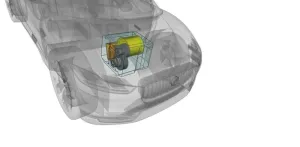
The development of vehicle components is a lengthy and therefore very costly process. Researchers at Graz University of Technology (TU Graz) have developed a method that can shorten the development phase of the powertrain of battery electric vehicles by several months. A team led by Martin Hofstetter from the Institute of Automotive Engineering is combining simulation models of components with evolutionary optimisation algorithms. This AI system automatically optimises the entire powertrain – from the power electronics to the electric machine through to the transmission – in line with the manufacturer’s technical requirements, taking ...

Read the release
Better digital memories with the help of noble gases
Technology

Better digital memories with the help of noble gases

The electronics of the future can be made even smaller and more efficient by getting more memory cells to fit in less space. One way to achieve this is by adding the noble gas xenon when manufacturing digital memories. This has been demonstrated by researchers at Linköping University in a study published in Nature Communications. This technology enables a more even material coating even in small cavities. Twenty-five years ago, a camera memory card could hold 64 megabytes of information. Today, the same physical ...

Read the release
Smarter memory paves the way for EU independence in computer manufacturing
Technology

Smarter memory paves the way for EU independence in computer manufacturing

New technology from Chalmers University of Technology and the University of Gothenburg, Sweden, is helping the EU establish its own competitive computer manufacturing industry. Researchers have developed components critical for optimising on-chip memory, a key factor in enhancing the performance of next-generation computers. The research leader, Professor Per Stenström, along with colleagues, has discovered new ways to make cache memory work smarter. A cache is a local memory that temporarily stores frequently accessed data, improving a computer’s ...

Read the release
Optical fiber sensor provides simple and sensitive detection of arsenic in drinking water
Technology

Optical fiber sensor provides simple and sensitive detection of arsenic in drinking water

WASHINGTON — Researchers have developed a new optical sensor that provides a simple way to achieve real-time detection of extremely low levels of arsenic in water. The technology could enable household testing for arsenic, empowering individuals to monitor their own water quality. Arsenic contamination is a serious environmental and public health challenge affecting millions of people around the world. This contamination occurs when natural geological processes release arsenic from rocks and soil into groundwater ...

Read the release
New training approach could help AI agents perform better in uncertain conditions
Technology

New training approach could help AI agents perform better in uncertain conditions

CAMBRIDGE, MA – A home robot trained to perform household tasks in a factory may fail to effectively scrub the sink or take out the trash when deployed in a user’s kitchen, since this new environment differs from its training space. To avoid this, engineers often try to match the simulated training environment as closely as possible with the real world where the agent will be deployed. However, researchers from MIT and elsewhere have now found that, despite this conventional wisdom, sometimes training in a completely different environment yields a better-performing artificial intelligence agent. Their results indicate that, in some situations, training a simulated ...

Read the release
SNU researchers apply the principles of mantis shrimp and fleas to create soft robots with powerful movements
Technology

SNU researchers apply the principles of mantis shrimp and fleas to create soft robots with powerful movements

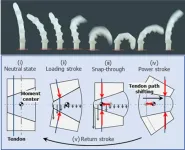
Seoul National University College of Engineering announced that a research team led by Professor Kyu-Jin Cho (Director of the Soft Robotics Research Center) from the Department of Mechanical Engineering took inspiration from principles found in nature and developed the "Hyperelastic Torque Reversal Mechanism (HeTRM)," which enables robots made from rubber-like soft materials to perform rapid and powerful movements. This study was published in the prestigious international journal Science Robotics on January 29. The mantis shrimp delivers a punch ...

Read the release
Technology

Quantum-inspired computing drives major advance in simulating turbulence

UNDER EMBARGO UNTIL 19:00 GMT / 14:00 ET, WEDNESDAY 29 JANUARY 2025 Quantum-inspired computing drives major advance in simulating turbulence Researchers at the University of Oxford have pioneered a new approach to simulate turbulent systems, based on probabilities. The findings have been published today (29 January) in the journal Science Advances. Predicting the dynamics of turbulent fluid flows has long been a central goal for scientists and engineers. Yet, even with modern computing technology, direct and accurate simulation of all but the simplest turbulent flows remains impossible. This is due to turbulence being ...

Read the release
Pairing old and new technologies could unlock advances in plankton science
Technology

Pairing old and new technologies could unlock advances in plankton science

Advances in technology – such as microscopic imaging and molecular techniques – have the potential to transform our understanding of global ocean health, according to the authors of a new study. However, they should not be employed at the expense of long-term plankton monitoring programmes, which continue to provide an essential role in tracking how our seas are shifting in the face of a changing global climate and are essential for informing routine assessments of marine biodiversity required by ...

Read the release
Technology

AAAS enters pilot with ProRata to bolster standards for transparency and reliability in AI searches

The American Association for the Advancement of Science (AAAS), the nonprofit publisher of the Science family of journals, is conducting a pilot with ProRata as part of its commitment to communicate trusted scientific findings broadly. ProRata is an AI company guided by the belief that content creators should receive attribution for their work. Partnering with AAAS will strengthen ProRata’s new AI-driven search engine, Gist.ai, while showing how content that powers AI-driven searches can be sustainably attributed. The pilot – ProRata’s first with a scientific publisher – ...

Read the release
Technology

A new register with thousands of entangled nuclei to scale quantum networks

In a groundbreaking achievement for quantum technologies, researchers at the Cavendish Laboratory, University of Cambridge, have created a functional quantum register using the atoms inside a semiconductor quantum dot. Published in Nature Physics, the work demonstrates the introduction of a new type of optically connected qubits—a critical advance in the development of quantum networks, where stable, scalable, and versatile quantum nodes are essential. Quantum dots are nanoscale objects with unique optical and electronic properties that come from quantum mechanical effects. These systems are already used in technologies ...

Read the release
Technology

New avenues in quantum research: supramolecular qubit candidates detected

Qubits are the basic building blocks of information processing in quantum technology. An important research question is what material they will actually consist of in technical applications. Molecular spin qubits are considered promising qubit candidates for molecular spintronics, in particular for quantum sensing. The materials studied here can be stimulated by light; this creates a second spin centre and, subsequently, a light-induced quartet state. Until now, research has assumed that the interaction between two spin centres can only be strong enough for ...

Read the release
Government Chief Scientific Adviser to launch University of Bath’s new Institute for Digital Security and Behavior
Technology

Government Chief Scientific Adviser to launch University of Bath’s new Institute for Digital Security and Behavior

Professor Dame Angela McLean, Government Chief Scientific Adviser, will lead the launch of the University of Bath’s new Institute for Digital Security and Behaviour (IDSB), on Wednesday 29 January, at Bath’s Guildhall, in a keynote speech on Securing the Future. The Institute marks a new research collaboration, bringing together behavioural and social scientists to address the risks to society posed by digital technology. Researchers will study the fundamental causes of vulnerability to harm and the factors that can make people, organisations and societies safer and more ...

Read the release
University of Virginia study reveals air pollution inequities linked to industrial swine facilities are detectable from space
Technology

University of Virginia study reveals air pollution inequities linked to industrial swine facilities are detectable from space

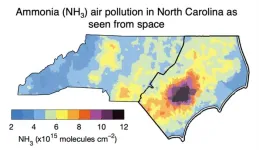
A groundbreaking study led by researchers from the University of Virginia has used satellite measurements to show the long-term persistence of air pollution inequalities tied to industrialized swine facilities in Eastern North Carolina. Using satellite data spanning a 15-year period from 2008–2023, the study quantifies disparities in ammonia (NH₃) — an air pollutant emitted by swine operations — for Black, Hispanic and Indigenous communities. These inequalities, exacerbated by hot and calm weather ...

Read the release
Technology

Humanoid robots join human musicians for synchronized musical performances

In a fascinating blend of technology and artistry, researchers present a study in PeerJ Computer Science, showcasing how humanoid robots can collaborate seamlessly with human musicians during live musical performances. This innovative work highlights the evolving role of robotics in entertainment and creativity. The study introduces a human-robot musical band featuring Polaris, a mid-sized humanoid robot as a drummer, and Oscar, a Robotis-OP3 humanoid robot as a keyboardist. These robots performed alongside human musicians, achieving natural synchronization and ...

Read the release
Technology

‘Embodied energy’ powers modular worm, jellyfish robots

ITHACA, N.Y. – In the same way that terrestrial life evolved from ocean swimmers to land walkers, soft robots are progressing, too, thanks to recent Cornell University research in battery development and design. A modular worm robot and jellyfish demonstrate the benefits of “embodied energy” – an approach that incorporates power sources into the body of a machine, to reduce its weight and cost. The worm and jellyfish are direct descendants of an aqueous soft robot, inspired by a lionfish and unveiled in 2019, that could store energy and power its applications via a circulating hydraulic fluid – i.e., “robot blood.” Similar blood sustains ...

Read the release
Technology

Sun receives funding for CyberCorps scholarship for service

Kun Sun, Professor, Information Sciences and Technology, Center for Secure Information Systems, College of Engineering and Computing (CEC), received funding for: “CyberCorps Scholarship for Service: EAGLE: Empowering American Government Leadership in Cybersecurity through Education.” Due to the proliferation of cyber-attacks, the ...

Read the release
How Camellias evolved with the formation of the Japanese archipelago?
Technology

How Camellias evolved with the formation of the Japanese archipelago?

Niigata, Japan – The distribution of plants has been shaped by geological and climatic changes over time through repeated migration, extinction, and adaptation to new environments. The genus Camellia, comprising over 100 species mainly in East Asia, is a representative warm-temperate tree of the Sino-Japanese Floristic Region. In Japan, four species of Camellia are found, with Camellia japonica and Camellia rusticana being the most well known. C. japonica has a broad distribution from Aomori Prefecture in the cool-temperate ...

Read the release
Technology

Make it worth Weyl: engineering the first semimetallic Weyl quantum crystal

An international team of researchers led by the Strong Correlation Quantum Transport Laboratory of the RIKEN Center for Emergent Matter Science (CEMS) has demonstrated, in a world’s first, an ideal Weyl semimetal, marking a breakthrough in a decade-old problem of quantum materials. Weyl fermions arise as collective quantum excitations of electrons in crystals. They are predicted to show exotic electromagnetic properties, attracting intense worldwide interest. However, despite the careful study of thousands of crystals, most ...

Read the release
Technology

Adding bridges to stabilize quantum networks

While entangled photons hold incredible promise for quantum computing and communications, they have a major inherent disadvantage. After one use, they simply disappear. In a new study, Northwestern University physicists propose a new strategy to maintain communications in a constantly changing, unpredictable quantum network. By rebuilding these disappearing connections, the researchers found the network eventually settles into a stable — albeit different — state. The key resides in adding a sufficient number of connections to ensure the ...

Read the release
AI judged to be more compassionate than expert crisis responders: Study
Technology

AI judged to be more compassionate than expert crisis responders: Study

By definition, robots can’t feel empathy — it requires being able to relate to another person’s human experience, to put yourself in their shoes. But according to new U of T Scarborough research, artificial intelligence (AI) can create empathetic responses more reliably and consistently than humans, even when compared to professionals whose job relies on empathizing with those in need. “AI doesn’t get tired,” says Dariya Ovsyannikova (HBSc 2023 UTSC), lab manager in Professor Michael Inzlicht’s lab at U of T Scarborough ...

Read the release
From the original Press-News collection. Issuers of news releases are responsible for the accuracy of their content.