THE ORIGINAL COLLECTION · SINCE 2010

Technology
press releases.

Research announcements from universities, hospitals and scientific institutions. Explore the stories, people and discoveries behind the headlines.

Original publication datesPage 72
FIND A STORY

Find a past release.

Dates and source material belong to the original release.

Read our research explainers

Browse the collection · original publication order

New AI model could make power grids more reliable amid rising renewable energy use
Technology

New AI model could make power grids more reliable amid rising renewable energy use

As renewable energy sources such as wind and solar become more widespread, managing the power grid has become increasingly complex. Researchers at the University of Virginia have developed an innovative solution: an artificial intelligence model that can address the uncertainties of renewable energy generation and electric vehicle demand, making power grids more reliable and efficient. Multi-Fidelity Graph Neural Networks: A New AI Solution The new model is based on multi-fidelity graph neural networks (GNNs), ...

Read the release
A new hydrogel semiconductor represents a breakthrough for tissue-interfaced bioelectronics
Technology

A new hydrogel semiconductor represents a breakthrough for tissue-interfaced bioelectronics

The ideal material for interfacing electronics with living tissue is soft, stretchable, and just as water-loving as the tissue itself—in short, a hydrogel. Semiconductors, the key materials for bioelectronics such as pacemakers, biosensors, and drug delivery devices, on the other hand, are rigid, brittle, and water-hating, impossible to dissolve in the way hydrogels have traditionally been built. A paper published today in Science from the UChicago Pritzker School of Molecular Engineering (PME) has solved this challenge that has long ...

Read the release
Technology

In pioneering study, gene technology outperforms standard newborn screening tests

Early results from a study of newborn screening methods show that DNA analysis picks up many more preventable or treatable serious health conditions than standard newborn screening and is favored by most parents who are offered the option. The study—called GUARDIAN—is one of the first large-scale studies in the world to use genome sequencing as a method for newborn screening and is the first to publish preliminary results. “The results show us that genome sequencing can radically improve children’s medical care,” says Joshua Milner, professor of Pediatrics, director of Allergy/Immunology and Rheumatology ...

Read the release
Take aim at the pause!
Technology

Take aim at the pause!

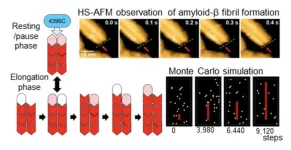
A collaborative research group, including researchers from Exploratory Research Center on Life and Living Systems and Institute for Molecular Science of National Institutes of Natural Sciences, as well as Nagoya City University, Nagoya University, and University of Tsukuba, has uncovered a new mechanism in the growth of amyloid β (Aβ) fibrils, which are closely associated with Alzheimer’s disease. Using advanced high-speed atomic force microscopy (HS-AFM), the team was able to observe Aβ fibril growth at the molecular ...

Read the release
Gene named for mythical Irish land could aid muscle function after traumatic nerve injuries
Technology

Gene named for mythical Irish land could aid muscle function after traumatic nerve injuries

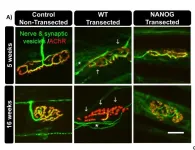
BUFFALO, N.Y. — The key to recovering from traumatic nerve injuries, like those sustained in motor vehicle accidents or gunshot wounds, may be a gene named for the land of everlasting youth in Irish folklore. In a study published today (Oct. 24) in Nature Communications, a University at Buffalo-led research team describes how the gene, called NANOG, can improve the regrowth of damaged nerves and re-establish innervation (the process of nerves growing and connecting with organs or tissues) after traumatic severing of peripheral nerves. The gene’s name is derived from Tír na nÓg, which is a mythical ...

Read the release
‘Paleo-robots’ to help scientists understand how fish started to walk on land
Technology

‘Paleo-robots’ to help scientists understand how fish started to walk on land

The transition from water to land is one of the most significant events in the history of life on Earth. Now, a team of roboticists, palaeontologists and biologists is using robots to study how the ancestors of modern land animals transitioned from swimming to walking, about 390 million years ago. Writing in the journal Science Robotics, the research team, led by the University of Cambridge, outline how ‘palaeo-inspired robotics’ could provide a valuable experimental approach to studying how the pectoral and pelvic fins of ancient fish evolved ...

Read the release
Study: Robotic automation, AI will speed up scientific progress in science laboratories
Technology

Study: Robotic automation, AI will speed up scientific progress in science laboratories

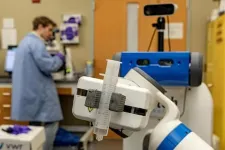
Science laboratories across disciplines—chemistry, biochemistry and materials science—are on the verge of a sweeping transformation as robotic automation and AI lead to faster and more precise experiments that unlock breakthroughs in fields like health, energy and electronics, according to UNC-Chapel Hill researchers in the paper, “Transforming Science Labs into Automated Factories of Discovery,” published in Science Robotics, the most prestigious journal covering robotics research. “Today, the development of new molecules, materials and chemical systems requires ...

Read the release
Capturing carbon from the air just got easier
Technology

Capturing carbon from the air just got easier

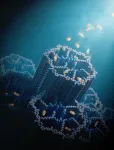
Capturing and storing the carbon dioxide humans produce is key to lowering atmospheric greenhouse gases and slowing global warming, but today's carbon capture technologies work well only for concentrated sources of carbon, such as power plant exhaust. The same methods cannot efficiently capture carbon dioxide from ambient air, where concentrations are hundreds of times lower than in flue gases. Yet direct air capture, or DAC, is being counted on to reverse the rise of CO2 levels, which have reached 426 parts per million (ppm), 50% higher than ...

Read the release
Technology

Can mobile phone networks and Bluetooth technology help researchers improve animal tracking?

Animal tracking studies for ecology and conservation all face technological limitations such as high costs or the need for tags to remain in close proximity to detectors. In research published in Methods in Ecology and Evolution, investigators describe a solution that can overcome many current limitations by employing the massive global network of personal mobile phones as gateways for tracking animals using Bluetooth low energy beacons. In areas with medium to high density of people, these simple, lightweight, and inexpensive beacons can provide regular updates of position with a battery life of 1–3 years. Through field testing ...

Read the release
Technology

Ethical framework aims to counter risks of geoengineering research

WASHINGTON — As interest grows in geoengineering as a strategy for tackling global warming, the world’s largest association of Earth and space scientists today launched an ethical framework as a guide to responsible decision-making and inclusive dialogue. The report, facilitated by the American Geophysical Union (AGU) and advised by a global panel of experts, says any research into large-scale interventions in Earth’s climate system must be grounded in sound ethical principles so society can make informed choices about whether to deploy them. It warns that the unintended consequences ...

Read the release
Technology

Listening skills bring human-like touch to robots

Note to Editors: Video clips available at: https://duke.box.com/s/wtq3ofu3kf84ayw3qr6jajxdizt0rwxc DURHAM, N.C. – Imagine sitting in a dark movie theater wondering just how much soda is left in your oversized cup. Rather than prying off the cap and looking, you pick up and shake the cup a bit to hear how much ice is inside rattling around, giving you a decent indication of if you’ll need to get a free refill. Setting the drink back down, you wonder absent-mindedly if the armrest is made of real wood. After ...

Read the release
Technology

A fully automated AI-based system for assessing IVF embryo quality

A new artificial intelligence-based system can accurately assess the chromosomal status of in vitro-fertilized (IVF) embryos using only time-lapse video images of the embryos and maternal age, according to a study from investigators at Weill Cornell Medicine. The new system, called "BELA,” and described in a paper published Sept. 5 in Nature Communications, is the team’s latest AI-based platform for assessing whether an embryo has a normal (euploid) or abnormal (aneuploid) number of chromosomes—a key determinant of IVF success. Unlike prior AI-based approaches, BELA does not need to consider embryologists' subjective assessments of embryos. ...

Read the release
Technology

People hate stories they think were written by AI. Even if they were written by people

Stories written by the latest version of ChatGPT were nearly as good as those written by human authors, according to new research on the narrative skills of artificial intelligence. But when people were told a story was written by AI — whether the true author was an algorithm or a person — they rated the story poorly, a sign that people distrust and dislike AI-generated art. “People don’t like when they think a story is written by AI, whether it was or not,” said Haoran “Chris” Chu, Ph.D., a professor of public relations at the University of Florida and co-author of the new study. “AI is good at writing something that is consistent, ...

Read the release
Technology

NYU Tandon School of Engineering and KAIST College of Business launch innovative dual master’s degree program in Management of Technology

NYU Tandon School of Engineering and KAIST (Korea Advanced Institute of Science and Technology ) College of Business will introduce the MOT NYU-KAIST dual degree master's program in technology management, offering students a global perspective on tech leadership and the opportunity to study in both Brooklyn, New York and Daejeon, South Korea. This program expands the historic partnership between NYU and KAIST that drives advances in research and education, and forges new industrial collaborations and investments by leveraging the distinct strengths of both universities. While dual-degree master’s ...

Read the release
Technology

Antil studying structure preserving optimization algorithms and digital twins

Antil Studying Structure Preserving Optimization Algorithms & Digital Twins Harbir Antil, Professor, Mathematical Sciences, College of Science, received funding from the National Science Foundation to study partial differential equation (PDE)-constrained optimization problems that incorporate data to make decisions in the presence of uncertainty arising from modeling unknown quantities. The proposed methods support various application areas, including digital twins where physics and data are fused to support decision making. One graduate student will be supported by the project and the ...

Read the release
Technology

Yang developing integrated evaluation cyberinfrastructure towards safe a dependable autonomous driving systems

Lishan Yang, Assistant Professor, Computer Science, College of Engineering and Computing (CEC), received funding for the project: “Collaborative Research: Elements: MELIOREM: An Integrated Evaluation Cyberinfrastructure towards Safe and Dependable Autonomous Driving Systems.” Yang and her collaborators aim to develop MELIOREM, an automated tool designed to enhance the safety of autonomous vehicles. MELIOREM will conduct rigorous testing to identify and address potential safety issues before they affect public roads. This initiative ensures that autonomous vehicles are dependable ...

Read the release
SwRI and JPL co-led study offers insights into mysterious features on airless worlds
Technology

SwRI and JPL co-led study offers insights into mysterious features on airless worlds

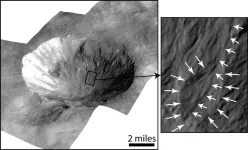
SAN ANTONIO — October 21, 2024—A Southwest Research Institute researcher collaborated with a team at NASA’s Jet Propulsion Laboratory to attempt to explain the presence of mysterious flow features that exist on the surfaces of airless celestial bodies, such as the asteroids Vesta and Ceres, explored recently by the NASA Dawn mission, or Jupiter’s moon Europa, which will soon be explored in detail by the NASA Europa Clipper mission that includes SwRI’s involvement. In a new paper published in The Planetary Science Journal, its lead author, SwRI’s Dr. Michael J. Poston, and a team of researchers outline how post-impact conditions, ...

Read the release
Artificial ‘nose’ can sniff out damaged fruit and spoiled meat
Technology

Artificial ‘nose’ can sniff out damaged fruit and spoiled meat

Although smell has historically played an important role in the fight against diseases such as the plague and tuberculosis, the human nose is generally not sensitive enough to be used as a reliable diagnostic tool. However, a new artificial ‘nose’ inspired by our sense of smell could now make it possible to detect undiagnosed disease, hazardous gases, and food that is starting to spoil. And it is all made possible with technology that already exists. Surrounded by antennas What do your mobile phone, computer and TV have in common? Antennas. “We are literally surrounded by technology that communicates using antenna technology,” said Michael ...

Read the release
Cloud computing captures chemistry code
Technology

Cloud computing captures chemistry code

RICHLAND, Wash.—Some computing challenges are so big that it’s necessary to go all in. That’s the approach a diverse team of scientists and computing experts led by the Department of Energy’s Pacific Northwest National Laboratory, along with colleagues from Microsoft and other national laboratories and universities, are taking to democratize access to emerging cloud computing resources. The effort, outlined in a recent peer-reviewed journal publication, provides a road map to moving scientific computing resources into a sustainable ecosystem that evolves as ...

Read the release
Photonic computing harnesses electromagnetic waves
Technology

Photonic computing harnesses electromagnetic waves

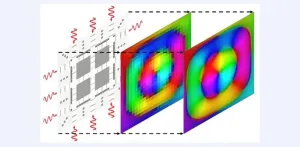
In the fields of physics, mathematics, and engineering, partial differential equations (PDEs) are essential for modeling various phenomena, from heat diffusion to particle motion and wave propagation. While some PDEs can be solved analytically, many require numerical methods, which can be time-consuming and computationally intensive. To address these challenges, scientists have been exploring alternative computing paradigms, including photonic computing. Photonic computing leverages light–matter interactions to perform ...

Read the release
UVA professor tackles graph mining challenges with new algorithm
Technology

UVA professor tackles graph mining challenges with new algorithm

University of Virginia School of Engineering and Applied Science professor Nikolaos Sidiropoulos has introduced a breakthrough in graph mining with the development of a new computational algorithm. Graph mining, a method of analyzing networks like social media connections or biological systems, helps researchers discover meaningful patterns in how different elements interact. The new algorithm addresses the long-standing challenge of finding tightly connected clusters, known as triangle-dense subgraphs, within large networks — a problem that is critical in fields such as fraud detection, computational biology and data ...

Read the release
Revolutionizing optical imaging: Breakthrough non-invasive technology for imaging through scattering media
Technology

Revolutionizing optical imaging: Breakthrough non-invasive technology for imaging through scattering media

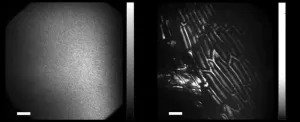
New study introduces a novel computational holography-based method that enables high-resolution, non-invasive imaging through highly scattering media, without the need for traditional tools like guide stars or spatial light modulators. By leveraging computational optimization, the method drastically reduces the number of measurements required and corrects over 190,000 scattered modes using just 25 holographic frames. This innovation shifts the imaging burden from physical hardware to flexible, scalable digital processing, allowing for faster, more efficient imaging across a wide range of fields, from medical diagnostics to autonomous navigation. Its importance lies in providing a versatile, ...

Read the release
Gut instincts: Intestinal nutrient sensors
Technology

Gut instincts: Intestinal nutrient sensors

A multi-institutional group of researchers led by the Hubrecht Institute and Roche’s Institute of Human Biology has developed strategies to identify regulators of intestinal hormone secretion. In response to incoming food, these hormones are secreted by rare hormone producing cells in the gut and play key roles in managing digestion and appetite. The team has developed new tools to identify potential ‘nutrient sensors’ on these hormone producing cells and study their function. This could result in new strategies to interfere with the release of these hormones and provide avenues for the treatment of a variety of metabolic or gut motility disorders. The work will be presented ...

Read the release
Measuring defects to better understand quantum systems
Technology

Measuring defects to better understand quantum systems

Quantum defects have the potential to act as ultra-sensitive sensors that could offer new kinds of navigation or biological sensor technology. One type of these defect systems, nitrogen vacancy (NV) centers in diamonds, can measure nanoscale magnetic fields. But while scientists can control the quantum spin of these centers — single defects in the diamond, where nitrogen has replaced the carbon — they still do not have a full understanding of how to best isolate that spin from the spins of other defects in the material, which can destroy its quantum state memory, ...

Read the release
Researchers advance ideas on abiotic organic synthesis
Technology

Researchers advance ideas on abiotic organic synthesis

Recently, a Chinese research team reported the discovery of abiotic organic compounds in the oceanic crust of the Southwest Indian Ridge and proposed a molecular mechanism for organic condensation. This breakthrough followed the team’s discovery of nanoscale abiotic organic matter in mantle rocks from the Yap Trench in 2021. It represents a significant advance in research on deep-sea carbon cycling and the origin of life, shedding light on key pathways for abiotic organic synthesis in nature. The scientists published their findings in the Proceedings ...

Read the release
From the original Press-News collection. Issuers of news releases are responsible for the accuracy of their content.