THE ORIGINAL COLLECTION · SINCE 2010

Technology
press releases.

Research announcements from universities, hospitals and scientific institutions. Explore the stories, people and discoveries behind the headlines.

Original publication datesPage 77
FIND A STORY

Find a past release.

Dates and source material belong to the original release.

Read our research explainers

Browse the collection · original publication order

Technology

Is CREME AI’s answer to CRISPR?

Imagine you’re looking at millions upon millions of mysterious genetic mutations. With CRISPR gene-editing technology, a select few of these mutations might have therapeutic potential. However, proving it would mean many thousands of hours of lab work. Just figuring out which ones are worth exploring further would take a lot of time and money. But what if you could do it in the virtual realm with artificial intelligence? CREME is a new AI-powered virtual laboratory invented by Cold Spring Harbor Laboratory (CSHL) Assistant Professor Peter Koo and his team. It allows geneticists to run thousands of virtual experiments ...

Read the release


Illinois Institute of Technology Architecture Programs earn National Sustainability Designation from U.S. Department of Energy
Technology

Illinois Institute of Technology Architecture Programs earn National Sustainability Designation from U.S. Department of Energy

CHICAGO—September 13, 2024—The College of Architecture at Illinois Institute of Technology has been awarded the prestigious Zero Energy Design Designation (ZEDD) from the United States Department of Energy (DOE) for it Bachelor of Architecture and Master of Architecture programs. This recognition highlights the college’s commitment to sustainability, carbon neutrality, and zero-energy design practices in a world of escalating extreme weather and climate change. The ...

Read the release
Rice research could make weird AI images a thing of the past
Technology

Rice research could make weird AI images a thing of the past

HOUSTON – (Sept. 13, 2024) – Generative artificial intelligence (AI) has notoriously struggled to create consistent images, often getting details like fingers and facial symmetry wrong. Moreover, these models can completely fail when prompted to generate images at different image sizes and resolutions. Rice University computer scientists’ new method of generating images with pre-trained diffusion models ⎯ a class of generative AI models that “learn” by adding layer after layer of random noise to the images they are trained on and then generate new images by removing the added noise ⎯ could help correct ...

Read the release
Technology

Can AI talk us out of conspiracy theories?

Have you ever tried to convince a conspiracy theorist that the moon landing wasn’t staged? You likely didn’t succeed, but ChatGPT might have better luck, according to research by MIT Sloan School of Management professor David Rand and American University professor of psychology Thomas Costello, who conducted the research during his postdoctoral position at MIT Sloan. In a new paper “Durably reducing conspiracy beliefs through dialogues with AI” published in Science, the researchers show that large language models can effectively reduce ...

Read the release
Quantum researchers cause controlled ‘wobble’ in the nucleus of a single atom
Technology

Quantum researchers cause controlled ‘wobble’ in the nucleus of a single atom

Researchers from Delft University of Technology in The Netherlands have been able to initiate a controlled movement in the very heart of an atom. They caused the atomic nucleus to interact with one of the electrons in the outermost shells of the atom. This electron could be manipulated and read out through the needle of a scanning tunneling microscope. The research, published in Nature Communications today, offers prospects for storing quantum information inside the nucleus, where it is safe from external disturbances. For weeks on end, the researchers studied a single titanium atom. “A Ti-47 atom, to be precise,” ...

Read the release
Deep learning for strain field customization in bioreactor with dielectric elastomer actuator array
Technology

Deep learning for strain field customization in bioreactor with dielectric elastomer actuator array

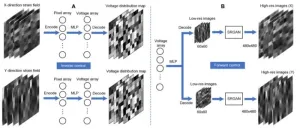
A research paper by scientists at Purdue University presented a deep learning method that enables the customization of complex strain fields according to specific requirements. The new research paper, published on Aug. 14 in the journal Cyborg and Bionic Systems, used a deep learning method based on image regression and achieved to predict and customize complex strain fields. Traditional bioreactors, powered by pneumatic actuators or motors, struggle to generate complex strain fields due to limited control over individual actuators. However, fields like cardiovascular biomechanics and tissue engineering require more advanced customization. “In the field of biomechanics, customizing ...

Read the release
Technology

Microscale robot folds into 3D shapes and crawls

ITHACA, N.Y. – Cornell University researchers have created microscale robots less than 1 millimeter in size that are printed as a 2D hexagonal “metasheet” but, with a jolt of electricity, morph into preprogrammed 3D shapes and crawl. The robot’s versatility is due to a novel design based on kirigami, a cousin of origami, in which slices in the material enable it to fold, expand and locomote. The team’s paper, “Electronically Configurable Microscopic Metasheet Robots,” published Sept. 11 in Nature Materials. The paper’s co-lead authors are postdoctoral ...

Read the release
Artificial muscles propel a robotic leg to walk and jump
Technology

Artificial muscles propel a robotic leg to walk and jump

Inventors and researchers have been developing robots for almost 70 years. To date, all the machines they have built – whether for factories or elsewhere – have had one thing in common: they are powered by motors, a technology that is already 200 years old. Even walking robots feature arms and legs that are powered by motors, not by muscles as in humans and animals. This in part suggests why they lack the mobility and adaptability of living creatures. A new muscle-powered robotic leg is not only more energy efficient than a conventional one, it can also perform high jumps and fast movements as well as detect and react to obstacles – ...

Read the release
Developed proprietary quantum error correction technology beyond the world's leading quantum computing companies
Technology

Developed proprietary quantum error correction technology beyond the world's leading quantum computing companies

Solving the problem of error is essential for the practical application of quantum computing technologies that surpass the performance of digital computers. Information input into a qubit, the smallest unit of quantum computation, is quickly lost and error-prone. No matter how much we mitigate errors and improve the accuracy of qubit control, as the system size and computation scale increase, errors accumulate and algorithms become impossible to perform. Quantum error correction is a way to solve this problem. As the race for global supremacy in quantum technology intensifies, most major companies and research groups leading the development of quantum ...

Read the release
Scalable, multi-functional device lays groundwork for advanced quantum applications
Technology

Scalable, multi-functional device lays groundwork for advanced quantum applications

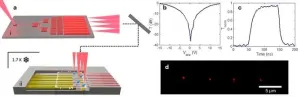
Researchers have demonstrated a new multi-functional device that could help advance the scalability of solid-state color centers, enabling them to be used in larger and more complex quantum computers and networks. As efficient photon-spin interfaces, solid-state color centers are promising candidates for qubit nodes — essential units for storing and processing quantum information. Solid-state color centers are point defects that can absorb and emit light at specific wavelengths. To be useful in real-world quantum applications, they must be optically addressable in a fast and controllable manner while also allowing ...

Read the release
Technology

Department of Energy announces $68 million in funding for artificial intelligence for scientific research

WASHINGTON, D.C. - The use of Artificial Intelligence (AI) in scientific research is a top priority at the Department of Energy (DOE), which today announced $68 million in funding for 11 multi-institution projects, comprising 43 awards. The funded projects will develop new ways to create foundation models, which are machine learning or deep learning models that can be used across a wide range of applications because they’re trained on broad data. Foundation models are a key building block of AI. Those models will be used in computational science, to automate workflow in laboratories, to accelerate scientific programming, and much more. The possibilities ...

Read the release
Technology

DOE, ORNL announce opportunity to define future of high-performance computing

The Department of Energy’s (DOE) Office of Science today announced a new research and development opportunity led by Oak Ridge National Laboratory (ORNL) to advance technologies and drive new capabilities for future supercomputers. This industry research program worth $23 million, called New Frontiers, will initiate partnerships with multiple companies to accelerate the R&D of critical technologies with renewed emphasis on energy efficiency for the next generation of post-exascale computing in the 2029 and beyond time frame. “There is a growing consensus that urgent action is needed to address an array of bottlenecks ...

Read the release
Technology

Molecular simulations, supercomputing lead to energy-saving biomaterials breakthrough

A team led by scientists at the Department of Energy’s Oak Ridge National Laboratory identified and successfully demonstrated a new method to process a plant-based material called nanocellulose that reduced energy needs by a whopping 21%. The approach was discovered using molecular simulations run on the lab’s supercomputers, followed by pilot testing and analysis. The method, leveraging a solvent of sodium hydroxide and urea in water, can significantly lower the production cost of nanocellulosic fiber — a strong, lightweight biomaterial ideal as a ...

Read the release
Researcher develops technology to provide cleaner energy and cleaner water
Technology

Researcher develops technology to provide cleaner energy and cleaner water

As the world transitions to cleaner energy sources, the need for energy-relevant metals and critical minerals has surged dramatically. Driven by the rise of electric vehicles and other green technologies, these essential materials are in high demand across the globe. Metals, such as lithium, cannot be grown. They must be mined or recycled, making this a top priority for researchers in the mining industry. Traditional methods of mining lithium are expensive and can be harmful to the environment, but researchers at Virginia Tech have found a way to minimize this environment impact. They will optimize and scale up this method with ...

Read the release
Researchers advance new class of quantum critical metal that could advance electronic devices
Technology

Researchers advance new class of quantum critical metal that could advance electronic devices

A new study led by Rice University’s Qimiao Si has unveiled a new class of quantum critical metal, shedding light on the intricate interactions of electrons within quantum materials. Published in Physical Review Letters on Sept. 6, the research explores the effects of Kondo coupling and chiral spin liquids within specific lattice structures. “The insights gained from this discovery could lead to the development of electronic devices with extreme sensitivity, driven by the unique properties of quantum-critical ...

Read the release
DOE, ORNL announce opportunity to define the future of high-performance computing
Technology

DOE, ORNL announce opportunity to define the future of high-performance computing

The U.S. Department of Energy’s (DOE) Office of Science (SC) today announced a new research and development opportunity led by Oak Ridge National Laboratory (ORNL) to advance technologies and drive new capabilities for future supercomputers. This industry research program worth $23 million, called New Frontiers, will initiate partnerships with multiple companies to accelerate the R&D of critical technologies with renewed emphasis on energy efficiency for the next generation of post-exascale computing in the 2029 ...

Read the release
Technology

Natural probiotic discovered in UK newborns microbiomes

Newborn babies have one of three pioneer bacteria in their gut shortly after birth, one of which could be used to develop new personalised infant therapeutic probiotics, researchers show. In the largest study of UK baby microbiomes to date, researchers from the Wellcome Sanger Institute, University College London (UCL), and the University of Birmingham, used whole genome sequencing to analyse stool samples from 1,288 healthy infants, all under one month old from the UK Baby Biome Study1. This research, published today (6 September) ...

Read the release
Technology

AI helps distinguish dark matter from cosmic noise

Dark matter is the invisible force holding the universe together – or so we think. It makes up around 85% of all matter and around 27% of the universe’s contents, but since we can’t see it directly, we have to study its gravitational effects on galaxies and other cosmic structures. Despite decades of research, the true nature of dark matter remains one of science’s most elusive questions. According to a leading theory, dark matter might be a type of particle that barely ...

Read the release
Multi-user reinforcement learning based task migration in mobile edge computing
Technology

Multi-user reinforcement learning based task migration in mobile edge computing

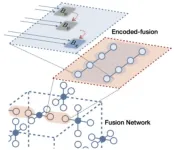
Dynamic service migration is a key technology in Mobile Edge Computing(MEC). In a multi-user service migration scenario, the states of all users are combined into a global state, which leads to the instability of the system and ignores the influence of multiple users. It is more and more challenging to design an effective migration strategy to balance migration costs and latency in a multi-user distributed environment. To solve the problems, a research team led by Degan ZHANG published their new research on 15 August 2024 in Frontiers of Computer Science co-published by Higher Education Press and Springer Nature. Considering ...

Read the release
Technology

Will humans accept robots that can lie? Scientists find it depends on the lie

Honesty is the best policy… most of the time. Social norms help humans understand when we need to tell the truth and when we shouldn’t, to spare someone’s feelings or avoid harm. But how do these norms apply to robots, which are increasingly working with humans? To understand whether humans can accept robots telling lies, scientists asked almost 500 participants to rate and justify different types of robot deception. “I wanted to explore an understudied facet of robot ethics, to contribute to our understanding of mistrust ...

Read the release
$7.5 million grant to guard against AI-driven misinformation
Technology

$7.5 million grant to guard against AI-driven misinformation

BLOOMINGTON, Ind. — Indiana University researchers will lead a multi-institutional team of experts in areas such as informatics, psychology, communications and folklore to assess the role that artificial intelligence may play in strengthening the influence of online communications — including misinformation and radicalizing messages — under a $7.5 million grant from the U.S. Department of Defense. The project is one of 30 recently funded by the department’s Multidisciplinary University ...

Read the release
Preventing car battery fires with help from machine learning
Technology

Preventing car battery fires with help from machine learning

One of the most critical safety concerns for electric vehicles is keeping their batteries cool, as temperature spikes can lead to dangerous consequences. New research led by a University of Arizona doctoral student proposes a way to predict and prevent temperature spikes in the lithium-ion batteries commonly used to power such vehicles. The paper "Advancing Battery Safety," led by College of Engineering doctoral student Basab Goswami, is published in the Journal of Power Sources. With the support of $599,808 from the Department of Defense's Defense Established Program to Stimulate Competitive Research, Goswami and his adviser, aerospace ...

Read the release
Study: People facing life-or-death choice put too much trust in AI
Technology

Study: People facing life-or-death choice put too much trust in AI

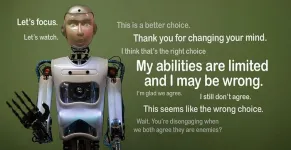
In simulated life-or-death decisions, about two-thirds of people in a UC Merced study allowed a robot to change their minds when it disagreed with them -- an alarming display of excessive trust in artificial intelligence, researchers said. Human subjects allowed robots to sway their judgment despite being told the AI machines had limited capabilities and were giving advice that could be wrong. In reality, the advice was random. “As a society, with AI accelerating so quickly, we need to be concerned about the potential for overtrust,” said Professor Colin ...

Read the release
Coatings manufacturer and ORNL partner Flexcon licenses self-healing film technology
Technology

Coatings manufacturer and ORNL partner Flexcon licenses self-healing film technology

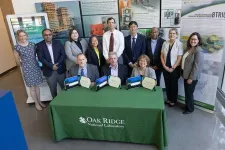
Flexcon Global has exclusively licensed two patented inventions to manufacture a self-healing barrier film from the Department of Energy’s Oak Ridge National Laboratory for research and development purposes. The film can be incorporated into vacuum insulation panels to increase the efficiency of buildings during retrofits. Flexcon, based in Spencer, Massachusetts, provides coatings, film laminations and functional technologies to a range of markets including healthcare, sustainable packaging, transportation, consumer durables, electronics, industrial, retail and advertising. Under ...

Read the release
KERI overcomes from overseas dependence on drive system technology for machine tools!
Technology

KERI overcomes from overseas dependence on drive system technology for machine tools!

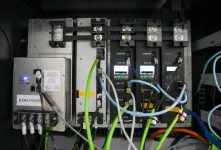
Korea Electrotechnology Research Institute (KERI) has succeeded in domestically developing the ‘CNC driving system’ technology, a core component of machine tools—often referred to as "Mother Machines," the machines that make other machines. The CNC (Computer Numerical Control) system is an electronic module that processes numerical information via a computer and automatically controls all functions of machine tools, including position, speed, and rotation of a machine tool. In a computer, it plays a role similar to that of a CPU. A major challenge ...

Read the release
From the original Press-News collection. Issuers of news releases are responsible for the accuracy of their content.