Medicine Technology 🌱 Environment Space Energy Physics Engineering Social Science Earth Science Science
Medicine 2015-03-26

Researchers identify timeline for HIV replication in the brain

CHAPEL HILL, NC - A team of researchers has discovered HIV can begin replicating in the brain as early as four months after initial infection. The study followed 72 treatment naïve participants during the first two years of HIV infection. Through analysis of cerebral spinal fluid (CSF) and blood samples, 20 percent of subjects showed replication in the central nervous system (CNS) at four months. Additionally, 30 percent of participants showed evidence of a marked CSF inflammatory response in at least one time point and 16 percent of study volunteers showed a marked ...
Read more →
Science: Theory of the strong interaction verified
Science 2015-03-26

Science: Theory of the strong interaction verified

The fact that the neutron is slightly more massive than the proton is the reason why atomic nuclei have exactly those properties that make our world and ultimately our existence possible. Eighty years after the discovery of the neutron, a team of physicists from France, Germany, and Hungary headed by Zoltán Fodor, a researcher from Wuppertal, has finally calculated the tiny neutron-proton mass difference. The findings, which have been published in the current edition of Science, are considered a milestone by many physicists and confirm the theory of the strong interaction. ...
Read more →
Dark matter even darker than once thought
Space 2015-03-26

Dark matter even darker than once thought

Astronomers using observations from the NASA/ESA Hubble Space Telescope and NASA's Chandra X-ray Observatory have studied how dark matter in clusters of galaxies behaves when the clusters collide. The results, published in the journal Science on 27 March 2015, show that dark matter interacts with itself even less than previously thought, and narrows down the options for what this mysterious substance might be. Dark matter is a giant question mark looming over our knowledge of the Universe. There is more dark matter in the Universe than visible matter, but it is extremely ...
Read more →
Medicine 2015-03-26

The brain in the supermarket

Say you're out shopping for basic household goods -- perhaps orange juice and soup. Or light bulbs. Or diapers for your young child. How do you choose the products you buy? Is it a complicated decision, or a simple one? It could be complex: Factors like price, quality, and brand loyalty may run through your mind. Indeed, some scholars have developed complicated models of consumer decision-making, in which people accumulate substantial product knowledge, then weigh that knowledge against the opportunity to explore less-known products. But in a new paper, MIT researchers ...
Read more →
Science 2015-03-26

Experts set strategic priorities for lymphoma research

(WASHINGTON - March, 26, 2015) - A committee of lymphoma experts today unveiled a strategic roadmap identifying key priority areas in both infrastructure and research that will be critical for advancing treatments for people with lymphoma. The report is meant to inform future research directions as well as funding decisions by strategic partners that could include government agencies and the private sector. The strategic recommendations were developed after a review of the state of the science in lymphoma conducted at a special ASH Meeting on Lymphoma Biology held in August ...
Read more →
How did the chicken cross the sea?
Science 2015-03-26

How did the chicken cross the sea?

EAST LANSING, Mich. -- It may sound like the makings of a joke, but answering the question of how chickens crossed the sea may soon provide more than just a punch line. Michigan State University researcher Eben Gering has collaborated with a team in a study of the mysterious ancestry of the feral chicken population that has overrun the Hawaiian Island of Kauai. Their results, published in the current issue of Molecular Ecology, may aid efforts to curtail the damage of invasive species in the future, and help improve the biosecurity of domestic chicken breeds. Domesticated ...
Read more →
Medicine 2015-03-26

Report: Budget cuts undermine global health innovations protecting against threats like Ebola

Washington, DC (March 26, 2015)--As the world looks to American innovation to fight Ebola, malaria, tuberculosis, and a host of other health threats, a new report released today on Capitol Hill warns budget battles in Washington are eroding preparedness at home and abroad at a time when scientific advances are poised to deliver new lifesaving drugs, vaccines, and diagnostics. "Since 2009, we've seen declining, or at best stagnating, support for global health research and development, with politics trumping prudent investments that could protect the US and the world from ...
Read more →
A decade in, have Australia's no-take reserves protected life on the Reef?
Science 2015-03-26

A decade in, have Australia's no-take reserves protected life on the Reef?

The expansion of no-take marine reserves (NTMRs) within Australia's Great Barrier Reef Marine Park more than a decade ago is working to protect fish just as experts had hoped it would, say researchers who have been monitoring the reef via underwater surveys. The findings, reported in the Cell Press journal Current Biology on March 26, come as encouraging news for Australia's largest reef and for other, similar projects around the world. While the park reserves could not protect the reef directly from extensive physical damage caused by Tropical Cyclone Hamish in 2009, ...
Read more →
Report: Photosynthesis hack needed to feed the world by 2050
Science 2015-03-26

Report: Photosynthesis hack needed to feed the world by 2050

CHAMPAIGN, Ill. -- Using high-performance computing and genetic engineering to boost the photosynthetic efficiency of plants offers the best hope of increasing crop yields enough to feed a planet expected to have 9.5 billion people on it by 2050, researchers report in the journal Cell. There has never been a better time to try this, said University of Illinois plant biology professor Stephen P. Long, who wrote the report with colleagues from Illinois and the CAS-MPG Partner Institute of Computational Biology in Shanghai. "We now know every step in the processes that ...
Read more →
Medicine 2015-03-26

New role uncovered for 'oldest' tumor suppressor gene

Scientists have revealed a brand new function for one of the first cancer genes ever discovered - the retinoblastoma gene - in a finding that could open up exciting new approaches to treatment. The retinoblastoma gene is so called because mutations to it cause a rare children's eye cancer of the same name, and is known to play a central role in stopping healthy cells from dividing uncontrollably. Now the new study - jointly led by scientists at The Institute of Cancer Research, London, and UCL (University College London) - has found that the gene also has another important ...
Read more →
Science 2015-03-26

Crossing fingers can reduce feelings of pain

How you feel pain is affected by where sources of pain are in relation to each other, and so crossing your fingers can change what you feel on a single finger, finds new UCL research. The research, published in Current Biology, used a variation on an established pain experiment, known as the "thermal grill illusion". In the thermal grill illusion, a pattern of warm-cold-warm temperatures applied to the index, middle and ring finger respectively causes a paradoxical, sometimes painful, sensation of burning heat on the middle finger - even though this finger is actually ...
Read more →
Engineering 2015-03-26

Building sound foundations: A matter of granular dynamics

Sand, rocks, grains, salt or sugar are what physicists call granular media. A better understanding of granular media is important - particularly when mixed with water and air, as it forms the foundations of houses and off-shore windmills. Until recently, there was no single theory that could account for granular media's flows at different speeds. Now, a new theory dubbed GSH, which stands for granular solid hydrodynamics, is supplementing previous models of granular material that work only for narrow speed ranges. And Yimin Jiang from Central South University, Changsha, ...
Read more →
Medicine 2015-03-26

Most women with early-stage breast cancer avoid extensive lymph node removal

CHICAGO (March 26, 2015): A new study of women with early-stage breast cancer finds that surgeons no longer universally remove most of the lymph nodes in the underarm area when a biopsy of the nearby lymph nodes shows cancer--a major change in breast cancer management. The study, which evaluated data from 2.7 million U.S. breast cancer patients, is published as an "article in press" on the Journal of the American College of Surgeons website in advance of print publication later this year. Until now, it was unclear to what extent surgeons were following the recommendations ...
Read more →
Engineering 2015-03-26

UT Dallas engineers twist nanofibers to create structures tougher than bulletproof vests

Researchers at the University of Texas at Dallas have created new structures that exploit the electromechanical properties of specific nanofibers to stretch to up to seven times their length, while remaining tougher than Kevlar. These structures absorb up to 98 joules per gram. Kevlar, often used to make bulletproof vests, can absorb up to 80 joules per gram. The material can reinforce itself at points of high stress and could potentially be used in military airplanes or other defense applications. In a study published by ACS Applied Materials and Interfaces, a journal ...
Read more →
Chemists make new silicon-based nanomaterials
Technology 2015-03-26

Chemists make new silicon-based nanomaterials

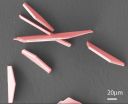
PROVIDENCE, R.I. [Brown University] -- In a paper published in the journal Nanoletters, the researchers describe methods for making nanoribbons and nanoplates from a compound called silicon telluride. The materials are pure, p-type semiconductors (positive charge carriers) that could be used in a variety of electronic and optical devices. Their layered structure can take up lithium and magnesium, meaning it could also be used to make electrodes in those types of batteries. "Silicon-based compounds are the backbone of modern electronics processing," said Kristie Koski, ...
Read more →
Medicine 2015-03-26

Moffitt Cancer Center research aims to reduce health care disparities

TAMPA, Fla. - The lesbian, gay, bisexual, transgender/transsexual, queer/questioning and intersex (LGBTQI) population has been largely understudied by the medical community. Researchers at Moffitt Cancer Center found that the LGBTQI community experience health disparities due to reduced access to health care and health insurance, coupled with being at an elevated risk for multiple types of cancer when compared to non-LGBTQI populations. Gwendolyn P. Quinn, Ph.D., scientific director of the Survey Methods Core Facility at Moffitt, identified physicians largely operate ...
Read more →
Medicine 2015-03-26

Fitness level associated with lower risk of some cancers, death in men

Men with a high fitness level in midlife appear to be at lower risk for lung and colorectal cancer, but not prostate cancer, and that higher fitness level also may put them at lower risk of death if they are diagnosed with cancer when they're older, according to a study published online by JAMA Oncology. While the association between cardiorespiratory fitness (CRF) and cardiovascular disease (CVD) has been well-established, the value of CRF as a predictor of primary cancer has gotten less attention, according to background in the study. Susan G. Lakoski, M.D., M.S., ...
Read more →
Science 2015-03-26

Deadly Japan quake and tsunami spurred global warming, ozone loss

WASHINGTON, D.C. - Buildings destroyed by the 2011 Tohoku earthquake released thousands of tons of climate-warming and ozone-depleting chemicals into the atmosphere, according to a new study. New research suggests that the thousands of buildings destroyed and damaged during the 9.0 magnitude earthquake and tsunami that struck Japan four years ago released 6,600 metric tons (7,275 U.S. tons) of gases stored in insulation, appliances and other equipment into the atmosphere. Emissions of these chemicals, called halocarbons, increased by 21 percent to 91 percent over ...
Read more →
Medicine 2015-03-26

Blood test may shed new light on Fragile X related disorders

MINNEAPOLIS - A blood test may shed new light on Fragile X syndrome related disorders in women, according to a new study published in the March 25, 2015, online issue of Neurology®, the medical journal of the American Academy of Neurology. Fragile X is the most common inherited form of intellectual disability and the most frequent genetic cause of autism. Fragile X, which is caused by a mutation in a single gene on the X chromosome, affects about 1 in 4,000 men and 1 in 6,000 women. Even more common are Fragile X carriers of a lesser change in the Fragile X gene ...
Read more →
Medicine 2015-03-26

Female IBD patients: Stay up-to-date on your cervical cancer screening

Bethesda, MD (March 26, 2015) -- Women with inflammatory bowel disease (IBD) may be at increased risk of cervical dysplasia and cancer, according to a new study1 published in Clinical Gastroenterology and Hepatology, the official clinical practice journal of the American Gastroenterological Association. "Our research shows that patients with IBD, specifically Crohn's disease, are at increased risk for developing cervical cancer, even when undergoing the recommended screening," said study author Professor Tine Jess, MD, from Statens Serum Institut in Denmark. "These findings ...
Read more →
Medicine 2015-03-26

High-fat diet alters behavior and produces signs of brain inflammation

Philadelphia, PA, March 26, 2015 - Can the consumption of fatty foods change your behavior and your brain? High-fat diets have long been known to increase the risk for medical problems, including heart disease and stroke, but there is growing concern that diets high in fat might also increase the risk for depression and other psychiatric disorders. A new study published in the current issue of Biological Psychiatry raises the possibility that a high-fat diet produces changes in health and behavior, in part, by changing the mix of bacteria in the gut, also known as ...
Read more →
Medicine 2015-03-26

How the human immune system keeps TB at bay

COLUMBUS, Ohio - A new tissue culture model using human white blood cells shows how people with a latent - or symptom-free - tuberculosis infection are protected from active disease by a critical early step in their immune response, researchers say. The model also shows, however, that some TB bacteria can find a way to get around that protection, which helps explain how latent infections turn into active and transmissible disease. More than 2 billion people worldwide are thought to be infected with TB bacteria, and an estimated 1.3 million people died of TB in 2012. ...
Read more →
Medicine 2015-03-26

Roseroot herb shows promise as potential depression treatment option, Penn team finds

PHILADELPHIA -- Rhodiola rosea (R. rosea), or roseroot, may be a beneficial treatment option for major depressive disorder (MDD), according to results of a study in the journal Phytomedicine led by Jun J. Mao, MD, MSCE, associate professor of Family Medicine, Community Health and Epidemiology and colleagues at the Perelman School of Medicine of University of Pennsylvania. The proof of concept trial study is the first randomized, double-blind, placebo-controlled, comparison trial of oral R. rosea extract versus the conventional antidepressant therapy sertraline for mild ...
Read more →
Social Science 2015-03-26

Veterans' avoidant coping interfers with transition to university life

DENTON (UNT), Texas -- Military veterans who use avoidant coping strategies -- denying or minimizing distressing thoughts, experiences and emotions -- are more likely to exhibit symptoms of depression and generalized anxiety. However, emotional help and support from family members reduces the negative impacts of these conditions, according to a University of North Texas study on veterans' transition to becoming college and university students. Counseling and wellness centers at colleges and universities -- where student veterans may seek help -- should therefore have ...
Read more →
Medicine 2015-03-26

The Mediterranean diet is not only healthier, it also pollutes less

The health benefits of the Mediterranean diet are well-known. As well as being healthier, a recent article concludes that the menu traditionally eaten in Spain leaves less of a carbon footprint than that of the US or the United Kingdom. The consequences of climate change range from species extinction to sea-level increases and the spread of diseases. For this reason, researchers have been struggling for years to alleviate its effects, even limiting the pollution caused by food consumption. A new study involving the University Hospital Complex of Huelva, Jaume I University ...
Read more →