Medicine Technology 🌱 Environment Space Energy Physics Engineering Social Science Earth Science Science
Medicine 2014-11-13

Errors in single gene may protect against heart disease

Rare mutations that shut down a single gene are linked to lower cholesterol levels and a 50 percent reduction in the risk of heart attack, according to new research from Washington University School of Medicine in St. Louis, the Broad Institute at Massachusetts Institute of Technology and Harvard, and other institutions. The gene, called NPC1L1, is of interest because it is the target of the drug ezetimibe, often prescribed to lower cholesterol. The study appears Nov. 12 in The New England Journal of Medicine. Everyone inherits two copies of most genes -- one copy ...
Read more →
Science 2014-11-13

Picture emerges of how kids get head injuries

A study in which more than 43,000 children were evaluated for head trauma offers an unprecedented picture of how children most frequently suffer head injuries, report physicians at Washington University School of Medicine in St. Louis and the University of California, Davis, School of Medicine. The findings also indicate how often such incidents result in significant brain injuries, computerized tomography (CT) scans to assess head injuries, and neurosurgery to treat them. In children ages 12 and younger, falls were the most common cause of head injuries. In children ...
Read more →
Science 2014-11-13

Experts address challenges of delivering critical care in resource-poor countries

Philadelphia, PA, November 12, 2014 - Critical care is defined by life-threatening conditions, which require close evaluation, monitoring, and treatment by appropriately trained health professionals. Cardiovascular care bears these same requirements. In fact, cardiovascular disease will soon surpass even human immunodeficiency virus (HIV) as the leading cause of mortality in Sub-Saharan Africa. In the latest issue of Global Heart, researchers discuss the challenges of delivering critical care in resource-limited countries. According to Guest Editors Vanessa Kerry, MD, ...
Read more →
Physics 2014-11-13

Atomic timekeeping, on the go

What time is it? The answer, no matter what your initial reference may be -- a wristwatch, a smartphone, or an alarm clock -- will always trace back to the atomic clock. The international standard for time is set by atomic clocks -- room-sized apparatuses that keep time by measuring the natural vibration of atoms in a vacuum. The frequency of atomic vibrations determines the length of one second -- information that is beamed up to GPS satellites, which stream the data to ground receivers all over the world, synchronizing cellular and cable networks, power grids, and ...
Read more →
Medicine 2014-11-13

Linking diet to human and environmental health

(Santa Barbara, California) -- The world is gaining weight and becoming less healthy, and global dietary choices are harming the environment. Those are among the findings of a paper co-authored by David Tilman, a professor in the Bren School of Environmental Science & Management, and Michael Clark, a graduate student at the University of Minnesota, where Tilman also is a professor. In "Global Diets Link Environmental Sustainability and Human Health," published today in the journal Nature, the researchers find that rising incomes and urbanization around the world are ...
Read more →
Science 2014-11-12

Study: Vitamin B may not reduce risk of memory loss

MINNEAPOLIS - Taking vitamin B12 and folic acid supplements may not reduce the risk of memory and thinking problems after all, according to a new study published in the November 12, 2014, online issue of Neurology®, the medical journal of the American Academy of Neurology. The study is one of the largest to date to test long-term use of supplements and thinking and memory skills. The study involved people with high blood levels of homocysteine, an amino acid. High levels of homocysteine have been linked to memory loss and Alzheimer's disease. "Since homocysteine ...
Read more →
Medicine 2014-11-12

Humans' big brains might be due in part to newly identified protein

A protein that may partly explain why human brains are larger than those of other animals has been identified by scientists from two stem-cell labs at UC San Francisco, in research published in the November 13, 2014 issue of Nature. Key experiments by the UCSF researchers revealed that the protein, called PDGFD, is made in growing brains of humans, but not in mice, and appears necessary for normal proliferation of human brain stem cells growing in a lab dish. The scientists made their discovery as part of research in which they identified genes that are activated to ...
Read more →
Medicine 2014-11-12

Soldiers at increased suicide risk after leaving hospital

U.S. Army soldiers hospitalized with a psychiatric disorder have a significantly elevated suicide risk in the year following discharge from the hospital, according to research from the Army Study to Assess Risk and Resilience in Servicemembers (Army STARRS). The yearly suicide rate for this group, 263.9 per 100,000 soldiers, was far higher than the rate of 18.5 suicides per 100,000 in the Regular Army for the same study period, the study found. The researchers looked at data from the 12 months following a hospital discharge for more than 40,000 anonymous, Regular Army ...
Read more →
Medicine 2014-11-12

Predicting US Army suicides after hospital discharge

It has long been known that patients recently discharged from psychiatric hospitalizations have a significantly elevated suicide risk. However, the rarity of suicide even in this high-risk segment of the population makes it impractical to justify providing intensive post-hospital suicide prevention programs to all recently discharged patients. Targeted programs for patients at especially high suicide risk would be more feasible, but it is difficult for clinicians to predict with good accuracy which patients are at high risk for suicide. A new report published online today ...
Read more →
Medicine 2014-11-12

Quarter of patients have subsequent surgery after breast conservation surgery

Nearly a quarter of all patients who underwent initial breast conservation surgery (BCS) for breast cancer had a subsequent surgical intervention, according to a report published online by JAMA Surgery. Completely removing breast cancer is seen as the best way to reduce recurrence and improve survival. A lack of consensus on an adequate margin width has led to variable rates of reexcision and, as a result, patients undergo repeat or additional surgeries, according to background information provided in the study. Lee G. Wilke, M.D., of the University of Wisconsin School ...
Read more →
Medicine 2014-11-12

Predicting US soldier suicides following psychiatric hospitalization

A study that looked at predicting suicides in U.S. Army soldiers after they are hospitalized for a psychiatric disorder suggests that nearly 53 percent of posthospitalization suicides occurred following the 5 percent of hospitalizations with the highest predicted suicide risk, according to a report in JAMA Psychiatry. The suicide rate in the U.S. Army has increased since 2004 and now exceeds the rate among civilians. Still, suicide is a rare outcome even among recently discharged psychiatric patients. A potentially promising approach to assess posthospitalization suicide ...
Read more →
Science 2014-11-12

New scientific review reveals huge gaps in understanding preterm birth

SEATTLE - Preterm birth is now the leading cause of death for children under 5 worldwide, and a new scientific paper reveals a startling lack of knowledge about what causes it and how to prevent it. Published in the November issue of Science Translational Medicine, "Prevention of Preterm Birth: Harnessing Science to Address the Global Epidemic" shines a light on the urgent need for a larger, coordinated research effort to discover how to identify women at risk of preterm birth and develop prevention interventions. "There are not enough resources dedicated to researching ...
Read more →
Science 2014-11-12

Older women with sleep-breathing problems more likely to see decline in daily functions

Older women with disordered breathing during sleep were found to be at greater risk of decline in the ability to perform daily activities, such as grocery shopping and meal preparation, according to a new study led by researchers at the Johns Hopkins Bloomberg School of Public Health and the University of California, San Francisco. The study was published Nov. 6 in the online edition of the Journal of the American Geriatrics Society. The findings are notable given the aging of the population - an estimated 3.7 million Americans will turn 65 in 2015, and by 2030, 19 ...
Read more →
Depression, overwhelming guilt in preschool years linked to brain changes
Medicine 2014-11-12

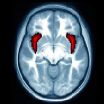
Depression, overwhelming guilt in preschool years linked to brain changes

In school-age children previously diagnosed with depression as preschoolers, a key brain region involved in emotion is smaller than in their peers who were not depressed, scientists have shown. The research, by a team at Washington University School of Medicine in St. Louis, also suggests that the size of the brain's right anterior insula may predict the risk of future bouts of depression, potentially giving researchers an anatomical marker to identify those at high risk for recurrence. The study is published online Nov. 12 in the journal JAMA Psychiatry. There is ...
Read more →
Genetic tweak gave yellow fever mosquitoes a nose for human odor
Science 2014-11-12

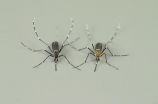
Genetic tweak gave yellow fever mosquitoes a nose for human odor

One of the world's deadliest mosquitoes sustains its taste for human blood thanks in part to a genetic tweak that makes it more sensitive to human odor, according to new research. Researchers report in the journal Nature that the yellow fever mosquito contains a version of an odor-detecting gene in its antennae that is highly attuned to sulcatone, a compound prevalent in human odor. The researchers found that the gene, AaegOr4, is more abundant and more sensitive in the human-preferring "domestic" form of the yellow fever mosquito than in its ancestral "forest" form that ...
Read more →
Science 2014-11-12

Puree helps kids make smooth transition to vegetables

Adding tiny amounts of vegetable puree to milk and then rice at the time of weaning makes children more likely to eat vegetables, new University of Leeds research shows. Infants who consumed either milk (breast milk or formula) followed by rice mixed with vegetable puree ate nearly half as many vegetables again as infants who ate just milk followed by baby rice. Professor Marion Hetherington, of the School of Psychology at the University of Leeds, led the study. She said: "We took inspiration from French mothers, as previous studies in this area have shown that they ...
Read more →
Medicine 2014-11-12

UC Davis investigational medication used to resolve life-threatening seizures in children

(SACRAMENTO, Calif.) -- In its first clinical application in pediatric patients, an investigational medication developed and manufactured at UC Davis has been found to effectively treat children with life-threatening and difficult-to-control epileptic seizures without side effects, according to a research report by scientists at UC Davis and Northwestern University. The investigational formulation of allopregnanolone was manufactured by UC Davis Health System's Good Manufacturing Practice Laboratory. Two children were treated with the allopregnanolone formulation, one ...
Read more →
The backwards brain? Study shows how brain maps develop to help us perceive the world
Medicine 2014-11-12

The backwards brain? Study shows how brain maps develop to help us perceive the world

LA JOLLA, CA - November 12, 2014 - Driving to work becomes routine--but could you drive the entire way in reverse gear? Humans, like many animals, are accustomed to seeing objects pass behind us as we go forward. Moving backwards feels unnatural. In a new study, scientists from The Scripps Research Institute (TSRI) reveal that moving forward actually trains the brain to perceive the world normally. The findings also show that the relationship between neurons in the eye and the brain is more complicated than previously thought--in fact, the order in which we see things ...
Read more →
Science 2014-11-12

Gene sequencing projects link two mutations to Ewing sarcoma subtype with poor prognosis

(MEMPHIS, Tenn. - November 12, 2014) An international collaboration has identified frequent mutations in two genes that often occur together in Ewing sarcoma (EWS) and that define a subtype of the cancer associated with reduced survival. The research, conducted by the St. Jude Children's Research Hospital-Washington University Pediatric Cancer Genome Project and the Institut Curie-Inserm through the International Cancer Genome Consortium, appears in the current issue of the scientific journal Cancer Discovery. Mutations in the genes STAG2 and TP53 have previously been ...
Read more →
Science 2014-11-12

Giant otter's repertoire includes 22 distinct vocalizations

Giant otters may have a vocal repertoire with 22 distinct vocalization types produced by adults and 11 neonate vocalization types, according to a study published November 12, 2014 in the open-access journal PLOS ONE by Christina Mumm and Mirjam Knörnschild from University of Ulm, Germany. Giant otters, found in South America, are very social and frequently vocalizing animals. They live in groups that may vary, but generally include a reproductive pair and their offspring, born in different years. Individuals engage in shared group activities and hold different social ...
Read more →
Medicine 2014-11-12

The whole-genome sequences of the world's oldest living people published

Using fewer than twenty genomes, researchers were unable to find rare protein-altering variants significantly associated with extreme longevity, according to a study published November 12, 2014 in the open-access journal PLOS ONE by Hinco Gierman from Stanford University and colleagues. Supercentenarians are the world's oldest people, living beyond 110 years of age. Seventy-four are alive worldwide, with twenty-two living in the United States. The authors of this study performed whole-genome sequencing on 17 supercentenarians to explore the genetic basis underlying ...
Read more →
Science 2014-11-12

Focus on self-regulating skills in kindergarten may provide lasting academic effects

An educational approach in kindergarten focused on the development of executive functions--the ability to avoid distractions, focus attention, hold relevant details in working memory, and regulate impulsive behavior--in children improved academic learning in and beyond kindergarten, helping to overcome deficits in school readiness associated with poverty, according to a study published November 12, 2014 in the open-access journal PLOS ONE by Clancy Blair and C. Cybele Raver from New York University. Based on the results, the authors suggest that executive function ...
Read more →
Science 2014-11-12

Focusing on executive functions in kindergarten leads to lasting academic improvements

An educational approach focused on the development of children's executive functions - the ability to avoid distractions, focus attention, hold relevant information in working memory, and regulate impulsive behavior - improved academic learning in and beyond kindergarten, according to a new study by researchers at NYU's Steinhardt School of Culture, Education, and Human Development. Because some effects were especially pronounced in high-poverty schools, the findings hold promise for closing the poverty-related achievement gap and suggest that an emphasis on executive ...
Read more →
Amateur, professional astronomers alike thrilled by extreme storms on Uranus
Space 2014-11-12

Amateur, professional astronomers alike thrilled by extreme storms on Uranus

The normally bland face of Uranus has become increasingly stormy, with enormous cloud systems so bright that for the first time ever, amateur astronomers are able to see details in the planet's hazy blue-green atmosphere. "The weather on Uranus is incredibly active," said Imke de Pater, professor and chair of astronomy at the University of California, Berkeley, and leader of the team that first noticed the activity when observing the planet with adaptive optics on the W. M. Keck II Telescope in Hawaii. "This type of activity would have been expected in 2007, when Uranus's ...
Read more →
Science 2014-11-12

Semen directly impairs effectiveness of microbicides that target HIV

In the fight against HIV, microbicides--chemical compounds that can be applied topically to the female genital tract to protect against sexually transmitted infections--have been touted as an effective alternative to condoms. However, while these compounds are successful at preventing transmission of the virus in a petri dish, clinical trials using microbicides have largely failed. A new study from the Gladstone Institutes and the University of Ulm now reveals that this discrepancy may be due to the primary mode of transportation of the virus during sexual transmission, ...
Read more →