Medicine Technology 🌱 Environment Space Energy Physics Engineering Social Science Earth Science Science
Altered milk protein can deliver AIDS drug to infants
Medicine 2014-11-11

Altered milk protein can deliver AIDS drug to infants

A novel method of altering a protein in milk to bind with an antiretroviral drug promises to greatly improve treatment for infants and young children suffering from HIV/AIDS, according to a researcher in Penn State's College of Agricultural Sciences. That's critical because an estimated 3.4 million children are living with HIV/AIDS, the World Health Organization reports, and nine out of 10 of them live in resource-limited countries in sub-Saharan Africa, where effective antiretroviral treatments still are not widely accessible or available. International medical experts ...
Read more →
Mapping the spread of diarrhea bacteria a major step towards new vaccine
Medicine 2014-11-11

Mapping the spread of diarrhea bacteria a major step towards new vaccine

Enterotoxigenic Escherichia coli (ETEC) bacteria are responsible each year for around 400 million cases of diarrhoea and 400,000 deaths in the world's low- and middle-income countries. Children under the age of five are most affected. ETEC bacteria also cause diarrhoea in nearly one in two travellers to these areas. Major breakthrough Researchers at the University of Gothenburg's Sahlgrenska Academy are world leaders in research into ETEC and have now made a major breakthrough in collaboration with colleagues from the Wellcome Trust Sanger Institute in the UK, Karolinska ...
Read more →
Medicine 2014-11-11

Enriched environments hold promise for brain injury patients

As football players are learning, a violent blow to the head has the potential to cause mild to severe traumatic brain injury -- physical damage to the brain that can be debilitating, even fatal. The long-term effects run the gamut of human functioning, from trouble communicating to extensive cognitive and behavioral deterioration. To date, there is no effective medical or cognitive treatment for patients with traumatic brain injuries. But a new study from Tel Aviv University researchers points to an "enriched environment" -- specially enhanced surroundings -- as a promising ...
Read more →
Tumor-analysis technology enables speedier treatment decisions for bowel-cancer patients
Medicine 2014-11-11

Tumor-analysis technology enables speedier treatment decisions for bowel-cancer patients

Technology developed at the University of Sussex helps hospitals make earlier and more accurate treatment decisions and survival assessments for patients with bowel cancer. Bowel cancer kills more than 16,000 people a year in the UK, making it the nation's second-most common cause of cancer death (after lung cancer). A novel medical-imaging technology, TexRAD, which analyses the texture of tumours, has been shown in trials to enable early diagnosis of those bowel-cancer patients not responding to the standard cancer therapy better than other available tumour markers. ...
Read more →
Science 2014-11-11

Queensland research helping reduce road fatalities in China

Changes to China's drink driving laws are catching the community off guard with more than 70 per cent of people unaware of the blood alcohol limits that could see them face criminal charges, according to new Queensland University of Technology (QUT) research conducted in two Chinese cities. QUT's Centre for Accident Research & Road Safety - Queensland (CARRS-Q) has partnered with organisations in China to promote road safety and reduce fatalities and injuries, as alcohol-related driving offences are being brought into sharper focus because of the country's rapid motorisation ...
Read more →
IU biologists collaborate to refine climate change modeling tools
Environment 2014-11-11

IU biologists collaborate to refine climate change modeling tools

A new climate change modeling tool developed by scientists at Indiana University, Princeton University and the National Oceanographic and Atmospheric Administration finds that carbon dioxide removal from the atmosphere owing to greater plant growth from rising CO2 levels will be partially offset by changes in the activity of soil microbes that derive their energy from plant root growth. Soils hold more carbon than all of the earth's plant biomass and atmosphere combined. The new work published by Benjamin N. Sulman, a postdoctoral researcher in the lab of co-author and ...
Read more →
IU researcher publishes 'landmark' results for curing hepatitis C in transplant patients
Medicine 2014-11-11

IU researcher publishes 'landmark' results for curing hepatitis C in transplant patients

INDIANAPOLIS -- A new treatment regimen for hepatitis C, the most common cause of liver cancer and transplantation, has produced results that will transform treatment protocols for transplant patients, according to research published online today in the New England Journal of Medicine. The investigational three-drug regimen, which produced hepatitis C cure rates of 97 percent, is an oral interferon-free therapy. Previously, the typical treatment for hepatitis C after a liver transplant was an interferon-based therapy, usually given for 48 weeks. It had a much lower response ...
Read more →
Science 2014-11-11

Typhoid gene unravelled

Lead researcher, Dr Sarah Dunstan from the Nossal Institute of Global Health at the University of Melbourne said the study is the first large-scale, unbiased search for human genes that affect a person's risk of typhoid. Enteric fever, or typhoid fever as it more commonly known, is a considerable health burden to lower-income countries. This finding is important because this natural resistance represents one of the largest human gene effects on an infectious disease. "We screened the human genome to look for genes associated with susceptibility to, or resistance ...
Read more →
Weeds yet to reach their full potential as invaders after centuries of change
Science 2014-11-11

Weeds yet to reach their full potential as invaders after centuries of change

Weeds in the UK are still evolving hundreds of years after their introduction and are unlikely to have yet reached their full potential as invaders, UNSW Australia scientists have discovered. The study is the first to have tracked the physical evolution of introduced plant species from the beginning of their invasion to the present day, and was made possible by the centuries-old British tradition of storing plant specimens in herbaria. The research team, led by Habacuc Flores-Moreno, looked at three common weeds - Oxford ragwort, winter speedwell and a willow herb - which ...
Read more →
Controversial medication has benefits for breastfeeding
Medicine 2014-11-11

Controversial medication has benefits for breastfeeding

A controversial medication used by breastfeeding women should not be restricted because of the benefits it offers mothers and their babies, according to researchers at the University of Adelaide. The medication domperidone has recently been the subject of warnings from the European Medicines Agency based on research that there is a link between the medication and fatal heart conditions. Domperidone has been banned in the United States for years because of fatal cardiac arrhythmias among cancer patients who had been prescribed the drug to prevent nausea and vomiting. However, ...
Read more →
Creating bright X-ray pulses in the laser lab
Physics 2014-11-11

Creating bright X-ray pulses in the laser lab

This news release is available in German. X-rays are widely used in medicine and in materials science. To take a picture of a broken bone, it is enough to create a continuous flux of X-ray photons, but in order to study time-dependent phenomena on very short timescales, short X-ray pulses are required. One possibility to create short hard X-ray pulses is hitting a metal target with laser pulses. The laser rips electrons out of the atoms and makes them emit X-ray radiation. Electrical engineers at the Vienna University of Technology (TU Wien) together with researchers ...
Read more →
Multiple models reveal new genetic links in autism
Science 2014-11-11

Multiple models reveal new genetic links in autism

With the help of mouse models, induced pluripotent stem cells (iPSCs) and the "tooth fairy," researchers at the University of California, San Diego School of Medicine have implicated a new gene in idiopathic or non-syndromic autism. The gene is associated with Rett syndrome, a syndromic form of autism, suggesting that different types of autism spectrum disorder (ASD) may share similar molecular pathways. The findings are published in the Nov. 11, 2014 online issue of Molecular Psychiatry. "I see this research as an example of what can be done for cases of non-syndromic ...
Read more →
Science 2014-11-11

Breakthrough shows how the 'termites of the sea' digest wood

An inter­na­tional research team led by Dan Distel, director of the Ocean Genome Legacy Center of New Eng­land Bio­labs at North­eastern Uni­ver­sity, has dis­cov­ered a novel diges­tive strategy in ship­worms. The break­through, the researchers say, may also be a game-​​changer for the indus­trial pro­duc­tion of clean biofuels. To start, it's impor­tant to note that ship­worms, the so-​​called "ter­mites of the sea," aren't actu­ally worms--they're bizarre clams that ...
Read more →
Medicine 2014-11-11

Hospital workers wash hands less frequently toward end of shift, study finds

WASHINGTON - Hospital workers who deal directly with patients wash their hands less frequently as their workday progresses, probably because the demands of the job deplete the mental reserves they need to follow rules, according to new research published by the American Psychological Association. Researchers led by Hengchen Dai, a PhD candidate at the University of Pennsylvania, looked at three years of hand-washing data from 4,157 caregivers in 35 U.S. hospitals. They found that "hand-washing compliance rates" dropped by an average of 8.7 percentage points from the beginning ...
Read more →
Too many people, not enough water: Now and 2,700 years ago
Science 2014-11-10

Too many people, not enough water: Now and 2,700 years ago

The Assyrian Empire once dominated the ancient Near East. At the start of the 7th century BC, it was a mighty military machine and the largest empire the Old World had yet seen. But then, before the century was out, it had collapsed. Why? An international study now offers two new factors as possible contributors to the empire's sudden demise - overpopulation and drought. Adam Schneider of the University of California, San Diego and Selim Adalı of Koç University in Istanbul, Turkey, have just published evidence for their novel claim. "As far as we know, ...
Read more →
Medicine 2014-11-10

Smoking associated with elevated risk of developing a second smoking-related cancer

Results of a federally-funded pooled analysis of five prospective cohort studies indicate that cigarette smoking prior to the first diagnosis of lung (stage I), bladder, kidney or head and neck cancer increases risk of developing a second smoking-associated cancer. This is the largest study to date exploring risk of second cancers among current smokers. An analysis of five large, prospective cohort studies indicates that lung (stage I), bladder, kidney and head and neck cancer survivors who smoked 20 or more cigarettes a day prior to their cancer diagnoses have an up ...
Read more →
ALMA finds best evidence yet for galactic merger in distant protocluster
Science 2014-11-10

ALMA finds best evidence yet for galactic merger in distant protocluster

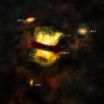
Nestled among a triplet of young galaxies more than 12.5 billion light-years away is a cosmic powerhouse: a galaxy that is producing stars nearly 1,000 times faster than our own Milky Way. This energetic starburst galaxy, known as AzTEC-3, together with its gang of calmer galaxies may represent the best evidence yet that large galaxies grow from the merger of smaller ones in the early Universe, a process known as hierarchical merging. An international team of astronomers observed these remarkable objects with the Atacama Large Millimeter/submillimeter Array (ALMA). "The ...
Read more →
Lung cancer screening with low-dose CT could be cost effective says Dartmouth study
Medicine 2014-11-10

Lung cancer screening with low-dose CT could be cost effective says Dartmouth study

VIDEO: Dartmouth researchers say lung cancer screening in the National Lung Screening Trial meets a commonly accepted standard for cost effectiveness as reported in the Nov. 6 issue of the New... Click here for more information. Dartmouth researchers say lung cancer screening in the National Lung Screening Trial (NLST) meets a commonly accepted standard for cost effectiveness as reported in the Nov. 6 issue of the New England Journal of Medicine. This relatively new screening ...
Read more →
The brain's 'inner GPS' gets dismantled
Medicine 2014-11-10

The brain's 'inner GPS' gets dismantled

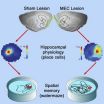
Imagine being able to recognize your car as your own but never being able to remember where you parked it. Researchers at University of California, San Diego School of Medicine have induced this all-too-common human experience - or a close version of it - permanently in rats and from what is observed perhaps derive clues about why strokes and Alzheimer's disease can destroy a person's sense of direction. The findings are published online in the current issue of Cell Reports. Grid cells and other specialized nerve cells in the brain, known as "place cells," comprise ...
Read more →
Medicine 2014-11-10

The cat's meow: Genome reveals clues to domestication

Cats and humans have shared the same households for at least 9,000 years, but we still know very little about how our feline friends became domesticated. An analysis of the cat genome by researchers at Washington University School of Medicine in St. Louis reveals some surprising clues. The research appears Nov. 10 in the Proceedings of the National Academy of Sciences Early Edition. Cats have a relatively recent history of domestication compared with dogs; canines arose from wolves over 30,000 years ago. "Cats, unlike dogs, are really only semidomesticated," said ...
Read more →
Environment 2014-11-10

Study ties conflict risk in sub-Saharan Africa to climate change, economics, geography

A massive new University of Colorado Boulder study indicates there is a statistical link between hotter temperatures generated by climate change and the risk of armed conflicts in sub-Saharan Africa. CU-Boulder Professor John O'Loughlin led a research team that assessed more than 78,000 armed conflicts between 1980 and 2012 in the Sahel region of Africa - a semi-arid belt just south of the Saharan Desert that spans about 3,000 miles and more than a dozen countries from the Atlantic to the Indian oceans. The team was looking for links between armed conflicts and temperature ...
Read more →
Medicine 2014-11-10

ACA health insurance plans differ in cost, coverage and hospital access across Texas

HOUSTON - (Nov. 10, 2014) - An analysis of more than 100 health insurance plans across Texas offered under the Affordable Care Act (ACA) shows that plans can differ significantly in premium cost and the number of hospitals included in insurance networks. That's just one of the findings of a report released today by the Episcopal Health Foundation and Rice University's Baker Institute for Public Policy. The report examined "Silver" health insurance plans offered by insurers within the ACA's Marketplace. Texas is divided into 26 different geographic areas, with different ...
Read more →
Medicine 2014-11-10

Beta-blockers have no mortality benefit in post-heart attack patients, say researchers

Philadelphia, PA, November 10, 2014 - Beta-blockers have been a cornerstone in the treatment of heart attack survivors for more than a quarter of a century. However, many of the data predate contemporary medical therapy such as reperfusion, statins, and antiplatelet agents, and recent data have called the role of beta-blockers into question. Two new studies published in The American Journal of Medicine evaluated the traditional management of these patients after their discharge from the hospital and in the light of changing medical treatment, as well as the impact of the ...
Read more →
We are not alone
Science 2014-11-10

We are not alone

The adult human body is made up of about 37 trillion cells. Microbes, mainly bacteria, outnumber body cells by 10 to 1. Increasingly, scientists recognize that this huge community of microbes, called the microbiome, affects the health, development and evolution of all multicellular organisms, including humans. Studies show symbiotic microbes can help prevent infection by disease-causing pathogens. But sometimes the interaction goes the other way, with a pathogen or disease disrupting the normal community of symbiotic bacteria. In a new study, a team of scientists from ...
Read more →
Technology 2014-11-10

Microbot muscles: Chains of particles assemble and flex

ANN ARBOR--In a step toward robots smaller than a grain of sand, University of Michigan researchers have shown how chains of self-assembling particles could serve as electrically activated muscles in the tiny machines. So-called microbots would be handy in many areas, particularly medicine and manufacturing. But several challenges lie between current technologies and science fiction possibilities. Two of the big ones are building the 'bots and making them mobile. "We are inspired by ideas of microscopic robots," said Michael Solomon, a professor of chemical engineering. ...
Read more →