Medicine Technology 🌱 Environment Space Energy Physics Engineering Social Science Earth Science Science
Virtual reality helps people to comfort and accept themselves
Technology 2014-11-12

Virtual reality helps people to comfort and accept themselves

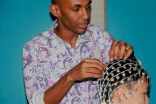
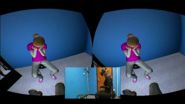
VIDEO: The video illustrates the complete experiment. First the participant shown wearing the Oculus head-mounted display and the OptiTrack motion capture suit gives comfort to the crying virtual child. We see... Click here for more information. Self-compassion can be learned using avatars in an immersive virtual reality, finds new research led by UCL. This innovative approach reduced self-criticism and increased self-compassion and feelings of contentment in naturally self-critical ...
Read more →
'Smart' drugs won't make smart people smarter
Medicine 2014-11-12

'Smart' drugs won't make smart people smarter

It is claimed one in five students have taken the 'smart' drug Modafinil to boost their ability to study and improve their chances of exam success. But new research into the effects of Modafinil has shown that healthy students could find their performance impaired by the drug. The study carried out by Dr Ahmed Dahir Mohamed, in the School of Psychology at The University of Nottingham Malaysia Campus, and published today, Wednesday 12 November 2014, in the open access journal PLOS ONE, showed the drug had negative effects in healthy people. Dr Mohamed said: "We looked ...
Read more →
Science 2014-11-12

Fighting crime through crowdsourcing

CORAL GABLES, Fla. (Nov. 12, 2014) -- Crowdsourcing utilizes the input of a crowd of online users to collaboratively solve problems. To advance this emerging technology, researchers at the University of Miami are developing a computing model that uses crowdsourcing to combine and optimize human efforts and machine computing elements. The new model can be used to efficiently perform the complex tasks of face recognition--a method used in law enforcement. It's a new approach to using social networks as a formal part of the criminal investigation process, explained computer ...
Read more →
Hope for those with social anxiety disorder: You may already be someone's best friend
Social Science 2014-11-12

Hope for those with social anxiety disorder: You may already be someone's best friend

Making friends is often extremely difficult for people with social anxiety disorder and to make matters worse, people with this disorder tend to assume that the friendships they do have are not of the highest quality. The problem with this perception, suggests new research from Washington University in St. Louis, is that it's not necessarily true from the point of view of their friends. "People who are impaired by high social anxiety typically think they are coming across much worse than they really are," said study co-author Thomas Rodebaugh, PhD, associate professor ...
Read more →
A piece of the quantum puzzle
Technology 2014-11-12

A piece of the quantum puzzle

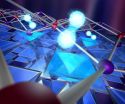
While the Martinis Lab at UC Santa Barbara has been focusing on quantum computation, former postdoctoral fellow Pedram Roushan and several colleagues have been exploring qubits (quantum bits) for quantum simulation on a smaller scale. Their research appears in the current edition of the journal Nature. "While we're waiting on quantum computers, there are specific problems from various fields ranging from chemistry to condensed matter that we can address systematically with superconducting qubits," said Roushan, who is now a quantum electronics engineer at Google. "These ...
Read more →
Moving cameras talk to each other to identify, track pedestrians
Science 2014-11-12

Moving cameras talk to each other to identify, track pedestrians

It's not uncommon to see cameras mounted on store ceilings, propped up in public places or placed inside subways, buses and even on the dashboards of cars. Cameras record our world down to the second. This can be a powerful surveillance tool on the roads and in buildings, but it's surprisingly hard to sift through vast amounts of visual data to find pertinent information - namely, making a split-second identification and understanding a person's actions and behaviors as recorded sequentially by cameras in a variety of locations. Now, University of Washington electrical ...
Read more →
Space 2014-11-12

Primordial galaxy bursts with starry births

ITHACA, N.Y. - Peering deep into time with one of the world's newest, most sophisticated telescopes, astronomers have found a galaxy - AzTEC-3 - that gives birth annually to 500 times the number of suns as the Milky Way galaxy, according to a new Cornell University-led study published Nov. 10 in the Astrophysical Journal. Lead author Dominik Riechers, Cornell assistant professor of astronomy, and an international team of researchers gazed back - with the Atacama Large Millimeter/submillimeter Array (ALMA) in Chile - over 12.5 billion years to find bustling galaxies creating ...
Read more →
Science 2014-11-12

Research suggests how mosquitoes evolved an attraction to human scent

New York, NY - The female mosquitoes that spread dengue and yellow fever didn't always rely on human blood to nourish their eggs. Their ancestors fed on furrier animals in the forest. But then, thousands of years ago, some of these bloodsuckers made a smart switch: They began biting humans and hitchhiked all over the globe, spreading disease in their wake. "It was a really good evolutionary move," says Leslie B. Vosshall, the Robin Chemers Neustein Professor and head of the Laboratory of Neurogenetics and Behavior at The Rockefeller University, and a Howard Hughes Medical ...
Read more →
Live longer? Save the planet? Better diet could nail both
Medicine 2014-11-12

Live longer? Save the planet? Better diet could nail both

As cities and incomes increase around the world, so does consumption of refined sugars, refined fats, oils and resource- and land-intense agricultural products such as beef. A new study led by University of Minnesota ecologist David Tilman shows how a shift away from this trajectory and toward healthier traditional Mediterranean, pescatarian or vegetarian diets could not only boost human lifespan and quality of life, but also slash greenhouse gas emissions and save habitat for endangered species. The study, published in the November 12 online edition of Nature by Tilman ...
Read more →
Study at SLAC explains atomic action in high-temperature superconductors
Physics 2014-11-12

Study at SLAC explains atomic action in high-temperature superconductors

Menlo Park, Calif. -- A study at the Department of Energy's SLAC National Accelerator Laboratory suggests for the first time how scientists might deliberately engineer superconductors that work at higher temperatures. In their report, a team led by SLAC and Stanford University researchers explains why a thin layer of iron selenide superconducts -- carries electricity with 100 percent efficiency -- at much higher temperatures when placed atop another material, which is called STO for its main ingredients strontium, titanium and oxygen. These findings, described today ...
Read more →
Science 2014-11-12

Shaking the topological cocktail of success

Graphene is the miracle material of the future. Consisting of a single layer of carbon atoms arranged in a honeycomb lattice, the material is extremely stable, flexible, highly conductive and of particular interest for electronic applications. ETH Professor Tilman Esslinger and his group at the Institute for Quantum Electronics investigate artificial graphene; its honeycomb structure consists not of atoms, but rather of light. The researchers align multiple laser beams in such a way that they create standing waves with a hexagonal pattern. This optical lattice is then superimposed ...
Read more →
Science 2014-11-12

Jackson Laboratory researchers discover lung regeneration mechanism

A research team led by Jackson Laboratory Professors Frank McKeon, Ph.D., and Wa Xian, Ph.D., reports on the role of certain lung stem cells in regenerating lungs damaged by disease. The work, published Nov. 12 in the journal Nature, sheds light on the inner workings of the still-emerging concept of lung regeneration and points to potential therapeutic strategies that harness these lung stem cells. "The idea that the lung can regenerate has been slow to take hold in the biomedical research community," McKeon says, "in part because of the steady decline that is seen ...
Read more →
Medicine 2014-11-12

Brain protein influences how the brain manages stress; suggests new model of depression

The brain's ability to effectively deal with stress or to lack that ability and be more susceptible to depression, depends on a single protein type in each person's brain, according to a study conducted at the Icahn School of Medicine at Mount Sinai and published November 12 in the journal Nature. The Mount Sinai study findings challenge the current thinking about depression and the drugs currently used to treat the disorder. "Our findings are distinct from serotonin and other neurotransmitters previously implicated in depression or resilience against it," says the ...
Read more →
Technology 2014-11-12

Latest supercomputers enable high-resolution climate models, truer simulation of extreme weather

Not long ago, it would have taken several years to run a high-resolution simulation on a global climate model. But using some of the most powerful supercomputers now available, Lawrence Berkeley National Laboratory (Berkeley Lab) climate scientist Michael Wehner was able to complete a run in just three months. What he found was that not only were the simulations much closer to actual observations, but the high-resolution models were far better at reproducing intense storms, such as hurricanes and cyclones. The study, "The effect of horizontal resolution on simulation ...
Read more →
HIV virulence depends on where virus inserts itself in host DNA
Medicine 2014-11-12

HIV virulence depends on where virus inserts itself in host DNA

The human immunodeficiency virus (HIV) can insert itself at different locations in the DNA of its human host - and this specific integration site determines how quickly the disease progresses, report researchers at KU Leuven's Laboratory for Molecular Virology and Gene Therapy. The study was published online today in the journal Cell Host & Microbe. When HIV enters the bloodstream, virus particles bind to and invade human immune cells. HIV then reprogrammes the hijacked cell to make new HIV particles. The HIV protein integrase plays a key role in this process: it ...
Read more →
NIDA researchers confirm important brain reward pathway
Medicine 2014-11-12

NIDA researchers confirm important brain reward pathway

Details of the role of glutamate, the brain's excitatory chemical, in a drug reward pathway have been identified for the first time. This discovery in rodents - published today in Nature Communications - shows that stimulation of glutamate neurons in a specific brain region (the dorsal raphe nucleus) leads to activation of dopamine-containing neurons in the brain's reward circuit (dopamine reward system). Dopamine is a neurotransmitter present in regions of the brain that regulate movement, emotion, motivation, and feelings of pleasure. Glutamate is a neurotransmitter ...
Read more →
China's old-growth forests vanishing despite government policies, Dartmouth research shows
Science 2014-11-12

China's old-growth forests vanishing despite government policies, Dartmouth research shows

HANOVER, N.H. - China's anti-logging, conservation and ecotourism policies are accelerating the loss of old-growth forests in one of the world's most ecologically fragile places, according to studies led by a Dartmouth College scientist. The findings shed new light on the complex interactions between China's development and conservation policies and their impact on the most diverse temperate forests in the world, in "Shangri-La" in northwest Yunnan Province. Shangri-La, until recently an isolated Himalayan hinterland, is now the epicenter of China's struggle to wed sustainable ...
Read more →
Energy 2014-11-12

Major class of fracking chemicals no more toxic than common household substances

The "surfactant" chemicals found in samples of fracking fluid collected in five states were no more toxic than substances commonly found in homes, according to a first-of-its-kind analysis by researchers at the University of Colorado Boulder. Fracking fluid is largely comprised of water and sand, but oil and gas companies also add a variety of other chemicals, including anti-bacterial agents, corrosion inhibitors and surfactants. Surfactants reduce the surface tension between water and oil, allowing for more oil to be extracted from porous rock underground. In a new ...
Read more →
Science 2014-11-12

Valuable movies and valued movies may be two different things

Action movies may drive box office revenues, but dramas and deeper, more serious movies earn audience acclaim and appreciation, according to a team of researchers. "Most people think that entertainment is just a silly diversion, but our research shows that entertainment is profoundly meaningful and moving for many people," said Mary Beth Oliver, Distinguished Professor in Media Studies and co-director of Media Effects Research Laboratory, Penn State. "It's not just types of entertainment that we usually think of as meaningful, such as poetry and dance, either, but also ...
Read more →
A tale of two seas: Last Ice Age has shaped sharks across Europe
Earth Science 2014-11-12

A tale of two seas: Last Ice Age has shaped sharks across Europe

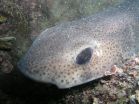
Shark populations in the Mediterranean are highly divided, an international team of scientists, led by Dr Andrew Griffiths of the University of Bristol, has shown. Many previous studies on sharks suggest they move over large distances. But catsharks in the Mediterranean Sea appear to move and migrate much less, as revealed by this study. This could have important implications for conserving and managing sharks more widely, suggesting they may be more vulnerable to over-fishing than previously thought. The study, published in the new journal Royal Society Open Science, ...
Read more →
Medicine 2014-11-12

Not all elderly Americans will surf to health

Providing health information on the internet may not be the "cure all" that it is hoped to be. It could sideline especially those Americans older than 65 years old who are not well versed in understanding health matters, and who do not use the web regularly. So says Helen Levy of the University of Michigan in the US, who led the first-ever study to show that elderly people's knowledge of health matters, so-called health literacy, also predicts how and if they use the internet. The findings¹ appear in the Journal of General Internal Medicine², published by Springer. Substantial ...
Read more →
Learning languages is a workout for brains, both young and old
Medicine 2014-11-12

Learning languages is a workout for brains, both young and old

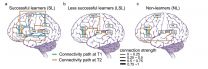
Learning a new language changes your brain network both structurally and functionally, according to Penn State researchers. "Learning and practicing something, for instance a second language, strengthens the brain," said Ping Li, professor of psychology, linguistics and information sciences and technology. "Like physical exercise, the more you use specific areas of your brain, the more it grows and gets stronger." Li and colleagues studied 39 native English speakers' brains over a six-week period as half of the participants learned Chinese vocabulary. Of the subjects ...
Read more →
Social Science 2014-11-12

Rice University program models more detailed evolutionary networks from genetic data

The tree has been an effective model of evolution for 150 years, but a Rice University computer scientist believes it's far too simple to illustrate the breadth of current knowledge. Rice researcher Luay Nakhleh and his group have developed PhyloNet, an open-source software package that accounts for horizontal as well as vertical inheritance of genetic material among genomes. His "maximum likelihood" method, detailed this month in the Proceedings of the National Academy of Sciences, allows PhyloNet to infer network models that better describe the evolution of certain ...
Read more →
Medicine 2014-11-12

Mental health providers not well prepared to care for military veterans, study finds

Most community-based mental health providers are not well prepared to take care of the special needs of military veterans and their families, according to a new study by the RAND Corporation that was commissioned by United Health Foundation in collaboration with the Military Officers Association of America. The exploratory report, based on a survey of mental health providers nationally, found few community-based providers met criteria for military cultural competency or used evidence-based approaches to treat problems commonly seen among veterans. "Our findings suggest ...
Read more →
UT Arlington team says non-genetic changes can help parents or offspring, not both
Science 2014-11-12

UT Arlington team says non-genetic changes can help parents or offspring, not both

A new study from The University of Texas at Arlington biologists examining non-genetic changes in water flea development suggests something human parents have known for years - ensuring a future generations' success often means sacrifice. Matthew Walsh, an assistant professor of biology, and his team looked at a phenomenon called "phenotypic plasticity" in the Daphnia abigua, or water flea. Phenotypic plasticity is when an organism changes its trait expressions or physical characteristics, or those of its offspring, because of external factors. In Daphnia, that can mean ...
Read more →