Medicine Technology 🌱 Environment Space Energy Physics Engineering Social Science Earth Science Science
Medicine 2014-10-01

AAO-HNSF clinical practice guideline: Tinnitus

ALEXANDRIA, VA — The American Academy of Otolaryngology—Head and Neck Surgery Foundation has released the first ever mutli-disciplinary, evidence-based clinical practice guideline to improve the diagnosis and management of tinnitus, the perception of sound—often ringing—without an external sound source. The guideline was published today in the journal Otolaryngology–Head and Neck Surgery. "Tinnitus affects 10-15% of adults in the United States. It is the most common service-related disability among our military veterans. Yet despite its prevalence and effect on quality ...
Read more →
Science 2014-10-01

Decreased ability to identify odors may predict 5-year mortality

For older adults, being unable to identify scents may be a predictor of mortality within five years, according to a study published October 1, 2014, in the journal PLOS ONE by Jayant Pinto from The University of Chicago and colleagues. The study was part of the National Social Life, Health and Aging Project (NSHAP), the first in-home study of social relationships and health in a large, nationally representative sample of men and women ages 57 to 85. Researchers first surveyed 3,000 participants in 2005-06, assessing their ability to identify five distinct common odors, ...
Read more →
Drug treats inherited form of intellectual disability in mice
Medicine 2014-10-01

Drug treats inherited form of intellectual disability in mice

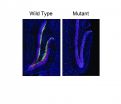
Studying mice with a genetic change similar to what is found in Kabuki syndrome, a inherited disease of humans, Johns Hopkins researchers report they have used an anticancer drug to "open up" DNA and improve mental function. Along with a potential treatment for the intellectual disability seen in Kabuki syndrome, the study's findings also suggest a new way of thinking about a category of genetic diseases known as Mendelian disorders of the epigenetic machinery, the researchers say. In these disorders, a genetic mutation causes errors in the way proteins and chemicals ...
Read more →
Science 2014-10-01

Study finds potential new target to treat asthma attacks brought on by colds

Researchers have identified a molecular mechanism that could explain why the common cold can bring on life-threatening asthma attacks. Published today in Science Translational Medicine, the findings indicate this may be a potential target for new drugs that could be more effective than existing treatments. Viruses that infect the airways are the most common cause of asthma attacks, accounting for 80-90 per cent of cases. The great majority of these are rhinoviruses, which are the predominant cause of the common cold. Although illnesses caused by rhinoviruses are ...
Read more →
Medicine 2014-10-01

Stem cell discovery could lead to better treatments for blindness

Scientists at the University of Southampton have discovered that a region on the front surface of the eye harbours special stem cells that could treat blinding eye conditions. This part of the eye is called the 'corneal limbus' and is a narrow gap lying between the transparent cornea and white sclera. The research, published in PLOS ONE, showed that stem cells can be cultured from the corneal limbus in vitro. Under the correct culture conditions, these cells could be directed to behave like the cells needed to see light - photoreceptor cells. The loss of photoreceptors ...
Read more →
Medicine 2014-10-01

Predictor of tissue injury in kidney transplant recipients found

Researchers at UC San Francisco and Rush University Medical Center, Chicago, may have found a predictor for a disorder affecting kidney transplant recipients that can accelerate organ failure, a discovery that eventually could allow for customized therapies and improved patient selection for transplant. The study of focal segmental glomerulosclerosis (FSGS), a devastating form of kidney disease, is in the Oct. 1 issue of Science Translational Medicine. Research was conducted by an international study team, with Necker Hospital in Paris and UCSF joint lead authors and ...
Read more →
Medicine 2014-10-01

Researchers find promise in new treatments for GBM

(Boston) — Glioblastma multiforme (GBM) is one of the most lethal primary brain tumors, with median survival for these patients only slightly over one year. Researchers at Boston University School of Medicine (BUSM), in collaboration with researchers from the City of Hope, are looking toward novel therapeutic strategies for the treatment of GBM in the form of targeted therapies against a unique receptor, the interleukin-13 receptor α chain variant 2 (IL13Rα2). In a review paper published in the October issue of Neuro-Oncology, the researchers discuss various ...
Read more →
Team advances understanding of the Greenland Ice Sheet's meltwater channels
Environment 2014-10-01

Team advances understanding of the Greenland Ice Sheet's meltwater channels

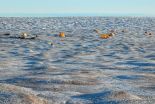
An international research team's field work, drilling and measuring melt rates and ice sheet movement in Greenland is showing that things are, in fact, more complicated than we thought. "Although the Greenland Ice Sheet initially speeds up each summer in its slow-motion race to the sea, the network of meltwater channels beneath the sheet is not necessarily forming the slushy racetrack that had been previously considered," said Matthew Hoffman, a Los Alamos National Laboratory scientist on the project. A high-profile paper appearing in Nature this week notes that observations ...
Read more →
NASA sees intensifying typhoon Phanfone heading toward Japan
Space 2014-10-01

NASA sees intensifying typhoon Phanfone heading toward Japan

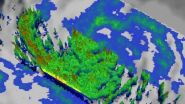
VIDEO: NASA's TRMM satellite saw Phanfone was producing rainfall over a very large area on Oct. 1. Some storms in these bands were dropping rain at a rate of over 76... Click here for more information. An intensifying typhoon called Phanfone that originated east of Guam on September 28, 2014 is headed toward southern Japan. The TRMM satellite crossed above Typhoon Phanfone on October 1, 2014 at 1039 UTC and gathered data about rainfall rates occurring in the storm. TRMM, ...
Read more →
Genetic secrets of the monarch butterfly revealed
Science 2014-10-01

Genetic secrets of the monarch butterfly revealed

The monarch butterfly is one of the most iconic insects in the world, best known for its distinct orange and black wings and a spectacular annual mass migration across North America. However, little has been known about the genes that underlie these famous traits, even as the insect's storied migration appears to be in peril. Sequencing the genomes of monarch butterflies from around the world, a team of scientists has now made surprising new insights into the monarch's genetics. They identified a single gene that appears central to migration – a behavior generally regarded ...
Read more →
Medicine 2014-10-01

Gut bacteria are protected by host during illness

To protect their gut microbes during illness, sick mice produce specialized sugars in the gut that feed their microbiota and maintain a healthy microbial balance. This protective mechanism also appears to help resist or tolerate additional harmful pathogens, and its disruption may play a role in human diseases such as Crohn's disease, report scientists from the University of Chicago in Nature on Oct 1. "Both hosts and their gut microbiota can suffer in the case of sickness, but this mutually beneficial relationship is guarded by the host," said study senior author Alexander ...
Read more →
Environment 2014-10-01

New study explains wintertime ozone pollution in Utah oil and gas fields

Chemicals released into the air by oil and gas exploration, extraction and related activities can spark reactions that lead to high levels of ozone in wintertime, high enough to exceed federal health standards, according to new NOAA-led research, published today in Nature. The study comes at a time when new technologies are helping to accelerate oil and gas development in Utah's Uintah Basin, elsewhere in the United States and in many other countries, and its findings may help air quality managers determine how to best minimize the impact of ozone pollution. When ozone ...
Read more →
Evolving plumbing system beneath Greenland slows ice sheet as summer progresses
Environment 2014-10-01

Evolving plumbing system beneath Greenland slows ice sheet as summer progresses

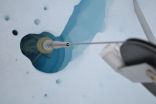
AUSTIN, Texas—A team led by scientists at the University of Texas at Austin's Institute for Geophysics has for the first time directly observed multiple parts of Greenland's subglacial plumbing system and how that system evolves each summer to slow down the ice sheet's movement toward the sea. These new observations could be important in accurately modeling Greenland's future response to climate change. "Everyone wants to know what's happening under Greenland as it experiences more and more melt," said study coauthor Ginny Catania, a research scientist at the institute ...
Read more →
Science 2014-10-01

Winter is coming ... to Titan's south pole

Titan is unique in our solar system because of its dense nitrogen-methane atmosphere, which is very similar to Earth's in some ways, but very different in others. For example, air temperatures are around 200 degrees colder and, in contrast to the warm salt water seas of Earth, frigid hydrocarbon lakes populate Titan's surface. Titan has seasons just like Earth, only each season lasts over seven years instead of three months due to its ponderous orbit around the Sun. After equinox in 2009, Titan's south pole entered the perpetual darkness of polar winter. Soon after, ...
Read more →
Space 2014-10-01

Solving the mystery of the 'man in the moon'

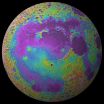
New data obtained by NASA's GRAIL mission reveals that the Procellarum region on the near side of the moon — a giant basin often referred to as the "man in the moon" — likely arose not from a massive asteroid strike, but from a large plume of magma deep within the moon's interior. The Procellarum region is a roughly circular, volcanic terrain some 1,800 miles in diameter — nearly as wide as the United States. One hypothesis suggested that it was formed by a massive impact, in which case it would have been the largest impact basin on the moon. Subsequent asteroid collisions ...
Read more →
Origin of moon's 'ocean of storms' revealed
Environment 2014-10-01

Origin of moon's 'ocean of storms' revealed

PROVIDENCE, R.I. [Brown University] — Oceanus Procellarum, a vast dark patch visible on the western edge of the Moon's near side, has long been a source of mystery for planetary scientists. Some have suggested that the "ocean of storms" is part of a giant basin formed by an asteroid impact early in the Moon's history. But new research published today in Nature deals a pretty big blow to the impact theory. The new study, based on data from NASA's GRAIL mission, found a series of linear gravitational anomalies forming a giant rectangle, nearly 1,600 miles across, running ...
Read more →
Medicine 2014-10-01

Researchers develop novel gene/cell therapy approach for lung disease

CINCINNATI – Researchers developed a new type of cell transplantation to treat mice mimicking a rare lung disease that one day could be used to treat this and other human lung diseases caused by dysfunctional immune cells. Scientists at Cincinnati Children's Hospital Medical Center report their findings in a study posted online Oct. 1 by Nature. In the study, the authors used macrophages, a type of immune cell that helps collect and remove used molecules and cell debris from the body. They transplanted either normal or gene-corrected macrophages into the respiratory ...
Read more →
Science 2014-10-01

New frontier in error-correcting codes

CAMBRIDGE, Mass--Error-correcting codes are one of the glories of the information age: They're what guarantee the flawless transmission of digital information over the airwaves or through copper wire, even in the presence of the corrupting influences that engineers call "noise." But classical error-correcting codes work best with large chunks of data: The bigger the chunk, the higher the rate at which it can be transmitted error-free. In the Internet age, however, distributed computing is becoming more and more common, with devices repeatedly exchanging small chunks of ...
Read more →
Coral reef winners and losers
Environment 2014-10-01

Coral reef winners and losers

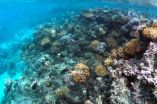
Contrary to the popular research-based assumption that the world's coral reefs are doomed, a new longitudinal study from UC Santa Barbara's National Center for Ecological Analysis and Synthesis (NCEAS) paints a brighter picture of how corals may fare in the future. An NCEAS working group reports that there will be winners and losers among coral species facing increasing natural and human-caused stressors. However, its experts demonstrate that a subset of the present coral fauna will likely populate the world's oceans as water temperatures continue to rise. The findings ...
Read more →
Science 2014-10-01

Proving 'group selection'

PITTSBURGH—The notion of "group selection"—that members of social species exhibit individual behavioral traits that render a population more or less fit for survival—has been bandied about in evolutionary biology since Darwin. The essence of the argument against the theory is that it's a "fuzzy" concept without the precision of gene-based selection. Jonathan Pruitt, assistant professor of behavioral ecology in the University of Pittsburgh's Department of Biological Sciences within the Kenneth P. Dietrich School of Arts and Sciences, has published a paper today in the ...
Read more →
New study provides key to identifying spiders in international cargo
Medicine 2014-10-01

New study provides key to identifying spiders in international cargo

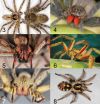
Spiders found in international cargo brought into North America are sometimes submitted to arachnologists for identification. Often, these spiders are presumed to be of medical importance because of their size or similarity to spiders that are known to be venomous. In 2006, after witnessing multiple episodes where harmless spiders were mistaken for toxic ones, Dr. Richard Vetter, an arachnologist at the University of California, asked other arachnologists to provide data on specimens they found in international cargo that had been submitted to them for identification. ...
Read more →
Technology 2014-10-01

Scientists aim to give botox a safer facelift

New insights into botulinum neurotoxins and their interactions with cells are moving scientists ever closer to safer forms of Botox and a better understanding of the dangerous disease known as botulism. By comparing all known structures of botulinum neurotoxins, researchers writing in the Cell Press journal Trends in Biochemical Sciences on October 1st suggest new ways to improve the safety and efficacy of Botox injections. "If we know from high-resolution structures how botulinum neurotoxins interact with their receptors, we can design inhibitors or specific antibodies ...
Read more →
Medicine 2014-10-01

Journal supplement examines innovative strategies for healthy aging

WASHINGTON— The Society for Public Health Education (SOPHE) proudly announces the publication of a Health Education & Behavior (HE&B) supplement devoted to the latest research and practice to promote healthy aging. The October 2014 supplement, "Fostering Engagement and Independence: Opportunities and Challenges for an Aging Society," contains a dozen peer-reviewed articles on innovative behavioral and psycho-social approaches to improve the health of the nation's fastest growing cohort - older adults. Together the articles describe promising advances in research directed ...
Read more →
Hide and seek: Sterile neutrinos remain elusive
Science 2014-10-01

Hide and seek: Sterile neutrinos remain elusive

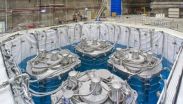
BEIJING; BERKELEY, CA; and UPTON, NY - The Daya Bay Collaboration, an international group of scientists studying the subtle transformations of subatomic particles called neutrinos, is publishing its first results on the search for a so-called sterile neutrino, a possible new type of neutrino beyond the three known neutrino "flavors," or types. The existence of this elusive particle, if proven, would have a profound impact on our understanding of the universe, and could impact the design of future neutrino experiments. The new results, appearing in the journal Physical Review ...
Read more →
New approach can predict impact of climate change on species that can't get out of the way
Environment 2014-10-01

New approach can predict impact of climate change on species that can't get out of the way

CUMBERLAND, MD (October 1, 2014)--When scientists talk about the consequences of climate change, it can mean more than how we human beings will be impacted by higher temperatures, rising seas and serious storms. Plants and trees are also feeling the change, but they can't move out of the way. Researchers at the University of Maryland Center for Environmental Science and University of Vermont have developed a new tool to overcome a major challenge of predicting how organisms may respond to climate change. "When climate changes, organisms have three choices: migrate, adapt, ...
Read more →