Medicine Technology 🌱 Environment Space Energy Physics Engineering Social Science Earth Science Science
Medicine 2014-10-06

Oxycodone may be more dangerous than other addictive pain medication

While all prescription opioids can be abused, oxycodone may be more potent in its ability to promote changes in the brain relevant to addiction. A new study in the European Journal of Neuroscience revealed greater increases of dopamine in the brain following the delivery of oxycodone compared with morphine. The release of dopamine, a chemical messenger between neurons, is consistently tied with reward and motivation. The study's investigators say that it is essential to understand how drugs differentially alter brain chemistry if we hope to understand addiction and ...
Read more →
Environment 2014-10-06

China's economic boom thwarts its carbon emissions goals

Efforts to reduce China's carbon dioxide emissions are being offset by the country's rampant economic growth, according to new research from the University of East Anglia (UEA). Research published today in Nature Climate Change reveals how carbon efficiency has improved in nearly all Chinese provinces. But the country's economic boom has simultaneously led to a growth in CO2-emitting activities such as mining, metal smelting and coal-fired electricity generation – negating any gains. According to the study, China, the world's largest producer of CO2 emissions, increased ...
Read more →
Medicine 2014-10-06

Think and act alobally: Health Affairs' September issue

This issue was supported by the Qatar Foundation and World Innovation Summit for Health (WISH), Hamad Medical Corporation, Imperial College London, and The Commonwealth Fund. How is accountable care taking shape internationally? Mark McClellan of the Brookings Institution and coauthors seek to offer a global description of an accountable care system and a mechanism to assess related reforms. They suggest five components for a framework applicable internationally: population, outcomes, metrics and learning, payments and incentives, and coordinated delivery. They also ...
Read more →
Science 2014-10-06

Lizards in the Caribbean -- How geography influences animal evolution

A new and potentially more revealing way of studying how animal evolution is affected by the geography of climate has been designed by researchers at The University of Nottingham and Harvard University. The research, published in the prestigious journal, The American Naturalist, uses a new approach to investigate how animals across (interspecific) and within (intraspecific) species change in size along temperature gradients, shedding light on a 150-year-old evolutionary puzzle. Bergmann's rule — the tendency for warm-blooded animal body size to increase in colder environments ...
Read more →
Invading crabs could threaten life in the Antarctic
Environment 2014-10-06

Invading crabs could threaten life in the Antarctic

Life on the Antarctic sea floor is under threat from crabs that could invade the area thanks to favorable conditions as a result of global warming, researchers warn. In a Journal of Biogeography editorial, experts say invasive species degrade marine ecosystems by preying on or outcompeting local species. Early signs of biological invasion are already apparent. "Biological invasion is a major worry in the Arctic," said lead author Dr. Richard Aronson, "but we should be just as concerned about the Antarctic." Assessing the extent of the problem requires long-term monitoring ...
Read more →
Environment 2014-10-06

Livermore scientists suggest Southern Hemisphere ocean warming underestimated

LIVERMORE, California -- Using satellite observations and a large suite of climate models, Lawrence Livermore scientists have found that long-term ocean warming in the upper 700 meters has likely been underestimated. "This underestimation is a result of poor sampling prior to the last decade and limitations of the analysis methods that conservatively estimated temperature changes in data-sparse regions," said LLNL oceanographer Paul Durack, lead author of a paper appearing in the October 5th issue of the journal Nature Climate Change. Ocean heat storage is important ...
Read more →
Same-sex marriages and heterosexual marriages show similar longevity
Science 2014-10-06

Same-sex marriages and heterosexual marriages show similar longevity

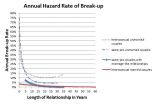
Among couples with marriage-like commitments, same-sex couples have a similar break-up rate as heterosexual couples, according to a recent study. The study also found that same-sex couples with a marriage-like commitment have stable unions regardless of government recognition. The findings come from a nationally representative survey of 3,009 couples (471 same-sex) who were followed between 2009 and 2013. "The marriage commitment is associated with a strong benefit in couple stability for both heterosexual couples and same-sex couples," said Dr. Michael J. Rosenfeld, ...
Read more →
Science 2014-10-06

There's no such thing as a vaginal orgasm, review finds

G-spot, vaginal, or clitoral orgasms are all incorrect terms, experts say. In a recent Clinical Anatomy review, they argue that like 'male orgasm', 'female orgasm' is the correct term. The authors note that the majority of women worldwide do not have orgasms during intercourse: as a matter of fact, female sexual dysfunctions are popular because they are based on something that does not exist, i.e. the vaginal orgasm. The key to female orgasm is the female penis—the clitoris, vestibular bulbs and pars intermedia, labia minora, and corpus spongiosum of the female urethra. ...
Read more →
Science 2014-10-06

Children understand familiar voices better than those of strangers

Familiar voices can improve spoken language processing among school-age children, according to a study by NYU's Steinhardt School of Culture, Education, and Human Development. However, the advantage of hearing a familiar voice only helps children to process and understand words they already know well, not new words that aren't in their vocabularies. The findings, which were published online in August in the Journal of Child Language, suggest that children store information about a speaker to retrieve and harness at a later time, similar to what has been found for adult ...
Read more →
Social Science 2014-10-06

School connectedness can help bullied gay and bisexual youth

In a study of 951 lesbian, gay, and bisexual youth, those experiencing both cyber and school bullying were most likely to engage in aggressive and suicidal behaviors. However, bullied youth who felt connected to an adult at school were not more likely to report such behaviors. "In recent years, clubs such as Gay-Straight Alliances have played an integral role in creating safer environments in schools. These efforts are often student-led with the guidance of only a handful of adult advisors; however, our study highlights just how important adults are in buffering sexual ...
Read more →
Medicine 2014-10-06

Stigma can hinder access to health care for the poor

In a study of 574 low-income adults, many felt stigmatized when receiving medical care. This stigma was most often the result of interactions with clinicians that felt demeaning, rather than an internalized sense of shame related to receiving public insurance or charity care. Experiencing stigma was associated with unmet health needs, poorer perceptions of quality of care, and worse self-reported health. "Feeling judged by providers was associated with higher reports of unmet physical and mental health needs and declining health, even though people who reported stigma ...
Read more →
Science 2014-10-06

Observing the Birkeland currents

When the supersonic solar wind hits the Earth's magnetic field, a powerful electrical connection occurs with Earth's field, generating millions of amperes of current that drive the dazzling auroras. These so-called Birkeland currents connect the ionosphere to the magnetosphere and channel solar wind energy to Earth's uppermost atmosphere. Solar storms release torrential blasts of solar wind that cause much stronger currents and can overload power grids and disrupt communications and navigation. Now for the first time, scientists are making continuous, global measurements ...
Read more →
Science 2014-10-06

Through the combining glass

Trying on clothes when a shop is closed could become a reality thanks to new research that uses semi-transparent mirrors in interactive systems and which will be unveiled at an international conference tomorrow [Tuesday 7 October]. The research paper, to be presented at one of the world's most important conferences on human-computer interfaces - ACM UIST 2014 [5-8 October], could change the way people interact and collaborate in public spaces, such as museums and shop windows. The research, led by Professor Sriram Subramanian, Dr Diego Martinez Plasencia and Florent ...
Read more →
Science 2014-10-06

Study: Workplace diversity can help the bottom line

Gender diversity in the workplace helps firms be more productive, according to a new study co-authored by an MIT researcher — but it may also reduce satisfaction among employees. "Having a more diverse set of employees means you have a more diverse set of skills," says Sara Ellison, an MIT economist, which "could result in an office that functions better." At the same time, individual employees may prefer less diverse settings. The study, analyzing a large white-collar U.S. firm, examined how much "social capital" offices build up in the form of things like cooperation, ...
Read more →
Science 2014-10-06

New imaging technique could detect acoustically 'invisible' cracks

The next generation of aircraft could be thinner and lighter thanks to the development of a new imaging technique that could detect damage previously invisible to acoustic imaging systems. The nonlinear acoustic technique developed by researchers from the University of Bristol's Ultrasonics and Non-destructive Testing (NDT) research group is published in the current issue of Physical Review Letters together with an accompanying article in Physics. It has long been understood that acoustic nonlinearity is sensitive to many physical properties including material microstructure ...
Read more →
Medicine 2014-10-06

A novel roadmap through bacterial genomes leads the way to new drug discovery

For millennia, bacteria and other microbes have engaged in intense battles of chemical warfare, attempting to edge each other out of comfortable ecological niches. Doctors fight pathogens with an arsenal of weapons—antibiotics—co-opted from these microbial wars, but their efforts are frustrated by the development of drug resistance that outpaces drug discovery. Researchers at the University of Illinois at Urbana-Champaign and Northwestern University have now innovated and demonstrated the value of an algorithm to analyze microbial genomic data and speed discovery of new ...
Read more →
Improvements in fuel cell design
Medicine 2014-10-06

Improvements in fuel cell design

This news release is available in Spanish. Fuel cells are totally appropriate systems for substituting the batteries of mobile phones, laptop computers and vehicles. They turn the energy resulting from the combining of hydrogen and oxygen into electrical power, with water vapour being the only waste product. In other words, they generate energy in the same way that batteries do, but they do not contaminate. However, if these fuel cells are to produce energy, they need an external supply of hydrogen, and right now storing hydrogen safely poses difficulties. That ...
Read more →
Social Science 2014-10-06

Mother's behavior has strong effect on cocaine-exposed children

BUFFALO, N.Y. – It is not only prenatal drug exposure, but also conditions related to drug use that can influence negative behavior in children, according to a new study from the University at Buffalo's Research Institute on Addictions. In examining the long-term effects of cocaine use during pregnancy in a sample of low-income, cocaine-exposed and non-exposed families, researchers found that a mother's harshness toward her child during mother-child interactions at 2 years of age is one of the strongest predictors of problem behaviors in kindergarten, such as fighting, ...
Read more →
Are Montana's invasive fish in for a shock?
Science 2014-10-06

Are Montana's invasive fish in for a shock?

A new paper from the Wildlife Conservation Society, Montana State University, Montana Department of Fish, Wildlife and Parks, and the U.S. Geological Survey looks at the feasibility of electrofishing to selectively remove invasive trout species from Montana streams as an alternative to using fish toxicants known as piscicides that effect all gill-breathing organisms. Westslope Cutthroat Trout (WCT) have experienced severe declines throughout much of their historical range. One major reason for this decline is the current competitive advantages enjoyed by non-native Brook ...
Read more →
Social Science 2014-10-06

Controlling Ebola in communities is critical factor in containing outbreaks

Reducing community transmission and changing behaviour in communities is key to containing Ebola outbreaks, according to new research into the first known outbreak of the virus in 1976 by researchers at the London School of Hygiene & Tropical Medicine and Fogarty International Center at the National Institutes of Health. The study authors include Professor Peter Piot and Dr Joel Breman, who travelled to Zaire (now the Democratic Republic of Congo), to investigate the first outbreak in 1976. The study, published in Epidemics, also found that if the people in the affected ...
Read more →
Medicine 2014-10-06

Study of identical twins reveals type 2 diabetes clues

By studying identical twins, researchers from Lund University in Sweden have identified mechanisms that could be behind the development of type 2 diabetes. This may explain cases where one identical twin develops type 2 diabetes while the other remains healthy. The study involved 14 pairs of identical twins in Sweden and Denmark. One twin had type 2 diabetes and the other was healthy. "Twins are a good model for finding mechanisms, but the results are applicable to all", said Emma Nilsson, who carried out the study with Charlotte Ling. We know that fat tissue can ...
Read more →
Medicine 2014-10-06

Link between breast implants and cancer under investigation

Worldwide there have been 71 documented cases of patients with anaplastic large cell lymphoma (ALCL) in which researchers suspected breast implants to be the cause. ALCL is normally found in the lymph nodes, as well as in skin, lung, liver and soft tissue, but not usually in the breast. Cases in which ALCL developed in the breast region almost exclusively involved patients who have had breast surgery. In these cases, ALCL developed around ten years after the operation. The tumours grew in the scar tissue around the implant. Breast implants are generally safe and studies ...
Read more →
Physics 2014-10-06

Atmospheric chemistry hinges on better physics model

New theoretical physics models could help us better grasp the atmospheric chemistry of ozone depletion. Indeed, understanding photoabsorption of nitrous oxide (N2O) — a process which involves the transfer of the energy of a photon to the molecule — matters because a small fraction of N2O reacts with oxygen atoms in the stratosphere to produce among others nitric oxide (NO). The latter participates in the catalytic destruction of ozone (O3). Now, new theoretical work unveils the actual dynamic of the photoabsorption of nitrous oxide molecules. These findings by Mohammad ...
Read more →
Basel scientists are bringing cells on the fast track
Medicine 2014-10-06

Basel scientists are bringing cells on the fast track

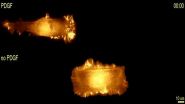
VIDEO: The cell stimulated with the growth factor PDGF (upper cell) migrates targeted in only one direction on its track, while the not stimulated cell (lower cell) changes its direction of... Click here for more information. During cancer metastasis, immune response or the development of organisms, cells are moving in a controlled manner through the body. Researchers from the Department of Biomedicine at the University of Basel discovered novel mechanisms of cell migration by ...
Read more →
Medicine 2014-10-06

Liquid DNA behind virus attacks

Viruses can convert their DNA from solid to fluid form, which explains how viruses manage to eject DNA into the cells of their victims. This has been shown in two new studies carried out by Lund University in Sweden. Both research studies are about the same discovery made for two different viruses, namely that viruses can convert their DNA to liquid form at the moment of infection. Thanks to this conversion, the virus can more easily transfer its DNA into the cells of its victim, which thus become infected. One of the studies investigated the herpes virus, which infects ...
Read more →