Medicine Technology 🌱 Environment Space Energy Physics Engineering Social Science Earth Science Science
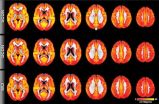
MRI technique detects evidence of cognitive decline before symptoms appear
Medicine 2014-10-07

MRI technique detects evidence of cognitive decline before symptoms appear

OAK BROOK, Ill. – A magnetic resonance imaging (MRI) technique can detect signs of cognitive decline in the brain even before symptoms appear, according to a new study published online in the journal Radiology. The technique has the potential to serve as a biomarker in very early diagnosis of preclinical dementia. The World Health Organization estimates that dementia affects more than 35 million people worldwide, a number expected to more than double by 2030. Problems in the brain related to dementia, such as reduced blood flow, might be present for years but are ...
Read more →
Medicine 2014-10-07

Rural hospitals replicate experiences of big city stroke care

A new model for stroke care is being studied in rural Alberta to reduce inequities in health across communities. This model, presented at the Canadian Stroke Congress, shows how hospitals in rural areas can mimic the type of care that's often only available in larger centres. In geographically diverse Canada, stroke care can seem like tale of two cities – or more like a city and a small town. The ideal is stroke unit care, where a multidisciplinary staff of doctors, nurses and therapists collaborate on treatment and the road to recovery. In Alberta, that type of ...
Read more →
Medicine 2014-10-07

Stroke patients past the 90-day danger period remain at high risk for repeat event

People who have had a stroke or transient ischemic attack (TIA or mini-stroke) are at high risk for a second similar event or other serious medical problems for at least five years and need better follow up and strategies to prevent these problems, according to data presented at the Canadian Stroke Congress. At present, most stroke or TIA patients in Canada are followed closely by specialty clinics for about 90 days after an event, during the period they are considered at highest risk for a repeat event. If no such incident occurs during that period, they are often transferred ...
Read more →
Technology 2014-10-07

Probiotics protect children and pregnant women against heavy metal poisoning

WASHINGTON, DC – October 7, 2014 -- Yogurt containing probiotic bacteria successfully protected children and pregnant women against heavy metal exposure in a recent study. Working with funding from the Bill and Melinda Gates Foundation, Canadian and Tanzanian researchers created and distributed a special yogurt containing Lactobacillus rhamnosus bacteria and observed the outcomes against a control group. The work is published this week in mBio, the online open-access journal of the American Society for Microbiology. A research team from the Canadian Centre for Human ...
Read more →
Medicine 2014-10-06

New vaccines targeting adults and teens are best chance to eliminate TB by 2050

Targets to eliminate tuberculosis (TB) by 2050 are more likely to be met if new vaccines are developed for adults and adolescents instead of for infants, according to new research published in the journal Proceedings of the National Academy of Sciences. Researchers at the London School of Hygiene & Tropical Medicine and the Stop TB Department at the World Health Organization found that a vaccine given to adolescents and adults in low- and middle-income countries could have a much larger impact on the burden of TB worldwide and is more likely to be cost-effective, even ...
Read more →
Medicine 2014-10-06

Vesicles influence the function of nerve cells

Tiny vesicles containing protective substances which they transmit to nerve cells apparently play an important role in the functioning of neurons. As cell biologists at Johannes Gutenberg University Mainz (JGU) have discovered, nerve cells can enlist the aid of mini-vesicles of neighboring glial cells to defend themselves against stress and other potentially detrimental factors. These vesicles, called exosomes, appear to stimulate the neurons on various levels: they influence electrical stimulus conduction, biochemical signal transfer, and gene regulation. Exosomes are ...
Read more →
Is internet-based diabetes self-management education beneficial?
Medicine 2014-10-06

Is internet-based diabetes self-management education beneficial?

New Rochelle, NY, October 6, 2014—Self-management of diabetes, including medication, nutrition, and lifestyle strategies, is essential for optimal glycemic control and minimizing complications of the disease. Education to teach and improve self-management skills is critical for success and, when delivered via the Internet, can lead to better glycemic control and enhanced diabetes knowledge compared to usual care, according to a Review article in Diabetes Technology & Therapeutics (DTT), a peer-reviewed journal from Mary Ann Liebert, Inc., publishers. The article is ...
Read more →
Sex differences in distance running participation disappears, according to GVSU research
Science 2014-10-06

Sex differences in distance running participation disappears, according to GVSU research

ALLENDALE, Mich. — Even among contemporary U.S. distance runners, men are still much more likely than women to have a competitive orientation, according to researchers at Grand Valley State University in Allendale, Michigan. The findings were published in the online journal, Evolutionary Psychology at http://www.epjournal.net/articles/u-s-masters-track-participation-reveals-a-stable-sex-difference-in-competitiveness/ The new research, led by Robert Deaner, associate professor of psychology at Grand Valley State, shows that, on average, American men participate at ...
Read more →
Medicine 2014-10-06

High-sugar diet no problem for genetic mutants

Imagine being able to take a pill that lets you eat all of the ice cream, cookies, and cakes that you wanted – without gaining any weight. New research from USC suggests that dream may not be impossible. A team of scientists led by Sean Curran of the USC Davis School of Gerontology and the Keck School of Medicine of USC found a new way to suppress the obesity that accompanies a high-sugar diet, pinning it down to a key gene that pharmaceutical companies have already developed drugs to target. So far, Curran's work has been solely on the worm Caenorhabditis elegans ...
Read more →
Does emotional stability affect the success of online poker players?
Science 2014-10-06

Does emotional stability affect the success of online poker players?

New Rochelle, NY, October 6, 2014—While poker is a game of chance, there is skill and decision-making involved, and the quality of those decisions depends on both knowledge of the game and the ability to control one's emotions. The results of a new study that evaluates emotionality, experience level, and success among online poker players are presented in Cyberpsychology, Behavior, and Social Networking, a peer-reviewed journal from Mary Ann Liebert, Inc., publishers. The article is available free on the Cyberpsychology, Behavior, and Social Networking website until ...
Read more →
Science 2014-10-06

Study: 'Broad consensus' that violent media increase child aggression

COLUMBUS, Ohio – Majorities of media researchers, parents and pediatricians agree that exposure to violent media can increase aggression in children, according to a new national study. The study found that 66 percent of researchers, 67 percent of parents and 90 percent of pediatricians agree or strongly agree that violent video games can increase aggressive behavior among children. Majorities of these groups also believed that children's aggressive behavior can be fueled by viewing violent video games, movies, TV programs, and Internet sites. However, fewer than ...
Read more →
A quick look at electron-boson coupling
Physics 2014-10-06

A quick look at electron-boson coupling

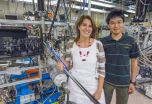
Imagine being able to tune the properties of a solid material just by flashing pulses of light on it, for example turning an insulator into a superconductor. That is just one potential payoff down-the-road from the physical phenomenon of electrons and atoms interacting with ultrashort pulses of light. The technology of ultrafast spectroscopy is a key to understanding this phenomenon and now a new wrinkle to that technology has been introduced by Berkeley Lab researchers. In a study led by Alessandra Lanzara of Berkeley Lab's Materials Sciences Division, time- and angle-resolved ...
Read more →
Medicine 2014-10-06

How rabies 'hijacks' neurons to attack the brain

Rabies causes acute inflammation of the brain, producing psychosis and violent aggression. The virus, which paralyzes the body's internal organs, is always deadly for those unable to obtain vaccines in time. Some 55,000 people die from rabies every year. For the first time, Tel Aviv University scientists have discovered the exact mechanism this killer virus uses to efficiently enter the central nervous system, where it erupts in a toxic explosion of symptoms. The study, published in PLOS Pathogens, was conducted by Dr. Eran Perlson and Shani Gluska of TAU's Sackler Faculty ...
Read more →
Medicine 2014-10-06

Penn Medicine study finds tongue fat and size may predict sleep apnea in obese adults

Obesity is a risk factor for many health problems, but a new Penn Medicine study published this month in the journal Sleep suggests having a larger tongue with increased levels of fat may be a sign of obstructive sleep apnea (OSA) in obese adults. The researchers examined tongue fat in 31 obese adults who had OSA and 90 obese adults without the condition. All subjects underwent magnetic resonance imaging and the size and distribution of upper airway fat deposits in their tongue and upper airway muscles measured. "Previous studies showed that the human tongue has a high ...
Read more →
UT Arlington researchers demonstrate direct fluid flow influences neuron growth
Medicine 2014-10-06

UT Arlington researchers demonstrate direct fluid flow influences neuron growth

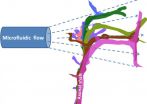
A University of Texas at Arlington team exploring how neuron growth can be controlled in the lab and, possibly, in the human body has published a new paper in Nature Scientific Reports on how fluid flow could play a significant role. In a new study co-authored by Samarendra Mohanty, leader of the Biophysics and Physiology Lab in the College of Science, the researchers were able to use microfluidic stimulations to change the path of an axon at an angle of up to 90 degrees. Axons are the shafts of neurons, on the tips of which connections are made with other neurons or cells. ...
Read more →
Science 2014-10-06

Are leaders born or made? New study shows how leadership develops

URBANA, Ill. – Hardly a day passes without pundits crying for leadership in the NFL commissioner and team owners, among high-ranking government officials, and in other public figures. If University of Illinois experts didn't have evidence that this valuable trait can be taught, they might join the collective swoon that's engulfing much of the country. But a new U of I study supports the idea that leaders are made, not born, and that leadership development follows a specific progression. Past research suggests that leadership is 30 percent genetic and 70 percent a result ...
Read more →
Natural gene selection can produce orange corn rich in provitamin A for Africa, US
Science 2014-10-06

Natural gene selection can produce orange corn rich in provitamin A for Africa, US

WEST LAFAYETTE, Ind. - Purdue researchers have identified a set of genes that can be used to naturally boost the provitamin A content of corn kernels, a finding that could help combat vitamin A deficiency in developing countries and macular degeneration in the elderly. Professor of agronomy Torbert Rocheford and fellow researchers found gene variations that can be selected to change nutritionally poor white corn into biofortified orange corn with high levels of provitamin A carotenoids - substances that the human body can convert into vitamin A. Vitamin A plays key roles ...
Read more →
Science 2014-10-06

Montefiore & Einstein investigators present research at 2014 AAP National Conference & Exhibition

NEW YORK (October 6, 2014) – Investigators at The Children's Hospital at Montefiore (CHAM) and Albert Einstein College of Medicine of Yeshiva University will present their latest research on neonatal lung disease, reducing wrong-patient errors in the NICU, hormonal contraception and more at the AAP Experience, the National Conference & Exhibition of the American Academy of Pediatrics. The AAP Experience will take place October 11-14 in San Diego, California. Judy Aschner, M.D., F.A.A.P., physician-in-chief, CHAM, professor of pediatrics and Michael I. Cohen, M.D., University ...
Read more →
Science 2014-10-06

Less than half of Canadians exercise to relieve stress

Hamilton, ON (October 6, 2014) – A research study out of McMaster University has found that only 40 per cent of Canadians exercise to cope with stress. The researchers analyzed data from Statistics Canada's Canadian Community Health Survey of nearly 40,000 Canadians 15 and older. Of 13 coping behaviours or strategies polled, exercise was ranked eighth, meaning people were more likely to cope with stress by problem-solving; looking on the bright side, trying to relax, talking to others, blaming oneself, ignoring stress or praying, rather than being active. "We know ...
Read more →
New theorem determines the age distribution of populations from fruit flies to humans
Science 2014-10-06

New theorem determines the age distribution of populations from fruit flies to humans

AUGUSTA, Ga. - The initial motivation was to estimate the age structure of a fruit fly population, the result a fundamental theorem that can help determine the age distribution of essentially any group. This emerging theorem on stationary populations shows that you can determine the age distribution of a population by looking at how long they still have to live. The mathematical discovery can help produce data with a wide range of implications, from predicting rates of infectious diseases, such as West Nile virus spread by mosquitoes, to anticipating the health care ...
Read more →
The skin cancer selfie
Medicine 2014-10-06

The skin cancer selfie

WASHINGTON, Oct. 6, 2014— Melanoma is the fifth most common cancer type in the United States, and it's also the deadliest form of skin cancer, causing more than 75 percent of skin-cancer deaths. If caught early enough though, it is almost always curable. Now a camera, capable of taking snapshots of the entire human body and rendering high-resolution images of a patient's skin may help doctors spot cancer early and save lives. Developed by a team of researchers at Duke University in North Carolina, USA, the "gigapixel whole-body photographic camera" is essentially three ...
Read more →
Medicine 2014-10-06

Most liver cancer patients do not receive proper care

Many US patients with liver cancer—even those with early stage disease that can often be cured—do not receive treatment for their disease, according to an analysis of studies published between 1989 and 2013. Less than one fourth of patients undergo curative treatment, and nearly 50% do not receive any treatment. Elderly, non-Caucasians and patients of low socioeconomic status had lower treatment rates than their counterparts. "We found the low treatment rates among patients with early stage tumors particularly concerning. Many of these patients currently fail to receive ...
Read more →
Medicine 2014-10-06

Blood levels of Vitamin D may affect liver cancer prognosis

Vitamin D deficiency is linked with advanced stages of liver cancer and may be an indicator of a poor prognosis, according to a study of 200 patients with the disease who were followed for an average of 46 weeks. Blood levels of vitamin D negatively correlated with stages of the disease, and patients with severe vitamin D deficiency had more than a 2-fold increased risk of dying during the study, according to Dr. Oliver Waidmann, senior author of the Alimentary Pharmacology and Therapeutics study. INFORMATION: ...
Read more →
Drug-loaded beads may help treat liver cancer
Medicine 2014-10-06

Drug-loaded beads may help treat liver cancer

A new phase 1 safety trial has demonstrated that idarubicin-loaded beads are well tolerated by patients but are toxic to liver cancer cells. Idarubicin is an anthracycline that is currently used to treat leukemias. Two months into the 21-patient trial, the tumors of 28% of patients had complete responses to the drug, and the tumors of 24% of patients had a partial response. The findings are published in Alimentary Pharmacology and Therapeutics. INFORMATION: ...
Read more →
Medicine 2014-10-06

Eating white meat and fish may lower risk of liver cancer

Eating lots of white meat (such as poultry) or fish may reduce the risk of developing liver cancer by 31% and 22%, respectively, according to a recent analysis of studies published between 1956 and 2013. Consuming red meat, processed meat, or total meat was not associated with liver cancer risk. The Alimentary Pharmacology and Therapeutics findings suggest that dietary interventions may be a promising approach for preventing liver cancer. INFORMATION: ...
Read more →