Medicine Technology 🌱 Environment Space Energy Physics Engineering Social Science Earth Science Science
Medicine 2014-10-02

Diet affects mix of intestinal bacteria and the risk of inflammatory bone disease

(MEMPHIS, Tenn. – October 2, 2014) Diet-induced changes in the gut's bacterial ecosystem can alter susceptibility to an autoinflammatory bone disease by modifying the immune response, St. Jude Children's Research Hospital scientists reported. The findings appeared September 28 as an advanced online publication of the scientific journal Nature. The research provides insight into how the thousands of bacteria and other microorganisms that live in the intestines affect health. The microbes make up the intestinal microbiome, a diverse evolving ecosystem that aids digestion ...
Read more →
In a bad mood? Head to Facebook and find someone worse off
Science 2014-10-02

In a bad mood? Head to Facebook and find someone worse off

COLUMBUS, Ohio – When people are in a bad mood, they are more likely to actively search social networking sites like Facebook to find friends who are doing even worse than they are, a new study suggests. Researchers found that, in general, people use social media to connect with people who are posting positive and success-oriented updates. "But when people are in a negative mood, they start to show more interest in the less attractive, less successful people on their social media sites," said Silvia Knobloch-Westerwick, co-author of the study and professor of communication ...
Read more →
Science 2014-10-02

To help solve slums, innovators build jobs, food security into affordable housing blueprints

Building on the poverty relief success achieved through self-sustaining high-tech "smart villages," Malaysian innovators have created blueprints for an urban counterpart that combines affordable homes, food security and sustainable jobs, aiming to solve the growing global problem of squalid city slums. Like the 50-acre smart village sites, the 5-acre urban version provides affordable accommodation with educational and community facilities and incorporates innovative employment opportunities and food security through aquaculture and state-of-the-art water-efficient greenhouse-based ...
Read more →
On the scent of a wine's bouquet
Science 2014-10-02

On the scent of a wine's bouquet

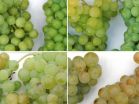
The majority of wines are produced from around 20 different types of grape, all of which have their own typical aroma. This is due to the terpenes, a diverse category of chemical substances including cholesterol and estrogen. Scientists from Technische Universität München (TUM), the Hochschule Geisenheim and the Universität Bonn have now identified two enzymes that determine the terpene content – and thus the aroma intensity – of grapes. The findings could play an important role in the future development of grape varieties. From Chardonnay to Sauvignon, Dornfelder to ...
Read more →
Science 2014-10-02

Parent coaching early intervention program benefits young children with autism

October 2, 2014 – A parent coaching intervention brings meaningful benefits for preschool-aged children with autism-spectrum disorders (ASD), according to a clinical trial in the October Journal of Developmental & Behavioral Pediatrics, the official journal of the Society for Developmental and Behavioral Pediatrics. The journal is published by Lippincott Williams & Wilkins, a part of Wolters Kluwer Health. The "Play and Language for Autistic Youngsters" (PLAY) Project approach yields improved parent-child interactions, along with other benefits for children with ASD ...
Read more →
The fat suit study
Science 2014-10-02

The fat suit study

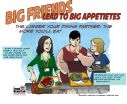
Have you ever ordered more food at a restaurant than you intended? There are elements of dining rooms that actually prime you to eat more food. One such element is the weight of those dining with or near you. This new Cornell University study found that the body type of your dining partner, or that of those dining nearby, may actually influence how much you serve yourself and how much you eat! The study investigated the impact the presence of an overweight diner on healthy and unhealthy food choices and found you are more likely to serve and eat more unhealthy foods ...
Read more →
New study finds link between depression and abnormal brain response to visceral pain in patients with IBS
Medicine 2014-10-02

New study finds link between depression and abnormal brain response to visceral pain in patients with IBS

This news release is available in German, Spanish, French and Japanese. High rates of anxiety and depression amongst patients with irritable bowel syndrome (IBS) have led many researchers to believe there could be a causal relationship between psychological factors and IBS symptoms. Now, scientists in Germany have found clear evidence that patients with IBS process pain signals from the gut abnormally, and that disturbed brain responses to pain are particularly pronounced in patients with more depression symptoms.1 At the 22nd United European Gastroenterology ...
Read more →
HHS releases 13th Report on Carcinogens
Science 2014-10-02

HHS releases 13th Report on Carcinogens

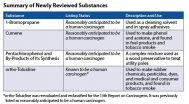
Four substances have been added in the U.S. Department of Health and Human Services 13th Report on Carcinogens, a science-based document that identifies chemical, biological, and physical agents that are considered cancer hazards for people living in the United States. The new report includes 243 listings. Ortho-toluidine, used to make rubber chemicals, pesticides, and dyes, has been reevaluated and is now listed as a known human carcinogen. Three substances have been added as reasonably anticipated to be human carcinogens. These include 1-bromopropane, used as a cleaning ...
Read more →
Science 2014-10-02

Creepy crawlers play key role in structure of grasslands

When asked to describe a forest or a meadow, most people would probably begin with the plants, the species diversity, or the color of the foliage. They probably wouldn't pay much attention to the animals living in the soil. But a new Yale-led study shows the critical importance of earthworms, beetles, and other tiny creatures to the structure of grasslands and the valuable ecosystem services they provide. During a 3-year study, researchers found that removing these small animals from the soil of a replicated Scottish sheep meadow altered the plant species that grew ...
Read more →
Medicine 2014-10-02

Marijuana use associated with lower death rates in patients with traumatic brain injuries

LOS ANGELES – (Oct. 2, 2014) – Surveying patients with traumatic brain injuries, a group of Los Angeles Biomedical Research Institute (LA BioMed) researchers reported today that they found those who tested positive for THC, the active ingredient in marijuana, were more likely to survive than those who tested negative for the illicit substance. The findings, published in the October edition of The American Surgeon, suggest THC, or tetrahydrocannabinol, may help protect the brain in cases of traumatic brain injury, the researchers said. The study included 446 patients who ...
Read more →
Link between past sexual violence and distress on pelvic exam
Science 2014-10-02

Link between past sexual violence and distress on pelvic exam

New Rochelle, NY, October 2, 2014–Women who have a history of violent sexual abuse may suffer emotional distress during a routine pelvic examination. Healthcare providers would benefit from greater awareness of symptoms predictive of examination-related distress in this patient population, according to a study published in Violence and Gender, a new peer-reviewed journal from Mary Ann Liebert, Inc., publishers. The article is available free on the Violence and Gender website at http://online.liebertpub.com/doi/full/10.1089/vio.2014.0016 until November 2, 2014. In the ...
Read more →
Research from Penn and UCSB shows how giant clams harness the sun
Science 2014-10-02

Research from Penn and UCSB shows how giant clams harness the sun

VIDEO: Researchers from the University of Pennsylvania and the University of California, Santa Barbara, have now shown how giant clams use iridescent structures to thrive, operating as exceedingly efficient, living greenhouses... Click here for more information. Evolution in extreme environments has produced life forms with amazing abilities and traits. Beneath the waves, many creatures sport iridescent structures that rival what materials scientists can make in the laboratory. A ...
Read more →
Medicine 2014-10-02

MRSA biofilms in joint fluid make infections tough to tackle

PHILADELPHIA, PA – Physicians have long speculated at the hard-to-treat nature of joint infection. In an article published in Journal of Infectious Diseases, Thomas Jefferson University scientists, in collaboration with scientists at the National Institutes of Health, come one step closer to understanding why these infections are so tough to tackle. The results could help explain the joint pain caused by different infections, including Lyme disease and why they're so resistant to antibiotic treatment. "Biofilm formation has been suspected to play a key role during septic ...
Read more →
Science 2014-10-02

Australia's high survival rates shed doubt on global sepsis guidelines

New research suggests treatment in Australia and New Zealand for patients with sepsis is the best in the world. The large-scale six-year study, led by the Australian and New Zealand Intensive Care Research Centre at Monash University, divided 1600 patients into two groups, who were admitted to emergency care with early stage sepsis from across more than 40 hospitals. The first group of 796 patients received Early Goal Directed Therapy (EGDT), an aggressive treatment not currently used in Australia and New Zealand, which inserts a catheter into the jugular vein to monitor ...
Read more →
Medicine 2014-10-02

Judgment and decision-making: Brain activity indicates there is more than meets the eye

Published today in PLOS ONE, the study is the first in the world to show that it is possible to predict abstract judgments from brain waves, even though people were not conscious of making such judgments. The study also increases our understanding of impulsive behaviours and how to regulate it. It found that researchers could predict from participants' brain activity how exciting they found a particular image to be, and whether a particular image made them think more about the future or the present. This is true even though the brain activity was recorded before ...
Read more →
On invasive species, Darwin had it right all along, study shows
Environment 2014-10-02

On invasive species, Darwin had it right all along, study shows

PROVIDENCE, R.I. [Brown University] — Dov Sax of Brown University and Jason Fridley of Syracuse University aren't proposing a novel idea to explain species invasiveness. In fact, Charles Darwin articulated it first. What's new about Sax and Fridley's "Evolutionary Imbalance Hypothesis" (EIH) is that they've tested it using quantifiable evidence and report in Global Ecology and Biogeography that the EIH works well. The EIH idea is this: Species from regions with deep and diverse evolutionary histories are more likely to become successful invaders in regions with less deep, ...
Read more →
Medicine 2014-10-02

Twice the DNA yield in less time

Molecular studies of plants often depend on high-quantity and high-quality DNA extractions. This can be quite difficult in plants, however, due to a diversity of compounds and physical properties found in plants. "Tannins, tough fibrous material, and/or secondary compounds can interfere with DNA isolation," explains Dr. Thomas Givnish, principal investigator of a new study published by Jackson Moeller et al. in the October issue of Applications in Plant Sciences (available for free viewing at http://www.bioone.org/doi/pdf/10.3732/apps.1400048). This is further complicated ...
Read more →
A new approach to on-chip quantum computing
Technology 2014-10-02

A new approach to on-chip quantum computing

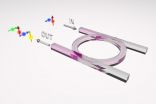
WASHINGTON, Oct. 2, 2014—Commercial devices capable of encrypting information in unbreakable codes exist today, thanks to recent quantum optics advances, especially the generation of photon pairs—tiny entangled particles of light. Now, an international team of researchers led by professor Roberto Morandotti of INRS-EMT in Canada, is introducing a new method to achieve a different type of photon pair source that fits into the tiny space of a computer chip. The team's method, which generates "mixed up" photon pairs from devices that are less than one square millimeter ...
Read more →
Making old lungs look young again
Science 2014-10-02

Making old lungs look young again

VIDEO: A new study suggests ibuprofen can make old lungs look young. In lab tests, daily ibuprofen lowered lung inflammation in elderly mice. The research and its implications are described by... Click here for more information. COLUMBUS, Ohio – New research shows that the lungs become more inflammatory with age and that ibuprofen can lower that inflammation. In fact, immune cells from old mouse lungs fought tuberculosis bacteria as effectively as cells from young mice after ...
Read more →
Science 2014-10-02

Grandparents' support linked to parents' willingness to have children and child welfare

Grandparents can significantly influence parents' decisions to have additional children and the well-being of grandchildren, according to a recent study completed at the University of Eastern Finland. In his PhD study, Dr Antti O. Tanskanen observed that grandparents' help with childcare and emotional support are linked to mothers' willingness to have a second or a third child. Furthermore, parents of small children who obtain support from paternal grandparents are also more likely to have additional children. The involvement of maternal grandparents in the lives of their ...
Read more →
Medicine 2014-10-02

Common painkillers combined with other drugs may cause high risk of GI bleeding

Bethesda, MD (Oct. 2, 2014) — Nonsteroidal anti-inflammatory drugs (NSAIDs) — such as ibuprofen and aspirin — increase one's risk of upper gastrointestinal bleeding. When taken in combination with other drugs, this risk is significantly higher, according to new research appearing in the October issue of Gastroenterology, the official journal of the American Gastroenterological Association. "These findings may help clinicians tailor therapy to minimize upper gastrointestinal bleeding, and are especially valuable in elderly patients who are likely to use multiple drugs ...
Read more →
Dog's epigenome gives clues to human cancer
Medicine 2014-10-02

Dog's epigenome gives clues to human cancer

The bond between humans and dogs is strong and ancient. From being the protector of the first herds in a faithful pet, dogs and people share many aspects of life. The relationship between the two species has been studied by psychologists, anthropologists, ethnologists and also by genetic and molecular biologists. In this sense, dogs are a great model for understanding the causes of human diseases, especially cancer. Unlike other mammals used in research, dogs develop cancer spontaneously as humans do and cancer is the most common cause of death in this species. The dog ...
Read more →
Horizon Report urges schools to tackle 'wicked' digital skills challenge
Technology 2014-10-02

Horizon Report urges schools to tackle 'wicked' digital skills challenge

This news release is available in French, Spanish and German. Low digital skills and competences among school pupils and the need to integrate effective use of information and communication technologies into teacher training are among the most pressing challenges faced by European school education today, according to a report published by the European Commission and the New Media Consortium, a US-based not-for-profit body bringing together experts in education technology. The first-ever Horizon Report Europe: 2014 Schools edition outlines the trends and technological ...
Read more →
Energy drinks cause insomnia and nervousness in athletes
Energy 2014-10-02

Energy drinks cause insomnia and nervousness in athletes

A study analysing the positive and negative effects of energy drinks on athletes has seen that, although in principle their sports performance was seen to improve by between 3% and 7%, there was also an increase in the frequency of insomnia, nervousness and the level of stimulation in the hours following competition. The consumption of energy drinks has increased in recent years. In the case of athletes, the use of them before practising sport has also risen: more than 50% take them during training and even before competitions. A four-year study carried out by experts ...
Read more →
Medicine 2014-10-02

Drug-food interactions in mountaineering

This news release is available in Spanish. According to a recent paper published by the researchers Aritz Urdampilleta-Otegui, PhD in Physical Education and Sports and lecturer in the Department of Physical and Sports Education of the UPV/EHU-University of the Basque Country and at the Government of the Basque Autonomous Community (region), and Saioa Gómez-Zorita, PhD in Pharmacy and Food Sciences and researcher at the UPV/EHU's Department of Pharmacy and Food Sciences, it is necessary to control the administering of drugs that interact with the foods consumed and which ...
Read more →