New cancer drug target involving lipid chemical messengers
Published 2014-09-19 · Original archive entry · Explore research explainers
PHILADELPHIA — More than half of human cancers have abnormally upregulated chemical signals related to lipid metabolism, yet how these signals are controlled during tumor formation is not fully understood.
Youhai Chen, PhD, MD, and Svetlana Fayngerts, PhD, both researchers in the department of Pathology and Laboratory Medicine at the Perelman School of Medicine, University of Pennsylvania, and colleagues report that TIPE3, a newly described oncogenic protein, promotes cancer by targeting these pathways.
Lipid second messengers play cardinal roles in relaying and amplifying signals from outside the cell to its interior and outer membrane. One of the best known lipid second messengers is PIP3, which relays signals from hundreds of membrane receptors, including many oncogenic receptors, on the cell surface to PIP3-binding proteins in the cell's interior, which control cell growth, differentiation, migration, transformation, and death.
Therefore, drugs targeting PIP3 – when its function goes awry -- may be effective for treating a variety of diseases, including cancer and inflammatory disorders. TIPE3 belongs to a newly described family of proteins and is a risk factor for human cancer and inflammation, although its mechanisms of action are largely unknown.
Chen and colleagues discovered that TIPE3 is the transfer protein of the second messenger PIP3 and it is hijacked by cancer cells to cause runaway cell division.
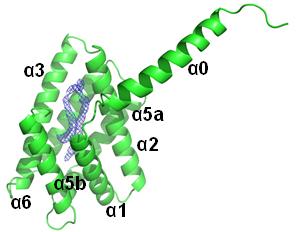
The high-resolution crystal structure of TIPE3 shows a large cavity that captures and transfers PIP3 and its chemical precursor PIP2 to increase their presence on the inner membrane of the cell. This promotes activation of downstream PIP3 effectors that cause cancer.
Importantly, human lung, colon, ovarian, and esophageal cancers have markedly upregulated TIPE3 expression. Knocking down TIPE3 in culture diminishes malignant tumor cell growth and knocking out TIPE3 in mice blocks tumor formation.
"These findings explain why normal cells can control their lipid signals but cancer cells can't, a phenomenon widely recognized, but poorly understood," says Chen. TIPE3 has to be expressed at just the right amount to make sure that the proper signal is transferred, which governs the proper amount of cell division. "Therefore, TIPE3 may represent a new therapeutic target for treating malignant diseases."
The team is now working on strategies to control abnormal TIPE3 expression to treat or prevent cancer.
INFORMATION: Other contributing authors are Jianping Wu, Camilla L. Oxley, Xianglan Liu, Anastassios Vourekas, Terry Cathopoulis, Zhaojun Wang, Jian Cui, Suxia Liu, Honghong Sun, Mark A. Lemmon, Lining Zhang, Yigong Shi.
This work was funded by the National Institute of Allergy and Infectious Diseases and the National Institute of General Medical Sciences (AI-077533, AI-050059, GM-085112).
Penn Medicine is one of the world's leading academic medical centers, dedicated to the related missions of medical education, biomedical research, and excellence in patient care. Penn Medicine consists of the Raymond and Ruth Perelman School of Medicine at the University of Pennsylvania (founded in 1765 as the nation's first medical school) and the University of Pennsylvania Health System, which together form a $4.3 billion enterprise.
The Perelman School of Medicine has been ranked among the top five medical schools in the United States for the past 17 years, according to U.S. News & World Report's survey of research-oriented medical schools. The School is consistently among the nation's top recipients of funding from the National Institutes of Health, with $392 million awarded in the 2013 fiscal year.
The University of Pennsylvania Health System's patient care facilities include: The Hospital of the University of Pennsylvania -- recognized as one of the nation's top "Honor Roll" hospitals by U.S. News & World Report; Penn Presbyterian Medical Center; Chester County Hospital; Penn Wissahickon Hospice; and Pennsylvania Hospital -- the nation's first hospital, founded in 1751. Additional affiliated inpatient care facilities and services throughout the Philadelphia region include Chestnut Hill Hospital and Good Shepherd Penn Partners, a partnership between Good Shepherd Rehabilitation Network and Penn Medicine.
Penn Medicine is committed to improving lives and health through a variety of community-based programs and activities. In fiscal year 2013, Penn Medicine provided $814 million to benefit our community.
Youhai Chen, PhD, MD, and Svetlana Fayngerts, PhD, both researchers in the department of Pathology and Laboratory Medicine at the Perelman School of Medicine, University of Pennsylvania, and colleagues report that TIPE3, a newly described oncogenic protein, promotes cancer by targeting these pathways.
Lipid second messengers play cardinal roles in relaying and amplifying signals from outside the cell to its interior and outer membrane. One of the best known lipid second messengers is PIP3, which relays signals from hundreds of membrane receptors, including many oncogenic receptors, on the cell surface to PIP3-binding proteins in the cell's interior, which control cell growth, differentiation, migration, transformation, and death.
Therefore, drugs targeting PIP3 – when its function goes awry -- may be effective for treating a variety of diseases, including cancer and inflammatory disorders. TIPE3 belongs to a newly described family of proteins and is a risk factor for human cancer and inflammation, although its mechanisms of action are largely unknown.
Chen and colleagues discovered that TIPE3 is the transfer protein of the second messenger PIP3 and it is hijacked by cancer cells to cause runaway cell division.
The high-resolution crystal structure of TIPE3 shows a large cavity that captures and transfers PIP3 and its chemical precursor PIP2 to increase their presence on the inner membrane of the cell. This promotes activation of downstream PIP3 effectors that cause cancer.
Importantly, human lung, colon, ovarian, and esophageal cancers have markedly upregulated TIPE3 expression. Knocking down TIPE3 in culture diminishes malignant tumor cell growth and knocking out TIPE3 in mice blocks tumor formation.
"These findings explain why normal cells can control their lipid signals but cancer cells can't, a phenomenon widely recognized, but poorly understood," says Chen. TIPE3 has to be expressed at just the right amount to make sure that the proper signal is transferred, which governs the proper amount of cell division. "Therefore, TIPE3 may represent a new therapeutic target for treating malignant diseases."
The team is now working on strategies to control abnormal TIPE3 expression to treat or prevent cancer.
INFORMATION: Other contributing authors are Jianping Wu, Camilla L. Oxley, Xianglan Liu, Anastassios Vourekas, Terry Cathopoulis, Zhaojun Wang, Jian Cui, Suxia Liu, Honghong Sun, Mark A. Lemmon, Lining Zhang, Yigong Shi.
This work was funded by the National Institute of Allergy and Infectious Diseases and the National Institute of General Medical Sciences (AI-077533, AI-050059, GM-085112).
Penn Medicine is one of the world's leading academic medical centers, dedicated to the related missions of medical education, biomedical research, and excellence in patient care. Penn Medicine consists of the Raymond and Ruth Perelman School of Medicine at the University of Pennsylvania (founded in 1765 as the nation's first medical school) and the University of Pennsylvania Health System, which together form a $4.3 billion enterprise.
The Perelman School of Medicine has been ranked among the top five medical schools in the United States for the past 17 years, according to U.S. News & World Report's survey of research-oriented medical schools. The School is consistently among the nation's top recipients of funding from the National Institutes of Health, with $392 million awarded in the 2013 fiscal year.
The University of Pennsylvania Health System's patient care facilities include: The Hospital of the University of Pennsylvania -- recognized as one of the nation's top "Honor Roll" hospitals by U.S. News & World Report; Penn Presbyterian Medical Center; Chester County Hospital; Penn Wissahickon Hospice; and Pennsylvania Hospital -- the nation's first hospital, founded in 1751. Additional affiliated inpatient care facilities and services throughout the Philadelphia region include Chestnut Hill Hospital and Good Shepherd Penn Partners, a partnership between Good Shepherd Rehabilitation Network and Penn Medicine.
Penn Medicine is committed to improving lives and health through a variety of community-based programs and activities. In fiscal year 2013, Penn Medicine provided $814 million to benefit our community.