Big shift seen in high-risk older adults' attitudes toward COVID-19 vaccination
Poll shows double-digit jumps since autumn in percentage of Black, Hispanic and chronically ill older adults who say they'll get vaccinated -- or already have
Published 2021-03-09 · Original archive entry · Explore research explainers
Last fall, nearly half of older adults were on the fence about COVID-19 vaccination - or at least taking a wait-and-see attitude, according to a University of Michigan poll taken at the time.
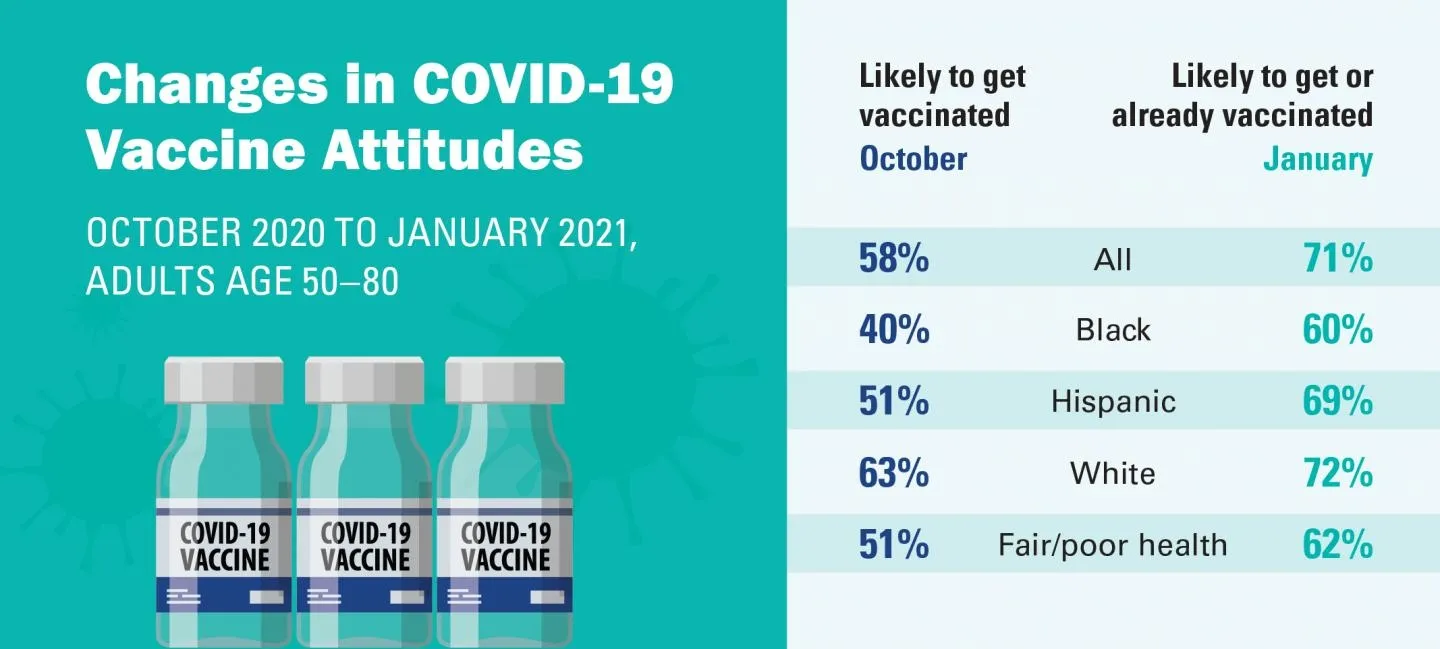
But a new follow-up poll shows that 71% of people in their 50s, 60s and 70s are now ready to get vaccinated against COVID-19 when a dose becomes available to them, or had already gotten vaccinated by the time they were polled in late January. That's up from 58% in October.
Three groups of older adults with especially high risk of severe COVID-19 -- Blacks, Hispanics and people in fair or poor health - had even bigger jumps in vaccine receptiveness between October and late January.
The poll shows a 20-point jump in just four months in the percentage of Black respondents who said they would likely get vaccinated, and an 18-point jump for Hispanic older adults. The jump for white respondents in that time was 9 points.
People who said their health was fair or poor - likely including many with chronic conditions that can increase their risk of serious illness if they catch the coronavirus - had an 11-point jump in likelihood of getting vaccinated. However, they were still less likely to want to get vaccinated than those in better health.
By late January, 60% of Black respondents, 69% of Hispanic respondents, and 62% of those in fair or poor health said they were very likely or somewhat likely to get vaccinated, or had already gotten at least one dose. Among all white respondents regardless of health status, it was 72%.
The data come from the National Poll on Healthy Aging, based at U-M's Institute for Healthcare Policy and Innovation with support from AARP and Michigan Medicine, U-M's academic medical center. In November 2020, the poll END
But a new follow-up poll shows that 71% of people in their 50s, 60s and 70s are now ready to get vaccinated against COVID-19 when a dose becomes available to them, or had already gotten vaccinated by the time they were polled in late January. That's up from 58% in October.
Three groups of older adults with especially high risk of severe COVID-19 -- Blacks, Hispanics and people in fair or poor health - had even bigger jumps in vaccine receptiveness between October and late January.
The poll shows a 20-point jump in just four months in the percentage of Black respondents who said they would likely get vaccinated, and an 18-point jump for Hispanic older adults. The jump for white respondents in that time was 9 points.
People who said their health was fair or poor - likely including many with chronic conditions that can increase their risk of serious illness if they catch the coronavirus - had an 11-point jump in likelihood of getting vaccinated. However, they were still less likely to want to get vaccinated than those in better health.
By late January, 60% of Black respondents, 69% of Hispanic respondents, and 62% of those in fair or poor health said they were very likely or somewhat likely to get vaccinated, or had already gotten at least one dose. Among all white respondents regardless of health status, it was 72%.
The data come from the National Poll on Healthy Aging, based at U-M's Institute for Healthcare Policy and Innovation with support from AARP and Michigan Medicine, U-M's academic medical center. In November 2020, the poll END