PRESS-NEWS.org - Press Release Distribution
PRESS RELEASES DISTRIBUTION

Turns out altruism is for the fish

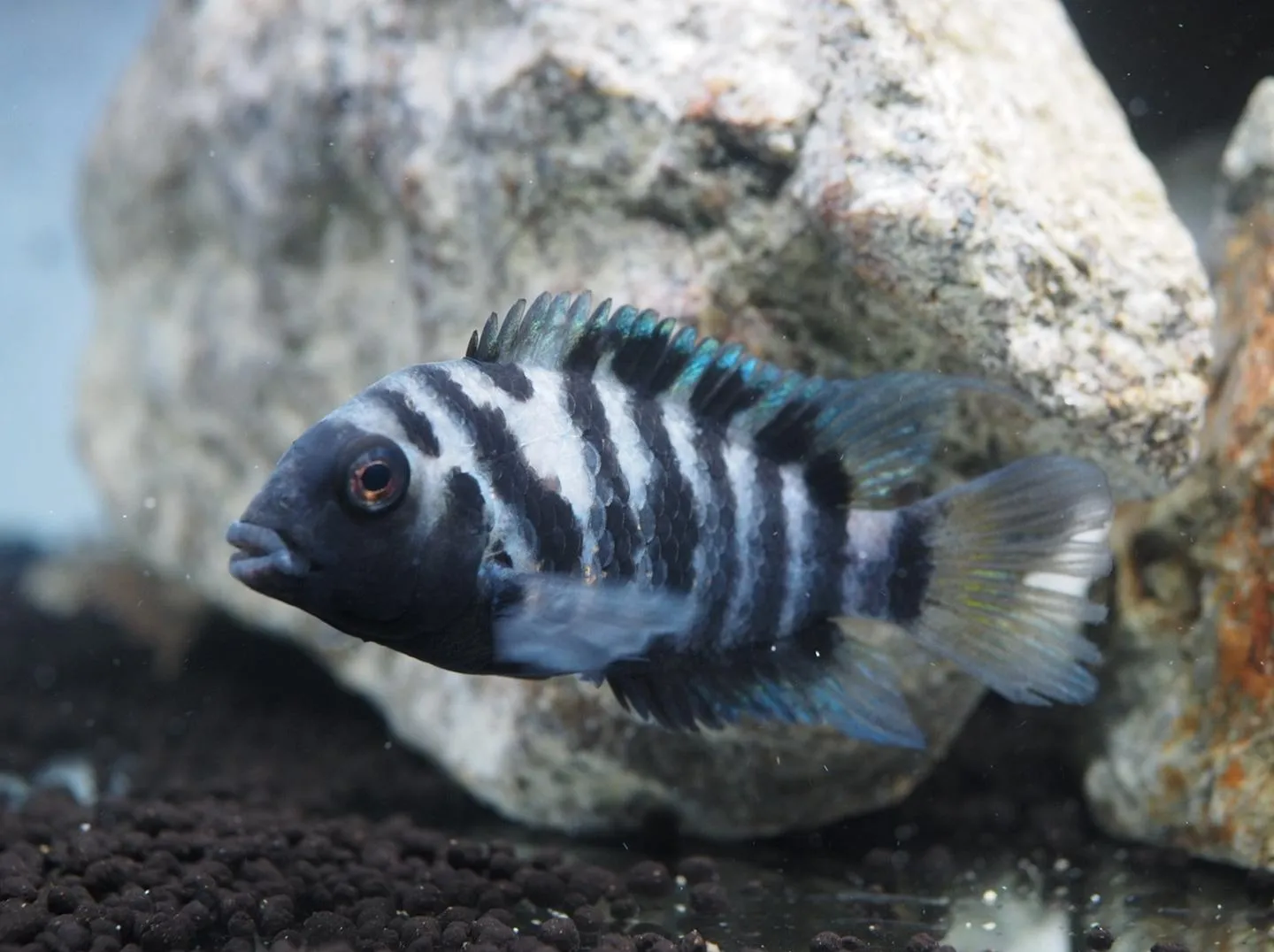
Osaka City University shows experimental evidence of an altruistic nature in small convict cichlid fish

Turns out altruism is for the fish
2021-03-19
(Press-News.org) OSAKA, Japan. If you were given the option to eat a delicious meal by yourself, or share that meal with your loved ones, you would need as very good excuse ready if you chose the former. Turns out, fish share a similar inclination to look after each other.

For the first time ever, a research group led by researcher Shun Satoh and Masanori Kohda, professor of the Graduate School of Science, Osaka City University, have shown these altruistic tendencies in fish through a series of prosocial choice tasks (PCT) where they gave male convict cichlid fish two choices: the antisocial option of receiving food for themselves alone and the prosocial option of receiving food for themselves and their partner.

"As a result, it can be said that the convict cichlid fish properly distinguish between paired females, unknown females, and rival males, and change their choices according to the situation", states Dr. Satoh.

However, what exactly happened?

An experimental male fish was placed in a tank, and a fish was presented to the male fish in another tank. When a partner with whom the male fish had experience in raising children was in the presentation tank, the male fish actively made a prosocial choice and both fish received food. On the other hand, when there was no one in the presentation tank, the male fish preferred neither the prosocial nor antisocial option. To understand how the social context affected the fish's prosocial nature, the team changed the partners to rival males or females the experimental male fish had never met before. Results showed the male fish actively choose the antisocial option of not feeding the rival male, while choosing the prosocial option of feeding the unknown female as if it was their own breeding partner. In the latter experiment, the team also presented the original paired female near the experimental tank holding the male fish. In the absence of the paired female, the male fish made the prosocial choice which provided food for the unknown female, but in the presence of the paired female, they made the antisocial choice.

"These PCT results mirror those from similar experiments with primates", states Dr. Satoh. "However, this is the first time that caring and misbehaving behavior has been observed in fish. No one had ever expected such delicate and exquisite social behavior from such a small fish."

Yet, there is still much work to do. "Through more rigorous behavioral experiments, we hope to clarify whether these fish really have psychosociality and the motivation to produce it and also how the mind of this type of fish evolved to produce it" states Prof. Kohda.

There are hypotheses floating around as to the origin of this desire to care. Could it be a link that connects us past our primate ancestors, ultimately back to fish? Let us wait and see what else Prof. Kohda and his team find out.

INFORMATION:

We are Osaka City University - the oldest research university in Osaka. With 9 undergraduate faculties and 11 graduate schools all dedicated to making urban life better, energy cleaner, and people healthier and happier, we have won numerous awards and have produced 2 Nobel laureates. For more information, please visit our website at https://www.osaka-cu.ac.jp/en


[Attachments] See images for this press release:
Turns out altruism is for the fish

ELSE PRESS RELEASES FROM THIS DATE:

Bioengineers learn the secrets to precisely turning on and off genes

Bioengineers learn the secrets to precisely turning on and off genes
2021-03-19
In a recent study led by the University of Bristol, scientists have shown how to simultaneously harness multiple forms of regulation in living cells to strictly control gene expression and open new avenues for improved biotechnologies. Engineered microbes are increasingly being used to enable the sustainable and clean production of chemicals, medicines and much more. To make this possible, bioengineers must control when specific sets of genes are turned on and off to allow for careful regulation of the biochemical processes involved. Their findings are reported today in the journal Nature Communications. Veronica Greco, lead author ...

New findings about immune system reaction to malaria and sickle cell disease

2021-03-19
Scientists have discovered in more detail than ever before how the human body's immune system reacts to malaria and sickle cell disease. The researchers from the universities of Aberdeen, Edinburgh, Exeter and Imperial College, London have published their findings in Nature Communications. Every year there are ~200 million cases of malaria, which causes ~400,000 deaths. As it causes resistance against malaria, the sickle cell disease mutation has spread widely, especially in people from Africa. But if a child inherits a double dose of the gene - from both mother and father - they will develop ...

Particulates are more dangerous than previously thought

Particulates are more dangerous than previously thought
2021-03-19
Researchers at the Paul Scherrer Institute PSI have for the first time observed photochemical processes inside the smallest particles in the air. In doing so, they discovered that additional oxygen radicals that can be harmful to human health are formed in these aerosols under everyday conditions. They report on their results today in the journal Nature Communications. It is well known that airborne particulate matter can pose a danger to human health. The particles, with a maximum diameter of ten micrometres, can penetrate deep into lung tissue and settle ...

CU cancer researcher wins two awards to study drug-resistant cancer cells

CU cancer researcher wins two awards to study drug-resistant cancer cells
2021-03-19
Sabrina L. Spencer, PhD, is a CU Boulder researcher and a CU Cancer Center member. Spencer recently won two awards: the Damon Runyon-Rachleff Innovation Award (from the Damon Runyon Cancer Research Foundation) and the Emerging Leader Award (from The Mark Foundation for Cancer Research). The preliminary research she used to apply for the grants, "Melanoma subpopulations that rapidly escape MAPK pathway inhibition incur DNA damage and rely on stress signalling," was published in Nature Communications on March 19, 2021. We spoke to Spencer about the awards and how she plans to use them to ...

New plutonium research helps distinguish nuclear power pollution from global fall out

2021-03-19
Researchers looking at miniscule levels of plutonium pollution in our soils have made a breakthrough which could help inform future 'clean up' operations on land around nuclear power plants, saving time and money. Publishing in the journal Nature Communications, researchers show how they have measured the previously 'unmeasurable' and taken a step forward in differentiating between local and global sources of plutonium pollution in the soil. By identifying the isotopic 'fingerprint' of trace-level quantities of plutonium in the soil which matched the ...

Study shows stronger brain activity after writing on paper than on tablet or smartphone

2021-03-19
A study of Japanese university students and recent graduates has revealed that writing on physical paper can lead to more brain activity when remembering the information an hour later. Researchers say that the unique, complex, spatial and tactile information associated with writing by hand on physical paper is likely what leads to improved memory. "Actually, paper is more advanced and useful compared to electronic documents because paper contains more one-of-a-kind information for stronger memory recall," said Professor Kuniyoshi L. Sakai, a neuroscientist at the University of Tokyo and corresponding author of the research recently published in Frontiers in Behavioral Neuroscience. The research was completed with collaborators from the NTT Data Institute of Management Consulting. Contrary ...

Study examines fermented milks' potential benefits for decreasing high blood pressure through modulation of gut microbiota

Study examines fermented milks potential benefits for decreasing high blood pressure through modulation of gut microbiota
2021-03-19
Philadelphia, March 19, 2021 - In recent years, fermented dairy foods have been gaining attention for their health benefits, and a new review published in the Journal of Dairy Science indicates these foods could help reduce conditions like hypertension (high blood pressure). A team of investigators from the Center for Food Research and Development in Sonora, Mexico, and the National Technological Institute of Mexico in Veracruz reports on numerous studies of fermented milks as antihypertensive treatments and in relation to gut microbiota modulation. They also examine the potential mechanistic pathways of gut modulation through antihypertensive fermented milks. In addition to the impact of genetics and the environment, there is growing ...

In pandemic, potentially avoidable hospitalizations for non-COVID conditions fell more among whites

2021-03-19
During the first six months of the pandemic, as people attempted to stay away from hospitals caring for those sick with COVID-19, potentially avoidable hospitalizations for non-COVID-19-related conditions fell far more among white patients than Black patients, according to a new study that looked at admissions to UCLA Health hospitals. The findings indicate that the COVID-19 crisis has exacerbated existing racial health care disparities and suggest that during the pandemic, African Americans may have had worse access than whites to outpatient care that could have helped prevent deterioration of their non-COVID-19 health conditions, said Dr. ...

Starving tumors by blocking glutamine uptake

Starving tumors by blocking glutamine uptake
2021-03-19
LA JOLLA, CALIF. - March 19, 2021 - Scientists at Sanford Burnham Prebys Medical Discovery Institute have identified a drug candidate that blocks the uptake of glutamine, a key food source for many tumors, and slows the growth of melanoma. The drug is a small molecule that targets a glutamine transporter, SLC1A5, which pumps the nutrient into cancer cells--offering a promising new approach for treating melanoma and other cancers. The study was published in the journal Molecular Cancer Therapeutics. "While great strides have been made recently in the treatment of melanoma, many patients' tumors become resistant to therapy, and this has become a major obstacle in the successful treatment of the disease," says Ze'ev ...

'Opposite action' could improve industrial gas separation

Opposite action could improve industrial gas separation
2021-03-19
A more energy-efficient method improves how an industrial gas is purified by reversing the traditional process. The concept was developed and successfully tested by scientists at Kyoto University's Institute for Integrated Cell-Material Sciences (iCeMS) in Japan and colleagues. The findings were reported in the journal Angewandte Chemie International Edition. Acetylene is a gas used in many industries, including as a fuel in welding and a chemical building block for materials like plastics, paints, glass and resins. To produce acetylene, it first needs to be purified from carbon dioxide. Traditionally, this is done by passing the acetylene/carbon ...

LAST 30 PRESS RELEASES:

Fecal microbiome and bile acid profiles differ in preterm infants with parenteral nutrition-associated cholestasis

The Institute of Science and Technology Austria (ISTA) receives €5 million donation for AI research

Study finds link between colorblindness and death from bladder cancer

Tailored treatment approach shows promise for reducing suicide and self-harm risk in teens and young adults

Call for papers: AI in biochar research for sustainable land ecosystems

Methane eating microbes turn a powerful greenhouse gas into green plastics, feed, and fuel

Hidden nitrogen in China’s rice paddies could cut fertilizer use

Texas A&M researchers expose hidden risks of firefighter gear in an effort to improve safety and performance

Wood burning in homes drives dangerous air pollution in winter

The Journal of Nuclear Medicine Ahead-of-Print Tip Sheet: January 23, 2026

ISSCR statement in response to new NIH policy on research using human fetal tissue (Notice NOT-OD-26-028)

Biologists and engineers follow goopy clues to plant-wilting bacteria

What do rats remember? IU research pushes the boundaries on what animal models can tell us about human memory

Frontiers Science House: did you miss it? Fresh stories from Davos – end of week wrap

Watching forests grow from space

New grounded theory reveals why hybrid delivery systems work the way they do

CDI scientist joins NIH group to improve post-stem cell transplant patient evaluation

Uncovering cancer's hidden oncRNA signatures: From discovery to liquid biopsy

Multiple maternal chronic conditions and risk of severe neonatal morbidity and mortality

Interactive virtual assistant for health promotion among older adults with type 2 diabetes

Ion accumulation in liquid–liquid phase separation regulates biomolecule localization

Hemispheric asymmetry in the genetic overlap between schizophrenia and white matter microstructure

Research Article | Evaluation of ten satellite-based and reanalysis precipitation datasets on a daily basis for Czechia (2001–2021)

Nano-immunotherapy synergizing ferroptosis and STING activation in metastatic bladder cancer

Insilico Medicine receives IND approval from FDA for ISM8969, an AI-empowered potential best-in-class NLRP3 inhibitor

Combined aerobic-resistance exercise: Dual efficacy and efficiency for hepatic steatosis

Expert consensus outlines a standardized framework to evaluate clinical large language models

Bioengineered tissue as a revolutionary treatment for secondary lymphedema

Forty years of tracking trees reveals how global change is impacting Amazon and Andean Forest diversity

Breathing disruptions during sleep widespread in newborns with severe spina bifida

[Press-News.org] Turns out altruism is for the fish
Osaka City University shows experimental evidence of an altruistic nature in small convict cichlid fish