Researchers uncover potential new way to treat dry mouth
PDE4 inhibition induces salivation in mice; findings might also have implications for cystic fibrosis
Published 2021-04-27 · Original archive entry · Explore research explainers
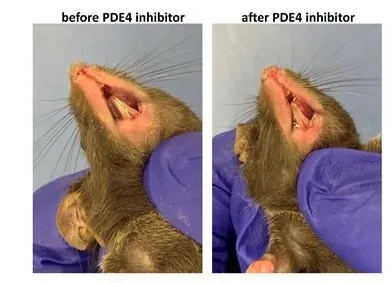
Researchers studying mice made a serendipitous discovery that could lead to a new dry mouth treatment. More than 10% of people experience dry mouth, which can be caused by medical conditions, radiation treatment, certain medications and aging.
Abigail Boyd, a doctoral candidate at the University of South Alabama, and colleagues made the new discovery while exploring the anti-inflammatory benefits of inhibiting phosphodiesterase-4 (PDE4) enzymes in a mouse model of bacterial lung infection. After noticing that mice treated with a PDE4 inhibitor were salivating, they decided to examine whether this observation could be translated into a dry mouth therapy. They also looked at the implications of the discovery for cystic fibrosis, which causes persistent lung infections and limits the ability to breathe over time.
"Saliva, while often taken for granted, is indispensable for oral health and overall well-being," said Boyd. "New ways to treat dry mouth are needed since treatment options are currently limited."
Boyd will present the new research at the END
Abigail Boyd, a doctoral candidate at the University of South Alabama, and colleagues made the new discovery while exploring the anti-inflammatory benefits of inhibiting phosphodiesterase-4 (PDE4) enzymes in a mouse model of bacterial lung infection. After noticing that mice treated with a PDE4 inhibitor were salivating, they decided to examine whether this observation could be translated into a dry mouth therapy. They also looked at the implications of the discovery for cystic fibrosis, which causes persistent lung infections and limits the ability to breathe over time.
"Saliva, while often taken for granted, is indispensable for oral health and overall well-being," said Boyd. "New ways to treat dry mouth are needed since treatment options are currently limited."
Boyd will present the new research at the END