The hidden power of Japanese food ― inhibiting the development of liver fibrosis
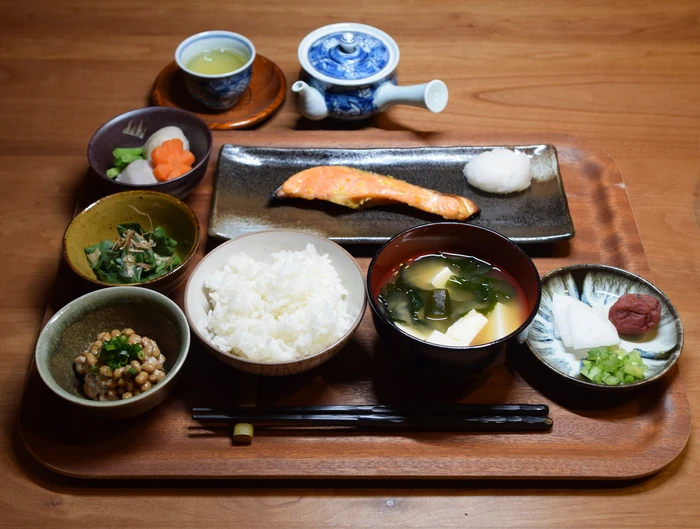
A research group led by Dr. Hideki Fujii M.D. and Associate Professor Yoshinari Matsumoto at the Osaka Metropolitan University analyzed the relationship between meals rated by mJDI12, muscle mass, and liver fibrosis progression in 136 patients with nonalcoholic fatty liver disease (NAFLD) attending the Osaka Metropolitan University Hospital.
The research group found the following: the group with a higher mJDI12 showed a lower degree of liver fibrosis progression. Moreover, among the Japanese diet patterns, a high intake of soy products, seafood, and seaweed showed a suppressive effect on liver fibrosis progression. In addition, the group with a higher intake of soy products had higher muscle mass, and the group with higher muscle mass had a lower degree of liver fibrosis progression.
“This study indicates that the Japanese diet pattern may be effective as a dietary treatment for NAFLD patients. We hope that further intervention studies will lead to the establishment of an effective diet for those patients,” concluded Professor Matsumoto.
Their findings were published in Nutrients.
###
About OMU
Osaka Metropolitan University is a new public university established in April 2022, formed by merger between Osaka City University and Osaka Prefecture University. For more research news visit https://www.omu.ac.jp/en/ or follow @OsakaMetUniv_en and #OMUScience.
END