THE ORIGINAL COLLECTION · SINCE 2010

Earth Science
press releases.

Research announcements from universities, hospitals and scientific institutions. Explore the stories, people and discoveries behind the headlines.

Original publication datesPage 12
FIND A STORY

Find a past release.

Dates and source material belong to the original release.

Read our research explainers

Browse the collection · original publication order

InSight seismic data reveals a molten layer at the base of the Martian mantle
Earth Science

InSight seismic data reveals a molten layer at the base of the Martian mantle

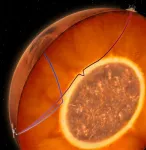
The first data from the InSight mission made it possible to determine the internal structure of Mars in a series of papers from the scientific team published in the summer of 2021. However, since then, the analysis of new data generated by a powerful meteorite impact that occurred on September 18 2021, questioned the first estimates of the internal structure of the Red Planet. By studying the propagation times of waves generated by this impact, an international team led by Henri Samuel, CNRS researcher at the Institut ...

Read the release
Earth Science

Biological fingerprints in soil show where diamond-containing ore is buried

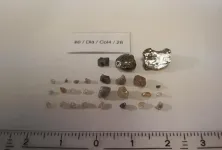
Researchers have identified buried kimberlite, the rocky home of diamonds, by testing the DNA of microbes in the surface soil. These ‘biological fingerprints’ can reveal what minerals are buried tens of metres below the earth’s surface without having to drill. The researchers believe it is the first use of modern DNA sequencing of microbial communities in the search for buried minerals. The research published this week in Nature Communications Earth and Environment represents a new tool for mineral exploration, where a full toolbox could save prospectors time and a lot of money, says co-author Bianca Iulianella Phillips, a doctoral candidate at ...

Read the release
Superdeep diamonds provide a window on supercontinent growth
Earth Science

Superdeep diamonds provide a window on supercontinent growth

Washington, DC—Diamonds contain evidence of the mantle rocks that helped buoy and grow the ancient supercontinent Gondwana from below, according to new research from a team of scientists led by Suzette Timmerman—formerly of the University of Alberta and now at the University of Bern—and including Carnegie’s Steven Shirey, Michael Walter, and Andrew Steele. Their findings, published in Nature, demonstrate that superdeep diamonds can provide a window through space and time into the supercontinent growth and formation ...

Read the release
Finding Argoland: how a lost continent resurfaced
Earth Science

Finding Argoland: how a lost continent resurfaced

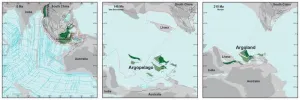
Geologists have long known that around 155 million years ago, a 5000 km long piece of continent broke off western Australia and drifted away. They can see that by the ‘void’ it left behind: a basin hidden deep below the ocean known as the Argo Abyssal Plain. The underwater feature also lends its name to the newly formed continent: Argoland. The structure of the seafloor shows that this continent must have drifted off to the northwest, and must have ended up where the islands of Southeast Asia are located today. ...

Read the release
Rebates can offer solutions to California’s groundwater woes
Earth Science

Rebates can offer solutions to California’s groundwater woes

Many aquifers in California and around the world are being drained of their groundwater because of the combined impacts of excess pumping, shifts in land use, and climate change. However, a new study by scientists at UC Santa Cruz and UC Berkeley, published on Oct. 18 in Nature Water, may offer a solution. It describes the development and operation of a novel incentive program that uses water rebates to pay for some of the costs of getting stormwater runoff into the ground. The program is called recharge net metering (ReNeM). Although ...

Read the release
Earth Science

Researchers test seafloor fiber optic cable as an earthquake early warning system

One of the biggest challenges for earthquake early warning systems (EEW) is the lack of seismic stations located offshore of heavily populated coastlines, where some of the world’s most seismically active regions are located. In a new study published in The Seismic Record, researchers show how unused telecommunications fiber optic cable can be transformed for offshore EEW. Jiuxun Yin, a Caltech researcher now at SLB, and colleagues used 50 kilometers of a submarine telecom cable running between the United States and Chile, sampling ...

Read the release
The earthworm effect: unraveling soil weathering dynamics
Earth Science

The earthworm effect: unraveling soil weathering dynamics

17 October 2023 The Geological Society of America Release No. 23-42 Contact: Justin Samuel +1-303-357-1026 jsamuel@geosociety.org For Immediate Release Contributed by Sarah Derouin Pittsburgh, Pa., USA: Earthworms, the hardworking invertebrates that grace the upper layers of soil, have long been considered helpful in our home gardens. Earthworms are prolific munchers, grinding up organic material and sediment grains that make up soils. Although they are very different animals, worms, like many poultry, have gizzards. “Worms will ingest some larger soil grains, and then they use the strongest and largest of those grains, retaining them in their gizzard,” ...

Read the release
How an ancient society in the Sahara Desert rose and fell with groundwater
Earth Science

How an ancient society in the Sahara Desert rose and fell with groundwater

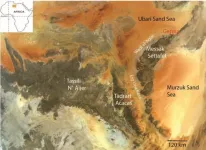
Contributed by Emily Zawacki Pittsburgh, Pa., USA: With its low quantities of rain and soaring high temperatures, the Sahara Desert is often regarded as one of the most extreme and least habitable environments on Earth. While the Sahara was periodically much greener in the distant past, an ancient society living in a climate very similar to today’s found a way to harvest water in the seemingly dry Sahara—thriving until the water ran out. New research that will be presented Monday, 16 Oct., ...

Read the release
New model explains precious metals in Earth’s mantle
Earth Science

New model explains precious metals in Earth’s mantle

SAN ANTONIO — October 10, 2023 —Southwest Research Institute’s Dr. Simone Marchi collaborated on a new study finding the first geophysically plausible scenario to explain the abundance of certain precious metals — including gold and platinum — in the Earth’s mantle. Based on the simulations, or model, scientists found that impact-driven mixing of mantle materials scenario that could prevent the metals from completely sinking into the Earth’s core. Early in its evolution, about 4.5 billion years ago, Earth sustained an impact with a Mars-sized planet, and the Moon formed from the resulting debris ejected ...

Read the release
Plate tectonic surprise: Utrecht geologist unexpectedly finds remnants of a lost mega-plate
Earth Science

Plate tectonic surprise: Utrecht geologist unexpectedly finds remnants of a lost mega-plate

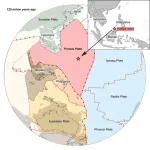
Utrecht University geologist Suzanna van de Lagemaat has reconstructed a massive and previously unknown tectonic plate that was once one-quarter the size of the Pacific Ocean. Her colleagues in Utrecht had predicted its existence over 10 years ago based on fragments of old tectonic plates found deep in the Earth’s mantle. Van de Lagemaat reconstructed lost plates through field research and detailed investigations of the mountain belts of Japan, Borneo, the Philippines, New Guinea, and New Zealand. To her surprise, she found that oceanic remnants on northern Borneo must have belonged to the long-suspected plate, which scientists have named Pontus. She has now reconstructed ...

Read the release
AI-driven earthquake forecasting shows promise in trials
Earth Science

AI-driven earthquake forecasting shows promise in trials

A new attempt to predict earthquakes with the aid of artificial intelligence has raised hopes that the technology could one day be used to limit earthquakes’ impact on lives and economies. Developed by researchers at The University of Texas at Austin, the AI algorithm correctly predicted 70% of earthquakes a week before they happened during a seven-month trial in China. The AI was trained to detect statistical bumps in real-time seismic data that researchers had paired with previous earthquakes. The outcome was a weekly forecast in which the AI successfully predicted 14 earthquakes within about 200 miles of where it estimated they would happen and at almost exactly the ...

Read the release
Prehistoric people occupied upland regions of inland Spain in even the coldest periods of the last Ice Age
Earth Science

Prehistoric people occupied upland regions of inland Spain in even the coldest periods of the last Ice Age

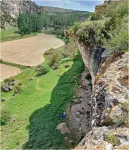
Paleolithic human populations survived even in the coldest and driest upland parts of Spain, according to a study published October 4, 2023 in the open-access journal PLOS ONE by Manuel Alcaraz-Castaño of the University of Alcalá, Spain, Javier Aragoncillo-del Rió of the Molina-Alto Tajo UNESCO Global Geopark, Spain and colleagues. Research into ancient hunter-gatherer populations of the Iberian Peninsula has mainly focused on coastal regions, with relatively little investigation into the inland. A classic hypothesis has been that the cold and dry conditions of inland Iberia ...

Read the release
Earth Science

Cornell fills data gap for volcanic ash effects on Earth systems

ITHACA, N.Y. -- Volcanic ash is no ordinary dust: It gets injected into the atmosphere, climbs to the stratosphere, impacts climate, powders roadways and clogs jet engines. To bridge the knowledge gap between volcanologists and atmospheric scientists working on climate change and observing global systems, Cornell researchers have characterized volcanic ash samples from many explosive eruptions of a broad compositional range. The work is helping scientists uncover how this tiny material – measured in microns and nanometers – plays a big role in the atmosphere. Volcanic ash is formed from minerals trapped in ...

Read the release
Discovery of massive undersea water reservoir could explain New Zealand’s mysterious slow earthquakes
Earth Science

Discovery of massive undersea water reservoir could explain New Zealand’s mysterious slow earthquakes

Researchers have discovered a sea’s worth of water locked within the sediment and rock of a lost volcanic plateau that’s now deep in the Earth’s crust. Revealed by a 3D seismic image, the water lies two miles under the ocean floor off the coast of New Zealand, where it may be dampening a major earthquake fault that faces the country’s North Island. The fault is known for producing slow-motion earthquakes, called slow slip events. These can release pent-up tectonic pressure harmlessly over days and weeks. Scientists want to know why they happen more often at some ...

Read the release
Earth Science

Ultrasound may rid groundwater of toxic ‘forever chemicals’

COLUMBUS, Ohio – New research suggests that ultrasound may have potential in treating a group of harmful chemicals known as PFAS to eliminate them from contaminated groundwater. Invented nearly a century ago, per- and poly-fluoroalkyl substances, also known as “forever chemicals,” were once widely used to create products such as cookware, waterproof clothing and personal care items. Today, scientists understand that exposure to PFAS can cause a number of human health issues such as birth defects and cancer. But because the bonds inside these chemicals don’t break down easily, they’re notoriously ...

Read the release
Earth Science

Dartmouth study removes human bias from debate over dinosaurs' demise

To help resolve the scientific debate over whether it was a giant asteroid or volcanic eruptions that wiped out the dinosaurs and most other species 66 million years ago, Dartmouth researchers tried a new approach — they removed scientists from the debate and let the computers decide. The researchers report in the journal Science a new modeling method powered by interconnected processors that can work through reams of geological and climate data without human input. They tasked nearly 130 processors with analyzing the fossil record in reverse to pinpoint the events and conditions that led to the Cretaceous–Paleogene (K–Pg) extinction event that ...

Read the release
Tree rings reveal a new kind of earthquake threat to the Pacific Northwest
Earth Science

Tree rings reveal a new kind of earthquake threat to the Pacific Northwest

In February, a 7.8-magnitude earthquake shook the Turkey-Syria border, followed by one nearly as large nine hours later. Shallow faults less than 18 miles beneath the surface buckled and ruptured, causing violent focused quakes that leveled thousands of buildings and killed tens of thousands. Similar shallow faults ruptured about 1,000 years ago in the Puget Lowlands in western Washington, according to new University of Arizona-led research. Tree rings helped pinpoint that the seismic event occurred in late A.D. 923 or ...

Read the release
Earth Science

New insights into soil liquefaction during earthquakes research reveals

In a new study, the conventional understanding of soil liquefaction is being challenged, significantly reshaping our comprehension of earthquake-related soil deformation. Traditionally, soil liquefaction has been linked to undrained conditions near earthquake epicenters, but this research reveals that liquefaction can take place under drained conditions, even at considerably lower seismic-energy density levels. This discovery sheds new light on far-field liquefaction events that have long perplexed scientists. The study highlights how seismic shaking, even in drained conditions, triggers interstitial fluid flow within the soil, leading ...

Read the release
Earth’s crust, tectonic plates gradually formed, geoscientists find
Earth Science

Earth’s crust, tectonic plates gradually formed, geoscientists find

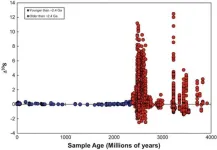
UNIVERSITY PARK, Pa. — The Earth’s crust continued a slow process of reworking for billions of years, rather than rapidly slowing its growth some 3 billion years ago, according to a Penn State-led research team. The new finding contradicts existing theories that suggest the rapid formation of tectonic plates earlier in Earth’s history, researchers said. They published the research in Geochemical Perspectives Letters. The work may help answer a fundamental question about our planet and could hold clues as to the formation of other planets, according to lead author ...

Read the release
Largest historic fire death toll belongs to aftermath of 1923 Japan Earthquake
Earth Science

Largest historic fire death toll belongs to aftermath of 1923 Japan Earthquake

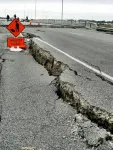
Fires that raged in the days following the 1 September 1923 magnitude 7.9 Kantō earthquake killed roughly 90% of the 105,000 people who perished in and around Tokyo, making it one of the deadliest natural disasters in history—comparable to the number of people killed in the World War II atomic bombing of Hiroshima. The story of the conflagration, not well-known outside of Japan, holds important lessons for earthquake scientists, emergency response teams and city planners, according to a new paper published ...

Read the release
Earth Science

Nature’s great survivors: Flowering plants survived the mass extinction that killed the dinosaurs

A new study by researchers from the University of Bath (UK) and Universidad Nacional Autónoma de México (Mexico) shows that flowering plants escaped relatively unscathed from the mass extinction that killed the dinosaurs 66 million years ago. Whilst they suffered some species loss, the devastating event helped flowering plants become the dominant type of plant today. There have been several mass extinctions in the Earth’s history, the most famous caused by an asteroid hit 66 million years ago, which has steered the course of life on Earth profoundly. The ...

Read the release
Virginia Tech has seismic role in earthquake center
Earth Science

Virginia Tech has seismic role in earthquake center

A Virginia Tech professor has an integral role in the establishment of a new center to study earthquakes in the Cascadia Subduction Zone off the coast of Oregon. The project will create an earthquake center to study subduction zones — fault lines where one tectonic plate slips beneath another — to enable collaborative research and community connections for increased hazard awareness. The Division of Earth Sciences in the Directorate for Geosciences at the National Science Foundation has awarded a $15 million grant over five years to establish the Cascadia Region ...

Read the release
Earth Science

Fiber from crustaceans, insects, mushrooms promotes digestion

Who can forget the stomach-churning moments when “Survivor” contestants forced down crunchy insects, among other unappetizing edibles, for a chance to win $1 million? In daring culinary challenges, the TV show’s contestants exhibited gastronomic bravery as viewers watched in discomfort. Digesting a crunchy critter starts with the audible grinding of its rigid protective covering — the exoskeleton. Unpalatable as it may sound, the hard cover might be good for the metabolism, according to a new study, in mice, from Washington University School of Medicine ...

Read the release
New research reveals Earth's ancient ‘breath’: Study reveals connection between atmospheric changes and mantle chemistry
Earth Science

New research reveals Earth's ancient ‘breath’: Study reveals connection between atmospheric changes and mantle chemistry

An international team of scientists have uncovered an important link between Earth’s early atmosphere and the chemistry of its deep mantle. The study, which was led by researchers at the University of Portsmouth and University of Montpellier, sheds new light on the evolution of life on our planet and the rise of atmospheric oxygen. The team investigated magmas formed in ancient subduction zones, where portions of Earth’s crust sink back into the mantle, from a pivotal moment in Earth's history – the Great Oxidation Event (GOE). This event, which is estimated to have happened between 2.1 ...

Read the release
Soils forming on the branches of trees are an overlooked forest habitat
Earth Science

Soils forming on the branches of trees are an overlooked forest habitat

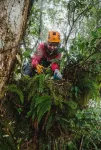
In certain trees, soils can form along branches and can support varied plant and animal life. However, what conditions these ‘canopy soils’ form in, and what kind of biodiversity they support, has been difficult to study. Now, researchers from Utah State University and Imperial College London have surveyed dozens of trees in Costa Rica, mapping the canopy soils to determine where they form and how they might be affected by a changing climate. The results are published in Geoderma. First author Jessica Murray, from Utah State University, said: “We found canopy soils most often form in cool, foggy areas in these tropical forests ...

Read the release
From the original Press-News collection. Issuers of news releases are responsible for the accuracy of their content.