THE ORIGINAL COLLECTION · SINCE 2010

Earth Science
press releases.

Research announcements from universities, hospitals and scientific institutions. Explore the stories, people and discoveries behind the headlines.

Original publication datesPage 11
FIND A STORY

Find a past release.

Dates and source material belong to the original release.

Read our research explainers

Browse the collection · original publication order

Earth Science

Palaeontology: Small dinosaurs flapped their feathers to scare prey

Small omnivorous and insectivorous dinosaurs may have flapped small, feathered primitive wings to scare prey out of hiding places, according to a study published in Scientific Reports. The authors built a robot dinosaur named Robopteryx to investigate how grasshoppers responded to different potential scaring behaviours, and speculate that the results could help explain why feathered wings evolved before they were capable of flight in some types of dinosaurs. Although the remains of numerous species of feathered dinosaurs have been discovered, so far only members of one group of dinosaurs known as ...

Read the release
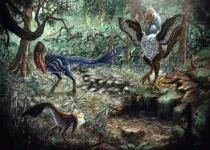

New oviraptor dinosaur from the US Hell Creek Formation lived at the end of the Age of Dinosaurs and weighed about the same as an average woman
Earth Science

New oviraptor dinosaur from the US Hell Creek Formation lived at the end of the Age of Dinosaurs and weighed about the same as an average woman

New oviraptor dinosaur from the US Hell Creek Formation lived at the end of the Age of Dinosaurs and weighed about the same as an average woman ### Article URL: https://journals.plos.org/plosone/article?id=10.1371/journal.pone.0294901 Article Title: A new oviraptorosaur (Dinosauria: Theropoda) from the end-Maastrichtian Hell Creek Formation of North America Author Countries: USA, Canada Funding: Funding for histology processing provided to HNW by Oklahoma State University for Health Sciences. Funding to GFF provided by the Royal Society (Grant NIF\R1\191527) and a Banting Fellowship ...

Read the release
Groundwater levels are sinking ever faster around the world
Earth Science

Groundwater levels are sinking ever faster around the world

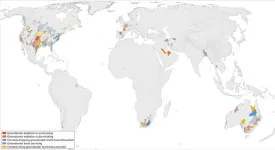
At the beginning of November, The New York Times ran the headline, “America is using up its groundwater like there’s no tomorrow.” The journalists from the renowned media outlet had published an investigation into the state of groundwater reserves in the United States. They came to the conclusion that the United States is pumping out too much groundwater. But the US isn’t an isolated case. “The rest of the world is also squandering groundwater like there’s no tomorrow,” says Hansjörg Seybold, Senior Scientist in the Department of Environmental Systems Science at ETH Zurich. He is coauthor ...

Read the release
Global groundwater depletion is accelerating, but is not inevitable
Earth Science

Global groundwater depletion is accelerating, but is not inevitable

(Santa Barbara, Calif.) — Groundwater is rapidly declining across the globe, often at accelerating rates. Writing in the journal Nature, UC Santa Barbara researchers present the largest assessment of groundwater levels around the world, spanning nearly 1,700 aquifers. In addition to raising the alarm over declining water resources, the work offers instructive examples of where things are going well, and how groundwater depletion can be solved. The study is a boon for scientists, policy makers and resource managers working to understand global groundwater dynamics. “This study was driven by curiosity. We wanted to better understand the state of global ...

Read the release
Earth Science

Norman A. Abrahamson earns top honor in seismology

The Seismological Society of America (SSA) will present its highest honor, the 2024 Harry Fielding Reid Medal, to Norman A. Abrahamson, adjunct professor of civil and environmental engineering at the University of California, Berkeley and University of California, Davis, and former engineering seismologist at Pacific Gas & Electric Co. Abrahamson, who will receive the Reid Medal at the 2024 SSA Annual Meeting, is recognized as a global leader in the field of probabilistic seismic hazard assessment (PSHA). Within the seismic hazard community, he is known for developing new methodologies as well as refining state-of-the-art practices ...

Read the release
Harley M. Benz honored by SSA for Advances in Communicating Earthquake Science
Earth Science

Harley M. Benz honored by SSA for Advances in Communicating Earthquake Science

For his work leading to profound improvements in how earthquake science is communicated to students, the media and decision makers, the Seismological Society of America (SSA) honors Harley M. Benz with the 2024 Frank Press Public Service Award. Benz, a former U.S. Geological Survey technical coordinator for the Advanced National Seismic System (ANSS) and the director of the USGS National Earthquake Information Center (NEIC), will receive the Press Award at the 2024 SSA Annual Meeting. In his nomination of Benz for the award, Gavin Hayes, senior science advisor for earthquake ...

Read the release
Study quantifies how aquifer depletion threatens crop yields
Earth Science

Study quantifies how aquifer depletion threatens crop yields

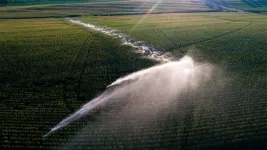
Three decades of data have informed a new Nebraska-led study that shows how the depletion of groundwater — the same that many farmers rely on for irrigation — can threaten food production amid drought and drier climes. The study found that, due in part to the challenges of extracting groundwater, an aquifer’s depletion can curb crop yields even when it appears saturated enough to continue meeting the demands of irrigation. Those agricultural losses escalate as an aquifer dwindles, the researchers reported, so that its ...

Read the release
Earth Science

Soil fungi may help explain the global gradient in forest diversity

A paper published in Nature Communications Biology contributes to the growing appreciation for the outsize role that microbes play in everything from human digestion to crop yields: Microbes in the soil—fungi in this case—appear to be influencing forest diversity on a global scale. Forests on Earth exhibit a marked gradient from the equator toward the poles: Tropical forests near the equator tend to include a large number of different species, whereas forests nearer the poles support less plant diversity. One explanation for this phenomenon maintains that soil pathogens, including bacteria and fungi, help create this gradient. ...

Read the release
Microbial awakening restructures high-latitude food webs as permafrost thaws
Earth Science

Microbial awakening restructures high-latitude food webs as permafrost thaws

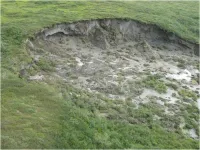
Alaska is on the front lines of climate change, experiencing some of the fastest rates of warming of any place in the world. And when temperatures rise in the state’s interior—a vast high-latitude region spanning 113 million acres—permafrost there not only thaws, releasing significant amounts of its stored carbon back into the atmosphere where it further accelerates rising temperatures, but it decays. This decomposition has the potential to infuse above- and belowground food webs with carbon, which can affect ...

Read the release
Earth Science

Was the earthquake induced or natural? New study tests frameworks to answer the question

Using questionnaires created to determine whether a particular earthquake is natural or induced by human activity, a panel of experts concluded that the November 2022 magnitude 5.2 Peace River earthquake sequence in Alberta, Canada was likely to be induced. The case study published in Seismological Research Letters was a serendipitous test of two recent questionnaire-based frameworks established to distinguish natural and induced earthquakes, the latter of which are mostly caused by hydraulic fracturing or injected water disposal wells associated with oil and gas recovery. The Peace River ...

Read the release
Earth Science

Study analyzes what babies hear, say on six continents

Elika Bergelson, associate professor of psychology at Harvard University, studies how infants and toddlers learn language from the world around them. The developmental psychologist specifically strives to parse the various theories that account for the onset and eventual mastery of language comprehension and production. Bergelson’s latest paper, published this month in the Proceedings of the National Academy of Sciences, represents a more global approach to developing and testing such theories. Written ...

Read the release
Novel mineral piezocatalysts offer innovative approaches for soil remediation
Earth Science

Novel mineral piezocatalysts offer innovative approaches for soil remediation

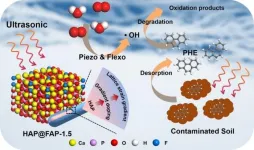
Polycyclic aromatic hydrocarbons (PAHs) removal in the soil environment is of great significance for repairing the long-term damaged ecosystem. However, the poor mass transfer process and low catalytic activity in most conventional methods lead to limited removal efficiency. A team of scientists has constructed a gradient F-doping hydroxyapatite core-shell structure (HAP@FAP) with the coupling effect of flexoelectricity and piezoelectricity for degradation of PAHs in soil that provide innovative approaches for soil remediation. Their work was published in the journal Industrial Chemistry & Materials in October 2023. The poor mass ...

Read the release
Earth Science

More than a meteorite: New clues about the demise of dinosaurs

What wiped out the dinosaurs? A meteorite plummeting to Earth is only part of the story, a new study suggests. Climate change triggered by massive volcanic eruptions may have ultimately set the stage for the dinosaur extinction, challenging the traditional narrative that a meteorite alone delivered the final blow to the ancient giants. That’s according to a study published in Science Advances, co-authored by Don Baker, a professor in McGill University’s Department of Earth and Planetary Sciences. The research team delved into volcanic eruptions of the Deccan Traps—a ...

Read the release
Earth Science

A mineral produced by plate tectonics has a global cooling effect, study finds

MIT geologists have found that a clay mineral on the seafloor, called smectite, has a surprisingly powerful ability to sequester carbon over millions of years. Under a microscope, a single grain of the clay resembles the folds of an accordion. These folds are known to be effective traps for organic carbon. Now, the MIT team has shown that the carbon-trapping clays are a product of plate tectonics: When oceanic crust crushes against a continental plate, it can bring rocks to the surface that, over ...

Read the release
Earth Science

'Dolomite Problem': 200-year-old geology mystery resolved

Images // Video ANN ARBOR—For 200 years, scientists have failed to grow a common mineral in the laboratory under the conditions believed to have formed it naturally. Now, a team of researchers from the University of Michigan and Hokkaido University in Sapporo, Japan have finally pulled it off, thanks to a new theory developed from atomic simulations. Their success resolves a long-standing geology mystery called the "Dolomite Problem." Dolomite—a key mineral in the Dolomite mountains in Italy, Niagara Falls, the White Cliffs of Dover and Utah's Hoodoos—is very abundant in rocks older than 100 million years, but nearly absent in younger ...

Read the release
New near-complete skeleton of a bird-like dinosaur is found in a position which suggests it slept like modern birds
Earth Science

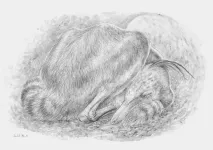
New near-complete skeleton of a bird-like dinosaur is found in a position which suggests it slept like modern birds

New near-complete skeleton of a bird-like dinosaur is found in a position which suggests it slept like modern birds ### Article URL: https://journals.plos.org/plosone/article?id=10.1371/journal.pone.0293801 Article Title: A new alvarezsaurid dinosaur (Theropoda, Alvarezsauria) from the Upper Cretaceous Baruungoyot Formation of Mongolia provides insights for bird-like sleeping behavior in non-avian dinosaurs Author Countries: Japan, Mongolia Funding: Funding for this project was granted by Research Fellowships from the Japan Society for the Promotion of Science (JSPS 21J12938) (to KK) and Ami Koshimizu (Endless Glory Office Restart Co., Ltd.) (to KK). The funders had ...

Read the release
New study reveals surprising insights into feeding habits of carnivorous dinosaurs in North America
Earth Science

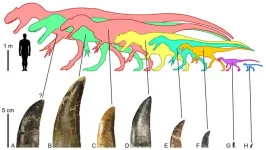
New study reveals surprising insights into feeding habits of carnivorous dinosaurs in North America

New research sheds light on the dining habits of ancient carnivorous dinosaurs from Jurassic rocks of the USA. A recent scientific study published in PeerJ Life & Environment by Roberto Lei (Università degli Studi di Modena e Reggio Emilia) and colleagues explores the bite marks left on the ancient bones of the giant long-necked sauropod dinosaurs like Diplodocus and Brontosaurus by carnivorous theropod dinosaurs. Tooth-marked bones provide invaluable insights into the feeding behaviors of long-extinct carnivorous creatures. While it is commonly thought that the giant tyrannosaurs were the primary culprits behind these tell-tale marks on dinosaur ...

Read the release
Earth Science

Some of today’s earthquakes may be aftershocks from quakes in the 1800s

American Geophysical Union 13 November 2023 AGU Release No. 23-42 For Immediate Release This press release and accompanying multimedia are available online at: https://news.agu.org/press-release/some-of-todays-earthquakes-may-be-aftershocks-from-quakes-in-the-1800s Some of today’s earthquakes may be aftershocks from quakes in the 1800s Aftershocks follow large earthquakes — sometimes for weeks, other times for decades. But in the U.S., some areas may be experiencing shocks from centuries-old events. AGU press contact: Liza Lester, +1 (202) 777-7494, news@agu.org (UTC-5 hours) Contact ...

Read the release
Single gene controls Corn Belt weed's resistance to soil-applied herbicide
Earth Science

Single gene controls Corn Belt weed's resistance to soil-applied herbicide

URBANA, Ill. — Waterhemp, the aggressive weed threatening Corn Belt crop production, is throwing curveballs once again, according to researchers at the University of Illinois Urbana-Champaign. The weed has famously developed resistance to not one or two, but seven herbicide sites-of-action classes, nearly exhausting the chemical tools farmers can use to defend their livelihood. In a new Weed Science study, U. of I. researchers show that a single major gene is responsible for waterhemp’s resistance to S-metolachlor ...

Read the release
New dates for landslides reveal past Seattle fault earthquakes
Earth Science

New dates for landslides reveal past Seattle fault earthquakes

New maps of more than 1,000 deep-seated landslides in the Puget Lowlands of Washington State provide evidence of the last major earthquake along the Seattle Fault about 1,100 years ago—and may also hold traces of older earthquakes along the fault. Clusters of landslides offer a potential record of earthquakes, if researchers can determine when the landslides occurred. The new study published in the Bulletin of the Seismological Society of America combines information about the location of these Puget Lowlands landslides along with new dates obtained from measuring the surface roughness of the landslides. The ...

Read the release
Earth Science

Crust-forming algae are displacing corals in tropical waters worldwide

Over the past few decades, algae have been slowly edging corals out of their native reefs across the globe by blocking sunlight, wearing the corals down physically, and producing harmful chemicals. But in recent years, a new type of algal threat has surfaced in tropical regions like the Caribbean—one that spreads quickly and forms a crust on top of coral and sponges, suffocating the organisms underneath and preventing them from regrowing. In an article publishing in the journal Current Biology on November 6, a team of marine biologists report that peyssonnelioid alga crusts, or PACs, ...

Read the release
UMass hydrogeologists develop innovative way to predict saltwater intrusion into groundwater using Plymouth, Mass. as test case
Earth Science

UMass hydrogeologists develop innovative way to predict saltwater intrusion into groundwater using Plymouth, Mass. as test case

November 2, 2023 UMass Hydrogeologists Develop Innovative Way to Predict Saltwater Intrusion into Groundwater Using Plymouth, Mass. as Test Case Working closely with local conservation group, researchers develop new model to predict climate-change driven saltwater intrusion that is transferable to other vulnerable coastal communities AMHERST, Mass. – As the world warms and ice sheets melt, the ocean continually rises. The greater Boston area can expect to see between one and six feet of sea level rise by 2100, according to recent ...

Read the release
Hebrew prayer book fills gap in Italian earthquake history
Earth Science

Hebrew prayer book fills gap in Italian earthquake history

The chance discovery of a note written in a 15th century Hebrew prayer book fills an important gap in the historical Italian earthquake record, offering a brief glimpse of a previously unknown earthquake affecting the Marche region in the central Apennines. Paolo Galli, who found the note in the Apostolic Vatican Library while looking for contemporaneous accounts of another historic Italian earthquake, writes in Seismological Research Letters that the note “not only helps us partially fill a gap in the seismic history ...

Read the release
Giant dinosaur carcasses might have been important food sources for Jurassic predators
Earth Science

Giant dinosaur carcasses might have been important food sources for Jurassic predators

Carnivorous dinosaurs might have evolved to take advantage of giant carcasses, according to a study published November 1, 2023 in the open-access journal PLOS ONE by Cameron Pahl and Luis Ruedas of Portland State University, Oregon and colleagues. Carnivorous dinosaurs lived in ecosystems rich with both living and dead prey. The authors hypothesize that giant carcasses, like those of sauropod dinosaurs, might have provided a major source of food for large carnivores. To test this hypothesis, the researchers created an agent-based model, a simplified virtual simulation of a dinosaur ecosystem. This model was based on the ancient fauna of the Jurassic-aged ...

Read the release
Venus had Earth-like plate tectonics billions of years ago, study suggests
Earth Science

Venus had Earth-like plate tectonics billions of years ago, study suggests

PROVIDENCE, R.I. [Brown University] — Venus, a scorching wasteland of a planet according to scientists, may have once had tectonic plate movements similar to those believed to have occurred on early Earth, a new study found. The finding sets up tantalizing scenarios regarding the possibility of early life on Venus, its evolutionary past and the history of the solar system. Writing in Nature Astronomy, a team of scientists led by Brown University researchers describes using atmospheric data from Venus and computer modeling to show that the composition of the planet’s current atmosphere and surface pressure would only have been possible as a result of an early form of plate ...

Read the release
From the original Press-News collection. Issuers of news releases are responsible for the accuracy of their content.