THE ORIGINAL COLLECTION · SINCE 2010

Earth Science
press releases.

Research announcements from universities, hospitals and scientific institutions. Explore the stories, people and discoveries behind the headlines.

Original publication datesPage 10
FIND A STORY

Find a past release.

Dates and source material belong to the original release.

Read our research explainers

Browse the collection · original publication order

Rock steady: Study reveals new mechanism to explain how continents stabilized
Earth Science

Rock steady: Study reveals new mechanism to explain how continents stabilized

UNIVERSITY PARK, Pa. — Ancient, expansive tracts of continental crust called cratons have helped keep Earth’s continents stable for billions of years, even as landmasses shift, mountains rise and oceans form. A new mechanism proposed by Penn State scientists may explain how the cratons formed some 3 billion years ago, an enduring question in the study of Earth’s history. The scientists reported today (May 8) in the journal Nature that the continents may not have emerged from Earth’s ...

Read the release
Researchers show that slow-moving earthquakes are controlled by rock permeability
Earth Science

Researchers show that slow-moving earthquakes are controlled by rock permeability

Earthquakes are the most dramatic and noteworthy results of tectonic plate movement. They are often destructive and deadly, or at the very least physically felt — they’re literally groundbreaking geological events. However not all tectonic movement results in effects that humans can perceive. Slow slip events occur when pent up tectonic forces are released over the course of a few days or months, like an earthquake unfolding in slow motion. The more gradual movement means people won’t feel the earth shaking beneath their feet and buildings won’t collapse. But the lack of destruction does not make slow slip events less scientifically ...

Read the release
Earth Science

Seismic waves used to track LA’s groundwater recharge after record wet winter

Record-setting storms in 2023 filled California’s major reservoirs to the brim, providing some relief in a decades-long drought, but how much of that record rain trickled underground? Shujuan Mao of Stanford University and her colleagues used a surprising technique to answer this question for the greater Los Angeles metropolitan area. They analyzed changes in the velocity of seismic waves traveling through the LA basin, tracking these changes in space and time between January and October 2023. As Mao reported at the Seismological Society of America (SSA)’s 2024 Annual Meeting, ...

Read the release
Earth Science

Do earthquake hazard maps predict higher shaking than actually occurred?

A new study by Northwestern University researchers and coworkers explains a puzzling problem with maps of future earthquake shaking used to design earthquake-resistant buildings. Although seismologists have been making these maps for about 50 years, they know very little about how well they actually forecast shaking, because large damaging earthquakes are infrequent in any area. To learn more, the Northwestern research team compiled shaking data from past earthquakes. These include CHIMP (California Historical Intensity Mapping Project) ...

Read the release
Rock solid evidence: Angola geology reveals prehistoric split between South America and Africa
Earth Science

Rock solid evidence: Angola geology reveals prehistoric split between South America and Africa

DALLAS (SMU) – An SMU-led research team has found that ancient rocks and fossils from long-extinct marine reptiles in Angola clearly show a key part of Earth’s past – the splitting of South America and Africa and the subsequent formation of the South Atlantic Ocean. With their easily visualized “jigsaw-puzzle fit,” it has long been known that the western coast of Africa and the eastern coast of South America once nestled together in the supercontinent Gondwana — which broke off from the larger landmass of Pangea. The research team says the southern coast of Angola, where they dug up the samples, arguably provides the most complete ...

Read the release
Dinosaur study challenges Bergmann’s rule
Earth Science

Dinosaur study challenges Bergmann’s rule

When you throw dinosaurs into the mix, sometimes you find that a rule simply isn’t. A new study led by scientists at the University of Alaska Fairbanks and the University of Reading calls into question Bergmann’s rule, an 1800s-era scientific principle stating that animals in high-latitude, cooler climates tend to be larger than close relatives living in warmer climates. The fossil record shows otherwise. “Our study shows that the evolution of diverse body sizes in dinosaurs and mammals cannot be reduced to simply being a function of latitude or temperature,” said Lauren Wilson, a UAF graduate student and a lead author ...

Read the release
Early dinosaurs grew up fast, but they weren’t the only ones
Earth Science

Early dinosaurs grew up fast, but they weren’t the only ones

The earliest dinosaurs had rapid growth rates, but so did many of the other animals living alongside them, according to a study published April 3, 2024 in the open-access journal PLOS ONE by Kristina Curry Rogers of Macalester College, Minnesota and colleagues. Dinosaurs grew up fast, a feature that likely set them apart from many other animals in their Mesozoic (252 to 66 million years ago) ecosystems. Some researchers have proposed that these elevated growth rates were key to the global success of dinosaurs, but little is known about the growth strategies of the earliest dinosaurs. In this study, Rogers and colleagues performed histological analysis, examining patterns of bone ...

Read the release
Demand for critical minerals puts African Great Apes at risk
Earth Science

Demand for critical minerals puts African Great Apes at risk

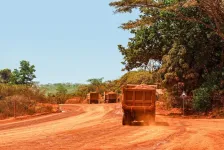
A recent study led by researchers from the German Centre for Integrative Biodiversity Research (iDiv), the Martin Luther University Halle-Wittenberg (MLU) and the non-profit conservation organization Re:wild shows that the threat of mining to the great ape population in Africa has been greatly underestimated. Their results have been published in Science Advances. The rising demand for critical minerals, such as copper, lithium, nickel, cobalt, and other rare earth elements required for the large-scale transition to cleaner energy is causing a surge of mining in Africa, where a large share of those mineral resources is still unexploited. ...

Read the release
Researchers propose new step in tectonic squeeze that turns seafloor into mountains
Earth Science

Researchers propose new step in tectonic squeeze that turns seafloor into mountains

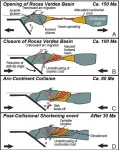
Scientists use tiny minerals called zircons as geologic timekeepers. Often no bigger than a grain of sand, these crystals record chemical signatures of the geological environment where they formed. In a new study led by scientists at The University of Texas at Austin, researchers used them to describe what could be an overlooked step in a fundamental tectonic process that raises seafloors into mountains. In a study published in the journal Geology, the researchers describe zircons from the Andes mountains of Patagonia. Although the zircons formed when tectonic plates were colliding, they have a chemical signature associated ...

Read the release
Twist of groundwater contaminants
Earth Science

Twist of groundwater contaminants

In recent years, the world has been experiencing floods and droughts as extreme rainfall events have become more frequent due to climate change. For this reason, securing stable water resources throughout the year has become a national responsibility called 'water security', and 'Aquifer Storage Recovery (ASR)', which stores water in the form of groundwater in the ground when water resources are available and withdraws it when needed, is attracting attention as an effective water resource management technique. The Korea Institute of Science and Technology (KIST) announced that a team of Dr. Seunghak ...

Read the release
Earth Science

In paleontology, correct names are keys to accurate study

COLUMBUS, Ohio – When the skeletal remains of a giant ground sloth were first unearthed in 1796, the discovery marked one of the earliest paleontological finds in American history. The animal, named Megalonyx by Thomas Jefferson in 1799, was the first genus of fossil named from the United States. Thought to have roamed North America during one of the last ice ages, the extinct giant ground sloth was an herbivorous mammal resembling a large bear — at full size, it likely reached nearly 10 feet tall (3 meters) and weighed about as much as a small elephant. The report made by Jefferson, an avid fossil collector who was known to keep ...

Read the release
DayCent-CABBI: new model integrates soil microbes, large perennial grasses
Earth Science

DayCent-CABBI: new model integrates soil microbes, large perennial grasses

Of all the carbon stored in ecosystems around the world, about half can be found in soils. Depending on climate, vegetation, and management, soils can be either a carbon source or a sink. Natural climate solutions (NCS) offer a promising opportunity to bring us closer to our net-zero emissions goals by removing carbon dioxide from the atmosphere and storing it in plant biomass and soil. The growth of bioenergy feedstocks has great potential in this regard, because these grasses both build soil carbon and have the potential to be used to produce carbon-neutral biofuels and bioproducts. Over ...

Read the release
Seismological study shows ancient lower mantle flow field under Philippine sea plate
Earth Science

Seismological study shows ancient lower mantle flow field under Philippine sea plate

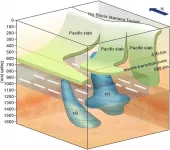
Researchers from China and Japan have discovered distinct characteristics of the lower mantle flow field. They investigated seismic anisotropy in the upper part of the lower mantle beneath the Philippine Sea Plate (PSP) and found that the ancient lower mantle flow field is still preserved there. The study was published in Nature Geoscience. The lower mantle is an important layer of the Earth and may play an important role in the evolution and material cycling of Earth's interior. It is generally believed to be not only the final destination of subducted slabs, ...

Read the release
Diving dinosaurs? Certain methods may be unsuitable for inferring dino lifestyles
Earth Science

Diving dinosaurs? Certain methods may be unsuitable for inferring dino lifestyles

The support for the hypothesis of Spinosaurus as an aquatic pursuit predator may have had fundamental flaws, according to Nathan Myhrvold of Intellectual Ventures, US and colleagues, in a study published March 6, 2024 in the open-access journal PLOS ONE. Paleontologists generally agree that the famous Spinosaurus was a fish-eater, but exactly how these dinosaurs caught their prey is the subject of lively debate, with some researchers suggesting that they hunted on the shore, some that they waded or swam in the shallows, and others that they were aquatic pursuit predators. One recent study provided support for the latter hypothesis using a fairly new ...

Read the release
Giant dinosaur was “heron from hell,” not a deep diver, says new analysis
Earth Science

Giant dinosaur was “heron from hell,” not a deep diver, says new analysis

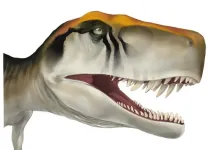
For years, controversy has swirled around how a Cretaceous-era, sail-backed dinosaur—the giant Spinosaurus aegyptiacus—hunted its prey. Spinosaurus was among the largest predators ever to prowl the Earth and one of the most adapted to water, but was it an aquatic denizen of the seas, diving deep to chase down its meals, or a semiaquatic wader that snatched prey from the shallows close to shore? A new analysis led by paleontologists from the University of Chicago reexamines the density ...

Read the release
Oregon State researchers make key advance toward removing pesticide from groundwater
Earth Science

Oregon State researchers make key advance toward removing pesticide from groundwater

CORVALLIS, Ore. – Scientists led by an Oregon State University chemistry researcher are closing in on a new tool for tackling the global problem of weedkiller-tainted groundwater. Kyriakos Stylianou of the OSU College of Science led an international team that identified a material known as a metal-organic framework, or MOF, that showed an ability to completely remove, and also break down, the oft-used herbicide glyphosate. The MOF, one of four tested in a collaboration among scientists from Oregon State and Tiangong University in China, is based on scandium, chemical symbol Sc, ...

Read the release
Restoration of degraded areas in semi-arid region contributes to ‘return’ of soil microorganisms, study shows
Earth Science

Restoration of degraded areas in semi-arid region contributes to ‘return’ of soil microorganisms, study shows

Strategies deployed for the restoration of degraded land have had promising results in Brazil’s semi-arid region, improving the microbial properties of the soil and contributing to a return of native ecosystem services. The techniques include removal of cattle or restriction of their access to specific areas of pasture; cultivation of cover crops; and terracing to control erosion. Recovery of soil microbial properties maintains biodiversity and raises crop yields, contributing to agricultural ...

Read the release
Geologists explore the hidden history of Colorado’s Spanish Peaks
Earth Science

Geologists explore the hidden history of Colorado’s Spanish Peaks

If you’ve driven the mostly flat stretch of I-25 in Colorado from Pueblo to Trinidad, you’ve seen them: the Spanish Peaks, twin mountains that soar into the sky out of nowhere, reaching altitudes of 13,628 and 12,701 feet above sea level. In a new study, geologists from the University of Colorado Boulder have laid out a timeline for the emergence of these majestic but isolated mountains. The team’s findings could bring scientists closer to answering one of the most enduring puzzles in Colorado geology: What made ...

Read the release
Scientists provide first detailed estimates of how much sediment is supplied to coral islands from the reef system
Earth Science

Scientists provide first detailed estimates of how much sediment is supplied to coral islands from the reef system

Scientists have produced the first detailed estimates of how much sediment is transported onto the shores of coral reef islands, and how that might enable them to withstand the future threats posed by climate change. Coral reef islands are low-lying accumulations of sand and gravel-sized sediment deposited on coral reef surfaces. The sediments are derived from the broken down remains of corals and other organisms that grow on the surrounding reef. Therefore, the rate of supply of sediment from reefs is a critical control on island formation and future change. The international team of researchers used data available for 28 reef islands in the Indian and Pacific Oceans, widely ...

Read the release
Earth Science

Streams connected to groundwater show improved detoxification and microbial diversity

Washington, D.C. — Feb. 23, 2024 —Streams with ample connections to shallow groundwater flowpaths have greater microbial diversity and are more effective at preventing toxic forms of metals—often products of upstream mining—from entering and being transported downstream. These streams are also better at detoxifying those metals already present. The research is published this week in Applied and Environmental Microbiology, a journal of the American Society for Microbiology. Under favorable conditions, the zone lining a stream channel stores nutrients and oxygen that meet nutritional and respiratory needs of local invertebrates and fish. That ...

Read the release
Earth Science

Potassium depletion in soil threatens global crop yields

Potassium deficiency in agricultural soils is a largely unrecognised but potentially significant threat to global food security if left unaddressed, finds new research involving researchers at UCL, University of Edinburgh and the UK Centre for Ecology & Hydrology. The study, published in Nature Food, found that more potassium is being removed from agricultural soils than is being added, throughout many regions of the world. It also gives a series of recommendations for how to mitigate the issue. Potassium is a vital nutrient for plant growth that ...

Read the release
Earth Science

Earthquake fatality measure offers new way to estimate impact on countries

A new measure that compares earthquake-related fatalities to a country’s population size concludes that Ecuador, Lebanon, Haiti, Turkmenistan, Iran and Portugal have experienced the greatest impact from fatalities in the past five centuries. The new impact measure, introduced in the Bulletin of the Seismological Society of America by Max Wyss and colleagues at International Centre for Earth Simulation Foundation, is called the earthquake fatality load or EQFL. The EQFL of a particular earthquake is the ratio of earthquake fatalities to the population estimate for the country in the year of the earthquake. In their study, Wyss, Michel Speiser ...

Read the release
The hidden rule for flight feathers—and how it could reveal which dinosaurs could fly
Earth Science

The hidden rule for flight feathers—and how it could reveal which dinosaurs could fly

Birds can fly— at least, most of them can. Flightless birds like penguins and ostriches have evolved lifestyles that don’t require flight. However, there’s a lot that scientists don’t know about how the wings and feathers of flightless birds differ from their airborne cousins. In a new study in the journal PNAS, scientists examined hundreds of birds in museum collections and discovered a suite of feather characteristics that all flying birds have in common. These “rules” provide clues as to how the dinosaur ancestors of modern birds first evolved the ability to fly, ...

Read the release
Ancient rocks improve understanding of tectonic activity between earthquakes
Earth Science

Ancient rocks improve understanding of tectonic activity between earthquakes

UNIVERSITY PARK, Pa. — Rocks once buried deep in ancient subduction zones — where tectonic plates collide — could help scientists make better predictions of how these zones behave during the years between major earthquakes, according to a research team from Penn State and Brown University. Clues from rock formations in Alaska and Japan allowed the scientists to develop a new model to predict the pressure solution activity in subduction zones, the researchers reported in the journal Science Advances. ...

Read the release
Contrasting response of rice rhizosphere microbiomes to in situ cadmium-contaminated soil remediation
Earth Science

Contrasting response of rice rhizosphere microbiomes to in situ cadmium-contaminated soil remediation

Understanding the responses of different rhizosphere microbial lineages to soil amendments during in situ remediation of Cd-contaminated soil is of great importance in the assessment of the restoration and crop health. This study demonstrates the distinct responses of rice rhizosphere microbial communities to soil amendment applications, highlighting the interactive associations between microbiomes, which is vital for enhancing our ability to develop effective strategies for sustainable soil management. The researchers' findings appeared December 4, 2023 in Soil Ecology Letters. A series ...

Read the release
From the original Press-News collection. Issuers of news releases are responsible for the accuracy of their content.