THE ORIGINAL COLLECTION · SINCE 2010

Energy
press releases.

Research announcements from universities, hospitals and scientific institutions. Explore the stories, people and discoveries behind the headlines.

Original publication datesPage 29
FIND A STORY

Find a past release.

Dates and source material belong to the original release.

Read our research explainers

Browse the collection · original publication order

Scientists discover the highest energy gamma-rays ever from a pulsar
Energy

Scientists discover the highest energy gamma-rays ever from a pulsar

Scientists using the H.E.S.S. observatory in Namibia have detected the highest energy gamma rays ever from a dead star called a pulsar. The energy of these gamma rays clocked in at 20 tera-electronvolts, or about ten trillion times the energy of visible light. This observation is hard to reconcile with the theory of the production of such pulsed gamma rays, as the international team reports in the journal Nature Astronomy. Pulsars are the left-over corpses of stars that spectacularly exploded in a supernova. The explosions leave behind ...

Read the release

PPPL awarded $5 million to lead an Energy Earthshot Research Center focused on clean hydrogen
Energy

PPPL awarded $5 million to lead an Energy Earthshot Research Center focused on clean hydrogen

Lessening the effects of climate change will require a variety of innovations and a lot of ingenuity. Now, a new center led by the U.S. Department of Energy’s (DOE) Princeton Plasma Physics Laboratory (PPPL) will help these efforts by advancing the understanding of plasma-based clean hydrogen production. PPPL was selected to lead a DOE Energy Earthshot Research Center (EERC) as part of the Hydrogen Shot™, which aims to reduce the cost of hydrogen by 80%. With funding from the DOE’s Office of Science, the EERCs support fundamental ...

Read the release
Energy

Registration now open for Energy Department’s National Science Bowl®

Washington, D.C. – Registration is open for the 34th National Science Bowl® (NSB), hosted by the U.S. Department of Energy (DOE) Office of Science. Thousands of students compete in the contest annually as it has grown into one of the largest academic math and science competitions in the country. Teams – four or five students and a teacher who serves as a coach – can sign up to participate in the NSB by registering with the coordinator for their regional competition. Details can be found on the NSB registration page. The competition is divided into two categories: high school and middle school. Regional competitions typically last one or two days ...

Read the release
Energy

Department of Energy announces up to $500 million for basic research to advance the frontiers of science

WASHINGTON, D.C. - The U.S. Department of Energy (DOE) today announced up to $500 million in funding for basic research in support of DOE’s clean energy, economic, and national security goals. The funding will advance the priorities of DOE’s Office of Science and its major programs, including Advanced Scientific Computing Research, Basic Energy Sciences, Biological and Environmental Research, Fusion Energy Sciences, High Energy Physics, Nuclear Physics, Isotope R&D and Production, and Accelerator R&D and Production. This funding opportunity will help achieve the Biden Administration’s ...

Read the release
Energy

DOE announces $264 million for basic research in support of Energy Earthshots™

WASHINGTON, D.C. — The U.S. Department of Energy (DOE) today announced $264 million in funding for 29 projects to develop solutions for the scientific challenges underlying DOE’s Energy Earthshots™ Initiative to advance clean energy technologies within the decade. The funding will support 11 new Energy Earthshot Research Centers led by DOE National Laboratories and 18 university research teams addressing one or more of the Energy Earthshots™ that are focused on six different areas, including industrial decarbonization, carbon storage, and offshore wind. The Department launched the Energy Earthshots ...

Read the release
Energy

Ball milling provides high pressure benefits to battery materials

Cheaper, more efficient lithium-ion batteries could be produced by harnessing previously overlooked high pressures generated during the manufacturing process. Scientists at the University of Birmingham have discovered that routine ball milling can cause high pressure effects on battery materials in just a matter of minutes, providing a vital additional variable in the process of synthesizing battery materials. The research (part of the Faraday Institution funded CATMAT project), led by Dr Laura Driscoll, Dr Elizabeth Driscoll and Professor Peter Slater at the University of Birmingham is published in RSC Energy Environmental Science. The use ...

Read the release
Energy

Shoring up the West's grid against extreme weather

The West’s electrical grid is a 136,000-mile patchwork of transmission lines connecting two Canadian provinces, 11 Western states and pieces of three others, serving 80 million people. While it drives a vital and growing piece of the U.S. economy, this fragile network remains vulnerable to increasingly extreme weather and wildfire risks, according to Masood Parvania, an associate professor of electrical and computing engineering at the University of Utah’s John and Marcia Price College of Engineering. “These ...

Read the release
A new twist on rechargeable battery performance
Energy

A new twist on rechargeable battery performance

RICHLAND, Wash.—For decades, researchers have assumed that the inevitable filmy buildup on electrodes inside rechargeable batteries is the driver of performance loss. Now, we know that view is backward. The buildup of mossy or tree-like structured lithium metal deposits on battery electrodes is not the root cause of performance loss, but rather a side effect. The first direct measurement of the electrical properties at the boundary between the solid electrode and the liquid electrolyte inside a rechargeable battery is reported today in Nature Energy. The study, led by a research team at the Department of Energy’s Pacific Northwest National Laboratory, shows that the so-called ...

Read the release
HsGDY on Ni foam for loading MoS2/Ni3S2 to enhance the performance on lithium-sulfur batteries
Energy

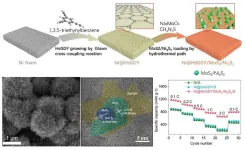
HsGDY on Ni foam for loading MoS2/Ni3S2 to enhance the performance on lithium-sulfur batteries

They published their work on Sep. 26 in Energy Material Advances. "The booming progress of electric vehicles demands next-generation energy storage technologies with high energy density, low cost, and longevity." said Lu, a professor at the college of chemistry and chemical engineering in Shantou university. "Lithium-sulfur batteries are identified as a promising energy storage system because of their high ultrahigh energy density and large theoretical capacity. However, they are limited by the poor electronic conductivity of sulfur, volume changes of the cathode, and shuttle effect." Lu explained that the conversion of polysulfides (Li2Sn, ...

Read the release
Chi-Nu experiment ends with data to support nuclear security, energy reactors
Energy

Chi-Nu experiment ends with data to support nuclear security, energy reactors

The results of the Chi-Nu physics experiment at Los Alamos National Laboratory have contributed essential, never-before-observed data for enhancing nuclear security applications, understanding criticality safety and designing fast-neutron energy reactors. The Chi-Nu project, a years-long experiment measuring the energy spectrum of neutrons emitted from neutron-induced fission, recently concluded the most detailed and extensive uncertainty analysis of the three major actinide elements — uranium-238, uranium-235 and plutonium-239. “Nuclear fission and related nuclear chain ...

Read the release
Energy

Separating molecules requires lots of energy. This new, heat-resistant membrane could change that

BUFFALO, N.Y. – Industry has long relied upon energy-intensive processes, such as distillation and crystallization, to separate molecules that ultimately serve as ingredients in medicine, chemicals and other products. In recent decades, there has been a push to supplant these processes with membranes, which are potentially a lower-cost and eco-friendly alternative. Unfortunately, most membranes are made from polymers that degrade during use, making them impractical. To solve this problem, a University at Buffalo-led research team ...

Read the release
Energy

Department of Energy announces $30 million for research to accelerate scientific advances at user facilities

WASHINGTON, D.C. - Today, the U.S. Department of Energy (DOE) announced $30 million in funding for three projects to increase scientific productivity and discoveries across DOE light source, neutron source, and high-performance computing and networking facilities. The DOE Office of Science provides researchers with access to the most advanced tools of modern science. The awarded projects are focused on developing the computational mathematics and scientific computing research needed to accelerate discovery and innovation at DOE’s X-ray and neutron source user facilities. “Scientific research is becoming ever more dependent on complex data ...

Read the release
Energy

Prolonged mismatch between calories eaten and burned may be putting many athletes at risk of REDs (Relative Energy Deficiency in Sport)

The estimated prevalence of REDs varies by sport, ranging from 15% to 80%. The syndrome often goes unrecognised by athletes themselves, their coaches, and team clinicians, and may unwittingly be exacerbated by the ‘sports culture,’ because of the perceived short term gains on performance from intentionally or unintentionally limiting calorie intake, warns the Statement. REDs was first recognised as a distinct entity by the IOC in a 2014 consensus statement. This latest consensus, informed by a panel of international experts, draws on key advances in REDs science ...

Read the release
Smart carts could detect fire hazards in nuclear facilities
Energy

Smart carts could detect fire hazards in nuclear facilities

A University of Texas at Arlington researcher is working with a not-for-profit cooperative to develop and test a smart, automated cart that could replace humans who conduct fire hazard safety checks in nuclear power facilities. Chan Kan, a UT Arlington assistant professor in the Department of Industrial, Manufacturing and Systems Engineering (IMSE), will lead the $250,000 project with the cooperative Utilities Service Alliance. “We will develop and build a cart with state-of-the-art equipment that could replace human testing of nuclear facilities,” Kan said. Currently, when the primary fire-sensing system fails or ...

Read the release
Energy

US Department of Energy Office of Science awards $115M for High Rigidity Spectrometer project at FRIB

Images EAST LANSING, Mich. – The U.S. Department of Energy Office of Science, or DOE-SC, has awarded $115 million for the High Rigidity Spectrometer, or HRS, project at the Facility for Rare Isotope Beams, or FRIB, at Michigan State University. The HRS instrument will enable scientists to characterize the properties of isotopes that are created in rare-isotope reactions produced at about 50% of the speed of light. With the ability to measure properties such as the mass, charge and velocity of rare isotopes produced in those conditions, HRS will be a centerpiece experimental instrument ...

Read the release
Re-wetting is key for boosting CO2 storage in southern peatlands
Energy

Re-wetting is key for boosting CO2 storage in southern peatlands

DURHAM, N.C. – Maintaining a water level between 20 and 30 centimeters below the local water table will boost southern peatlands’ carbon storage and reduce the amount of climate-warming carbon dioxide (CO2) and methane they release back into the atmosphere during dry periods by up to 90%, a new Duke University study finds. “We could immediately reduce U.S. carbon losses by 2% to 3% of our total national goal by applying this guideline on about 100,000 acres of restored or partially restored peatlands currently found across ...

Read the release
Gold nanoclusters can improve electrochemical water splitting to produce hydrogen
Energy

Gold nanoclusters can improve electrochemical water splitting to produce hydrogen

As energy demand continues to rise, research into new, efficient renewable and clean energy sources is an urgent priority. Currently, renewable energy sources like solar, wind, tide, and geothermal make up less than 40% of the current energy demand. Increasing this percentage and reducing the amount of fossil fuels used will require other, more efficient renewable and clean energy sources. Hydrogen is a promising alternative, but it is currently produced using steam reforming, which is inefficient and produces CO2 emissions. Electrochemical water splitting, also called ...

Read the release
Ultrathin films achieve record hydrogen-nitrogen separation
Energy

Ultrathin films achieve record hydrogen-nitrogen separation

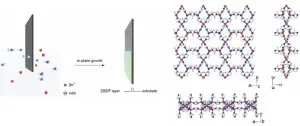
Metal-organic frameworks (MOFs) are a class of materials that contain nano-sized pores. These pores give MOFs record-breaking internal surface areas, which make them extremely versatile for a number of applications: separating petrochemicals and gases, mimicking DNA, producing hydrogen, and removing heavy metals, fluoride anions, and even gold from water are just a few examples. In the gas-separation domain, MOFs are particularly interesting for separating hydrogen from nitrogen, which is crucial for clean energy production, fuel cell efficiency, ammonia synthesis, and various ...

Read the release
Energy

Predictive model could improve hydrogen station availability

Consumer confidence in driving hydrogen-fueled vehicles could be improved by having station operators adopt a predictive model that helps them anticipate maintenance needs, according to researchers at the U.S. Department of Energy’s National Renewable Energy Laboratory (NREL) and Colorado State University (CSU). Stations shutting down for unscheduled maintenance reduces hydrogen fueling availability to consumers and may slow adoption of these types of fuel cell electric vehicles, the researchers noted. The use of what is known as a ...

Read the release
A mysterious blue molecule will help make better use of light energy
Energy

A mysterious blue molecule will help make better use of light energy

Researchers at IOCB Prague are the first to describe the causes of the behavior of one of the fundamental aromatic molecules, which fascinates the scientific world not only with its blue color but also with other unusual properties – azulene. Their current undertaking will influence the foundations of organic chemistry in the years to come and in practice will help harness the maximum potential of captured light energy. The article appeared in the Journal of the American Chemical Society (JACS). Azulene has piqued the ...

Read the release
UT Dallas to lead $30 million battery initiative
Energy

UT Dallas to lead $30 million battery initiative

As announced by the Department of Defense today, The University of Texas at Dallas will receive $30 million over three years from the DOD to develop and commercialize new battery technologies and manufacturing processes, enhance the domestic availability of critical raw materials, and train high-quality workers for jobs in an expanding battery energy storage workforce. The award, which creates a prototype Energy Storage Systems Campus, is the largest allocation from a federal agency that the University has received to date. The Energy Storage Systems Campus will leverage and stimulate over $200 million in private capital. Dr. Kyeongjae ...

Read the release
Improving the properties of sweeteners for enhanced thermal energy storage
Energy

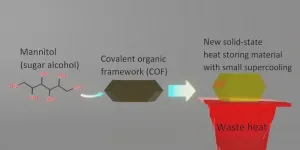
Improving the properties of sweeteners for enhanced thermal energy storage

As we seek more efficient utilization of waste thermal energy, use of “phase change materials (PCMs)” is a good option. PCMs have a large latent heat capacity and the ability to store-and-release heat as they change from one state of matter to another. Among many PCMs, sugar alcohols (SAs), a class of organic compounds commonly used as sweeteners, stand out due to their low cost, non-toxic, non-corrosive, and biodegradable nature. In particular, SAs generally have their melting point in 100–200 °C, which is an important temperature range where a huge amount of waste heat exists but is currently ...

Read the release
Hydroelectric power plants in Brazil threaten turtles that depend on rapids, study warns
Energy

Hydroelectric power plants in Brazil threaten turtles that depend on rapids, study warns

A research project supported by FAPESP shows that the construction of new hydroelectric power plants in Brazil’s South region could have an impact on more than 30% of the habitat of Phrynops williamsi, the Williams’ side-necked turtle. The species occurs only in areas of Atlantic Rainforest and Pampa (the grassland biome adjacent to Brazil’s border with Uruguay and Argentina), and is classed as “Vulnerable” (facing a high risk of extinction) by the International Union for Conservation of Nature (IUCN). An article on the study is published in the Journal of Applied Ecology by ...

Read the release
Energy

Anesthesiology researcher pipeline lags behind other specialties

CHICAGO — Anesthesiology researchers are responsible for some of medicine’s most significant advances, from the Apgar score that tests a newborn’s health to cardiopulmonary resuscitation (CPR). But the number of medical residents in the anesthesiology physician-scientist (researcher) pipeline trails other specialties, particularly among women, according to findings of the Anesthesia Research Council (ARC), published in the journal Anesthesia & Analgesia. Out of eleven medical specialties, anesthesiology ranked eighth both for the percentage of entering residents ...

Read the release
Learn the intricacies in solving problems related to energy transfer
Energy

Learn the intricacies in solving problems related to energy transfer

Volume 2 of the series on Solved Problems in Transport Phenomena is out. This unique compendium covers energy transfer at the microscopic and macroscopic levels in a format that does not overwhelm students with a large repertoire of problems. It uses clear highlights and easy-to-follow concept presentations to help students grasp the methodology in problem solving. Solved Problems in Transport Phenomena: Energy Transfer shows the students how to tackle a problem related to heat transfer as if they were going to solve it for the first time in their lives. A balanced approach ...

Read the release
From the original Press-News collection. Issuers of news releases are responsible for the accuracy of their content.