THE ORIGINAL COLLECTION · SINCE 2010

Engineering
press releases.

Research announcements from universities, hospitals and scientific institutions. Explore the stories, people and discoveries behind the headlines.

Original publication datesPage 17
FIND A STORY

Find a past release.

Dates and source material belong to the original release.

Read our research explainers

Browse the collection · original publication order

Novel redox-active metal-organic framework as an anode material for Li batteries operating in freezing conditions
Engineering

Novel redox-active metal-organic framework as an anode material for Li batteries operating in freezing conditions

The Korea Institute of Energy Research (KIER) has developed a redox-active metal-organic hybrid electrode material (SKIER-5) for Li batteries that remains stable in cold conditions as low as minus 20 degrees Celsius. By addressing the limitations of graphite as an anode material of conventional Li batteries under freezing conditions, SKIER-5 has the potential to be a superior alternative. This novel material can be used in Li batteries for a variety of applications, including electric vehicles, drones, and ultra-small electronic devices, even in low temperatures. Currently, ...

Read the release


Lehigh University is a core institution of new $26 Million NSF Engineering Research Center
Engineering

Lehigh University is a core institution of new $26 Million NSF Engineering Research Center

The U.S. National Science Foundation (NSF) has awarded $26 million to establish a new Gen-4 Engineering Research Center (ERC) named Environmentally Applied Refrigerant Technology Hub (EARTH) to create a sustainable and circular refrigerant economy. The University of Kansas is the lead institution, joined by partners at Lehigh University, University of Notre Dame, University of Maryland, University of Hawai'i and University of South Dakota. David Vicic, the Howard S. Bunn Distinguished Professor of Chemistry, will lead Lehigh’s team. Mark Shiflett, University of Kansas Foundation Distinguished Professor in the Department of Chemical & Petroleum Engineering, will be the ERC EARTH ...

Read the release
Engineering

University of Kansas awarded $26 million for new Engineering Research Center from National Science Foundation

LAWRENCE — The National Science Foundation (NSF) has awarded the University of Kansas $26 million to establish a new Gen-4 Engineering Research Center (ERC) —Environmentally Applied Refrigerant Technology Hub (EARTH) — that will create a sustainable and circular refrigerant economy. NSF’s Engineering Research Centers bring universities and businesses together to strengthen the competitive position of American industry in the global marketplace. “NSF's Engineering Research Centers ask big questions in order to catalyze ...

Read the release
Engineering

MIT engineers’ new theory could improve the design and operation of wind farms

The blades of propellers and wind turbines are designed based on aerodynamics principles that were first described mathematically more than a century ago. But engineers have long realized that these formulas don’t work in every situation. To compensate, they have added ad hoc “correction factors” based on empirical observations. Now, for the first time, engineers at MIT have developed a comprehensive, physics-based model that accurately represents the airflow around rotors even under extreme conditions, such as when the blades are operating at high forces and speeds, or are angled in certain directions. The model could improve the way rotors themselves ...

Read the release
Humpbacks are among animals who manufacture and wield tools
Engineering

Humpbacks are among animals who manufacture and wield tools

In a study published today in Royal Society Open Science, researchers at the Marine Mammal Research Program (MMRP) at UH Hawaiʻi Institute of Marine Biology (HIMB) and Alaska Whale Foundation (AWF) consider a new designation of the humpback whales they study: tool wielders. Researchers have known that humpback whales create “bubble-nets” to hunt, but they have learned that the animals don’t just create the bubble-nets; they manipulate this unique tool in a variety of ways to maximize their food intake in Alaskan feeding grounds. This novel research demystifies a behavior key to the whales’ survival and offers a compelling case for including humpbacks among the rare ...

Read the release
Investigating the interplay of folding and aggregation in supramolecular polymer systems
Engineering

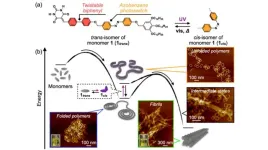
Investigating the interplay of folding and aggregation in supramolecular polymer systems

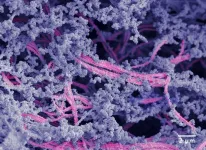
In polymers, the competition between the folding and aggregation of chains, both at an individual level and between chains, can determine the mechanical, thermal, and conductive properties of such materials. Understanding the interplay of folding and aggregation presents a significant opportunity for the development and discovery of polymeric materials with tailored properties and functionalities. This also holds true for non-covalent counterparts of conventional covalent polymers, i.e., supramolecular polymers (SPs). SPs are expected to have practical applications as novel stimuli-responsive ...

Read the release
Adaptive 3D printing system to pick and place bugs and other organisms
Engineering

Adaptive 3D printing system to pick and place bugs and other organisms

MINNEAPOLIS / ST. PAUL (08/20/2024) — A first-of-its-kind adaptive 3D printing system developed by University of Minnesota Twin Cities researchers can identify the positions of randomly distributed organisms and safely move them to specific locations for assembly. This autonomous technology will save researchers time and money in bioimaging, cybernetics, cryopreservation, and devices that integrate living organisms. The research is published in Advanced Science, a peer-reviewed scientific journal. The researchers ...

Read the release
Engineering

UC Irvine scientists create material that can take the temperature of nanoscale objects

Irvine, Calif., Aug. 14, 2024 — University of California, Irvine scientists recently discovered a one-dimensional nanoscale material whose color changes as temperature changes. The team’s results appeared in Advanced Materials. “We found that we can make really small and sensitive thermometers,” said Maxx Arguilla, UC Irvine professor of chemistry whose research group led the study. “It’s one of the most applied and translatable works to come out of our lab.” Arguilla ...

Read the release
iFAB Tech Hub grows net-zero industrial chemical partnerships, champions bioeconomy
Engineering

iFAB Tech Hub grows net-zero industrial chemical partnerships, champions bioeconomy

In the wake of the $51 million funding announcement from the Economic Development Administration, momentum is tangible for the Illinois Fermentation and Agriculture Biomanufacturing (iFAB) Tech Hub. Today marks the beginning of a new collaboration to replace fossil fuel-derived petrochemicals with zero-emission alternatives produced through precision fermentation. Industrial Microbes (iMicrobes) is partnering with the iFAB Tech Hub’s Integrated Bioprocessing Research Laboratory at the University of Illinois Urbana-Champaign to harness microbes to produce acrylic acid, a versatile chemical ...

Read the release
How bread dough gave rise to civilization
Engineering

How bread dough gave rise to civilization

A major international study has explained how bread wheat helped to transform the ancient world on its path to becoming the iconic crop that today sustains a global population of eight billion. “Our findings shed new light on an iconic event in our civilisation that created a new kind of agriculture and allowed humans to settle down and form societies,” said Professor Brande Wulff, a wheat researcher at KAUST (King Abdullah University of Science and Technology) and one of the lead ...

Read the release
Reducing operation qualification time and cost in additive manufacturing
Engineering

Reducing operation qualification time and cost in additive manufacturing

America Makes, the National Additive Manufacturing Innovation Institute, is supporting research to revolutionize the additive manufacturing (AM) industry by significantly reducing operational qualification time and cost. The $2 million project, titled ACCELERATE, is led by Dr. Mohsen Taheri-Andani, an assistant professor in the J. Mike Walker ’66 Department of Mechanical Engineering at Texas A&M University. To secure the funding, Dr. Taheri-Andani partnered with Dr. Yash Parikh, a process engineering consultant at EOS who graduated with a doctorate in mechanical ...

Read the release
Engineers make tunable, shape-changing metamaterial inspired by vintage toys
Engineering

Engineers make tunable, shape-changing metamaterial inspired by vintage toys

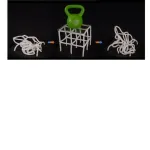
Common push puppet toys in the shapes of animals and popular figures can move or collapse with the push of a button at the bottom of the toys’ base. Now, a team of UCLA engineers has created a new class of tunable dynamic material that mimics the inner workings of push puppets, with applications for soft robotics, reconfigurable architectures and space engineering. Inside a push puppet, there are connecting cords that, when pulled taught, will make the toy stand stiff. But by loosening these cords, the “limbs” of the toy will go limp. Using the same cord tension-based principle that controls a puppet, researchers have developed a new type of metamaterial, a material ...

Read the release
Engineering

Researchers show nanovoids improve material performance

Voids or pores have usually been viewed as fatal flaws that severely degrade a material's mechanical performance and should be eliminated in manufacturing. However, a research team led by Prof. JIN Haijun from the Institute of Metal Research (IMR) of the Chinese Academy of Sciences has proposed that the presence of voids is not always hazardous. Instead, voids can be beneficial if they are added "properly" to the material. The team demonstrated that a metal with a large number of nanoscale voids shows improved ...

Read the release
Kamikaze drones built at KTU in Lithuania are sent to Ukraine
Engineering

Kamikaze drones built at KTU in Lithuania are sent to Ukraine

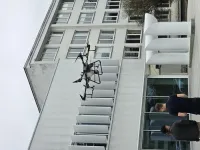
KTU M-Lab, the Centre of Experimental and Prototyping Laboratories at Kaunas University of Technology, Lithuania, in cooperation with the company Nando Droid, is constructing first-person view (FPV) kamikaze drones, which are being sent to Ukraine and used in the war field. These drones are fitted with explosives that are activated when they hit an obstacle. Kaunas University of Technology students assembling the drones say that they are built to have a long flight range and the ability to carry a large payload. “The war in Ukraine is already being called a drone war. Without them, this war would be unimaginable. It saves many lives,” says the representative ...

Read the release
Engineering

Can nanomaterials enhance plant tolerance to high soil salt levels?

Soil salt concentrations above the optimal threshold for plant growth can threaten global food security by compromising agricultural productivity and crop quality. An analysis published in Physiologia Plantarum examined the potential of nanomaterials—which have emerged over the past decade as a promising tool to mitigate such “salinity stress”—to address this challenge. Nanomaterials, which are tiny natural or synthetic materials, can modulate a plant’s response to salinity stress ...

Read the release
New biomaterial regrows damaged cartilage in joints
Engineering

New biomaterial regrows damaged cartilage in joints

Northwestern University scientists have developed a new bioactive material that successfully regenerated high-quality cartilage in the knee joints of a large-animal model. Although it looks like a rubbery goo, the material is actually a complex network of molecular components, which work together to mimic cartilage’s natural environment in the body. In the new study, the researchers applied the material to damaged cartilage in the animals’ knee joints. Within just six months, the researchers observed evidence of enhanced repair, including ...

Read the release
A blueprint for building the future: Eco-friendly 3D concrete printing
Engineering

A blueprint for building the future: Eco-friendly 3D concrete printing

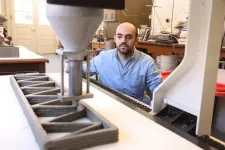
A research team led by engineers at the University of Virginia School of Engineering and Applied Science is the first to explore how an emerging plant-based material, cellulose nanofibrils, could amplify the benefits of 3D-printed concrete technology. “The improvements we saw on both printability and mechanical measures suggest that incorporating cellulose nanofibrils in commercial printable materials could lead to more resilient and eco-friendly construction practices sooner rather than later,” said Osman E. Ozbulut, a professor in the Department of Civil and Environmental ...

Read the release
Engineering

CLEAR: a new approach to 3D printing materials with highly entangled polymer networks

Researchers have developed a novel approach to three-dimensional (3D) printing they call “CLEAR,” which significantly improves the strength and durability of materials by using a combination of light and dark chemical reactions to create densely entangled polymer chains. The authors used their approach to print structures with special features, such as the ability to adhere to wet tissues. Incorporation of polymer chain entanglements as reinforcements within 3D printed materials can significantly enhance their mechanical properties. However, traditional vat photopolymerization-based 3D printing techniques, such as digital ...

Read the release
States consider new science-backed solution to save time and money on concrete infrastructure repair
Engineering

States consider new science-backed solution to save time and money on concrete infrastructure repair

WEST LAFAYETTE, Ind. — A Purdue University invention that may shorten construction timelines and increase long-term durability of concrete highways, bridges and other transportation infrastructure is emerging as a viable alternative to methods that have been used for decades to estimate when newly poured concrete is mature enough to withstand heavy loads such as those from trucks and other vehicles. The American Association of State Highway and Transportation Officials’ Committee on Materials and Pavements (AASHTO COMP) has approved the Purdue-developed method as a new national ...

Read the release
Rice, DOE labs tackle knowledge gap in materials science research
Engineering

Rice, DOE labs tackle knowledge gap in materials science research

HOUSTON – (August 1, 2024) – Materials behave differently in different size regimes, and researchers tend to cluster their efforts either at the nanoscale, examining materials in atom-level detail, or at the microscale, looking at structures between three and five orders of magnitude greater. However, less is known about what happens in the “in-between” realm spanning from 10 billionths to 1 millionth of a meter. “We call this the mesoscale,” said Rice University materials scientist Lane Martin, who together with collaborators at the U.S. Department of Energy’s (DOE) Argonne National Laboratory and Lawrence Berkeley National ...

Read the release
Ce-doped yttria transparent ceramic: A new ultraviolet-shielding material for extreme conditions
Engineering

Ce-doped yttria transparent ceramic: A new ultraviolet-shielding material for extreme conditions

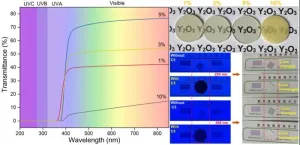
Ultraviolet (UV) radiation can break most of the chemical bonds in organic matter, and prolonged exposure to ultraviolet light can cause significant harm to humans and objects. In response, UV-shielding materials have been developed to fulfill various commercial requirements, including UV-shielding windows, food containers, contact lenses, and masks. While existing UV shielding materials are suitable for daily use, their effectiveness diminishes in high-temperature, high-pressure, corrosive, and radioactive environments. Organics fail at high temperatures, and films or coatings tend to flake under harsh conditions; glass is constrained ...

Read the release
Engineering

Engineered microbes repel mosquitoes

Genetically engineered human skin bacteria can make mice less attractive to mosquitoes for 11 days. Mosquitoes transmit a host of deadly diseases, including malaria, West Nile, dengue, yellow fever, and Zika. Female mosquitoes on the hunt for a blood meal tune into scents released by skin microbes that live on their targets. Omar Akbari and colleagues engineered versions of the common human skin commensals Staphylococcus epidermidis and Corynebacterium amycolatum to produce much less of a form of lactic acid known to attract mosquitoes. The authors tested the microbes alone and found the engineered version of S. epidermidis attracted about half as ...

Read the release
KERI advances in cathode composite design for sulfide-based all-solid-state batteries
Engineering

KERI advances in cathode composite design for sulfide-based all-solid-state batteries

Researchers in Korea have united to tackle the challenges in the commercialization of all-solid-state batteries. Dr. Yoon-Cheol Ha from the Next Generation Battery Research Center of KERI collaborated with a team led by professor Byung Gon Kim of Department of Applied Chemistry, Kyung Hee University, a team led by professor Janghyuk Moon of School of Energy Systems Engineering, Chung-Ang University, and a team led by professor Seung-kKiSeoung-Ki Lee of School of Materials Science and Engineering, ...

Read the release
Nature inspires a breakthrough: scientists develop revolutionary egg white-based bioink for advanced tissue engineering
Engineering

Nature inspires a breakthrough: scientists develop revolutionary egg white-based bioink for advanced tissue engineering

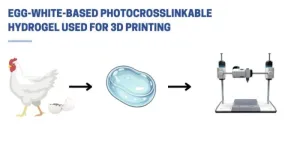
Los Angeles, California – July 29, 2024 - Terasaki Institute scientists have created a cutting-edge technology inspired by nature by developing a novel bioink derived from egg whites or Egg White methacryloyl (EWMA). Bioinks are mainly used in 3D bioprinting to create artificial tissues. These natural or synthetic materials support living cells, aiding their adhesion, growth, and differentiation. They are essential for developing complex tissue structures for medical research, drug testing, and organ transplantation. This novel EWMA bioink represents a promising addition to this field, offering a unique combination of properties that address many challenges faced in tissue engineering. The ...

Read the release
Steel industry’s net zero drive could make lower-grade iron ore viable
Engineering

Steel industry’s net zero drive could make lower-grade iron ore viable

A decarbonised steel industry that includes carbon dioxide removal techniques in its net zero arsenal could use lower-grade iron ore, according to a new study. Steel accounts for 5-8% of carbon dioxide emissions globally. Its total emissions have risen over the past decade, largely due to increased demand. The International Energy Agency has stated that, without innovation, the scope to limit emissions is ‘limited’. Therefore, the commercialisation of new zero-emission production processes is critical. Innovative ...

Read the release
From the original Press-News collection. Issuers of news releases are responsible for the accuracy of their content.