THE ORIGINAL COLLECTION · SINCE 2010

Environment
press releases.

Research announcements from universities, hospitals and scientific institutions. Explore the stories, people and discoveries behind the headlines.

Original publication datesPage 113
FIND A STORY

Find a past release.

Dates and source material belong to the original release.

Read our research explainers

Browse the collection · original publication order

Reviving England’s polluted rivers? Incentivising farmers and comprehensive monitoring among key recommendations from experts
Environment

Reviving England’s polluted rivers? Incentivising farmers and comprehensive monitoring among key recommendations from experts

At the close of 2023, Defra asked the British Ecological Society to bring together nearly 40 experts, to collate expert opinion on freshwater policy and set out a list of priorities for the biodiversity evidence programme to focus on. Published today, the new report sets out priorities for restoring England’s polluted fresh waters. We know that England’s rivers, and the life they support, are in a desperate state. The River Trust’s annual State of Our Rivers report found that a mere 15% of rivers in England were classed as being in good ecological health and no ...

Read the release
Environment

Scientists develop catalyst designed to make ammonia production more sustainable

Ammonia is one of the most widely produced chemicals in the world, and is used in a great many manufacturing and service industries. The conventional production technology is the Haber-Bosch process, which combines nitrogen gas (N2) and hydrogen gas (H2) in a reactor in the presence of a catalyst. This process requires high levels of temperature and pressure, resulting in substantial power consumption. Indeed, ammonia production is estimated to consume 1%-2% of the world’s electricity and to account for about 3% of global carbon emissions. In pursuit of more sustainable alternatives, researchers affiliated with the Center for Development of Functional Materials (CDMF) ...

Read the release
A new way to quantify climate change impacts: “Outdoor days”
Environment

A new way to quantify climate change impacts: “Outdoor days”

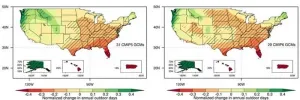
For most people, reading about the difference between a global average temperature rise of 1.5 C versus 2 C doesn’t conjure up a clear image of how their daily lives will actually be affected. So, researchers at MIT have come up with a different way of measuring and describing what global climate change patterns, in specific regions around the world, will mean for people’s daily activities and their quality of life. The new measure, called “outdoor days,” describes the number of days per year that outdoor temperatures are neither too ...

Read the release
Environment

New reactor could save millions when making ingredients for plastics and rubber from natural gas

Images A new way to make an important ingredient for plastics, adhesives, carpet fibers, household cleaners and more from natural gas could reduce manufacturing costs in a post-petroleum economy by millions of dollars, thanks to a new chemical reactor designed by University of Michigan engineers. The reactor creates propylene, a workhorse chemical that is also used to make a long list of industrial chemicals, including ingredients for nitrile rubber found in automotive hoses and seals as well as blue protective gloves. ...

Read the release
Species diversity promotes ecosystem stability
Environment

Species diversity promotes ecosystem stability

Species diversity promotes ecosystem stability Biodiversity loss may accelerate ecosystem destabilization What maintains stability within an ecosystem and prevents a single best competitor from displacing other species from a community? Does ecosystem stability depend upon the presence of a wide variety of species, as early ecologists believed, or does diversity do the exact opposite, and lead to instability, as modern theory predicts? Resolving a long-standing debate among ecologists A new study from McGill University and ...

Read the release
New geological study: Scandinavia was born in Greenland
Environment

New geological study: Scandinavia was born in Greenland

In a Finnish outcrop nestled between some of Northern Europe's oldest mountains, researchers have found traces of a previously hidden part of Earth's crust that points more than three billion years back in time and north towards Greenland. These traces were found in the mineral zircon, which after chemical analyses, indicated to researchers from the Department of Geosciences and Natural Resource Management that the "foundation" upon which Denmark and Scandinavia rest, was probably 'born' from Greenland approximately 3.75 billion years ago. "Our data suggest that the oldest part of Earth's crust beneath Scandinavia originates ...

Read the release
Climate change disrupts vital ecosystems in the Alps
Environment

Climate change disrupts vital ecosystems in the Alps

Reduced snow cover and shifting vegetation patterns in the Alps, both driven by climate change, are having major combined impacts on biodiversity and functioning of ecosystems in the high mountains, according to new research published today. Mountain ranges covering vast areas of the world are warming much faster than surrounding lowland areas, triggering huge reductions in snow cover and rapid upward movement of dwarf-shrubs, such as heather. Scientists at The University of Manchester have found that these changes are disrupting the timing of crucial alpine ecosystem functions performed by ...

Read the release
Say hello to biodegradable microplastics
Environment

Say hello to biodegradable microplastics

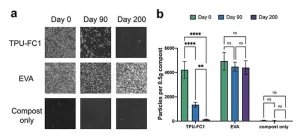
Microplastics are tiny, nearly indestructible fragments shed from everyday plastic products. As we learn more about microplastics, the news keeps getting worse. Already well-documented in our oceans and soil, we’re now discovering them in the unlikeliest of places: our arteries, lungs and even placentas. Microplastics can take anywhere from 100 to 1,000 years to break down and, in the meantime, our planet and bodies are becoming more polluted with these materials every day. Finding viable alternatives to traditional petroleum-based plastics and microplastics has never been more important. New research from scientists ...

Read the release
New route to recyclable polymers from plants
Environment

New route to recyclable polymers from plants

Cellulose, abundantly available from plant biomass, can be converted into molecules used to make a new class of recyclable polymers, to sustainably replace some plastics. Researchers at Hokkaido University have taken a significant step forward in the drive to make recyclable yet stable plastics from plant materials. This is a key requirement to reduce the burden of plastic pollution in the environment. They developed a convenient and versatile method to make a variety of polymers from chemicals derived from plant cellulose; crucially, these polymers can be fully recycled. The method was published in the journal ACS Macro Letters. Cellulose is one of the most abundant ...

Read the release
Killer whales use specialized hunting techniques to catch marine mammals in the open ocean
Environment

Killer whales use specialized hunting techniques to catch marine mammals in the open ocean

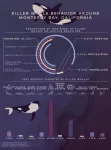
Killer whales foraging in deep submarine canyons off the coast of California represent a distinct subpopulation that uses specialized hunting techniques to catch marine mammals, Josh McInnes at the University of British Columbia and colleagues report March 20 in the open-access journal PLOS ONE. Killer whales (Orcinus orca) are found in oceans around the world, but they form separate populations, or ‘ecotypes’, that have their own social structure, food preferences and hunting behaviors. One ecotype, known as transient killer whales, specialize in hunting marine ...

Read the release
Environment

Companies reluctant to pay extra to confirm suppliers’ sustainability claims

Many companies proclaiming ethical credentials resist paying a premium to test their suppliers’ sustainability claims, new research suggests. A team from Bayes Business School (formerly Cass), City, University of London, studied responses from 234 managers with procurement decision-making powers. While buyers’ purchasing decisions are not solely price-driven, the team found, they are often happy to accept suppliers’ reassurances about sustainability rather than pay a premium for third party verification. Despite accepting ...

Read the release
Electronic waste rising five times faster than documented e-waste recycling: UN
Environment

Electronic waste rising five times faster than documented e-waste recycling: UN

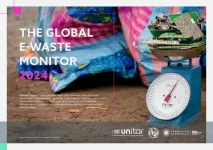
Geneva / Bonn - The world's generation of electronic waste is rising five times faster than documented e-waste recycling, the UN's fourth Global E-waste Monitor (GEM) reveals today. The 62 million tonnes of e-waste generated in 2022 would fill 1.55 million 40-tonne trucks, roughly enough trucks to form a bumper-to-bumper line encircling the equator, according to the report from ITU and UNITAR. Meanwhile, less than one quarter (22.3%) of the year's e-waste mass was documented as having been ...

Read the release
Scientists uncover a causal relationship between remote extreme heat and the Canadian wildfires in 2023
Environment

Scientists uncover a causal relationship between remote extreme heat and the Canadian wildfires in 2023

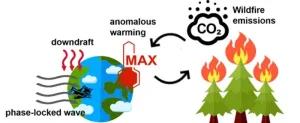
Wildfires are events that can have significant impacts on ecosystems and human society. In the context of global warming, there has been a notable surge in the frequency and ferocity of wildfires in the Northern Hemisphere over recent years. In 2023, Canada experienced an unprecedented wildfire event, with CO2 emissions increasing by 527.1% over the average of 2001–2022 during the months of May–August. The burned area was more than 6–7 times larger than in a normal year. Notably, both Canada and more than 15 states in the northeastern ...

Read the release
Crawfish could transfer ionic lithium from their environment into food chain
Environment

Crawfish could transfer ionic lithium from their environment into food chain

NEW ORLEANS, March 20, 2024 — From cell phones to watches to electric cars, lithium-ion rechargeable batteries power a plethora of devices. The increased use of this technology means more lithium could find its way into the environment as consumers discard electronic products. Now, researchers describe how lithium can accumulate in a common Southern crustacean: the crawfish. As the season for catching and eating mudbugs comes into full swing, the researchers’ findings highlight the potential implications for public health and the environment. The researchers will present ...

Read the release
Greenhouse gas emissions in Global South countries linked with IMF lending policies
Environment

Greenhouse gas emissions in Global South countries linked with IMF lending policies

CHAMPAIGN, Ill. — Greenhouse gas emissions significantly increase in countries in the Global South within a few years after initially borrowing from the International Monetary Fund using structural loans, but not when more flexible lending conditions are involved. However, with countries’ second or subsequent IMF loans, their emissions spike almost immediately, regardless of the lending conditions involved, a recent study suggests. Structural loans, one of IMF’s two primary lending instruments, specify the precise changes borrowers are required ...

Read the release
Monitoring and measuring biodiversity require more than just numbers; scientists advocate for change
Environment

Monitoring and measuring biodiversity require more than just numbers; scientists advocate for change

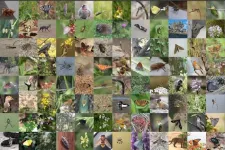
Highlights: Human actions influence the success and how species spread throughout geographic locations. This is why monitoring wildlife biodiversity is critical for scientists and policymakers to understand and preserve the present state of flora and fauna. A study led by University of Florida scientists published today in the journal of Trends and Ecology and Evolution advocates for change to promote standardized practices in the field – a practice that has been missing from the science. Assessing wildlife populations, as ...

Read the release
Climate change graphics are important, so make them simple
Environment

Climate change graphics are important, so make them simple

When the “hockey stick” graph, which illustrated a steep increase in global temperatures, was published in 1998, it reshaped the world’s understanding of climate change. A quarter-century later, with climate change now wreaking havoc around the world, graphics depicting global warming are more important than ever to inform policymaking. However, a recent USC-led study reveals that some graphics developed for reports by the Intergovernmental Panel on Climate Change (IPCC) are too complex, even for the intended audiences of policymakers and practitioners. Researchers recommend limiting each graphic, which the IPCC refers to as “figures,” ...

Read the release
Characterizing salps as predators of marine microbes
Environment

Characterizing salps as predators of marine microbes

A huge fraction of global flows of carbon and other nutrients passes through marine microbes, little is known about their causes of death—information that in many cases determines where those nutrients will go. Recent work on microbial death via viral lysis and protistan predation is helping close the gap, but there remains a missing source of microbial mortality. Anne Thompson and colleagues explore the role played by salps, pelagic tunicates that feed by pumping seawater through mucous mesh nets, filtering out and capturing particles such as preferred microbes. Salps send ...

Read the release
Is food waste the key to sustainable, plastic-free diapers and sanitary pads?
Environment

Is food waste the key to sustainable, plastic-free diapers and sanitary pads?

NEW ORLEANS, March 19, 2024 — Once thrown away, disposable items such as diapers and sanitary pads can take hundreds of years to decompose, because their absorbent parts and waterproof layers contain plastics and other synthetic polymers. But now, researchers are replacing these materials with porous components made from protein biomass that is often discarded by the food and agricultural industries. These components are sustainable and biodegradable, and could potentially allow future diapers and sanitary pads to be flushed down a toilet or used as ...

Read the release
Molecular orientation is key: shining new light on electron behavior using 2-photon photoemission spectroscopy
Environment

Molecular orientation is key: shining new light on electron behavior using 2-photon photoemission spectroscopy

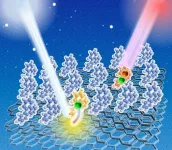
Osaka, Japan – Organic electronics is a field that has garnered significant interest in academic and industrial circles due to its potential applications in OLEDs and organic solar cells, offering advantages such as lightweight design, flexibility, and cost-efficiency. These devices are made by depositing a thin film of organic molecules onto a substrate that acts as an electrode, and function by controlling the transfer of electrons between the thin film and the substrate. Therefore, understanding electron behavior at the interface between the substrate ...

Read the release
Sustainable solution for wastewater polluted by dyes used in many industries
Environment

Sustainable solution for wastewater polluted by dyes used in many industries

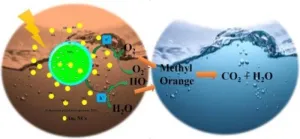
Water pollution from dyes used in textile, food, cosmetic and other manufacturing is a major ecological concern with industry and scientists seeking biocompatible and more sustainable alternatives to protect the environment. A new study led by Flinders University has discovered a novel way to degrade and potentially remove toxic organic chemicals including azo dyes from wastewater, using a chemical photocatalysis process powered by ultraviolet light. Professor Gunther Andersson, from the Flinders Institute for NanoScale Science and Technology, says the process involves creating metallic ‘clusters’ of just nine gold (Au) atoms chemically ‘anchored’ ...

Read the release
Environment

New research finds boreal arctic wetlands are producing more methane over time

MADISON –– Scientists have been measuring global methane emissions for decades, but the boreal arctic —with a wide range of biomes including wetlands that extend across the northern parts of North America, Europe and Asia — is a key region where accurately estimating highly potent greenhouse gas emissions has been challenging. Wetlands are great at storing carbon, but as global temperatures increase, they are warming up. That causes the carbon they store to be released into the atmosphere in the form of methane, which contributes to more global warming. Now, researchers — including the University ...

Read the release
Climate change alters the hidden microbial food web in peatlands
Environment

Climate change alters the hidden microbial food web in peatlands

DURHAM, N.C. -- The humble peat bog conjures images of a brown, soggy expanse. But it turns out to have a superpower in the fight against climate change. For thousands of years, the world’s peatlands have absorbed and stored vast amounts of carbon dioxide, keeping this greenhouse gas in the ground and not in the air. Although peatlands occupy just 3% of the land on the planet, they play an outsized role in carbon storage -- holding twice as much as all the world’s forests do. The fate of all that carbon is uncertain in the face of climate change. And ...

Read the release
Environment

Avatar will not lie... or will it? Scientists investigate how often we change our minds in virtual environments

How confident are you in your judgments and how well can you defend your opinions? Chances are that they will change under the influence of a group of avatars in a virtual environment. Scientists from SWPS University investigated the human tendency to be influenced by the opinions of others, including virtual characters. We usually conform to the views of others for two reasons. First, we succumb to group pressure and want to gain social acceptance. Second, we lack sufficient knowledge and perceive the group as a source of a better interpretation of the current situation, describes Dr. Konrad Bocian from the Institute of Psychology at SWPS University. So far, only a few studies ...

Read the release
Sustainable biomass production capacity could triple US bioeconomy, report finds
Environment

Sustainable biomass production capacity could triple US bioeconomy, report finds

The United States could triple its current bioeconomy by producing more than 1 billion tons per year of plant-based biomass for renewable fuels, while meeting projected demands for food, feed, fiber, conventional forest products and exports, according to the Department of Energy’s latest Billion-Ton Report led by Oak Ridge National Laboratory. The 2023 Billion-Ton Report, or BT23, announced by DOE, is the fourth in a series of national biomass resource assessments spanning two decades. The report identifies feedstocks that could be ...

Read the release
From the original Press-News collection. Issuers of news releases are responsible for the accuracy of their content.