THE ORIGINAL COLLECTION · SINCE 2010

Environment
press releases.

Research announcements from universities, hospitals and scientific institutions. Explore the stories, people and discoveries behind the headlines.

Original publication datesPage 118
FIND A STORY

Find a past release.

Dates and source material belong to the original release.

Read our research explainers

Browse the collection · original publication order

Aston University receives nearly half a million pounds to create safer and greener batteries
Environment

Aston University receives nearly half a million pounds to create safer and greener batteries

• Researchers to explore the use of gel electrolyte materials to improve lithium-ion batteries • The batteries are the most commonly used in electric vehicles and electronics • Will use non-harmful, non-flammable and renewably sourced materials for next generation battery technologies. Aston University researchers are to explore the use of gel electrolyte materials to make lithium-ion batteries - the most commonly used for electric vehicles and electronics - safer and less environmentally damaging. The University has received a grant of £443,058 from the Engineering and Physical Sciences Research ...

Read the release
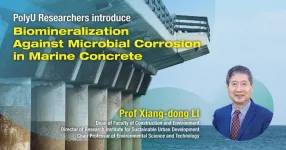
PolyU researchers introduce biomineralization as a sustainable strategy against microbial corrosion in marine concrete
Environment

PolyU researchers introduce biomineralization as a sustainable strategy against microbial corrosion in marine concrete

Microbially induced corrosion (MIC) is a prevalent issue in marine environments, leading to structural damages such as cracking in concrete infrastructure. This corrosion poses a persistent challenge, significantly reducing the lifespan of marine structures and resulting in substantial economic losses. In response to the need for an effective solution to combat the marine corrosion on concrete, researchers of the Hong Kong Polytechnic University have developed a biomineralization approach to protect marine concrete from MIC. Prof. ...

Read the release
PolyU researchers introduce biomineralisation as a sustainable strategy against microbial corrosion in marine concrete
Environment

PolyU researchers introduce biomineralisation as a sustainable strategy against microbial corrosion in marine concrete

Microbially induced corrosion (MIC) is a prevalent issue in marine environments, leading to structural damages such as cracking in concrete infrastructure. This corrosion poses a persistent challenge, significantly reducing the lifespan of marine structures and resulting in substantial economic losses. In response to the need for an effective solution to combat the marine corrosion on concrete, researchers of the Hong Kong Polytechnic University have developed a biomineralization approach to protect marine concrete from MIC. Prof. ...

Read the release
UBC Okanagan researchers look to the past to improve construction sustainability
Environment

UBC Okanagan researchers look to the past to improve construction sustainability

Researchers at UBC Okanagan are revisiting old building practices—the use of by-products and cast-offs—as a way to improve building materials and sustainability of the trade. A technique known as rammed earth construction uses materials that are alternatives to cement and are often more readily available in the environment. One such alternative is wood fly ash, a by-product of pulp mills and coal-fired power plants, explains Dr. Sumi Siddiqua, with UBC Okanagan’s School of Engineering. Industry has been trying to find a use for materials like fly ash ...

Read the release
Strategic grazing could boost conservation of ‘near-threatened’ sage-grouse
Environment

Strategic grazing could boost conservation of ‘near-threatened’ sage-grouse

RENO, Nev. – A multi-agency study, spearheaded by researchers from the University of Nevada, Reno’s College of Agriculture, Biotechnology & Natural Resources and the U.S. Department of Agriculture, underscores the impacts of strategic cattle grazing, particularly on restoring the declining population of the greater sage-grouse bird, a keystone species in the Great Basin region. Amidst ongoing decline, the U.S. Fish and Wildlife Service acted by listing the sage-grouse for protection under the Endangered Species Act in 2011. This move prompted the Bureau of Land Management to develop a federal conservation plan for the species ...

Read the release
Study shows how local fishers respond to climate challenges
Environment

Study shows how local fishers respond to climate challenges

BEAUFORT, N.C. – When it comes to protecting a crucial resource in the face of changing conditions, it’s important to know how the humans reliant on that resource have organized themselves. Especially if there isn’t a lot of government supervision. A new study of small-scale fisheries in Mexico’s Gulf of California has found that the fishers’ response to a changing climate can be strongly influenced by what they fish for and how they’re organized. The work appears in the January 2024 issue of Global Environmental Change. “When we ...

Read the release
Environment

Chemistry and albedo feedbacks offset forestation’s net climate benefits

Roughly a third of the climate cooling that forests achieve by removing carbon dioxide (CO2) from the atmosphere is offset through changes to atmospheric composition and decreased surface reflectivity, researchers report. The findings suggest that the benefits of wide-scale forestation efforts may be overestimated and do not represent a single solution for addressing climate change. They also highlight the urgency of simultaneously focusing on emissions reductions. Planting trees has been widely promoted as a nature-based solution to remove anthropogenic CO2 from the atmosphere to help mitigate ...

Read the release
Environment

Side effects of wide scale forestation could reduce carbon removal benefits by up to a third

The side effects of large-scale forestation initiatives could reduce the CO2 removal benefits by up to a third Researchers at the University of Sheffield used computer models, which simulate the land, ocean and atmosphere, to investigate the impact of forestation under future climate scenarios While forestation increases atmospheric CO2 removal, it also changes atmospheric composition and darkens the land surface, reducing its potential to tackle climate change Combining forestation with other climate mitigation ...

Read the release
New electrochemical system enables efficient metal recovery from industrial wastewater
Environment

New electrochemical system enables efficient metal recovery from industrial wastewater

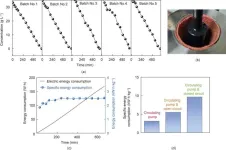
A research team at Tsinghua University led by Professor Huijuan Liu has developed a new electrochemical system that promises to revolutionize metal recovery from industrial wastewater. The research was published in Engineering. Industrial wastewater poses significant environmental hazards due to heavy metal pollution. Current methods for metal recovery, such as electrodeposition, suffer from interfacial ion transport limitations, resulting in slow and low-quality recovery. In their study, the team proposed a novel approach that integrates a transient electric field (TE) and swirling flow (SF) to improve mass transfer and promote interfacial ...

Read the release
Environment

New study is first step in predicting carbon emissions in agriculture

MINNEAPOLIS / ST. PAUL (02/19/2024)—For the first time, researchers at the University of Minnesota Twin Cities (UMN) and the University of Illinois Urbana-Champaign (UIUC) have demonstrated that it is possible to provide accurate, high-resolution predictions of carbon cycles in agroecosystems, which could help mitigate the impacts of climate change. The study by scholars from the UMN-led National Artificial Intelligence Institute for Climate-Land Interactions, Mitigation, Adaptation, Tradeoffs and Economy (AI-CLIMATE) and UIUC-led Agroecosystem Sustainability ...

Read the release
Air pollution hides increases in rainfall
Environment

Air pollution hides increases in rainfall

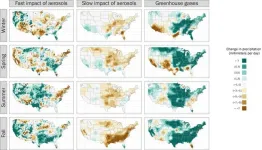
We know that greenhouse gas emissions like carbon dioxide should increase rainfall. The emissions heat the atmosphere, causing a one-two punch: warmer oceans make it easier for water to evaporate, and warmer air can hold more water vapor, meaning more moisture is available to fall as rain. But for much of the 20th century, that increase in precipitation didn’t clearly show up in the data. A new study led by researchers at the Department of Energy’s Lawrence Berkeley National Laboratory (Berkeley ...

Read the release
Mice surprise: Australian researchers discover new native species
Environment

Mice surprise: Australian researchers discover new native species

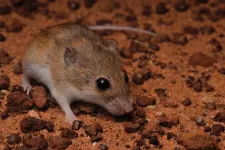
Australia can lay claim to two new species of native rodent thanks to a study from The Australian National University (ANU). The aptly named delicate mouse was previously thought to be a single species spanning a massive stretch of the country from the Pilbara in Western Australia, across parts of the Northern Territory and through Queensland down to the New South Wales border. But researchers at ANU and CSIRO thought there might be more to the story. Lead author Dr Emily Roycroft, from ANU, said we now know there ...

Read the release
Carbon emissions from the destruction of mangrove forests predicted to increase by 50,000% by the end of the century
Environment

Carbon emissions from the destruction of mangrove forests predicted to increase by 50,000% by the end of the century

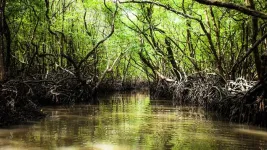
The annual rate of carbon emissions due to the degradation of carbon stocks in mangrove forests is predicted to rise by nearly 50,000% by the end of the century, according to a new study published in IOP Publishing’s journal Environmental Research Letters. Mangroves in regions such as southern India, southeastern China, Singapore and eastern Australia are particularly affected. Mangrove forests store a large amount of carbon, particularly in their soils, however human development in these areas has led to the degradation of these carbon ...

Read the release
Does Russia stand to benefit from climate change?
Environment

Does Russia stand to benefit from climate change?

“There’s a narrative out there about climate change that says there are winners and losers. Even if most of the planet might lose from the changing climate, certain industries and countries stand to benefit. And Russia is usually at the tip of people’s tongues, with Russian officials even making the claim that Russia is a potential winner.” This portrayal, described by Debra Javeline, associate professor of political science at the University of Notre Dame and lead author on the recently published study “Russia in a changing climate,” was debated ...

Read the release
Environment

Biodiversity footprints for 151 dishes from around the world show that dishes with a larger impact on biodiversity tend to be meat, legume, or rice-based

Dishes like Brazilian steak and Indian kidney bean curry have an especially large biodiversity footprint, or impact on biodiversity, according to a study published February 21, 2024 in the open-access journal PLOS ONE by Elissa Cheng from the National University of Singapore, Singapore, and colleagues. Food choices can have significant environmental impacts. Previous research has begun to develop datasets that identify the encroachment of specific crops on the ranges of birds, mammals and amphibians. Based on these data, Cheng and colleagues estimated how 151 ...

Read the release
Increasingly similar or different? Centuries-long analysis suggests biodiversity is differentiating and homogenizing to a comparable extent
Environment

Increasingly similar or different? Centuries-long analysis suggests biodiversity is differentiating and homogenizing to a comparable extent

The tendency of communities and the species within them to become more similar or more distinct across landscapes – biotic homogenisation and differentiation – are approximately balanced, according to a new study published in Science Advances. Led by researchers at the German Centre for Integrative Biodiversity Research (iDiv) and the Martin Luther University Halle-Wittenberg (MLU), the researchers analysed 527 datasets collected from ecosystems like grasslands, shrublands, and coral reefs as far back as 500 years ago. The analysis is the first of its kind to provide ...

Read the release
New cloud model could help with climate research
Environment

New cloud model could help with climate research

When clouds meet clear skies, cloud droplets evaporate as they mix with dry air. A new study involving researchers from the University of Gothenburg has succeeded in capturing what happens in a model. Ultimately, this could lead to more accurate climate modeling in the future. The clouds in the sky have a significant impact on our climate. Not only do they produce precipitation and provide shade from the sun, they also act as large reflectors that prevent the radiation of heat from the Earth – commonly known as the greenhouse effect. “Although clouds have been studied for a long time, they are one of the biggest sources of uncertainty in climate models,” ...

Read the release
$2 million grant from The Roe Green Foundation catalyzes multidisciplinary research building in Uganda
Environment

$2 million grant from The Roe Green Foundation catalyzes multidisciplinary research building in Uganda

CLEVELAND--For the past 38 years, Case Western Reserve University (CWRU) and University Hospitals (UH) have worked closely with a variety of institutions in Uganda to advance medical research and education across a range of fields. Their facilities have remained scattered across the campuses of local partners but now, the collaboration will have a permanent home. A $2 million gift from The Roe Green Foundation, jointly awarded to CWRU and UH, will advance global health initiatives from each institution and establish a state-of-the-art research hub and gathering ...

Read the release
UT-Battelle donates $186,000 to support SEEED’s green construction program
Environment

UT-Battelle donates $186,000 to support SEEED’s green construction program

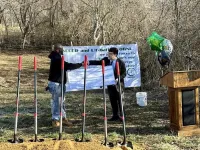
Oak Ridge National Laboratory’s managing contractor, UT-Battelle, presented a donation of $186,000 to Socially Equal Energy Efficient Development, or SEEED, to support the nonprofit’s third green solar home as part of their Green Construction Program. “We are committed to serving the communities that we live in,” UT-Battelle CEO and ORNL Director Stephen Streiffer said. “Our partnership with SEEED has provided a tremendous opportunity to share our scientific expertise, and we are excited that our support will help make this green solar home become a reality.” Streiffer joined SEEED for a groundbreaking ceremony in Knoxville, Tenn., at the home project ...

Read the release
Low oxygen in lakes may breathe new life into conservation efforts for water quality
Environment

Low oxygen in lakes may breathe new life into conservation efforts for water quality

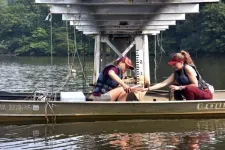
Abigail Lewis traveled all across the United States for college and graduate school, and she ended up researching lakes in her own hometown. For one of her graduate research projects, Lewis analyzed 656 lakes across five continents with an international research team. The lakes in her hometown of Waukesha, Wisconsin, were among those included. “To look back and pull together these two parts of my life has been really satisfying,” said Lewis, who will earn her Ph.D. in biological sciences this spring. In a paper recently published in Global Change Biology, ...

Read the release
Study shows UK offshores emissions through used vehicle exports
Environment

Study shows UK offshores emissions through used vehicle exports

Published today in Nature Climate Change, the study found that exported used vehicles generate at least 13-53% more emissions per mile than those that are scrapped or on the road in Great Britain. The researchers used mandatory annual vehicle inspections – known as MOT tests – of all 65 million used vehicles on British roads between 2005 and 2021 to compare the pollution and emissions intensity of vehicles exported to those scrapped, destroyed, or driven in Great Britain. The data revealed substantially higher rates of carbon dioxide and pollution generation in exported vehicles. ...

Read the release
Environment

Communities must get prepared for increased flooding due to climate change, expert warns

Communities must be better prepared for flooding in their homes and businesses, an expert warns, as climate change predictions suggest more extreme flooding globally. Floods still inflict major costs to the economies, livelihoods and wellbeing of communities, with flood risks and impacts set to increase further due to climate change (IPCC, 2021). Professor of Environmental Management, Lindsey McEwen explains how many experts now believe local communities have critical roles as key actors within flood risk management and disaster risk reduction. Professor McEwen, author of Flood ...

Read the release
Giant Antarctic sea spiders reproductive mystery solved by UH researchers
Environment

Giant Antarctic sea spiders reproductive mystery solved by UH researchers

Link to video and sound (details below): https://spaces.hightail.com/receive/JwM0o5gQdq The reproduction of giant sea spiders in Antarctica has been largely unknown to researchers for more than 140 years, until now. University of Hawaiʻi at Mānoa scientists traveled to the remote continent and saw first-hand the behaviors of these mysterious creatures, and their findings could have wider implications for marine life and ocean ecosystems in Antarctica and around the world. Sea spiders, or ...

Read the release
Environment

Anoxic marine basins are among the best candidates for deep-sea carbon sequestration

(Santa Barbara, Calif.) — Anoxic marine basins may be among the most viable places to conduct large-scale carbon sequestration in the deep ocean, while minimizing negative impacts to marine life. So say UC Santa Barbara researchers in a paper published in the journal AGU Advances. As we explore ways to actively draw down the levels of carbon in the atmosphere, sending plant biomass to these barren, oxygen-free zones on the seafloor becomes an option worth considering. “The big picture here is that all the best models that we have say that we have to do some form of net negative CO2 removal in order to hit climate goals,” said geochemist, geobiologist ...

Read the release
Environment

Climate change has brought forward the flowering period in Doñana National Park by 22 days

Researchers from the University of Seville have investigated how the flowering of 51 species of shrubs, bushes and trees has changed over the last 35 years in Doñana National Park so as to understand how plant communities are responding to climate change in the south of the Iberian Peninsula. Over this period, the average temperature in the area has increased by 1 °C and the minimum temperature by as much as 2 °C. As a result, the community’s peak flowering time, the time when the greatest number of species are in flower, has been brought forward by 22 days, from 9 May to 17 April. This earlier flowering is not ...

Read the release
From the original Press-News collection. Issuers of news releases are responsible for the accuracy of their content.