THE ORIGINAL COLLECTION · SINCE 2010

Environment
press releases.

Research announcements from universities, hospitals and scientific institutions. Explore the stories, people and discoveries behind the headlines.

Original publication datesPage 119
FIND A STORY

Find a past release.

Dates and source material belong to the original release.

Read our research explainers

Browse the collection · original publication order

Laboratory study on conditions for spontaneous excitation of "chorus emission," wave of space plasma
Environment

Laboratory study on conditions for spontaneous excitation of "chorus emission," wave of space plasma

A dipole magnetic field, created by a ring current, is the most fundamental type of magnetic field that is found both in laboratories and in space. Planetary magnetospheres, such as Jupiter's, effectively confine plasma. The RT-1 project aims to learn from nature and create a magnetosphere-type high-performance plasma to realize advanced fusion energy. Simultaneously, the artificial magnetosphere offers a means to experimentally understand the mechanisms of natural phenomena in a simplified and controlled ...

Read the release
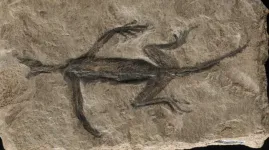
Mystery solved: the oldest fossil reptile from the alps is an historical forgery
Environment

Mystery solved: the oldest fossil reptile from the alps is an historical forgery

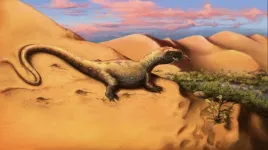
A 280-million-year-old fossil that has baffled researchers for decades has been shown to be, in part, a forgery following new examination of the remnants. The discovery has led the team led by Dr Valentina Rossi of University College Cork, Ireland (UCC) to urge caution in how the fossil is used in future research. Tridentinosaurus antiquus was discovered in the Italian alps in 1931 and was thought to be an important specimen for understanding early reptile evolution. Its body outline, appearing dark against the surrounding rock, was initially interpreted ...

Read the release
Environment

Searching for clues in the history book of the ocean

Oxygen is fundamental to sustaining life on Earth. The ocean gets its oxygen from its uppermost layers in contact with the atmosphere. As our planet continues to warm, the ocean is gradually losing its capacity to absorb oxygen, with severe consequences on marine ecosystems and human activities that depend on them. While these trends will likely continue in the future, it remains unclear how ocean oxygen will redistribute across the ocean interior, where ocean currents and biological degradation of biomass dominate over atmospheric diffusion. “Marine sediments are the history book of the ocean. ...

Read the release
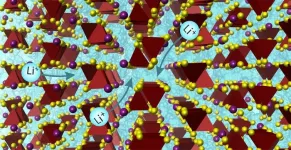
Discovery of new Li ion conductor unlocks new direction for sustainable batteries
Environment

Discovery of new Li ion conductor unlocks new direction for sustainable batteries

One of the grand challenges for materials science is the design and discovery of new materials that address global priorities such as Net Zero. In a paper published in the journal Science, researchers at the University of Liverpool have discovered a solid material that rapidly conducts lithium ions. Such lithium electrolytes are essential components in the rechargeable batteries that power electric vehicles and many electronic devices. Consisting of non-toxic earth-abundant elements, the new material has high ...

Read the release
Environment

Oxygen increased in the tropical ocean during the Paleocene-Eocene Thermal Maximum

Oxygenation in the tropical North Pacific Ocean increased during a warm climatic interval that occurred roughly 56 million years ago, despite high global temperatures, according to a new study. Its findings offer insights into how modern tropical oceans may respond to ongoing anthropogenic climate warming. The availability and distribution of dissolved oxygen in Earth’s oceans play a fundamental role in supporting marine ecosystems and marine life. However, oxygen in the global oceans is declining in response to anthropogenic warming. Although these trends writ large are predicted to continue, the future of oxygen in the highly productive ...

Read the release
UT Dallas Wind Energy Center to expand with new headquarters, resources
Environment

UT Dallas Wind Energy Center to expand with new headquarters, resources

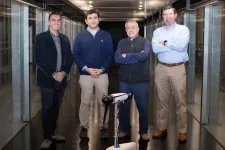
The University of Texas at Dallas’ wind energy research programs have expanded rapidly in recent years, with labs, offices and facilities spread out on campus. In 2020 UT Dallas formed the Wind Energy Center, called UTD Wind, to bring its wind energy programs under one virtual umbrella. Now, a new initiative will give UTD Wind a physical headquarters for the first time with additional labs, meeting areas and office space. The project also includes additional equipment for wind energy research and education. UT Dallas has received $1.6 million through the federal Consolidated Appropriations Act to support the expansion, which will bring most of the center’s ...

Read the release
How is deforested land in Africa used?
Environment

How is deforested land in Africa used?

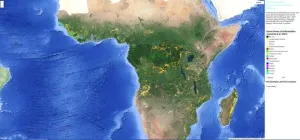
Africa's forested areas – an estimated 14 % of the global forest area – are continuing to decline at an increasing rate – mostly because of human activities to convert forest land for economic purposes. As natural forests are important CO2 and biodiversity reservoirs, this development has a significant impact on climate change and effects the integrity of nature. To intervene in a targeted manner in the interests of climate protection and biodiversity, there has been a lack of sufficiently good data and detailed knowledge ...

Read the release
Methane emissions from wetlands increase significantly over high latitudes
Environment

Methane emissions from wetlands increase significantly over high latitudes

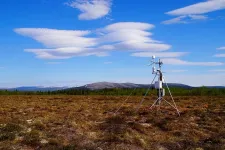
– By Julie Bobyock Wetlands are Earth’s largest natural source of methane, a potent greenhouse gas that is about 30 times more powerful than carbon dioxide at warming the atmosphere. A research team from the Department of Energy’s Lawrence Berkeley National Laboratory (Berkeley Lab) analyzed wetland methane emissions data across the entire Boreal-Arctic region and found that these emissions have increased approximately nine percent since 2002. Livestock and fossil fuel production are well studied for their role in releasing tons of methane per year into the atmosphere. Although more uncertain, quantifying natural wetlands emissions is important to predicting climate ...

Read the release
Environment

New ‘time travel’ study reveals future impact of climate change on coastal marshes

A new Tulane University study published in Nature Communications offers a glimpse into the possible impact of climate change on coastal wetlands 50 years or longer into the future. Scientists are usually forced to rely on computer models to project the long-term effects of rising seas. But an unexpected set of circumstances enabled a real-world experiment along the Gulf Coast. An extensive network of nearly 400 monitoring sites was established along the Louisiana coast after hurricanes Katrina and Rita. Then the ...

Read the release
Just a few sites of exceptional fossil preservation may significantly distort the phylogenetic record for birds, scaly reptiles and dinosaurs
Environment

Just a few sites of exceptional fossil preservation may significantly distort the phylogenetic record for birds, scaly reptiles and dinosaurs

Just a few sites of exceptional fossil preservation may significantly distort the phylogenetic record for birds, scaly reptiles and dinosaurs ### Article URL: https://journals.plos.org/plosone/article?id=10.1371/journal.pone.0297637 Article Title: Quantifying the effects of exceptional fossil preservation on the global availability of phylogenetic data in deep time Author Countries: USA Funding: CHW: Richard Estes Memorial Award (No grant number); Society of Vertebrate Paleontology; www.vertpaleo.org; NO - CHW: Theodore Roosevelt Memorial Grant (No grant number); American Museum of Natural History; www.amnh.org; NO - CHW: EAR-PF 2305564; ...

Read the release
Environment

Amazon rainforest at the threshold: loss of forest worsens climate change

The Amazon rainforest could approach a tipping point, which could lead to a large-scale collapse with serious implications for the global climate system. A new Nature study by an international research team including scientists from the Potsdam Institute for Climate Impact research (PIK) reveals that up to 47 percent of the Amazonian forest is threatened and identifies climatic and land-use thresholds that should not be breached to keep the Amazon resilient. “The Southeastern Amazon has already shifted from a carbon sink to a source –meaning that the current amount of human pressure is too high for the region to maintain its status as a rainforest over the long term. But ...

Read the release
Tiny crustaceans discovered preying on live jellyfish during harsh Arctic night
Environment

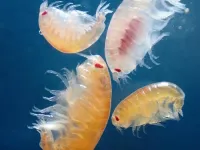
Tiny crustaceans discovered preying on live jellyfish during harsh Arctic night

In the dark and cold of the months-long polar night, food resources are limited. Some groups of marine organisms in the polar regions overcome this challenge by going into a metabolic resting state in winter, surviving on reserves accumulated during the short growth season. But others, such as several species of marine zooplankton, have evolved a different strategy: they shift from a specialized to an omnivorous diet during the polar night, profiting from a wide range of potentially less rewarding foods that are available throughout the year. Now, ...

Read the release
Environment

Hostile environment policies linked to prolonged distress in people with Black Caribbean ancestry

Psychological distress increased among people with Black Caribbean heritage in the UK, relative to the White population, following the 2014 Immigration Act and the Windrush scandal, finds a new study led by UCL researchers. The researchers say their findings, published in The Lancet Psychiatry, suggest a causal link between government policies and a subsequent decline in mental health. They were investigating the impact of the Immigration Act 2014, requiring landlords, employers, the NHS, banks and the police to check right-to-stay documentation. This was a key part of a set of measures known as the Home Office hostile environment policy, seeking ...

Read the release
Business operations affect fishermen's resilience to climate change, new study finds
Environment

Business operations affect fishermen's resilience to climate change, new study finds

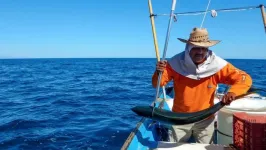
Timothy Frawley has spent the better of the past two decades working in and around commercial fisheries. Born and raised in Casco Bay, Maine, he grew up packing lobsters and pitching bait on Portland’s working waterfront. He has worked in commercial fisheries in California, Alaska and the Mexican state of Baja California Sur. Throughout his years spent on working waterfronts, Frawley, a postdoctoral researcher affiliated with the University of Maine’s Darling Marine Center, closely observed the ways in which fishermen conducted their business, making decisions about what and how they fished, and how it affected their operations and profit. “While ...

Read the release
Environment

Seeking a middle ground for reducing greenhouse emissions

As the world gradually transitions to making meaningful reductions in greenhouse gas emissions, one of the most crucial questions that needs to be answered is how much that change is going to cost. The United Nations Intergovernmental Panel on Climate Change (IPCC) has put out reports on this potential cost that showed global greenhouse gas emissions can be reduced by at least half in 2030 at a cost of less than $100 per ton of CO2 equivalent. A new study from the University of Delaware, Yale University and Columbia University, however, points out that these estimates do not consider some hidden, underlying frictions ...

Read the release
Satellites unveil the size and nature of the world’s coral reefs
Environment

Satellites unveil the size and nature of the world’s coral reefs

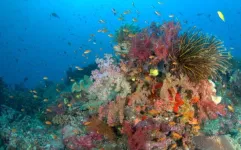
University of Queensland-led research has shown there is more coral reef area across the globe than previously thought, with detailed satellite mapping helping to conserve these vital ecosystems. Dr Mitchell Lyons from UQ’s School of the Environment, working as part of the Allen Coral Atlas project, said scientists have now identified 348,000 square kilometres of shallow coral reefs, up to 20-30 metres deep. “This revises up our previous estimate of shallow reefs in the world’s oceans,” Dr Lyons said. “Importantly, the high-resolution, up-to-date mapping satellite technology also allows us to see what these habitats ...

Read the release
If we can't untangle this mess, Norway's blue industry will never be green
Environment

If we can't untangle this mess, Norway's blue industry will never be green

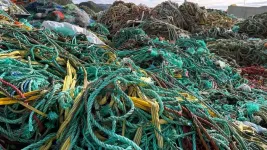
Lost fishing lines and ropes are a growing problem. As a leading fishing nation, Norway, with its long coastline and fish-rich waters, is particularly vulnerable to marine litter. A new study from the Norwegian University of Science and Technology (NTNU) shows that only a third of all ropes produced and sold in Norway can be recycled in a sustainable way. The rest are burned, buried, sent out of the country - or just pile up and contribute to something called ghost fishing. That's when lost or abandoned fishing gear, floating in the ocean or anchored to the bottom, inadvertently continues to catch marine creatures long ...

Read the release
Frequent marine heatwaves in the Arctic Ocean will be the norm
Environment

Frequent marine heatwaves in the Arctic Ocean will be the norm

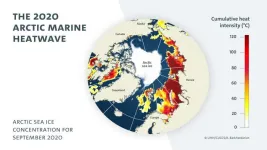
Marine heatwaves will become a regular occurrence in the Arctic in the near future and are a product of higher anthropogenic greenhouse-gas emissions – as shown in a study just released by Dr. Armineh Barkhordarian from Universität Hamburg’s Cluster of Excellence for climate research CLICCS. Since 2007, conditions in the Arctic have shifted, as confirmed by data recently published in the journal Nature Communications Earth & Environment. Between 2007 and 2021, the marginal zones ...

Read the release
Environment

Greenland’s ice sheet is melting - and being replaced by vegetation

University of Leeds Press Release Under embargo until 10:00 GMT on 13 February There are graphics and photographic images that help explain this story – see under Note to editors Greenland’s ice sheet is melting - and being replaced by vegetation An estimated 11,000 sq miles or 28,707 sq kilometres of Greenland’s ice sheet and glaciers have melted over the last three decades, according to a major analysis of historic satellite records. The total area of ice loss is equivalent to the size of Albania, and represents about 1.6 % of Greenland’s ...

Read the release
Researchers studying ocean transform faults, describe a previously unknown part of the geological carbon cycle
Environment

Researchers studying ocean transform faults, describe a previously unknown part of the geological carbon cycle

Woods Hole, Mass. (February 12, 2024) – Studying a rock is like reading a book. The rock has a story to tell, says Frieder Klein, an associate scientist in the Marine Chemistry & Geochemistry Department at the Woods Hole Oceanographic Institution (WHOI). The rocks that Klein and his colleagues analyzed from the submerged flanks of the St. Peter and St. Paul Archipelago in the St. Paul’s oceanic transform fault, about 500 km off the coast of Brazil, tells a fascinating and previously unknown story about parts of the geological ...

Read the release
Innovative decarbonization: UH researcher offers carbon-driven framework to accelerate shift toward net-zero electric power sector
Environment

Innovative decarbonization: UH researcher offers carbon-driven framework to accelerate shift toward net-zero electric power sector

Houston, Texas, the epicenter of the global energy market, and the University of Houston – the Energy University – are leading the transition towards a cleaner, more sustainable future with innovative solutions. With three-quarters of U.S. greenhouse gas emissions stemming from burning fossil fuels for energy, it's clear that the key to curbing emissions lies in reimagining how energy is produced and consumed. In Texas, the shift is already well on its way. Technologies like giant batteries, ...

Read the release
In the Cerrado, crop diversification has beneficial effects on wildlife and reduces the presence of boars
Environment

In the Cerrado, crop diversification has beneficial effects on wildlife and reduces the presence of boars

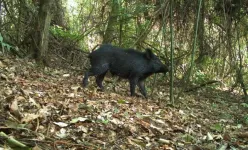
There are no substitutes for native vegetation, but replacing large areas of monoculture with diversified crops in places where agricultural activities are widespread can have beneficial effects on the mammals that still inhabit the region. This is one of the conclusions of a study conducted by researchers at the University of São Paulo (USP) supported by FAPESP. They focused on the northeast of São Paulo state, where the predominant biome is the Cerrado (Brazilian savanna). The region is one of the nation’s agribusiness centers. An article on the study is published in the Journal of Applied Ecology. The study showed that ...

Read the release
New fossil site of worldwide importance uncovered in southern France
Environment

New fossil site of worldwide importance uncovered in southern France

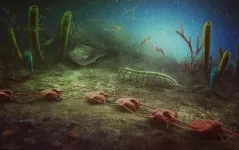
Nearly 400 exceptionally well-preserved fossils dating back 470 million years have been discovered in the south of France by two amateur paleontologists. This new fossil site of worldwide importance has been analyzed by scientists from the University of Lausanne, in collaboration with the CNRS and international teams. This discovery provides unprecedented information on the polar ecosystems of the Ordovician period. Paleontology enthusiasts have unearthed one of the world's richest and most diverse fossil sites from the Lower Ordovician period (around 470 million ...

Read the release
Global study: Wild megafauna shape ecosystem properties
Environment

Global study: Wild megafauna shape ecosystem properties

For millions of years, a variety of large herbivores, or megafauna, influenced terrestrial ecosystems. Among many others, these included elephants in Europe, giant wombats in Australia, and ground sloths in South America. However, these animals experienced a wave of extinctions coinciding with the worldwide expansion of humans, leading to dramatic but still not fully understood changes in ecosystems. Even the survivors of these extinctions strongly declined, and many are currently threatened with extinction. While there are many case studies as well as theories about the effects of large animals, formal attempts to quantitatively synthesize their effects and establish ...

Read the release
Conversion process turns greenhouse gas into ethylene
Environment

Conversion process turns greenhouse gas into ethylene

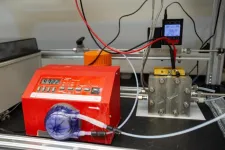
Engineers at the University of Cincinnati created a more efficient way of converting carbon dioxide into valuable products while simultaneously addressing climate change. In his chemical engineering lab in UC’s College of Engineering and Applied Science, Associate Professor Jingjie Wu and his team found that a modified copper catalyst improves the electrochemical conversion of carbon dioxide into ethylene, the key ingredient in plastic and a myriad of other uses. Ethylene has been called ...

Read the release
From the original Press-News collection. Issuers of news releases are responsible for the accuracy of their content.