THE ORIGINAL COLLECTION · SINCE 2010

Environment
press releases.

Research announcements from universities, hospitals and scientific institutions. Explore the stories, people and discoveries behind the headlines.

Original publication datesPage 121
FIND A STORY

Find a past release.

Dates and source material belong to the original release.

Read our research explainers

Browse the collection · original publication order

Environment

A common add-on in IVF may be an expensive waste of time, study in Lancet reveals

One of the most common add-ons to IVF procedures undertaken in Australia and globally by infertile couples may be a waste of time as well as expensive and invasive, and maye even reduce the chances of success, according to a new report in The Lancet. The research, by Monash University’s Professor Ben Mol in Australiaa and Dr. Rui Wang and colleagues in China, found that intracytoplasmic sperm injection (ICSI) whereby a single sperm is injected directly into a mature egg – originally developed in 1992 for couples with severe male infertility but which has since expanded ...

Read the release
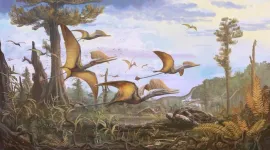
New species of Jurassic pterosaur discovered on the Isle of Skye
Environment

New species of Jurassic pterosaur discovered on the Isle of Skye

A new species of pterosaur from specimens found on the Isle of Skye, Scotland, has been announced by scientists from the Natural History Museum, University of Bristol, University of Leicester, and University of Liverpool. The new pterosaur is part of the Darwinoptera clade of pterosaurs. Its discovery shows that the clade was considerably more diverse than previously thought, and persisted for more than 25 million years, from the late Early Jurassic to the latest Jurassic. During this period species within the clade spread worldwide. The discovery underpins a new and more complex model for the early evolution of pterosaurs. The rarity of Middle Jurassic pterosaur ...

Read the release
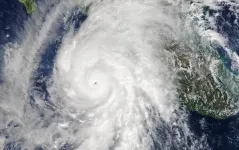
In a warming world, climate scientists consider category 6 hurricanes
Environment

In a warming world, climate scientists consider category 6 hurricanes

– By Linda Vu For more than 50 years, the National Hurricane Center has used the Saffir-Simpson Windscale to communicate the risk of property damage; it labels a hurricane on a scale from Category 1 (wind speeds between 74 - 95 mph) to Category 5 (wind speeds of 158 mph or greater). But as increasing ocean temperatures contribute to ever more intense and destructive hurricanes, climate scientists Michael Wehner of Lawrence Berkeley National Laboratory (Berkeley Lab) and James Kossin of the First Street Foundation wondered whether the ...

Read the release
Understanding how soil traps carbon
Environment

Understanding how soil traps carbon

EVANSTON, Ill. — When carbon molecules from plants enter the soil, they hit a definitive fork in the road. Either the carbon gets trapped in the soil for days or even years, where it is effectively sequestered from immediately entering the atmosphere. Or it feeds microbes, which then respire carbon dioxide (CO2) into the ever-warming environment. In a new study, Northwestern University researchers determined the factors that could tip plant-based organic matter in one direction or the other. By combining laboratory experiments and molecular modeling, researchers ...

Read the release
Environment

Currently stable parts of East Antarctica may be closer to melting than anyone realized

In a warming climate, meltwater from Antarctica is expected to contribute significantly to rising seas. For the most part, though, research has been focused on West Antarctica, in places like the Thwaites Glacier, which has seen significant melt in recent decades. In a paper published Jan. 19 in Geophysical Research Letters, researchers at Stanford have shown that the Wilkes Subglacial Basin in East Antarctica, which holds enough ice to raise global sea levels by more than 10 feet, could be closer to runaway melting than anyone realized. “There hasn’t been much analysis in this region – there’s huge ...

Read the release
SwRI’s CHEDE-9 consortium expands decarbonization research priorities
Environment

SwRI’s CHEDE-9 consortium expands decarbonization research priorities

SAN ANTONIO — February 5, 2024 - Southwest Research Institute has launched the latest phase of the transportation industry’s longest running commercial vehicle research consortium. Building on more than 33 years of research and development, the Clean Highly Efficient Decarbonized Engines 9 (CHEDE-9) consortium has expanded its scope from diesel-engine-focused research to a range of internal combustion engines and hybrid solutions. Formerly known as the Clean High-Efficiency Diesel Engine consortium, CHEDE-9 focuses on research of low- and net-zero carbon dioxide (CO2) transportation technologies for light-duty passenger vehicles, heavy-duty commercial vehicles and large ...

Read the release
Environment

Green steel from toxic red mud

The production of aluminium generates around 180 million tonnes of toxic red mud every year. Scientists at the Max-Planck-Institut für Eisenforschung, a centre for iron research, have now shown how green steel can be produced from aluminium production waste in a relatively simple way. In an electric arc furnace similar to those used in the steel industry for decades, they convert the iron oxide contained in the red mud into iron using hydrogen plasma. With this process, almost 700 million tonnes of CO2-free steel could be produced from the four billion tonnes of red ...

Read the release
Brazilian researcher helps describe a novel species of jellyfish discovered in a remote location in Japan
Environment

Brazilian researcher helps describe a novel species of jellyfish discovered in a remote location in Japan

A gelatinous animal with a diameter of about 10 cm and a red stomach resembling the Cross of St George when seen from above. This is Santjordia pagesi, a newly described species of medusa. Medusae are a type of free-swimming, umbrella-shaped jellyfish with a reduced stalk. The new species is described in an article published in the journal Zootaxa. The study was conducted by an international group of researchers that included a Brazilian scientist supported by FAPESP. The scientist in question is André Morandini, last author ...

Read the release
Environment

Small but mighty – study highlights the abundance and importance of the ocean’s tiniest inhabitants

Tiny plankton – measuring less than 20µm (or 0.02mm) in diameter – make up the majority of plankton in the ocean and play a critical role in the planet’s health, according to new research. However, scientists say challenges in identifying them have led to them becoming a silent majority that is currently being overlooked when it comes to global ocean policy. The study is one of the first to explore the abundance and importance of these tiny ocean inhabitants around the UK coastline, with the technology capable of monitoring them only having been introduced in around 2010. However, ...

Read the release
Fencing young mussels for ecosystem restoration
Environment

Fencing young mussels for ecosystem restoration

The restoration of mussel beds in the Wadden Sea or the Delta is a lot more successful when young mussels are helped a little with low, protective fences on the bottom. That is shown by research conducted by marine biologist Jildou Schotanus at the Hogeschool Zeeland / University of Applied Sciences in Vlissingen and at the Royal Netherlands Institute for Sea Research in Yerseke. She defends her thesis Restoring mussel beds on highly dynamic mudflats at the University of Groningen on Monday February 5th. Ecosystem engineers Mussels are so-called ecosystem ...

Read the release
Improving climate predictions by unlocking the secrets of soil microbes
Environment

Improving climate predictions by unlocking the secrets of soil microbes

Climate models are essential to predicting and addressing climate change, but can fail to adequately represent soil microbes, a critical player in ecosystem soil carbon sequestration that affects the global carbon cycle. A team of scientists led by the Department of Energy’s Lawrence Berkeley National Laboratory (Berkeley Lab) has developed a new model that incorporates genetic information from microbes. This new model enables the scientists to better understand how certain soil microbes efficiently store carbon supplied by plant ...

Read the release
Cary Institute receives NSF funding to offer ecological research experiences for teachers
Environment

Cary Institute receives NSF funding to offer ecological research experiences for teachers

(Millbrook, NY) Cary Institute for Ecosystem Studies is launching a new program to support high school and middle school educators in teaching global change and ecology. Starting in the summer of 2024, nine teachers will spend six weeks at Cary Institute conducting collaborative research in ecosystem science. Follow-up meetings throughout the school year will support the teachers as they develop and implement innovative curricula based on their research experiences. The program is funded by a three-year award from the National Science Foundation as part of its Research ...

Read the release
Environment

Plant groupings in drylands support ecosystem resilience

Many complex systems, from microbial communities to mussel beds to drylands, display striking self-organized clusters. According to theoretical models, these groupings play an important role in how an ecosystem works and its ability to respond to environmental changes. A new paper in PNAS focused on the spatial patterns found in drylands offers important empirical evidence validating the models. Drylands make up 40 percent of the Earth’s landmass and are places where water is the limiting resource for life. They often display a characteristic ...

Read the release
Rare 3D fossils show that some early trees had forms unlike any you’ve ever seen
Environment

Rare 3D fossils show that some early trees had forms unlike any you’ve ever seen

In the fossil record, trees typically are preserved with only their trunks. They don’t usually include any leaves to show what their canopies and overall forms may have looked like. But now, researchers reporting in the journal Current Biology on February 2 describe fossilized trees from New Brunswick, Canada with a surprising and unique three-dimensional crown shape. “The way in which this tree produced hugely long leaves around its spindly trunk, and the sheer number over a short length of trunk, is startling,” says Robert Gastaldo of Colby College in Waterville, Maine. The forms taken by these ...

Read the release
Brexit-induced spatial restrictions reveal alarming increase of fishing fleet’s carbon footprint
Environment

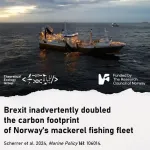
Brexit-induced spatial restrictions reveal alarming increase of fishing fleet’s carbon footprint

In a study published today in Marine Policy, researchers have unveiled striking evidence that fisheries management decisions such as spatial fisheries restrictions can increase greenhouse gas emissions. The study, conducted by a team of scientists led by postdoctoral researcher Kim Scherrer at the University of Bergen, sheds light on the unforeseen consequences of policy changes on fishing fleets and their carbon footprint. In the North Atlantic, international agreements often allow fleets to follow the fish across national borders. This allows fishers to catch the fish where it is most efficient. But when the UK left the EU (Brexit), ...

Read the release
Why are people climate change deniers?
Environment

Why are people climate change deniers?

Do climate change deniers bend the facts to avoid having to modify their environmentally harmful behavior? Researchers from the University of Bonn and the Institute of Labor Economics (IZA) ran an online experiment involving 4,000 US adults, and found no evidence to support this idea. The authors of the study were themselves surprised by the results. Whether they are good or bad news for the fight against global heating remains to be seen. The study is being published in the journal Nature Climate Change. STRICTLY EMBARGOED: Do not publish before Friday, February 02, 11 a.m. CET! A surprisingly large number of people ...

Read the release
Environment

World Wetlands Day: Bogs hold an important key to the climate crisis

World Wetlands Day: Bogs hold an important key to the climate crisis Peat bogs store twice as much CO2 as all of the world's forests combined. A new research center at the University of Copenhagen will map Earth’s wetlands and provide important knowledge about the greenhouse gas budgets of these areas. The Global Wetland Center will teach us how to contain carbon from plants and trees in bogs and other wetlands – and preserve it as well as the ancient bog bodies also found there. He is world-renowned ...

Read the release
Environment

Sustainable carbon removals limits identified, huge climate mitigation challenge revealed

*Embargoed until 14:00 US Eastern / 19:00 UK GMT / 20:00 Europe CET – Thursday 1 February* Governments and businesses are relying on dangerous amounts of future removal of carbon dioxide (CO2) from the atmosphere, instead of more rapidly reducing emissions and phasing out fossil fuels. This problem is partly due to an incomplete picture1 of the damaging consequences of carbon dioxide removal for people, food security and natural ecosystems, according to new research published in Science. The paper finds that the carbon dioxide removal potential currently reported by the UN ...

Read the release
Environment

New study suggests culling animals who ‘don’t belong’ can be a flawed nature conservation practice

New research published today in the journal Science has concluded that eradicating animals on the basis that they are not native in order to protect plant species, can be a flawed practice costing millions of dollars, and resulting in the slaughter of millions of healthy wild animals. Introduced large herbivores, or megafauna, are claimed to have distinct and harmful ecological impacts, including damaging sensitive plants and habitats, reducing native plant diversity, and facilitating introduced plants. However, up to now these impacts have been studied without comparison to a proper ...

Read the release
The ShAPE of buildings to come: Scrap aluminum transforms recycling life cycle
Environment

The ShAPE of buildings to come: Scrap aluminum transforms recycling life cycle

RICHLAND, Wash.—The circular economy just closed the loop on scrap aluminum, thanks to a new patent-pending technology developed at the Department of Energy’s Pacific Northwest National Laboratory. That twisted aluminum mesh, those banged up bicycle frames, and the used car parts now languishing in junk yards could gain new life as building structures such as door and window frames, facades, lighting, decorative features and a myriad of other uses—all while conserving nearly all the energy required to manufacture new aluminum products. It’s no secret that strong, yet light-weight aluminum parts are being ...

Read the release
Tidal landscapes a greater carbon sink than previously thought
Environment

Tidal landscapes a greater carbon sink than previously thought

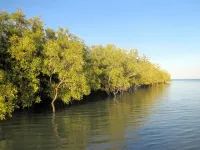
Mangroves and saltmarshes sequester large amounts of carbon, mitigating the greenhouse effect. New research from the University of Gothenburg shows that these environments are perhaps twice as effective as previously thought. Natural habitats flooded by the tide form ecosystems that captures large amounts of carbon, which can help to mitigate climate change. Carbon dioxide is stored in the biomass and in the muddy soils. Therefore, several governments have launched blue carbon market initiatives to encourage landowners to restore and preserve mangrove and saltmarsh ecosystems, similar to the rainforest. Large ...

Read the release
Climate change threatens older elephants most, jeopardizing African elephants’ future
Environment

Climate change threatens older elephants most, jeopardizing African elephants’ future

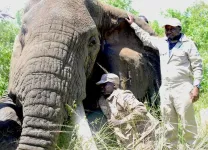
January 31, 2024 Climate Change Threatens Older Elephants Most, Jeopardizing African Elephants’ Future New study from UMass Amherst and Wildlife Conservation Society finds that continuing international cooperation, community involvement most important in ensuring elephants’ survival AMHERST, Mass. – A collaborative team of researchers from the University of Massachusetts Amherst and the Wildlife Conservation Society (WCS), which runs the world’s largest field conservation program, has conducted first-of-its kind research into how global climate change affects African elephants. The work, published recently in PLOS Sustainability and Transformation, ...

Read the release
Trees struggle to ‘breathe’ as climate warms, researchers find
Environment

Trees struggle to ‘breathe’ as climate warms, researchers find

UNIVERSITY PARK, Pa. — Trees are struggling to sequester heat-trapping carbon dioxide (CO2) in warmer, drier climates, meaning that they may no longer serve as a solution for offsetting humanity’s carbon footprint as the planet continues to warm, according to a new study led by Penn State researchers. “We found that trees in warmer, drier climates are essentially coughing instead of breathing,” said Max Lloyd assistant research professor of geosciences at Penn State and lead author on the study recently published in Proceedings of the National Academy of Sciences. “They are sending CO2 right back into the ...

Read the release
Fermentation revolution? Trash becomes treasure as bio-waste yields valuable acetone and isopropanol
Environment

Fermentation revolution? Trash becomes treasure as bio-waste yields valuable acetone and isopropanol

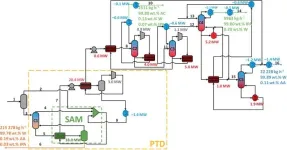
In a major stride towards sustainable industrial fermentation, a team of researchers at Delft University of Technology (TU Delft) in The Netherlands, has unveiled pioneering advancements in the purification of isopropanol and acetone from the fermentation of waste gases. The study, published in SCI's Journal of Chemical Technology and Biotechnology, introduces novel processes that promise to elevate the efficiency and viability of large-scale production. Isopropanol and acetone have a combined global market of $10 billion. Both chemicals are important industry solvents and isopropanol ...

Read the release
The hottest catalog of the year: the most comprehensive list of slow-building solar flares yet
Environment

The hottest catalog of the year: the most comprehensive list of slow-building solar flares yet

Solar flares occur when magnetic energy builds up in the Sun’s atmosphere and is released as electromagnetic radiation. Lasting anywhere from a few minutes to a few hours, flares usually reach temperatures around 10 million degrees Kelvin. Because of their intense electromagnetic energy, solar flares can cause disruptions in radio communications, Earth-orbiting satellites and even result in blackouts. Although flares have been classified based on the amount of energy they emit at their peak, there has not been significant study into differentiating ...

Read the release
From the original Press-News collection. Issuers of news releases are responsible for the accuracy of their content.