THE ORIGINAL COLLECTION · SINCE 2010

Environment
press releases.

Research announcements from universities, hospitals and scientific institutions. Explore the stories, people and discoveries behind the headlines.

Original publication datesPage 122
FIND A STORY

Find a past release.

Dates and source material belong to the original release.

Read our research explainers

Browse the collection · original publication order

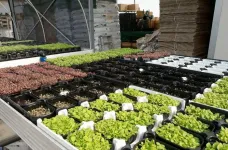
Microgreens made to order: Italian scientists have tailored iodine and potassium content of radishes, peas, rocket and chard
Environment

Microgreens made to order: Italian scientists have tailored iodine and potassium content of radishes, peas, rocket and chard

In a significant development for personalised nutrition, researchers in Italy have cultivated microgreens with bespoke nutritional profiles to serve individual dietary requirements. The study, published in the Journal of the Science of Food and Agriculture (doi: 10.1002/jsfa.13222), provides a blueprint for the soilless cultivation of nutritionally enriched plants in a commercial greenhouse setting. Co-authors Massimiliano D’Imperio and Francesco Serio, both at the Institute of Sciences of Food Production (ISPA) National Council ...

Read the release

Environment

Oxford scientists launch ambitious roadmap for circular carbon plastics economy

Researchers from the Oxford Martin Programme on the Future of Plastics, University of Oxford, have outlined ambitious targets to help deliver a sustainable and net zero plastic economy. In a paper published in Nature, the authors argue for a rethinking of the technical, economic, and policy paradigms that have entrenched the status-quo, one of rising carbon emissions and uncontrolled pollution. Currently the global plastics system results in over 1 gigatonnes per annum (Gt/annum) of carbon dioxide equivalent emissions which is the same as the total combined emissions ...

Read the release
Environment

Decarbonizing the world’s industries

Harmful emissions from the industrial sector could be reduced by up to 85% across the world, according to new research. The sector, which includes iron and steel, chemicals, cement, and food and drink, emits around a quarter of global greenhouse gas (GHG) emissions - planet-warming gases that result in climate change and extreme weather. This new study, led by the University of Leeds as part of its contribution to the UK Energy Research Centre (UKERC), found that decarbonising the sector is technically possible with a mix of “high and low-maturity” technologies - those that are tried and tested, along with upcoming tech that is not yet ready to be used in industry. Lead ...

Read the release
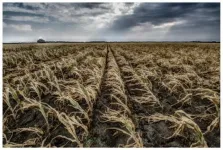
Alleviate the drought in the east Hungarian plains
Environment

Alleviate the drought in the east Hungarian plains

Intensive agricultural cultivation and the resulting changes in soil structure cause low humidity in the near-surface air during heat waves in really dry years. As a result, summer cold fronts roar across the Plain without the usual thunderstorms and precipitation, researchers at the Institute of Geography and Earth Sciences at Eötvös Loránd University explain in a review of articles on topics ranging from geodynamics to soil science to meteorology what made the summer of 2022 so severe in the eastern part of the country. In 2022, the 7-week period starting in mid-June was disastrous for eastern Hungary. Almost no rain fell for weeks, and in the eastern part of the country, ...

Read the release
Fungal-rich soil may improve green roofs
Environment

Fungal-rich soil may improve green roofs

Green roofs have become increasingly popular thanks to their benefits related to climate adaptation, mitigation, and urban biodiversity management. These vegetated surfaces on the rooftops of buildings absorb excess storm water, reduce energy use by insulating buildings, and cool neighborhoods, tempering urban heat islands, while also creating urban habitats for plants, pollinators, and wildlife. But, in the U.S., green roofs are typically planted with non-native plants in sterile soils, and their effectiveness declines over time. A Dartmouth-led research team set out to determine ...

Read the release
As cities grow, how will city trash, wastewater, and emissions rise?
Environment

As cities grow, how will city trash, wastewater, and emissions rise?

More than half of the world’s population—4.4 billion people—lives in cities, and that proportion will grow to two-thirds by the year 2050, according to the United Nations. As the world’s population expands, and becomes increasingly urbanized, many have raised concerns about the impact of waste—from house trash to wastewater to greenhouse gas emissions—on the planet. “We as a society tend to ignore the unpleasant side of our production,” says Mingzhen Lu, an assistant professor at New York University’s ...

Read the release
Lifetime of ‘biodegradable’ straws in the ocean is 8-20 months, study finds
Environment

Lifetime of ‘biodegradable’ straws in the ocean is 8-20 months, study finds

Plastic drinking straws that get into marine ecosystems make beaches unsightly and pose problems for turtles and seabirds. So, people increasingly favor alternatives marketed as biodegradable or compostable. But do marine microorganisms break apart those straws? Researchers conducted experiments with seawater and report in ACS Sustainable Chemistry & Engineering that some commercial bioplastic or paper straws might disintegrate within eight to 20 months in coastal ocean systems and switching to ...

Read the release
Joint efforts to ensure the sustainability of our one and only Earth
Environment

Joint efforts to ensure the sustainability of our one and only Earth

The 37th International Geological Congress (IGC 2024) in August 2024, Busan, Korea, will highlight a growing concern amid urgent threats posed by accelerated climate and environmental changes. This will prompt collaborative efforts towards ensuring the sustainability of our planet. Abnormally high temperatures across the globe during the past year were expected to make 2023 the hottest year in Earth's history. This realization underscores the concept of climate change, which was once confined to academic desks but has since permeated into our daily existence. Geologists now assert that the rapid climate and environmental changes necessitate ...

Read the release
Environment

New research shows how pollutants from aerosols and river run-off are changing the marine phosphorus cycle in coastal seas

New research into the marine phosphorus cycle is deepening our understanding of the impact of human activities on ecosystems in coastal seas. The research, co-led by the University of East Anglia, in partnership with the Sino-UK Joint Research Centre at the Ocean University of China, looked at the impact of aerosols and river run-off on microalgae in the coastal waters of China. It identified an ‘Anthropogenic Nitrogen Pump’ which changes the phosphorus cycle and therefore likely coastal biodiversity and associated ecosystem services. In a balanced ecosystem, microalgae, also known as phytoplankton, provide food for a wide ...

Read the release
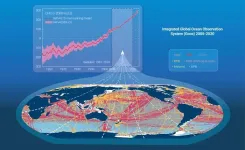
Integrated design of Global Ocean Observing System essential to monitor climate change
Environment

Integrated design of Global Ocean Observing System essential to monitor climate change

We know that our climate is changing. Extreme weather events are becoming more common, sea levels are rising and overall, our planet is getting warmer. Monitoring these changes is critical. One of the best indicators of climate change is the Ocean Heat Content (OHC) estimate, a measurement of overall oceanic temperature calculated by gathering water temperature data in oceans around the world in differing locations, at varying depths and across time. The data necessary to calculate the OHC over such a wide-spread area is gathered by the Global Ocean Observing System (GOOS), an integrated network of platforms ...

Read the release
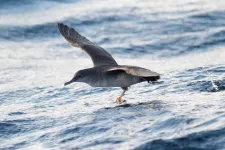
Endangered seabird shows surprising individual flexibility to adapt to climate change
Environment

Endangered seabird shows surprising individual flexibility to adapt to climate change

New research finds that individual behavioural flexibility and not evolutionary selection is driving the northward shift of Balearic shearwaters. The findings were revealed through a decade-long study which tagged individual birds. The results indicate that individual animals may have greater behavioural flexibility to respond to climate change impacts than previously thought. How individual animals respond to climate change is key to whether populations will persist or go extinct. Many species are shifting their ranges as the environment warms, but up to now the mechanisms underlying ...

Read the release
Environment

Spacing characteristics between vegetation could be a warning sign of degrading dryland ecosystems - study

Scientists have found that the spatial arrangement of plants in drylands can be a sign of the environment degrading, according to a new study. One of the iconic features of drylands is the striking appearance of islands of plants surrounded by bare soil. This spatial structure of arid vegetation has long fascinated scientists, but now a new study published in Proceedings of the National Academy of Sciences, has shed new light on why these plants group in this way. An international team of scientists, including from the University of Birmingham, combined field data from 115 sites around the world, and used mathematical models and remote sensing to build a picture of how the ...

Read the release
Argonne scientists help scale up nanomaterials for sustainable manufacturing
Environment

Argonne scientists help scale up nanomaterials for sustainable manufacturing

New material is self-assembling, long-lasting and recyclable. As electronic devices get smaller, the materials needed to create them get smaller as well. Nanoscience is the study of extremely small materials that find uses in energy storage, electronics, health and safety applications and more. Now a team led by the U.S. Department of Energy’s (DOE) Lawrence Berkeley National Laboratory has developed a new self-assembly method to fabricate multilayered 2D nanosheets. A nanosheet is an extremely small, lasagna-like material made of ultrathin layers of polymers and nanoparticles. These nanosheets have significantly ...

Read the release
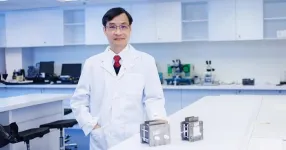
PolyU develops high-efficiency carbon dioxide electroreduction system for reducing carbon footprint and progressing carbon neutrality goals
Environment

PolyU develops high-efficiency carbon dioxide electroreduction system for reducing carbon footprint and progressing carbon neutrality goals

Global warming continues to pose a threat to human society and the ecological systems, and carbon dioxide accounts for the largest proportion of the greenhouse gases that dominate climate warming. To combat climate change and move towards the goal of carbon neutrality, researchers from The Hong Kong Polytechnic University (PolyU) have developed a durable, highly selective and energy-efficient carbon dioxide (CO2) electroreduction system that can convert CO2 into ethylene for industrial purposes to provide an effective solution for ...

Read the release
UC Irvine-led team unravels mysteries of planet formation and evolution in distant solar system
Environment

UC Irvine-led team unravels mysteries of planet formation and evolution in distant solar system

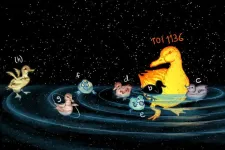
A recently discovered solar system with six confirmed exoplanets and a possible seventh is boosting astronomers’ knowledge of planet formation and evolution. Relying on a globe-spanning arsenal of observatories and instruments, a team led by researchers at the University of California, Irvine has compiled the most precise measurements yet of the exoplanets’ masses, orbital properties and atmospheric characteristics. In a paper published today in The Astronomical Journal, the researchers share ...

Read the release
Peach-palm waste and Trichoderma stromaticum: The potential of Cost-effective amylase production
Environment

Peach-palm waste and Trichoderma stromaticum: The potential of Cost-effective amylase production

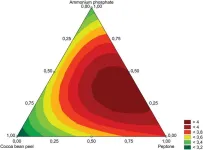
Amylases are among the most important biotechnological and industrial enzymes that can be applied in various sectors, such as food, pharmaceuticals, textiles, chemicals, paper, and detergents. The enzymes’ costs come from a range of factors including the quantity produced, the production process, the expense of its recovery, and the degree of purity at which it will be marketed, etc. The use of agro-industrial substrates and microorganisms brings the potential to low-cost enzyme production. Meanwhile, due to the ability to improve physical and chemical resistance to industrial environmental extremes, such as high temperature and pH, as well ...

Read the release
Glacier melting destroys important climate data archive
Environment

Glacier melting destroys important climate data archive

As part of the Ice Memory initiative, PSI researchers, with colleagues from the University of Fribourg and Ca’ Foscari University of Venice as well as the Institute of Polar Sciences of the Italian National Research Council (CNR), analysed ice cores drilled in 2018 and 2020 from the Corbassière glacier at Grand Combin in the canton of Valais. A comparison of the two sets of ice cores published in Nature Geoscience shows: Global warming has made at least this glacier unusable as a climate archive. Reliable information about the past climate and air pollution can no longer be obtained from ...

Read the release
Environment

Achieving sustainable urban growth on a global scale

From the impacts on the environment and climate to transforming land cover and habitats, urban growth is driving global change. Urban areas contribute up to 75% of global greenhouse gas emissions. By 2050, urban areas globally will either double or triple, and the raw materials needed to build future cities is more than the world can sustainably provide. Yet, the impacts of cities on Earth systems are not factored into policy and planning among international agencies and that needs to change, says Karen Seto, Frederick ...

Read the release
Environment

How an ant invasion led to lions eating fewer zebra in a Kenyan ecosystem

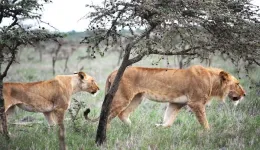
The invasion of non-native species can sometimes lead to large and unexpected ecosystem shifts, as Douglas Kamaru and colleagues demonstrate in a unique, careful study that traces the links between big-headed ants, acacia trees, elephants, lions, zebras, and buffalo at a Kenyan conservancy. The invasive big-headed ant species disrupted a mutualism between native ants and the region’s thorny acacia trees, in which the native ants protected the trees from grazers in exchange for a place to live. Through a combination of observations, experimental plots, and animal tracking at Ol Pejeta Conservancy, Kamaru et al. followed the ecosystem chain reaction prompted by this disruption. ...

Read the release
Environment

Total organic carbon concentrations measured over Canadian oil sands reveal huge underestimate of emissions

New measurements of total gaseous organic carbon concentrations in the air over the Athabasca oil sands in Canada suggest that traditional methods of estimating this pollution can severely underestimate emissions, according to an analysis by Megan He and colleagues. Using aircraft-based measurements, He et al. conclude that the total gaseous organic carbon emissions from oil sands operations exceed industry-reported values by 1900% to over 6300% across the studied facilities. “Measured facility-wide emissions represented approximately 1% of extracted petroleum, resulting in total organic ...

Read the release
Tiny ant species disrupts lion’s hunting behavior
Environment

Tiny ant species disrupts lion’s hunting behavior

What makes the little old ant think he can disrupt the life of an African lion? Researchers say it’s more than just high hopes. In a study published today in the journal Science, a team of scientists reports that a tiny and seemingly innocuous invasive ant species is changing tree cover in an East African wildlife area, making it harder for lions, the world’s most iconic predator, to hunt its preferred prey, zebra. “These tiny invaders are cryptically pulling on the ties that bind an African ecosystem together, determining who is eaten and ...

Read the release
An unconventional yeast increases the quality of carbonic maceration wine, rosé wine and orange wine
Environment

An unconventional yeast increases the quality of carbonic maceration wine, rosé wine and orange wine

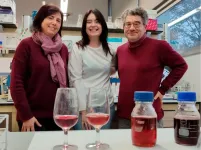
Carbonic maceration wines are increasingly in demand on the market. They are young red wines in which floral and fresh fruit aromas predominate and they must be consumed within the first year. The best-known example is Beaujolais nouveau in France, but there is also a tradition in La Rioja and Catalonia, especially in the Montsant area and the Conca de Barberà. Research by the URV has found that the quality of these wines can be increased by using an unconventional yeast that considerably improves their organoleptic properties and speeds up the malolactic fermentation process. ...

Read the release
Environment

Permeable pavements could reduce coho-killing tire pollutants

PUYALLUP, Wash. — The pore-like structure of permeable pavements may help protect coho salmon by preventing tire wear particles and related contaminants from entering stormwater runoff, according to a Washington State University study. Researchers demonstrated that four types of permeable pavements can act as giant filters, retaining more than 96% of applied tire particle mass. They also captured several tire-associated chemicals, resulting in a 68% average reduction of 6PPD-quinone, a contaminant shown to kill coho salmon in urban streams. The study findings were published in the journal Science of the Total Environment. “The pressure on existing stormwater management technologies ...

Read the release
Environment

More reporting needed to show progress on Ontario municipal climate and sustainability plans

While sustainability reporting is a widespread practice in the private sector, new research shows that the same cannot be said for Ontario municipalities. Researchers at the University of Waterloo studied 38 municipalities in Ontario, representing more than two-thirds of the population, and discovered that almost all municipalities publish their sustainability and climate change goals, but under half are formally reporting on their progress. Municipalities are a key part of the equation ...

Read the release
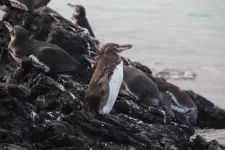
Microplastics may be accumulating rapidly in endangered Galápagos penguins’ food web
Environment

Microplastics may be accumulating rapidly in endangered Galápagos penguins’ food web

Microplastics, with a size from 1 micron to < 5 millimeters, are pervasive pollutants that have been found in all parts of the global ocean, and have made their way into the marine food webs. Researchers, led by University of British Columbia UBC’s Institute for the Oceans and Fisheries scientists and Ecuadorian researchers from Galápagos and the ESPOL Polytechnic School (Guayaquil, Ecuador), looked closely at how microplastic bioaccumulation was affecting the endangered Galápagos penguin (Spheniscus mendiculus) as an indicator species to trace how deeply microplastic bioaccumulation has entered the food web in the isolated Galápagos Islands. An ...

Read the release
From the original Press-News collection. Issuers of news releases are responsible for the accuracy of their content.